SKU: IOWC-1334
📋 GST Invoice Available

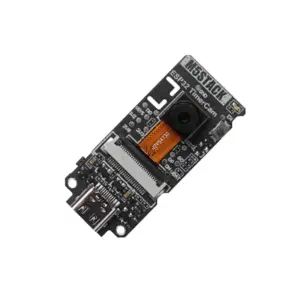
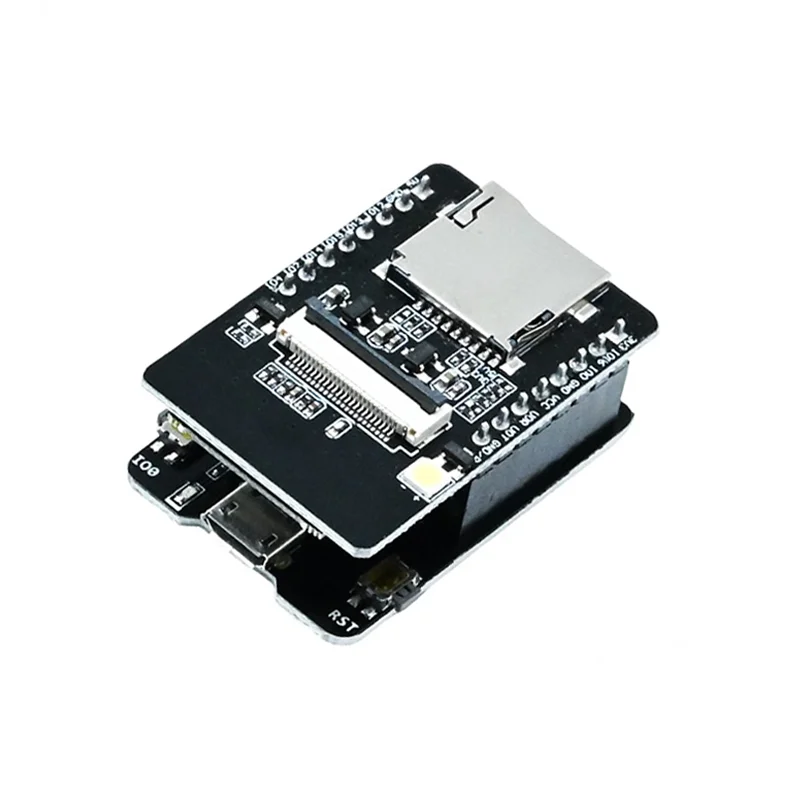
ESP32-CAM-MB Development Board w/ OV3660 Camera

₹689.00 (Inclusive of all taxes)
Out of Stock

The ESP32-CAM-MB is a compact development board integrating an ESP32 dual-core SoC with 2.4GHz Wi-Fi, Bluetooth/BLE, and an OV3660 camera sensor. It’s designed for wireless IoT vision projects, compatible with Arduino IDE and ESP-IDF, powered via its Micro USB port.

Features

  • ESP32 dual-core Xtensa LX6 processor with integrated 2.4GHz Wi-Fi 802.11b/g/n and Bluetooth Classic/BLE for wireless connectivity.
  • Integrated OV3660 image sensor supporting up to 2MP (1600×1200) resolution for photo and video capture.
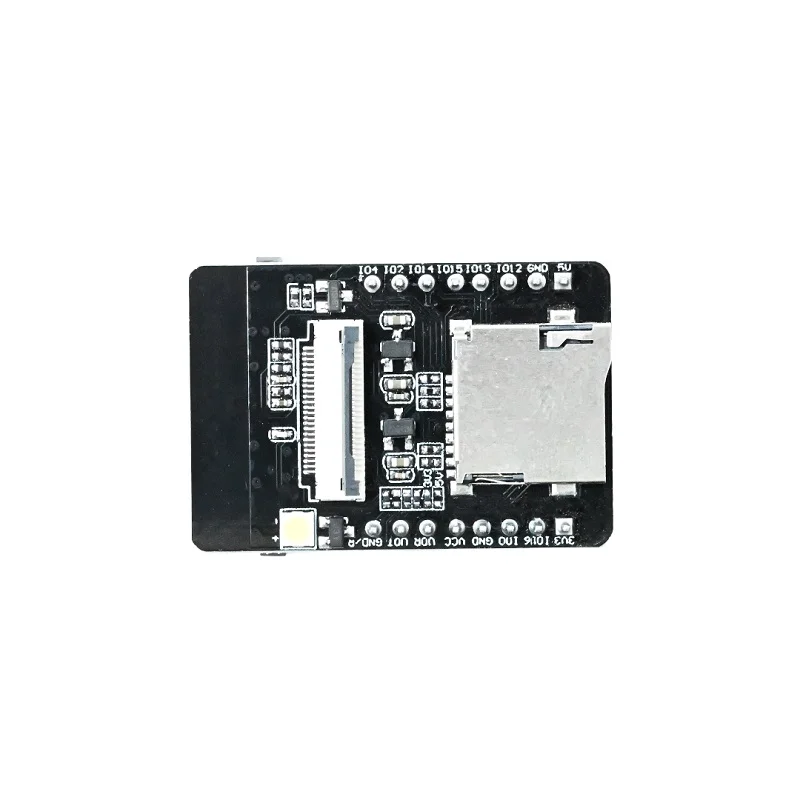
  • Includes a MicroSD card slot for local image storage and a Micro USB port for serial communication and 5V power.
  • Exposes GPIO headers for connecting peripherals, making it ideal for DIY security cameras, robotics, and IoT monitoring.
  • Compact form factor suitable for embedded vision applications, supporting programming via Arduino IDE or ESP-IDF.

Out of stock

Description

The ESP32-CAM-MB development board merges Espressif’s powerful ESP32 wireless microcontroller with a dedicated OV3660 camera module, creating a single-board solution for IoT projects requiring vision and connectivity. The dual-core processor handles image processing and network tasks simultaneously, while the integrated 2.4GHz Wi-Fi and Bluetooth stack enables direct data transmission to cloud platforms or local networks.

Its architecture is optimized for low-power operation, supporting deep sleep modes to conserve energy in battery-powered surveillance or remote sensing nodes. The board’s design includes a direct serial connection via the onboard USB-to-serial chip, simplifying firmware flashing and debugging. This makes it a foundational platform for developers building smart home security systems, machine vision prototypes, or wireless telemetry endpoints with visual data.

Key Features

  • All-in-one ESP32 development board with integrated 2MP OV3660 camera sensor for image and video capture.
  • Dual-core Xtensa LX6 CPU provides ample processing power for running camera routines and wireless protocols concurrently.
  • Onboard MicroSD card slot allows for high-capacity, local storage of captured images and video clips.
  • Micro USB port provides 5V power input and a built-in USB-to-serial converter for easy programming and serial communication.
  • Exposed GPIO pin headers offer flexibility for adding sensors, actuators, or displays to expand project functionality.
  • Supports both Bluetooth Classic and Bluetooth Low Energy (BLE) for short-range device pairing and data exchange.
  • Compact and self-contained design reduces wiring complexity for rapid prototyping of vision-based IoT applications.

Applications

  • DIY IP security cameras and wireless surveillance systems for home or property monitoring.
  • Smart doorbells and IoT intercoms with live video streaming capabilities.
  • Machine vision and object recognition prototypes for robotics and automation.
  • Wireless environmental monitoring stations that capture visual data (e.g., wildlife cams).
  • Social media or telepresence robots that stream video over Wi-Fi.

Technical Specifications

Microcontroller/SoCESP32 dual-core Xtensa LX6
Wireless ProtocolsWi-Fi 802.11b/g/n (2.4GHz), Bluetooth Classic, BLE
Camera SensorOV3660
Maximum Resolution1600 x 1200 pixels (2MP)
Supply Voltage5V via Micro USB
InterfacesMicro USB (Serial/Power), GPIO Headers, MicroSD Card Slot
DimensionsApprox. 10 x 7 x 2 cm

Frequently Asked Questions

How do I program the ESP32-CAM-MB board?

You can program it using the Arduino IDE with the ESP32 board package installed or via Espressif's official ESP-IDF framework. Connect the board via its Micro USB port, select the correct COM port and board type (e.g., AI-Thinker ESP32-CAM), and upload your sketch. Ensure the GPIO0 pin is pulled low during reset to enter flashing mode if needed.

What is the power requirement for the ESP32-CAM-MB?

The board is typically powered by 5V supplied through the Micro USB port. When active with both Wi-Fi and the camera running, current draw can be several hundred milliamps. For battery operation, use a 5V regulator or a LiPo battery with a boost converter, and leverage the ESP32's deep sleep modes to extend battery life significantly between capture events.

How do I access the images captured by the OV3660 camera?

Images can be stored directly on the onboard MicroSD card or transmitted over Wi-Fi. You'll need to initialize the SD card and camera sensor in your code using libraries like 'ESP32 Camera' in Arduino. For live streaming, implement a web server on the ESP32 to serve a video feed, or use protocols like MQTT to send image data to a cloud dashboard for remote viewing and storage.

Package Includes

  • 1 x ESP32-CAM-MB Development Board with OV3660 Camera

Additional Information

Weight 0.01 kg
Dimensions 10 × 7 × 2 cm