SKU: IOWC-1258
📋 GST Invoice Available

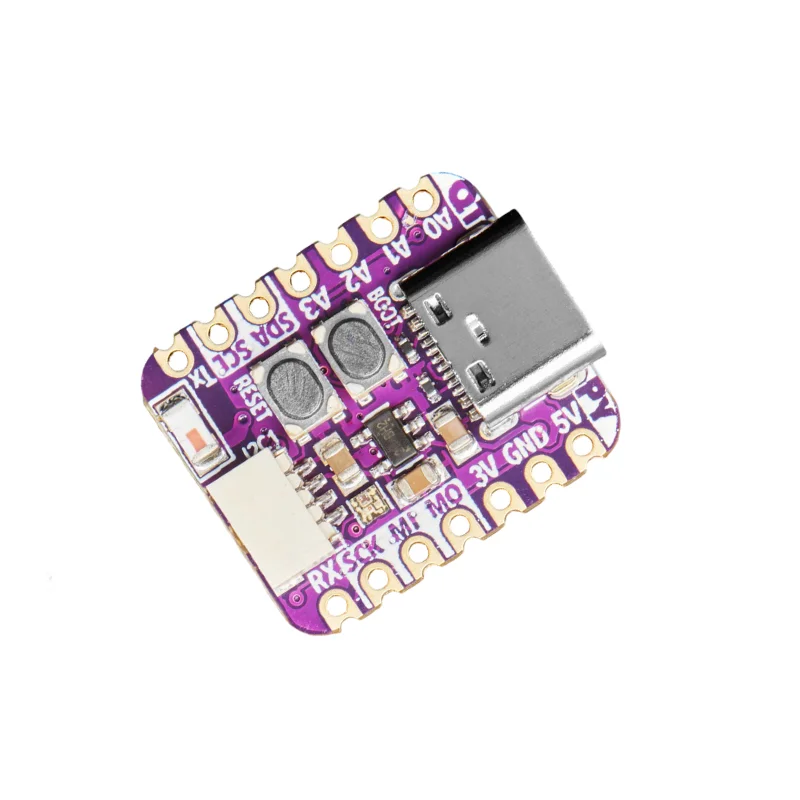
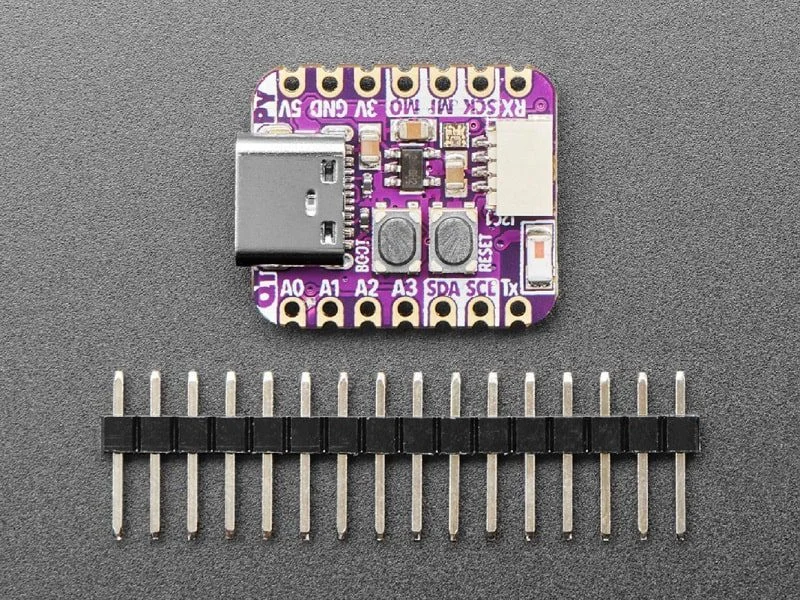
Adafruit QT Py S3 ESP32-S3 WiFi Dev Board w/ 2MB PSRAM & STEMMA QT

₹2,519.00 (Inclusive of all taxes)
Out of Stock

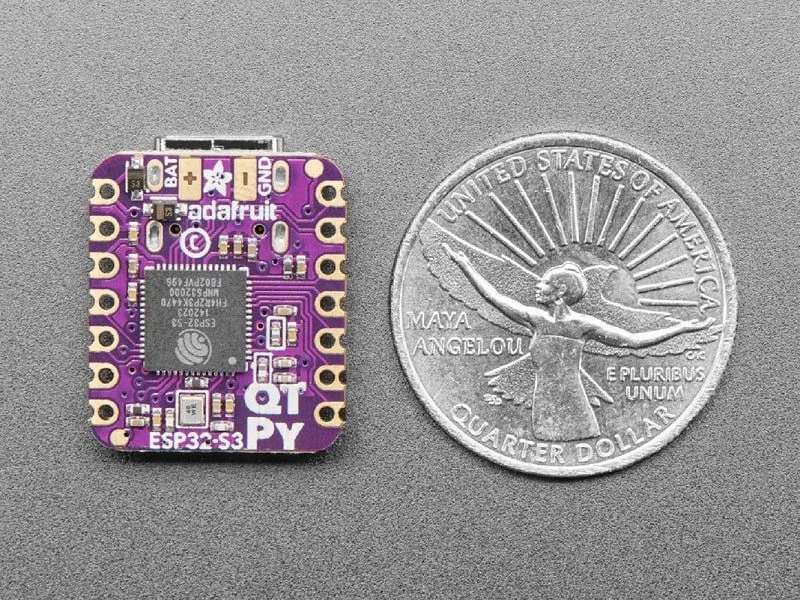
The Adafruit QT Py S3 is a compact ESP32-S3 development board featuring dual-core 240MHz processing, WiFi 4 and BLE 5.0 connectivity, 2MB PSRAM for data-intensive tasks, and native USB for HID device emulation, ideal for Arduino, ESP-IDF, and CircuitPython projects.

Features

  • ESP32-S3 Dual-Core Power: Features a 240MHz Tensilica processor with 4MB flash, 512KB SRAM, and 2MB PSRAM for handling complex IoT applications and buffering large datasets.
  • Integrated Wireless Connectivity: Provides built-in WiFi 4 and Bluetooth Low Energy 5.0 (BLE) for robust wireless communication in smart home, sensor node, and wearable projects.
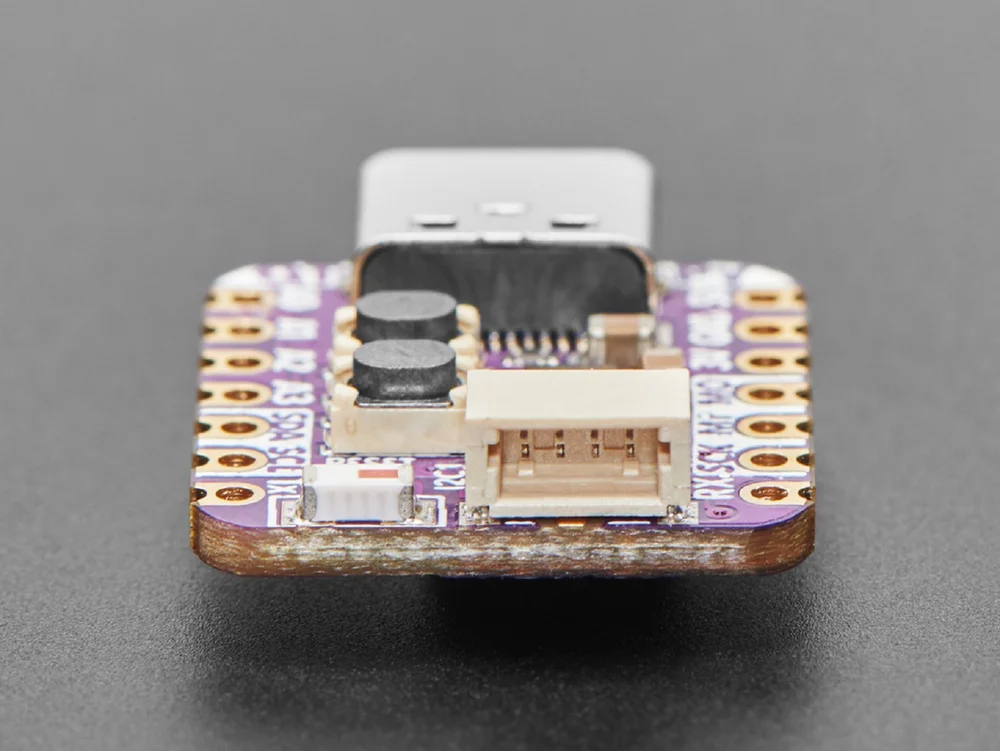
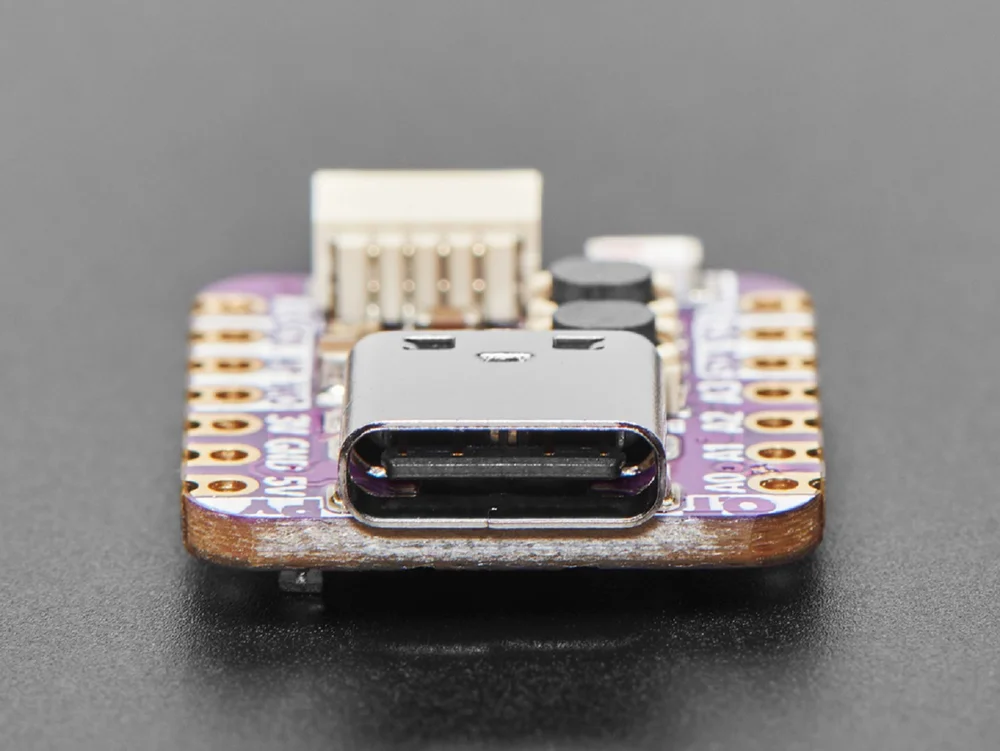
  • Native USB & STEMMA QT: Supports native USB for acting as a keyboard, mouse, or disk drive without an external converter, and includes a STEMMA QT connector for plug-and-play I2C sensor integration.
  • Developer-Friendly GPIO: Offers 13 GPIO pins with 10x 12-bit ADC inputs, hardware I2C/UART/SPI/I2S interfaces, and 5 capacitive touch inputs for versatile peripheral connection.
  • Optimized Power Management: Includes a 3.3V regulator, external battery input support up to 6V, and low-power sleep modes (~70µA deep sleep) for battery-operated IoT deployments.

Out of stock

Description

The Adafruit QT Py S3 is a feature-dense IoT development board built around Espressif’s ESP32-S3 microcontroller. Its dual-core 240MHz architecture, coupled with 2MB of dedicated PSRAM, provides the computational headroom needed for advanced wireless applications, machine learning inference, and graphics handling where buffering large data arrays is critical. Native USB implementation allows the board to function as a composite USB device, enabling direct development of HID peripherals without additional hardware.

Designed for seamless system integration, the board incorporates a SparkFun Qwiic and Seeed Studio Grove-compatible STEMMA QT connector for instant daisy-chaining of I2C sensors and actuators. Its compact footprint hosts 11 breakout GPIOs plus two dedicated for the QT connector, supporting a full suite of hardware interfaces including I2S for audio and capacitive touch for intuitive control. The integrated power system supports a wide 3.3V-6V input range with diode-protected battery pads, making it suitable for portable and low-power edge computing nodes where deep sleep currents as low as 70 microamps are essential for extended field deployment.

Key Features

  • High-Performance ESP32-S3 Core: Dual-core 240MHz LX7 microprocessor with 4MB flash and 512KB SRAM for demanding IoT firmware.
  • Extended Memory for Data Buffering: Integrated 2MB PSRAM enables storage of large graphics frames, audio buffers, or sensor datasets directly in memory.
  • Native USB Device Support: Acts as a native USB peripheral (keyboard, mouse, MIDI, disk drive) without requiring a separate USB-to-serial chip.
  • Plug-and-Play Sensor Ecosystem: STEMMA QT connector provides solderless compatibility with hundreds of Qwiic and Grove I2C modules for rapid prototyping.
  • Comprehensive Peripheral Set: Hardware interfaces include two I2C ports, UART, SPI, I2S, 10x 12-bit ADC channels, and 5 capacitive touch GPIOs.
  • Low-Power Operation Ready: Supports light sleep (2-4mA) and deep sleep (~70µA) modes with dedicated battery input pads for energy-efficient field deployments.
  • Onboard Status & Control: Includes a user-controllable RGB NeoPixel LED, reset button, and BOOT0 button for easy firmware flashing and system feedback.

Applications

  • USB HID Devices: Develop custom keyboards, mice, game controllers, or MIDI interfaces leveraging native USB support.
  • Sensor Fusion Hubs: Use as a central node with STEMMA QT to aggregate data from multiple I2C environmental, motion, or light sensors.
  • Low-Power Wireless Nodes: Deploy in battery-powered BLE beacons, WiFi sensor telemetry units, or smart home automation controllers.
  • Edge AI & Data-Intensive Projects: Buffer camera frames, audio streams, or ML model weights in the 2MB PSRAM for on-device processing.
  • Rapid Prototyping & Education: Ideal for makers and educators due to its compact size, plug-and-play sensor connectivity, and CircuitPython/Arduino IDE compatibility.

Technical Specifications

Microcontroller / SoCESP32-S3 Dual-Core 240MHz Tensilica LX7
Wireless ProtocolsWiFi 4 (802.11 b/g/n), Bluetooth Low Energy 5.0 (BLE)
Memory4MB Flash, 512KB SRAM, 2MB PSRAM
Supply Voltage3.3V (Regulated), Battery Input: 3.3V to 6V
Operating CurrentActive: ~40-80mA (varies with RF), Light Sleep: 2-4mA, Deep Sleep: ~70µA
GPIO & Interfaces13 GPIO (11 breakout, 2 QT), 10x 12-bit ADC, Hardware UART/SPI/I2S, Dual I2C, 5x Capacitive Touch
USB InterfaceNative USB (Type-C)
ConnectorSTEMMA QT (Qwiic/Grove I2C compatible)
Onboard IndicatorsRGB NeoPixel LED
DimensionsApprox. 5.0 x 2.0 cm (Board Footprint)

Frequently Asked Questions

How do I program the Adafruit QT Py S3, and what frameworks are supported?

The board is fully supported in the Arduino IDE using the ESP32 board package, in Espressif's ESP-IDF for advanced features, and in CircuitPython for rapid Python-based development. Use a USB-C cable to connect; it enumerates as a serial COM port for uploading code. The BOOT0 button is used to enter download mode if automatic firmware upload fails. Native USB allows it to also act as a USB mass storage device in CircuitPython for direct file editing.

What is the purpose of the 2MB PSRAM on this board, and how do I utilize it?

The 2MB PSRAM (Pseudo Static RAM) provides additional volatile memory for buffering large data sets that exceed the internal 512KB SRAM. It is essential for applications like buffering camera images, audio samples, graphics frames, or machine learning model weights. In Arduino, enable PSRAM in the board configuration menu. In ESP-IDF, use heap_caps_malloc() with MALLOC_CAP_SPIRAM flag. It is not persistent storage; data is lost on power-off.

Can I power the QT Py S3 with a battery, and what are the sleep current figures?

Yes, you can solder wires to the BAT and GND pads on the back to connect a 3.3V to 6V DC battery pack. The onboard regulator will supply 3.3V. For low-power operation, utilize the ESP32-S3's sleep modes: Light Sleep consumes approximately 2-4mA with RAM retained, while Deep Sleep can reduce current to around 70 microamps, allowing for months of operation on a suitable LiPo battery when waking periodically for measurements.

How do the STEMMA QT connector and the GPIO breakout pads work together?

The STEMMA QT connector provides a 4-pin JST SH socket (VCC, GND, SDA, SCL) for plug-and-play connection of Qwiic or Grove I2C devices. It uses two of the board's GPIOs for I2C, specifically the SDA and SCL lines. The 11 breakout pads give you access to the remaining GPIOs, including the second I2C port, hardware SPI, UART, ADC pins, and capacitive touch inputs. You can use both simultaneously, allowing a sensor on QT and other peripherals on the breakout pins.

Package Includes

  • 1 x Adafruit QT Py S3 ESP32-S3 Development Board with 2MB PSRAM

Additional Information

Weight 0.01 kg
Dimensions 4 × 5 × 2 cm