SKU: IOWC-1166
📋 GST Invoice Available

Waveshare ESP32-C6 1.47-Inch Display Development Board w/ WiFi 6 & BLE

₹1,239.00 (Inclusive of all taxes)
Out of Stock

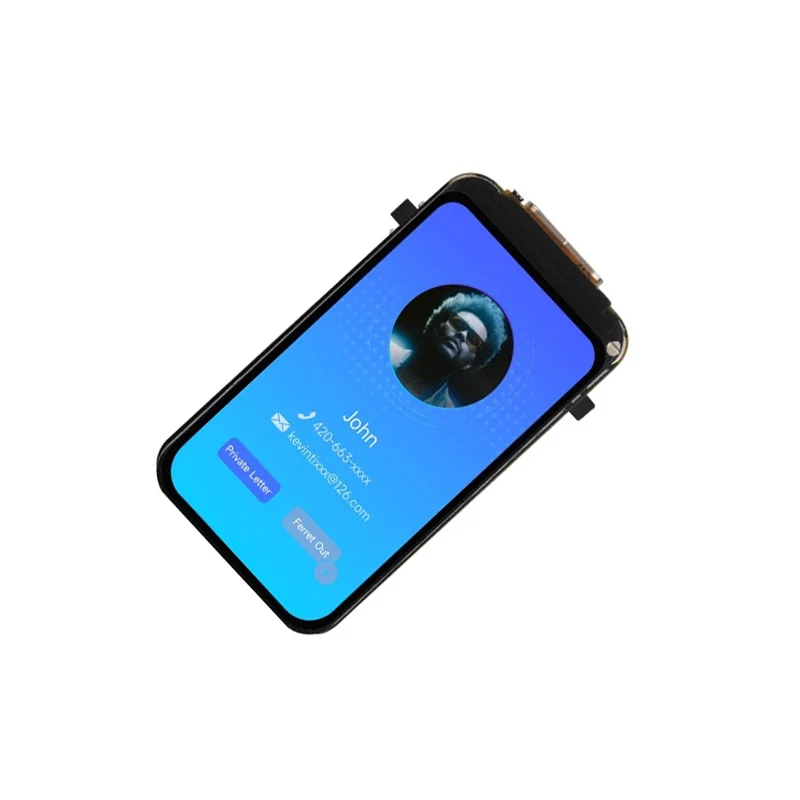
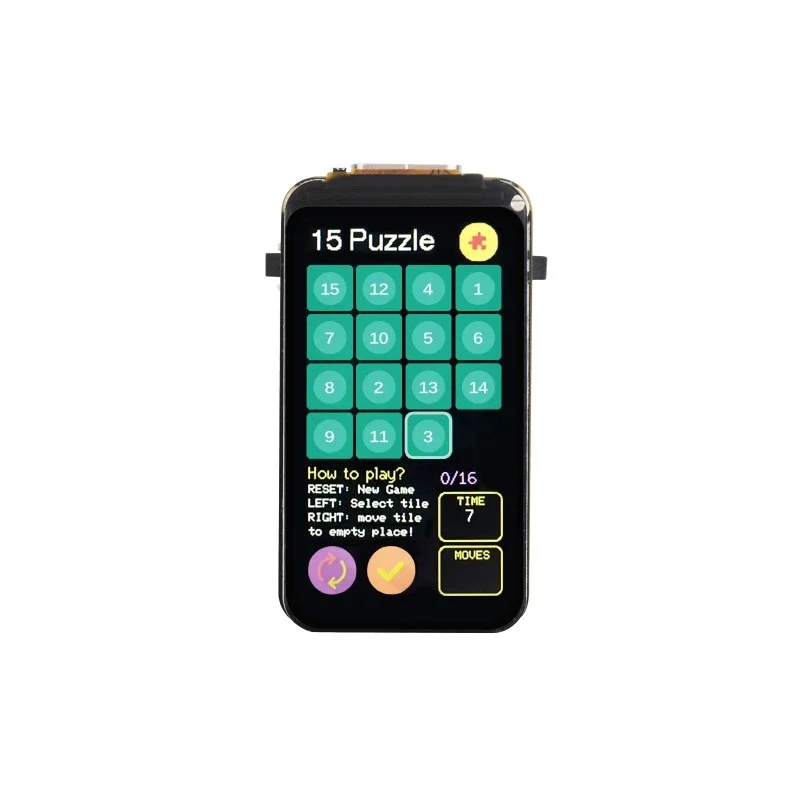
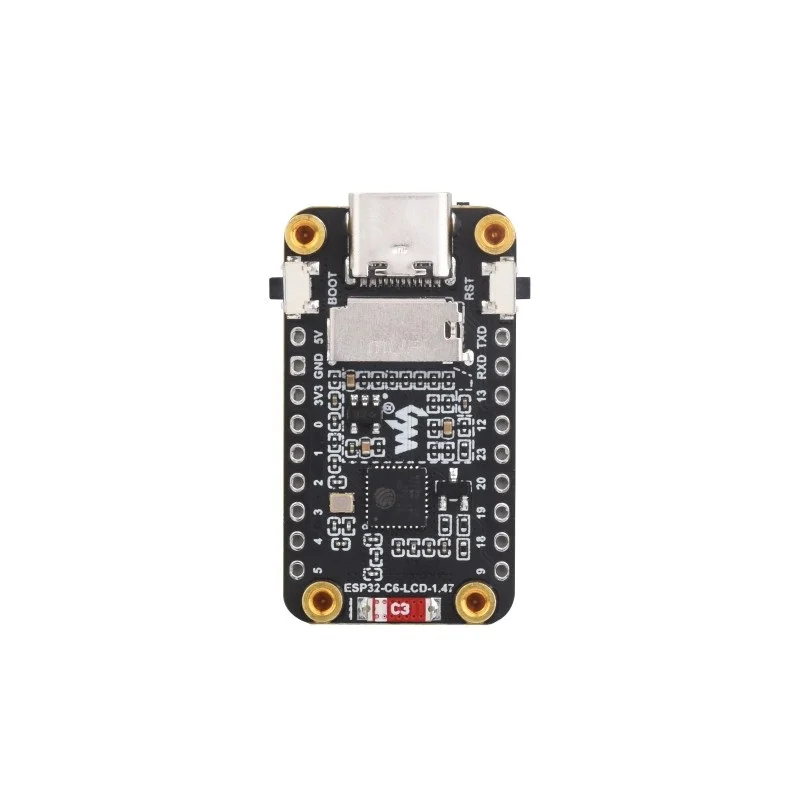
The Waveshare ESP32-C6 Display Development Board integrates a 1.47-inch 172×320 color LCD with an Espressif ESP32-C6 RISC-V processor, supporting modern WiFi 6 and Bluetooth LE 5.0 connectivity for low-power IoT applications with graphical interfaces.

Features

  • Features a 1.47-inch 172×320 LCD with 262K colors for GUI development and status visualization.
  • Powered by a 32-bit RISC-V ESP32-C6 SoC running at up to 160 MHz with WiFi 6 and BLE 5.0.
  • Includes 4MB Flash, 512KB SRAM, and an onboard microSD (TF) card slot for data logging.
  • Offers multiple low-power modes and flexible clock gating for battery-operated IoT projects.
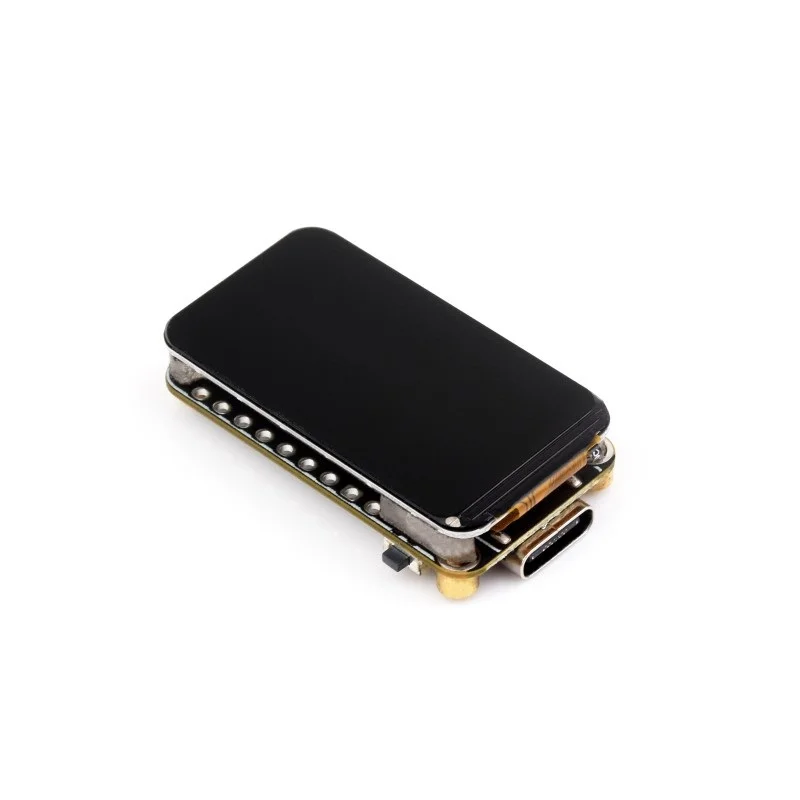
  • Provides a full-speed USB port and GPIO header for easy peripheral expansion and prototyping.

Out of stock

Description

The Waveshare ESP32-C6 Display Development Board is a compact AIoT platform centered on Espressif’s ESP32-C6, a single-core RISC-V processor optimized for low-power wireless applications. It combines modern WiFi 6 (802.11ax) and Bluetooth 5.0 Low Energy connectivity with a vibrant 1.47-inch TFT display, enabling developers to create interactive, visually-rich IoT endpoints for smart home dashboards, portable sensor nodes, or industrial HMIs.

Architecturally, the board provides a robust memory subsystem with 4MB of flash and 512KB of SRAM, supplemented by an integrated microSD card slot for external storage. Its power management unit supports deep sleep and dynamic frequency scaling, making it suitable for always-on, battery-powered deployments. The exposed GPIO header grants access to the SoC’s peripheral interfaces, facilitating seamless integration with sensors, actuators, and communication modules.

Key Features

  • Integrated 1.47-inch TFT LCD with 172x320 resolution and 262K color depth for dynamic user interfaces.
  • Espressif ESP32-C6 RISC-V core delivers up to 160 MHz clock speed with WiFi 6 and BLE 5.0 stack.
  • Comprehensive memory configuration: 4MB Flash, 512KB HP SRAM, and 16KB LP SRAM for data processing.
  • Onboard microSD (TF) card slot enables expanded file storage for logging images, data, or firmware.
  • Full-speed USB Type-C port for programming, serial communication, and power delivery.
  • Built-in RGB LED with acrylic light guide for visual status indication and effects.
  • Multiple low-power operating modes (including deep sleep) extend battery life in field deployments.
  • Standard 2.54mm pitch GPIO header breaks out UART, I2C, SPI, ADC, and PWM signals for hardware expansion.

Applications

  • Smart home control panels and interactive dashboards with local display.
  • Portable IoT sensor nodes with graphical data visualization and WiFi 6 backhaul.
  • Prototyping low-power wearable devices with BLE connectivity and status screens.
  • Industrial HMI (Human-Machine Interface) units for equipment monitoring.
  • Educational kits for learning embedded systems, wireless protocols, and GUI programming.

Technical Specifications

Microcontroller/SoCEspressif ESP32-C6 (32-bit RISC-V, up to 160 MHz)
Wireless ProtocolsWiFi 6 (802.11ax), Bluetooth 5.0 Low Energy (LE)
Display1.47-inch TFT LCD, 172x320 resolution, 262K colors
Memory4MB Flash, 512KB HP SRAM, 16KB LP SRAM, 320KB ROM
Storage ExpansionOnboard microSD (TF) Card Slot
USB InterfaceFull-speed USB Type-C
GPIO & ExpansionStandard 2.54mm pitch header
IndicatorsBuilt-in RGB LED
DimensionsApprox. 70mm x 50mm (based on shipping data)

Frequently Asked Questions

How do I program the Waveshare ESP32-C6 board and which frameworks are supported?

You can program the board using the Arduino IDE with the ESP32-C6 core installed via Board Manager, or use Espressif's official ESP-IDF framework for full low-level control. Connect the USB Type-C port to your computer; the board should enumerate as a serial COM port. Select 'ESP32-C6 Dev Module' as your target board in the Arduino IDE. For MicroPython, you'll need to flash the appropriate firmware binary using esptool.py via the serial bootloader mode.

What is the power supply requirement and typical operating current for this board?

The board is powered via the USB Type-C port at 5V DC. The operating current varies significantly based on the CPU frequency, wireless radio activity, and display backlight. With WiFi active and the display on, expect currents in the range of 100-250mA. Utilizing the ESP32-C6's deep sleep modes with the display off can reduce current consumption to microamp levels, which is critical for battery-powered deployments. Always ensure your USB source or regulator can provide at least 500mA for stable operation.

Can I connect external antennas to the ESP32-C6 for improved WiFi or Bluetooth range?

No, the Waveshare ESP32-C6 development board uses an integrated PCB trace antenna for both WiFi 6 and Bluetooth signals. There is no external antenna connector (like an IPEX or SMA) provided on this specific board variant. The range is therefore limited to the performance of the onboard antenna, which is suitable for most indoor and short-range applications. For projects requiring extended range, consider an ESP32-C6 module with an external antenna port or add an RF amplifier stage.

How do I use the onboard microSD (TF) card slot for data logging?

The microSD card slot is connected to the ESP32-C6's SPI peripheral. You will need to solder the provided header to access the GPIO pins. Typically, the SD card uses the HSPI or VSPI interface (pins like GPIO 36, 37, 35 for CLK, MISO, MOSI, and a CS pin defined in your code). Use the Arduino 'SD' library or the ESP-IDF 'sdmmc' component. Format your microSD card as FAT16 or FAT32 before use. Ensure proper power supply, as card initialization can draw a peak current.

What are the GPIO pins available on the header and how do I identify them?

The standard 2.54mm pitch header breaks out most usable GPIOs from the ESP32-C6, excluding pins used for the internal flash, display, and USB. The pinout is typically silkscreened on the board's PCB. You will find pins for UART (TX/RX), I2C (SDA/SCL), SPI (MISO/MOSI/SCLK), analog inputs (ADC), and digital outputs. Always consult the board's schematic from Waveshare's wiki. Note that some pins may have pull-up/pull-down resistors or be used for bootstrapping; avoid using them for critical I/O.

Package Includes

  • 1 x ESP32-C6-LCD-1.47 Development Board
  • 1 x Black GPIO Header (unsoldered)

Additional Information

Weight 0.015 kg
Dimensions 5 × 7 × 3 cm