SKU: IOWC-1154
📋 GST Invoice Available

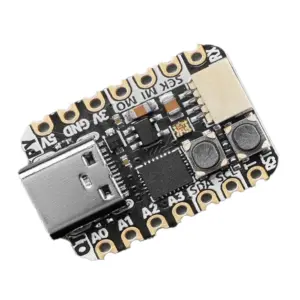
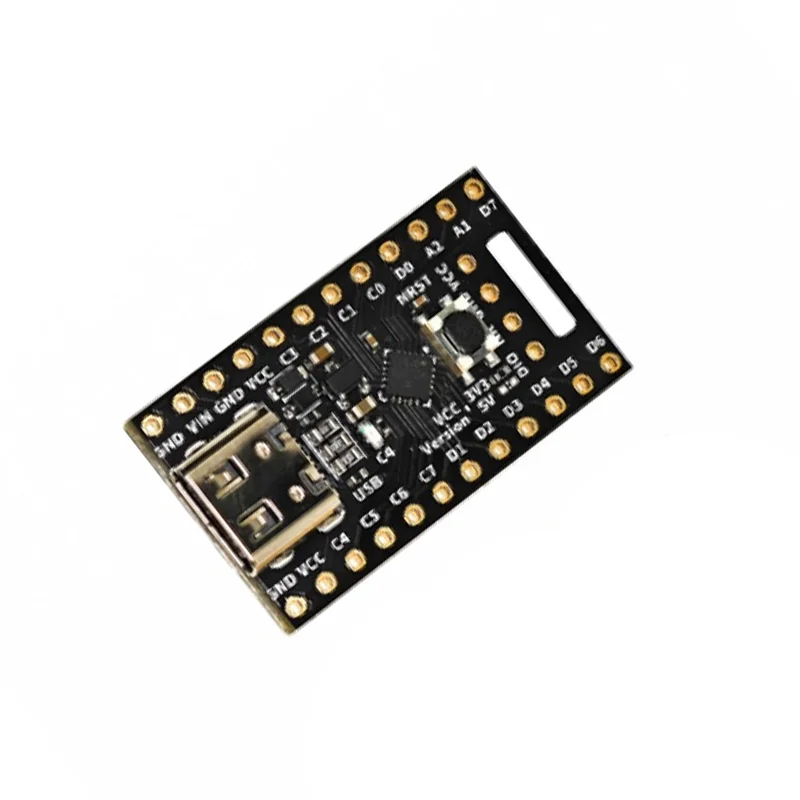
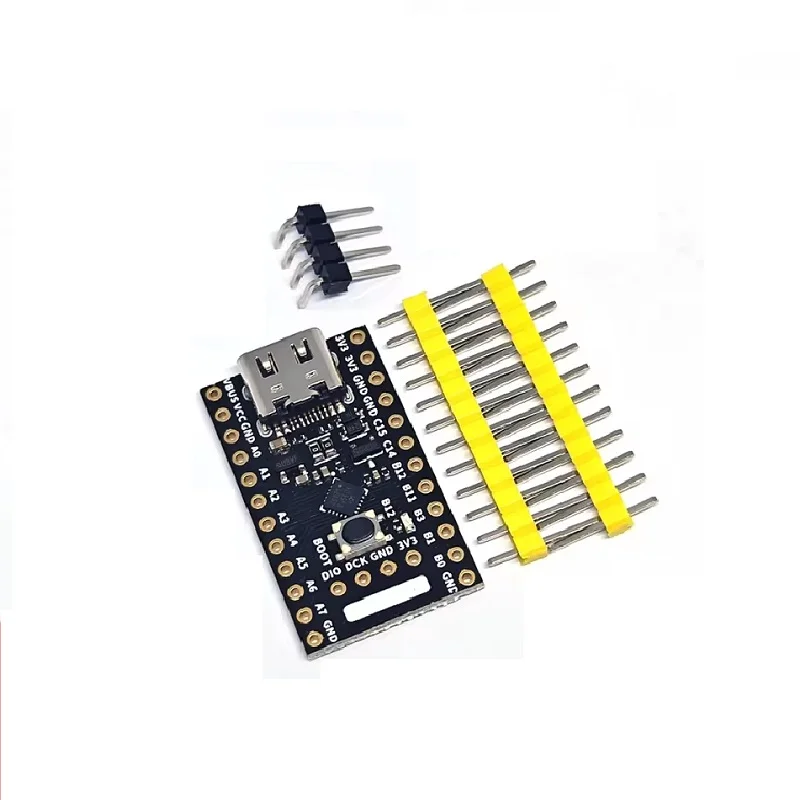
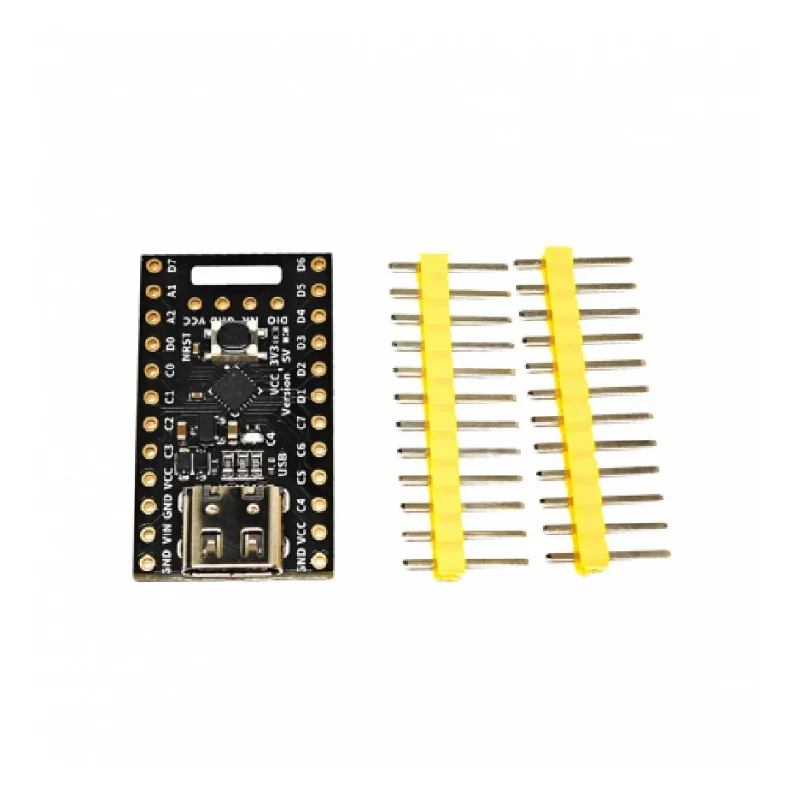
WeAct Studio CH32X035F8U6 CH32 USB PD Core Board RISC-V

₹184.00 (Inclusive of all taxes)
Out of Stock

The WeAct Studio CH32X035F8U6 is a USB PD core board featuring a 32-bit QingKe RISC-V microcontroller, ideal for embedded development with Arduino IDE or MounRiver Studio. It supports flexible 3.3V/5V power input and integrates essential peripherals like USART, I2C, SPI, and a 10-bit ADC for rapid IoT prototyping.

Features

  • 32-bit QingKe RISC-V2A core running at up to 48MHz for efficient embedded processing.
  • Flexible 3.3V or 5V power supply compatibility simplifies integration into various systems.
  • Integrated 16KB Flash and 2KB SRAM for program and data storage in compact applications.
  • Comprehensive I/O with 18 GPIOs, USART, I2C, SPI, and a 10-bit ADC for sensor interfacing.
  • Low-power Sleep and Standby modes extend battery life in portable IoT devices.

Out of stock

Description

The WeAct Studio CH32X035F8U6 core board is built around the CH32V003 series microcontroller, a general-purpose RISC-V MCU designed for industrial-grade embedded applications. Its QingKe 32-bit RISC-V2A processor delivers a maximum system frequency of 48MHz, balancing performance with power efficiency for IoT nodes and control systems.

Power management is versatile, supporting both 3.3V and 5V input voltages, which accommodates a wide range of power sources and peripheral logic levels. The board includes a 1-channel DMA controller for efficient data handling, alongside op-amp comparators and multiple timers for precise analog measurement and control tasks. A 1-wire Serial Debug Interface (SDI) streamlines firmware development and in-circuit debugging workflows.

Key Features

  • QingKe 32-bit RISC-V2A processor core with support for two-level interrupt nesting.
  • Dual-voltage operation (3.3V/5V) enables flexible design and easy integration with other boards.
  • Integrated 10-bit ADC and op-amp comparators for accurate analog sensor reading and signal conditioning.
  • Standard communication interfaces including USART, I2C, and SPI facilitate connectivity with displays, sensors, and wireless modules.
  • Multiple low-power modes (Sleep, Standby) optimize energy consumption for battery-powered deployments.
  • 1-channel general-purpose DMA controller offloads the CPU for efficient data transfers.
  • 18 multifunctional I/O ports with external interrupt mapping provide extensive peripheral connection options.
  • 64-bit unique chip ID enhances device security and identification in networked applications.

Applications

  • Compact USB-powered IoT sensor nodes and data loggers.
  • Industrial control interfaces and simple automation controllers.
  • Battery-operated portable devices leveraging low-power sleep modes.
  • Educational platforms for learning RISC-V architecture and embedded C programming.
  • Prototyping core for custom hardware requiring USART, I2C, or SPI communication.

Technical Specifications

Microcontroller Core32-bit QingKe RISC-V2A
Maximum Clock Frequency48 MHz
Flash Memory16 KB
SRAM2 KB
Supply Voltage3.3V or 5V
Operating ModesActive, Sleep, Standby
Analog-to-Digital Converter (ADC)10-bit
Communication InterfacesUSART, I2C, SPI
DMA Channels1-channel general-purpose
GPIO Ports18 I/O with external interrupt
Debug Interface1-wire Serial Debug Interface (SDI)
Unique Identifier64-bit chip unique ID

Frequently Asked Questions

What development environments support the CH32X035F8U6 core board?

The board is supported by the MounRiver Studio IDE (based on Eclipse) and can be programmed via the Arduino IDE using community-developed cores. It uses a 1-wire Serial Debug Interface (SDI) for flashing and debugging, requiring a compatible WCH-Link or similar RISC-V debug probe. Official toolchains and SDKs are available from WCH for low-level register access and peripheral configuration.

How do I power the board and what are the current requirements?

The board accepts a 3.3V or 5V DC input via its designated power pins. In active mode at 48MHz, expect current draw in the tens of mA range. For low-power operation, utilize the Sleep or Standby modes via firmware to reduce current to microamp levels, which is critical for battery-powered IoT deployments. Always ensure your power supply can provide stable voltage within these ranges.

What communication interfaces are available and how do I connect sensors?

The MCU provides USART, I2C, and SPI hardware interfaces, accessible via the board's GPIO pins. For I2C sensors, connect SDA and SCL lines with appropriate pull-up resistors. For SPI devices, connect MOSI, MISO, SCK, and a chip select GPIO. The integrated 10-bit ADC can read analog sensors directly. Refer to the pinout diagram to identify the specific pins assigned to each peripheral function.

Package Includes

  • 1 x WeAct Studio CH32X035F8U6 CH32 USB PD Core Board

Additional Information

Weight 0.015 kg
Dimensions 9 × 6 × 2 cm