SKU: IOWC-1143
📋 GST Invoice Available

Waveshare RP2350-LCD-0.96 Dev Board w/ 0.96-Inch IPS LCD

₹1,069.00 (Inclusive of all taxes)
Out of Stock

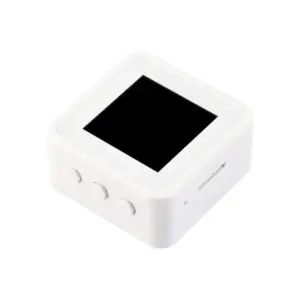
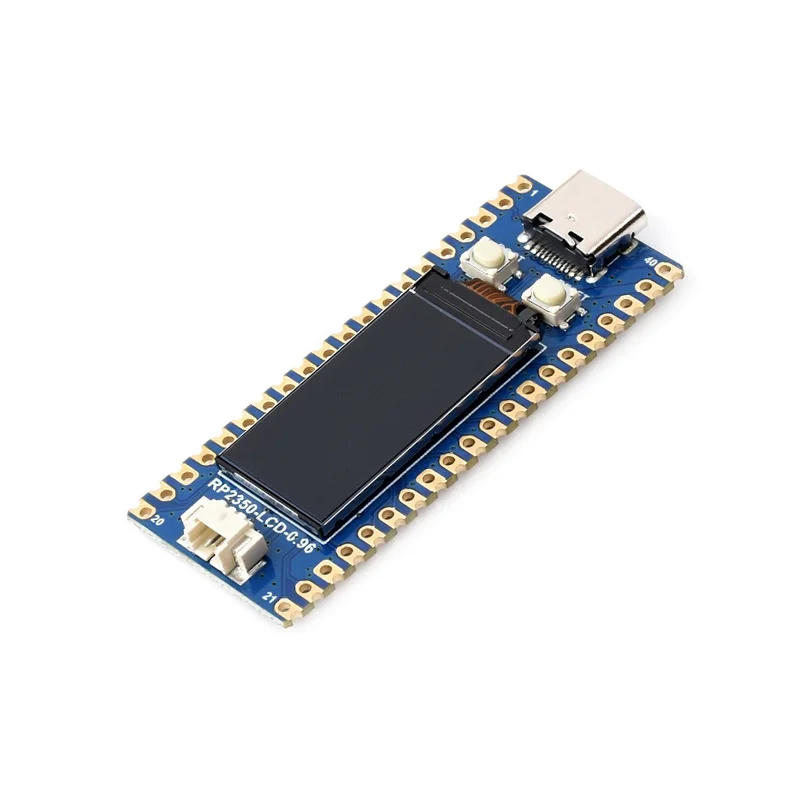
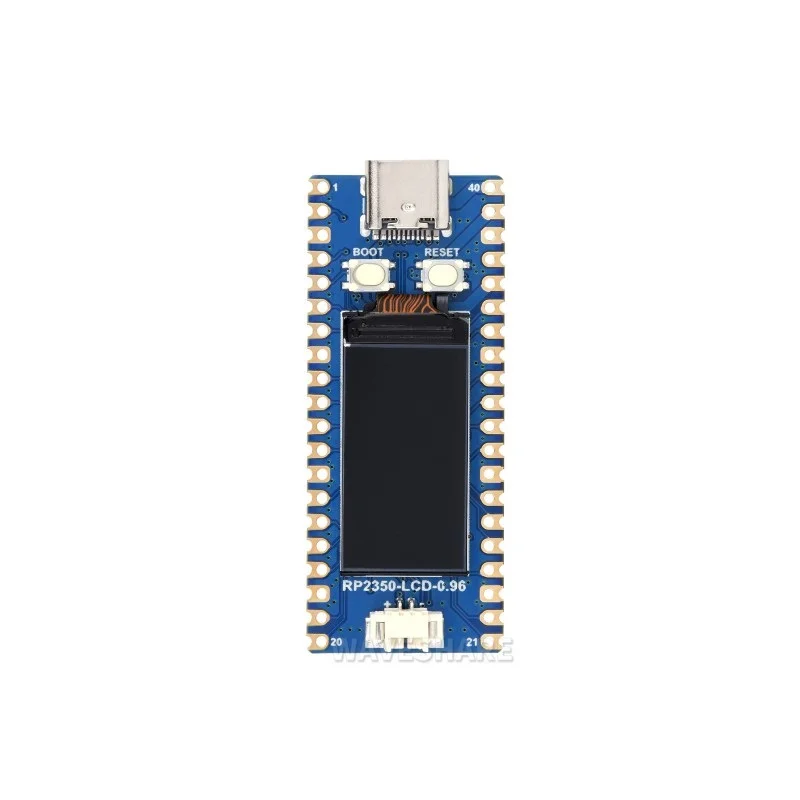
The Waveshare RP2350-LCD-0.96 is a Pico-like development board featuring Raspberry Pi’s RP2350A dual-core microcontroller and a built-in 0.96-inch IPS LCD. It supports development with Raspberry Pi’s C/C++ SDK or MicroPython via USB-C and is powered by a 2A DC-DC buck-boost converter for battery operation.

Features

  • RP2350A Dual-Core SoC: Combines dual-core Arm Cortex-M33 and dual-core RISC-V processors, clocked up to 150 MHz for versatile embedded tasks.
  • Integrated 0.96-Inch IPS Display: Features a 160×80 pixel, 65K-color LCD for direct UI, sensor data, or debug output without external screens.
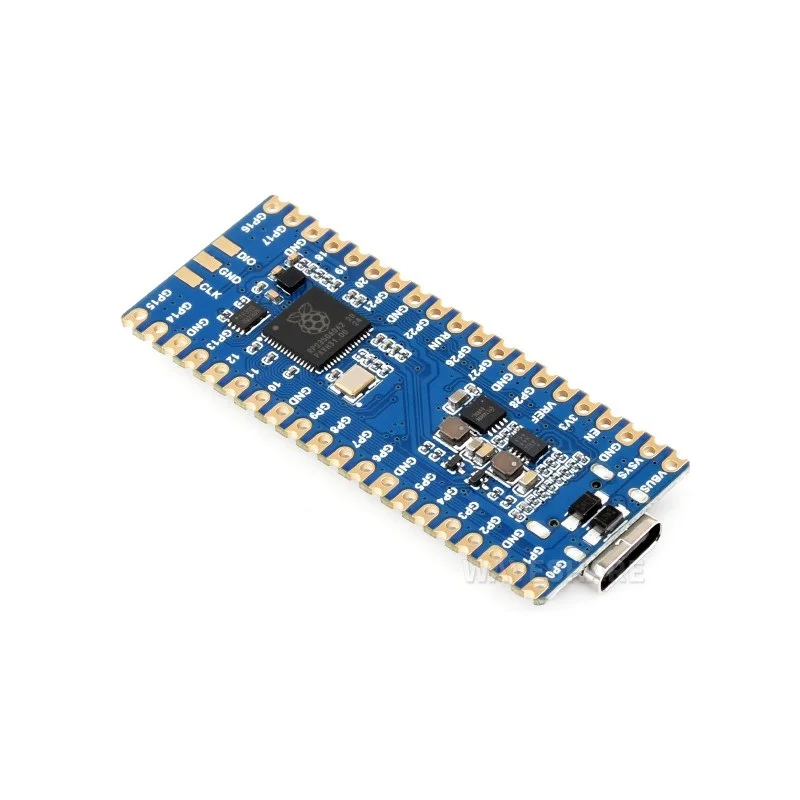
  • High-Efficiency Power Management: Onboard MP28164 DC-DC buck-boost converter supports up to 2A load, ideal for lithium battery-powered portable IoT devices.
  • Rich I/O & Programmable Peripherals: Offers 26 GPIO, 2x SPI/I2C/UART, 4x ADC, 16x PWM, and 12x PIO state machines for custom interface emulation.
  • Developer-Friendly Workflow: Supports drag-and-drop USB mass storage programming and is compatible with Raspberry Pi’s official SDK and MicroPython.

Out of stock

Description

The Waveshare RP2350-LCD-0.96 Development Board integrates Raspberry Pi’s innovative RP2350A microcontroller, which pairs a dual-core Arm Cortex-M33 with a dual-core RISC-V processor, enabling efficient task partitioning for real-time control and custom peripheral emulation. This architecture, combined with 520KB SRAM and 4MB flash, provides substantial resources for complex embedded applications.

Its integrated 0.96-inch IPS LCD delivers clear visual feedback for prototypes, while the high-current MP28164 buck-boost power supply ensures stable operation from a wide range of input sources, including single-cell Li-ion batteries. The board’s castellated edges allow for direct soldering onto carrier PCBs, facilitating a transition from prototype to compact end-product.

Key Features

  • Raspberry Pi RP2350A microcontroller with dual-core Arm Cortex-M33 and dual-core RISC-V architecture.
  • Integrated 0.96-inch IPS LCD display with 160x80 resolution and 65K colors.
  • Onboard MP28164 high-efficiency DC-DC buck-boost converter supporting up to 2A output current.
  • Comprehensive I/O set including 26 GPIO, 2x SPI, 2x I2C, 2x UART, 4x 12-bit ADC, and 16x PWM channels.
  • 12 Programmable I/O (PIO) state machines for implementing custom serial protocols or interfaces.
  • USB-C connector for power, programming, and host/device communication.
  • Lithium battery charge/discharge management header for portable applications.
  • Low-power sleep and dormant modes to extend battery life in field deployments.

Applications

  • Portable data loggers and handheld sensor displays with integrated UI.
  • Prototyping for consumer electronics and IoT gadgets with visual feedback.
  • Educational tools for learning dual-core microcontroller programming and real-time systems.
  • Battery-powered embedded systems requiring efficient power conversion.
  • Custom peripheral development using the PIO state machines for unique communication protocols.

Technical Specifications

Microcontroller/SoCRaspberry Pi RP2350A (Dual-core Arm Cortex-M33 & Dual-core RISC-V)
CPU Clock SpeedUp to 150 MHz
SRAM520 KB
Flash Memory4 MB
Display0.96-inch IPS LCD
Display Resolution160 x 80 pixels
Power SupplyUSB-C, Lithium Battery Header
DC-DC ConverterMP28164 Buck-Boost, 2A Max
Interfaces2x SPI, 2x I2C, 2x UART, USB 1.1 Host/Device
GPIO26 multi-function pins
Analog Inputs4x 12-bit ADC
PWM Channels16 controllable channels
Programmable I/O (PIO)12 state machines
On-chip PeripheralsTemperature Sensor, Accurate Clock/Timer
ProgrammingDrag-and-drop via USB Mass Storage
Dimensions (Shipping)6 x 6 x 2 cm
Weight (Shipping)0.014 kg

Frequently Asked Questions

What software tools can I use to program the Waveshare RP2350-LCD-0.96 board?

You can develop for this board using Raspberry Pi's official C/C++ SDK (pico-sdk) or MicroPython. Setup involves installing the SDK or the MicroPython firmware, then connecting via USB-C. The board supports drag-and-drop programming by appearing as a mass storage device when the boot button is held during power-up, allowing you to copy UF2 files directly for flashing.

How do I power the board for a portable, battery-operated project?

The board includes a header for connecting a single-cell lithium-ion/polymer battery (typically 3.7V). The onboard MP28164 DC-DC buck-boost converter efficiently regulates this input voltage to provide a stable 3.3V system supply with up to 2A current. Ensure you connect the battery's positive and negative terminals to the correct pins on the dedicated battery header to enable charging via USB and proper power management during operation.

Can I use the Programmable I/O (PIO) blocks to create custom interfaces?

Yes, the RP2350A includes 12 PIO state machines, which are separate processors dedicated to I/O. You can program them in assembly (via the SDK) to emulate protocols like DVI video output, LED pixel control (WS2812), or custom serial communication independently of the main CPU cores. This is ideal for timing-critical tasks without burdening the Cortex-M33 or RISC-V cores, freeing them for application logic.

Package Includes

  • 1 x Waveshare RP2350-LCD-0.96 Development Board

Additional Information

Weight 0.014 kg
Dimensions 6 × 6 × 2 cm