SKU: IOWC-1062
📋 GST Invoice Available

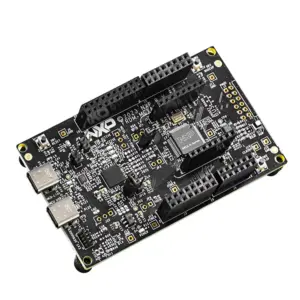
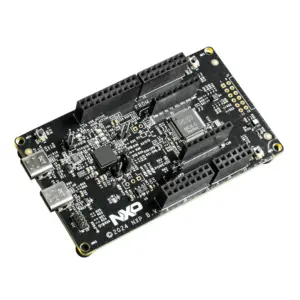
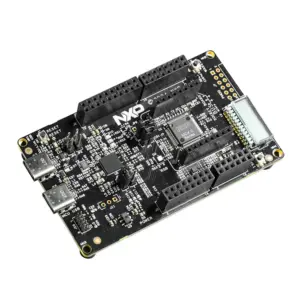
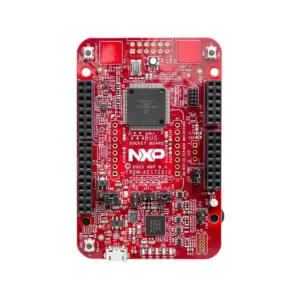
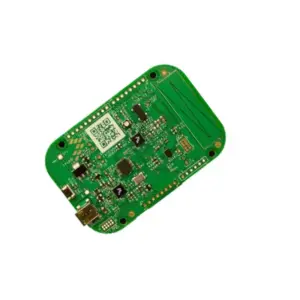
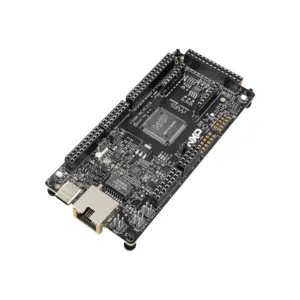
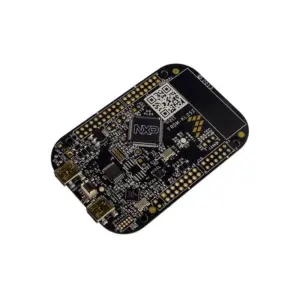
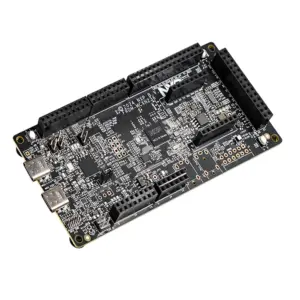
NXP Semiconductors FRDM-MCXA156 Development Board (Cortex-M33, CAN-FD, I3C)

₹2,209.00 (Inclusive of all taxes)
Out of Stock

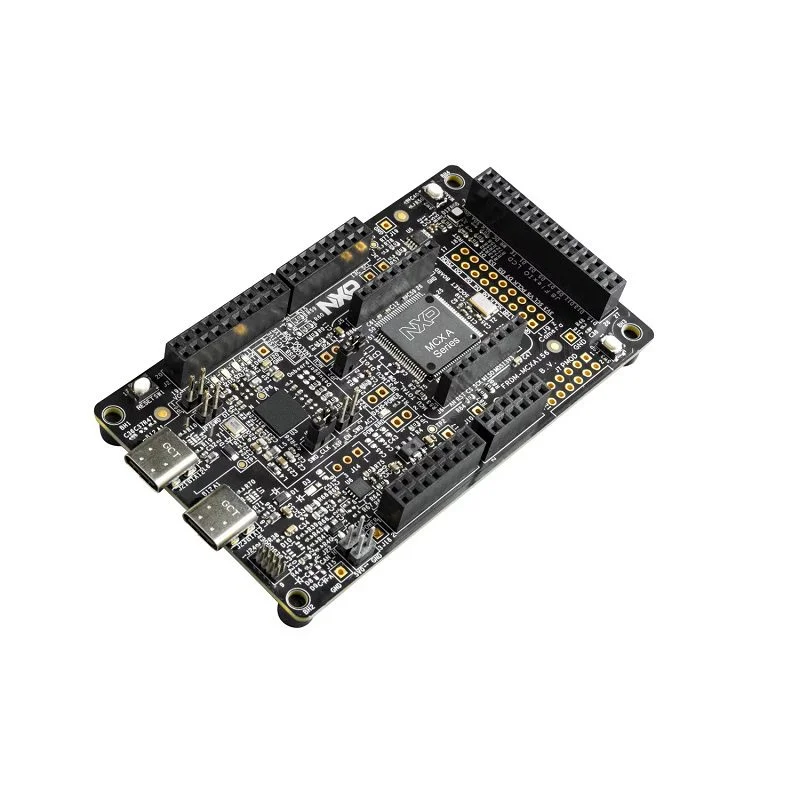
The NXP Semiconductors FRDM-MCXA156 is a scalable development board for rapid prototyping with the MCXA156 MCU, featuring an Arm Cortex-M33 core, 1MB Flash, and extensive connectivity including CAN-FD, I3C, USB-C, and Arduino/mikroBUS headers for sensor and wireless module expansion.

Features

  • MCXA156 Cortex-M33 MCU: Features a 32-bit Arm Cortex-M33 core with up to 1 MB of flash memory and 128 KB RAM, ideal for complex IoT edge processing and motor control applications.
  • Rich Industrial Connectivity: Equipped with CAN-FD, I3C, FlexIO, FS USB, and multiple serial interfaces (LPSPI, LPI2C, LPLUART) for robust industrial and automotive communication.
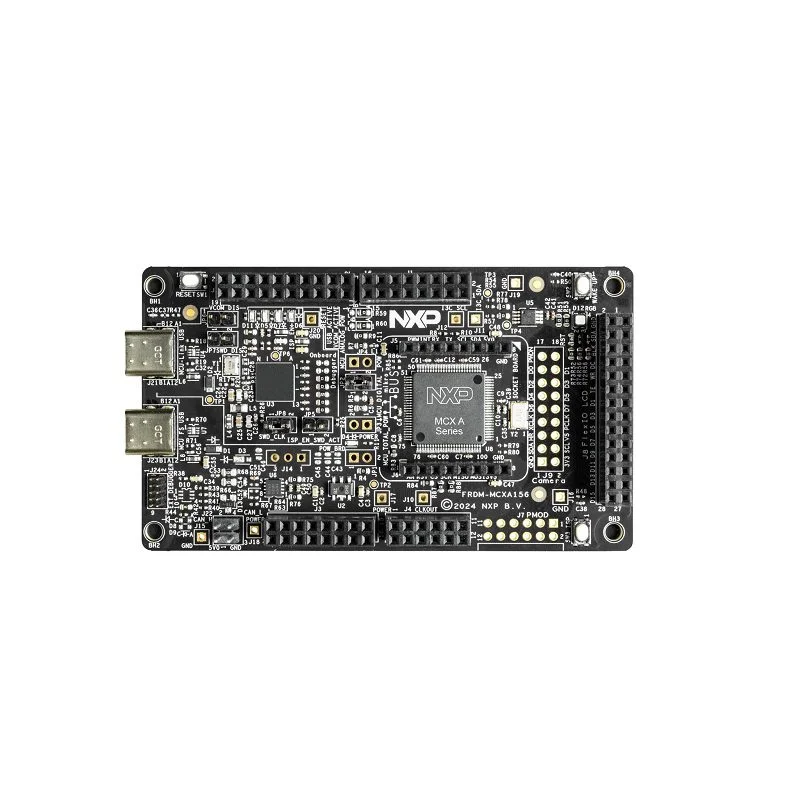
  • Expansive Header Ecosystem: Provides Arduino R3, PMOD, mikroBUS, and dedicated FlexIO headers for LCDs and cameras, enabling rapid integration of displays, sensors, and wireless modules.
  • Integrated Debugging: Includes an on-board MCU-Link debugger with CMSIS-DAP support and JTAG/SWD connector, streamlining firmware development and debugging workflows.
  • On-Board Sensor & USB-C: Comes with a P3T1755DPJ I3C/I²C temperature sensor and a USB Type-C connector for both device functionality and debugger communication.

Out of stock

Description

The NXP Semiconductors Freedom FRDM-MCXA156 Development Board is a compact, feature-rich platform designed for evaluating and prototyping with the MCX A-series microcontrollers. It centers on the MCXA156, which integrates an Arm Cortex-M33 core with advanced peripherals like CAN-FD, I3C, FlexIO, and full-speed USB, making it suitable for demanding IoT edge nodes, industrial motor drives, and smart consumer devices.

Its architecture supports low-power operation modes and includes an integrated LDO for flexible power management. The board’s extensive I/O is broken out through industry-standard connectors, including Arduino R3, PMOD, and mikroBUS, facilitating seamless attachment of Wi-Fi/Bluetooth modules, displays, and sensor shields. The on-board MCU-Link debugger eliminates the need for external probes, accelerating the development cycle from code compilation to hardware testing.

Key Features

  • Scalable development platform for the MCX A144/5/6 and A154/5/6 microcontroller families.
  • Integrated Arm Cortex-M33 core with up to 1 MB flash and 128 KB RAM for robust application hosting.
  • Comprehensive industrial communication suite including CAN-FD, I3C, FlexIO, and multiple low-power serial interfaces.
  • On-board MCU-Link debugger with CMSIS-DAP firmware for seamless programming and debugging via JTAG/SWD.
  • Multiple expansion headers (Arduino, PMOD, mikroBUS, FlexIO) for rapid peripheral and wireless module integration.
  • Includes a P3T1755DPJ I3C/I²C digital temperature sensor for immediate environmental monitoring projects.
  • Dual USB Type-C connectors: one for target device functionality and one for the on-board debugger connection.
  • User interface elements include RGB LED, reset, ISP, and wake-up buttons for interactive prototyping.

Applications

  • Industrial Motor Control: Ideal for prototyping Brushless DC (BLDC) and Permanent Magnet Synchronous Motor (PMSM) drives leveraging CAN-FD and high-performance processing.
  • Smart Energy Metering: Suitable for electricity meter designs with its precision timing, communication interfaces, and low-power capabilities.
  • Consumer IoT & HVAC: Enables development of advanced Air Conditioning (AC) controllers and smart home hubs using I3C for sensor aggregation.
  • Industrial IoT (IIoT) Gateways: Serves as a processing node for vital signs monitors or telemetry systems, connecting sensors via SPI/I2C to cloud via add-on wireless modules.
  • Prototyping & Education: A versatile platform for embedded systems education and rapid prototyping of connected devices with extensive expansion options.

Technical Specifications

Microcontroller/SoCNXP Semiconductors MCXA156 (Arm Cortex-M33)
Core & Architecture32-bit Arm Cortex-M33 RISC
Flash MemoryUp to 1 MB
RAMUp to 128 KB
Key InterfacesCAN-FD, I3C, FlexIO, FS USB, LPSPI, LPI2C, LPLUART, DMA
Debug InterfaceOn-board MCU-Link (CMSIS-DAP), JTAG/SWD connector
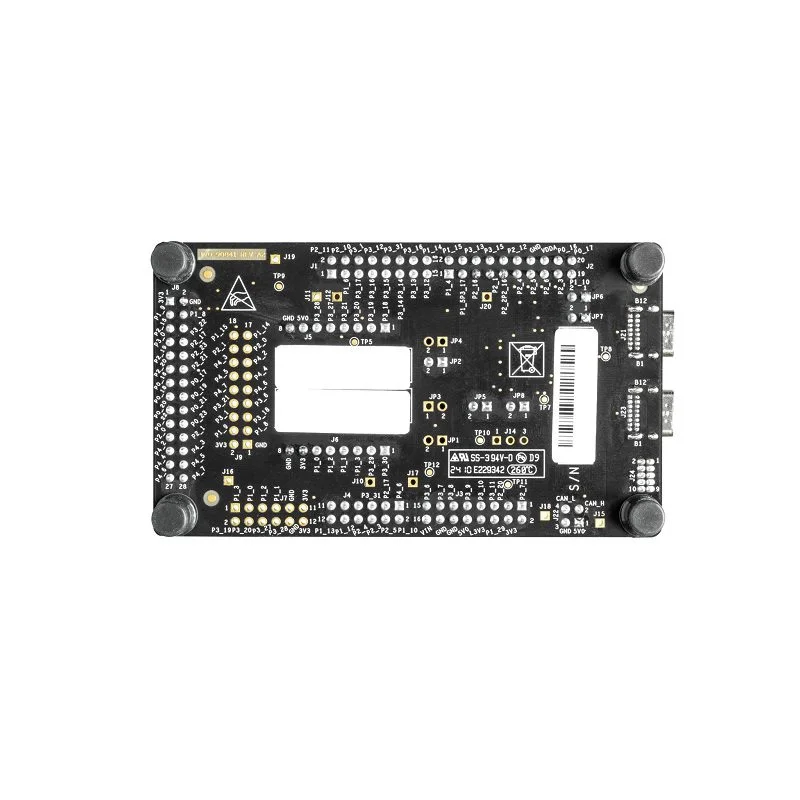
Expansion HeadersArduino R3, PMOD, mikroBUS, FlexIO for LCD/Camera
On-Board SensorP3T1755DPJ I3C/I²C Temperature Sensor
User I/ORGB LED, Reset/ISP/Wake-up buttons
ConnectorsUSB Type-C (Target & Debug), various I/O headers
Dimensions (LxW)95 mm x 60 mm
Weight41 g

Frequently Asked Questions

How do I start programming the FRDM-MCXA156 board?

Install the MCUXpresso IDE or SDK from NXP Semiconductors's website. Connect the board via the USB-C debug port; the on-board MCU-Link debugger will be recognized as a CMSIS-DAP device. You can then create, build, and flash projects directly to the MCXA156's flash memory using the integrated debugger without any external probe. The board also supports programming via the Arduino IDE with community-supported cores for basic prototyping.

What is the purpose of the I3C interface on this board?

The I3C interface combines the best features of I2C and SPI, offering higher data rates, in-band interrupts, and dynamic addressing. On the FRDM-MCXA156, it's used to communicate with the on-board P3T1755DPJ temperature sensor and can connect to external I3C sensors. It's ideal for sensor hubs in automotive and industrial applications where multiple sensors need efficient, low-pin-count communication with the host MCU, reducing system complexity and power consumption.

Can I add Wi-Fi or LoRa connectivity to this development board?

Yes, you can easily add wireless connectivity. The board features standard Arduino R3 and mikroBUS headers. You can plug in compatible Wi-Fi (e.g., ESP32-based) or LoRa (e.g., SX1276) shields/modules. The SPI, UART, and GPIO lines on these headers allow the MCXA156 to communicate with the wireless co-processor. For example, connect a LoRa module via SPI on the Arduino header to create a LoRaWAN sensor node, using the board's processing power for data aggregation and protocol handling.

What are the power supply requirements for the FRDM-MCXA156?

The board is primarily powered via the USB Type-C connector labeled for the target MCU (not the debug port). The operating voltage is regulated internally. You can also supply power through the Vin pin on the Arduino header (acceptable range typically 6-12V). The on-board LDO provides stable voltage to the MCU and peripherals. For low-power projects, utilize the MCU's built-in low-power run and sleep modes, which are configurable via the MCUXpresso SDK to minimize current draw during idle periods.

How do I use the FlexIO headers for an LCD or camera module?

The dedicated FlexIO headers provide direct access to the MCXA156's FlexIO peripheral, a highly configurable hardware module that can emulate various serial protocols. For an LCD, you would connect the display's data and control lines to the FlexIO pins and configure the peripheral to emulate a parallel 8080 or SPI interface. For a camera, connect the DVP (Digital Video Port) signals. You'll need to use the MCUXpresso SDK to configure the FlexIO hardware registers or use provided driver examples for specific displays or sensors.

Package Includes

  • 1 x NXP Semiconductors Freedom FRDM-MCXA156 Development Board
  • 1 x Adapter Cable
  • 1 x User Manual

Additional Information

Weight 0.041 kg
Dimensions 9.5 × 6 cm