SKU: IOWC-1032
📋 GST Invoice Available

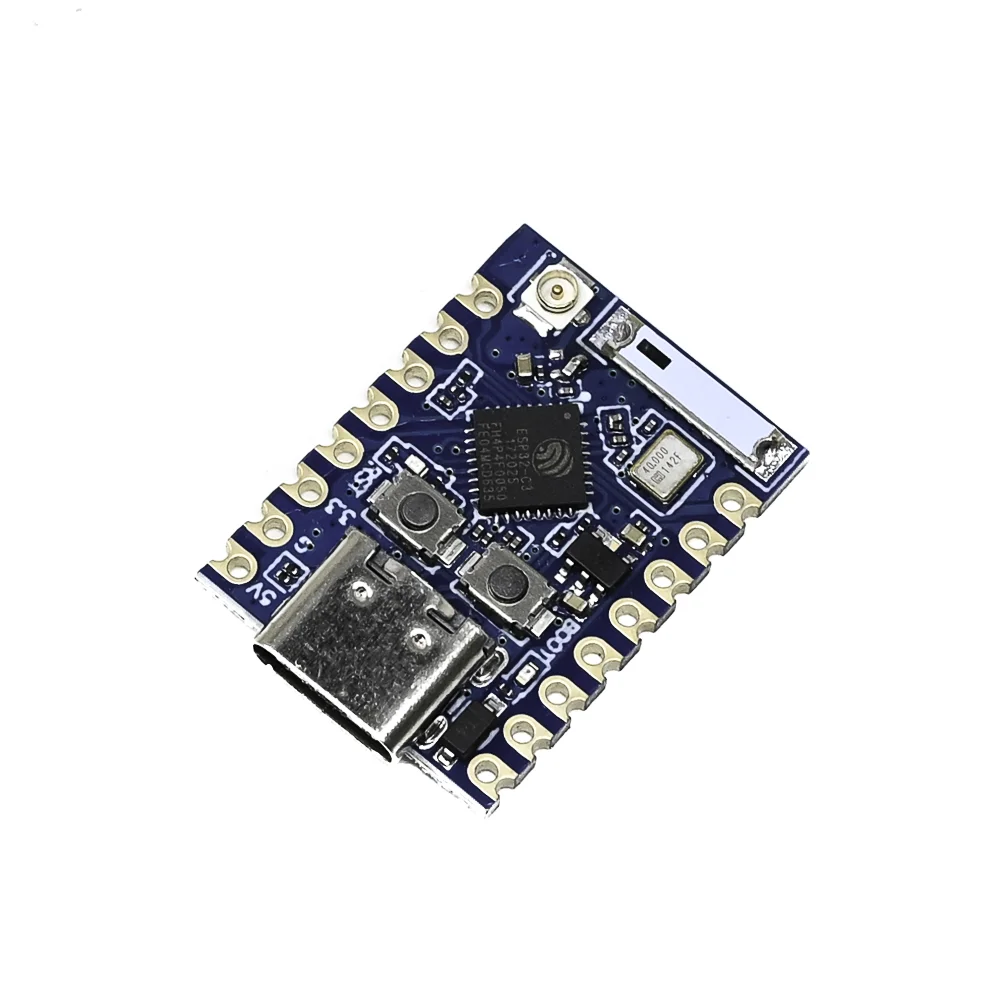
ESP32-C3 SuperMini Development Board w/ WiFi & Bluetooth 5.0

₹269.00 (Inclusive of all taxes)
Out of Stock

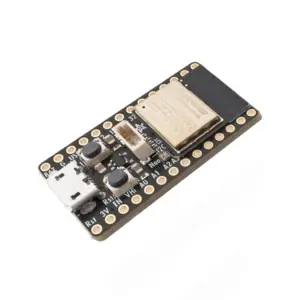
The ESP32-C3 SuperMini Development Board is a compact, RISC-V-based IoT platform featuring integrated WiFi (802.11 b/g/n) and Bluetooth 5.0 LE, programmable via Arduino IDE or ESP-IDF, and powered via Micro USB or a 3.3V-6V external supply.

Features

  • RISC-V 32-bit CPU: Features the ESP32-C3 chip running at up to 160MHz for efficient embedded processing.
  • Dual Wireless Connectivity: Integrates 2.4GHz WiFi (802.11 b/g/n) and Bluetooth 5.0 Low Energy for versatile IoT projects.
  • Ultra-Low Power Design: Achieves deep sleep currents as low as ~43µA, ideal for battery-powered sensor nodes.
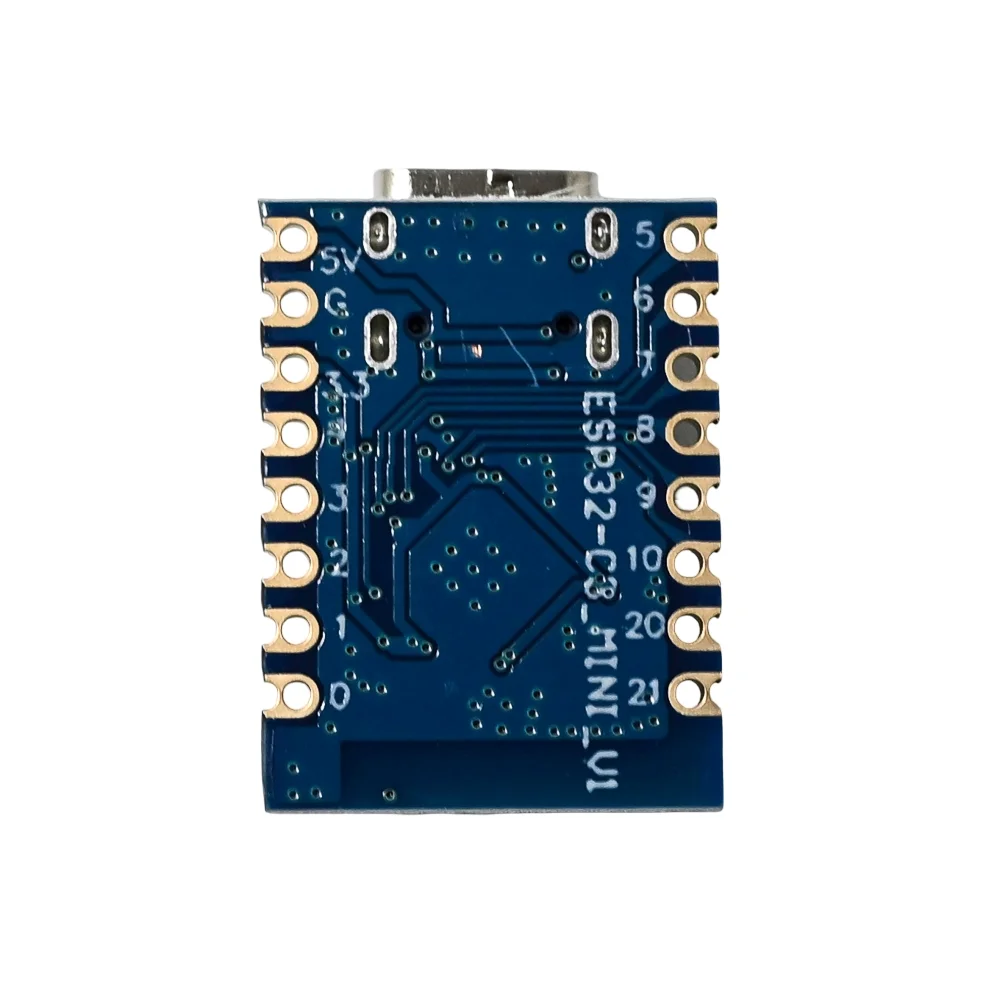
  • Compact & Feature-Rich: Thumb-sized board includes 11x GPIO (PWM), 4x ADC, UART, I2C, SPI, and external antenna support.
  • Developer-Friendly: Includes onboard reset/boot buttons and is compatible with optional expansion board for Li-ion battery charging.

Out of stock

Description

The ESP32-C3 SuperMini Development Board leverages the Espressif ESP32-C3 RISC-V processor to deliver a powerful yet power-efficient foundation for wireless IoT applications. Its integrated 2.4GHz WiFi and Bluetooth 5.0 transceiver supports a wide range of network protocols, from HTTP/MQTT for cloud connectivity to BLE for local device communication, making it suitable for smart home automation, wearable tech, and industrial telemetry.

Engineered for low-power operation, the board features advanced sleep modes, drawing only ~43µA in deep sleep, enabling long-term deployments on battery or solar power. The compact form factor houses a full suite of interfaces, including multiple GPIOs with PWM, analog inputs, and serial buses, all accessible via pre-soldered header pins. The design includes support for an external antenna to enhance wireless range in challenging environments.

Key Features

  • Based on the ESP32-C3 single-core 32-bit RISC-V microprocessor (up to 160MHz).
  • Integrated 2.4GHz WiFi (802.11 b/g/n) and Bluetooth 5.0 (Low Energy) radio.
  • Provides 11 digital GPIO pins (all capable of PWM output) and 4-channel 12-bit ADC inputs.
  • Supports multiple serial communication protocols: 2x UART, 1x SPI, 1x I2C.
  • Ultra-low power consumption with deep sleep mode drawing approximately 43µA.
  • Compact, thumb-sized PCB design (25mm x 22mm) with external antenna connector option.
  • Onboard reset and boot buttons for easy firmware development and flashing.
  • Flexible power supply via Micro USB port or external 3.3V to 6V DC input.

Applications

  • Smart Home Automation: Wireless sensor nodes, smart switches, and lighting controllers.
  • Wearable & Portable Electronics: Fitness trackers, remote data loggers, and BLE beacons.
  • Industrial IoT (IIoT): Low-power telemetry units for monitoring equipment and environmental conditions.
  • Prototyping & Education: Compact development platform for learning embedded systems and wireless communication.

Technical Specifications

Microcontroller / SoCESP32-C3 (RISC-V 32-bit, up to 160MHz)
Wireless ProtocolsWiFi 802.11 b/g/n, Bluetooth 5.0 LE
Frequency Range2.4GHz ISM Band
Flash Memory4 MB
SRAM400 KB
ROM384 KB
GPIO11x Digital (PWM), 4x Analog (ADC)
Interfaces2x UART, 1x SPI, 1x I2C, Micro USB
Supply Voltage3.3V - 6V (External), 5V (USB)
Operating CurrentUp to 100 mA (Max)
Deep Sleep Current~43 µA
Antenna ConnectorExternal antenna support (via connector)
Operating Temperature-40°C to +85°C
Dimensions (L x W)25 mm x 22 mm

Frequently Asked Questions

How do I program the ESP32-C3 SuperMini Development Board?

You can program the board using the Arduino IDE with the ESP32 board package installed or directly with Espressif's ESP-IDF framework. Connect the board via the Micro USB port, select 'ESP32-C3 Dev Module' as your target in the IDE, and upload your code. The onboard boot and reset buttons facilitate the flashing process. Ensure you have the correct USB drivers installed if needed.

What is the power supply requirement and how do I power it with a battery?

The board can be powered via the Micro USB port (5V) or through an external supply on the VIN pin accepting 3.3V to 6V DC. For battery operation, connect a Li-ion or Li-Po battery (within the voltage range) to the VIN and GND pins. The optional expansion board adds a dedicated battery charging circuit. In deep sleep mode, the board consumes only about 43µA, enabling long battery life for sensor applications.

Can I attach an external antenna to improve WiFi/Bluetooth range?

Yes, the ESP32-C3 SuperMini board supports an external antenna. You will need to solder an IPEX or SMA connector to the designated RF pad on the PCB, depending on your board variant. Ensure you configure the software to use the external antenna via the ESP-IDF or Arduino code. Using a higher gain antenna (e.g., 5dBi) can significantly improve wireless range in environments with interference or physical obstacles.

Package Includes

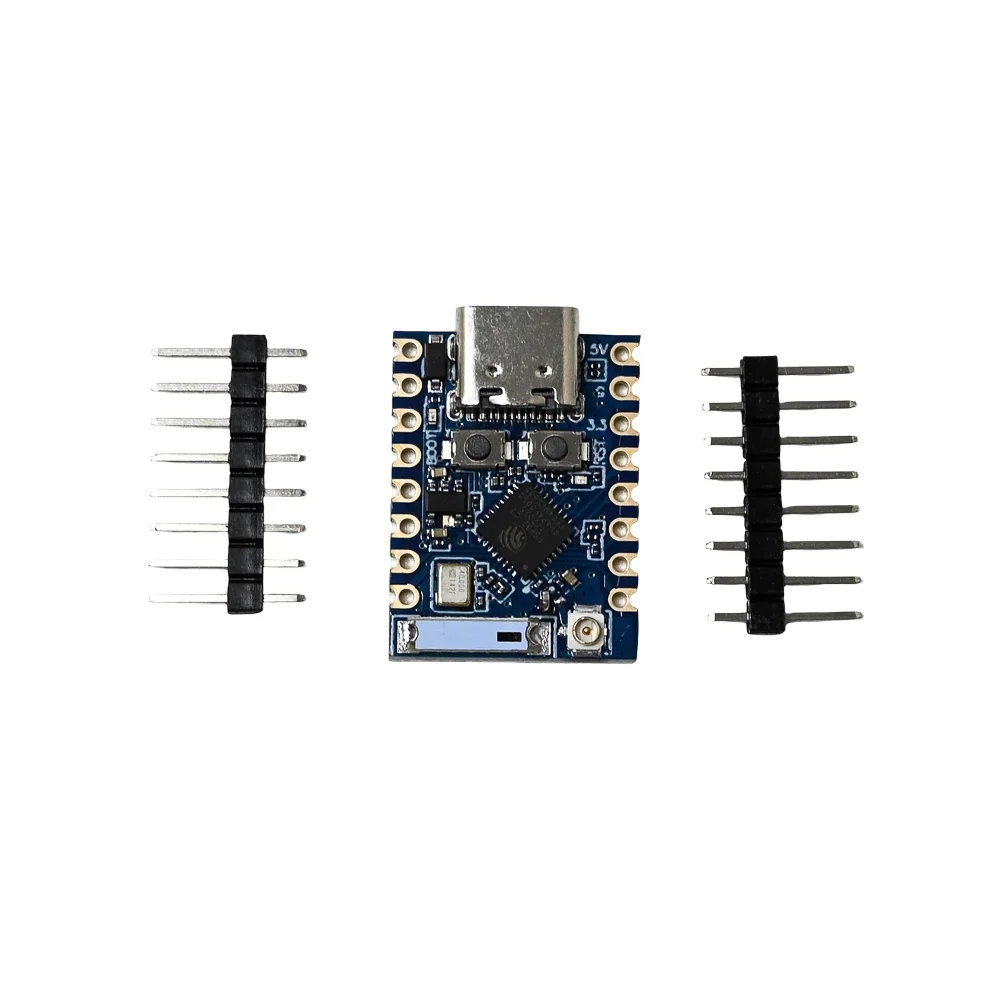
  • 1 x ESP32-C3 SuperMini Development Board
  • 2 x Header Pin Strips

Additional Information

Weight 0.003 kg
Dimensions 2.5 × 2.2 cm