SKU: IOWC-1008
📋 GST Invoice Available

LilyGO T3 STM32WL55 LoRa Development Board w/ 0.96-Inch OLED

₹2,219.00 (Inclusive of all taxes)
Out of Stock

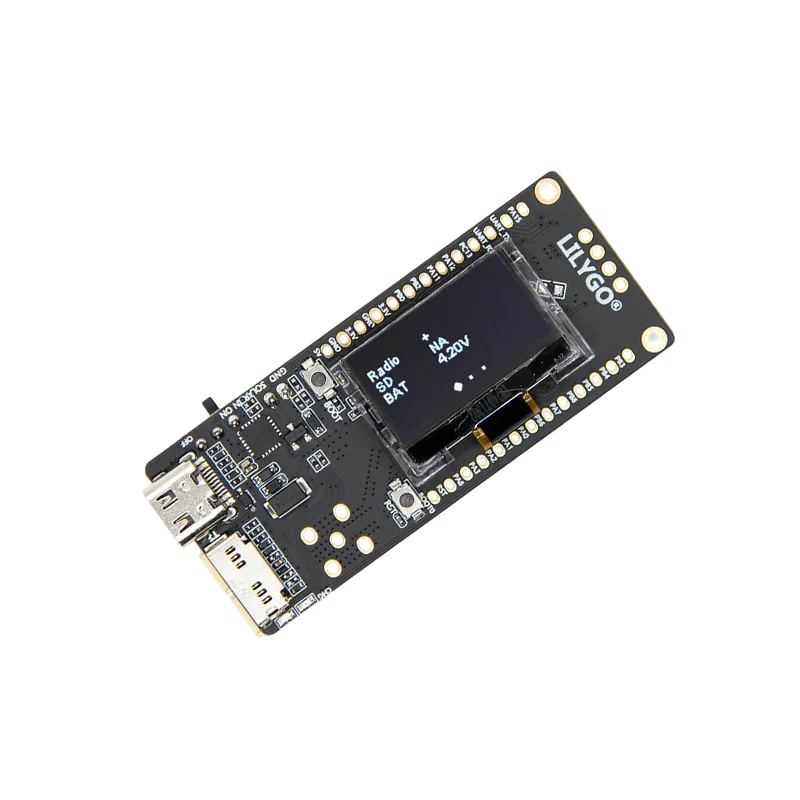
The LilyGO T3 is an STM32WL55-based development board with an integrated LoRa transceiver and a 0.96-inch OLED display, designed for ultra-low-power, long-range IoT applications. It is programmable via USB Type-C using the Arduino framework or STM32CubeIDE.

Features

  • Dual-core STM32WL55 MCU (Cortex-M4 & M0+) with integrated LoRa/FSK/MSK/BPSK transceiver for efficient wireless communication.
  • 0.96-inch OLED display (128×64) provides local status monitoring and debugging without external hardware.
  • Ultra-low-power architecture with multiple sleep modes, ideal for battery-powered LPWAN sensor nodes and remote trackers.
  • USB Type-C interface simplifies power delivery, programming, and serial communication in a compact form factor.
  • Full Arduino IDE and STM32CubeIDE compatibility offers flexible firmware development for makers and engineers.

Out of stock

Description

The LilyGO T3 STM32 Development Board consolidates a powerful wireless microcontroller and a user interface into a single, compact platform. At its core is the STM32WL55, featuring a dual-core Arm Cortex-M4 and Cortex-M0+ architecture alongside a fully integrated Sub-1GHz radio supporting LoRa, (G)FSK, MSK, and BPSK modulations across 433, 868, and 915 MHz bands. This integration eliminates external transceiver ICs, streamlining design and reducing power consumption for long-range IoT deployments.

Engineered for field deployment, the board includes an onboard antenna and is built around a low-leakage power management system, enabling extended operation from small batteries. The integrated 128×64 pixel OLED provides immediate visual feedback for sensor readings, network status, or device configuration, accelerating prototyping and reducing system complexity. Its USB Type-C port delivers robust connectivity for both firmware flashing via ST-LINK/V2-1 and serial communication, while the exposed GPIO via pin headers allows for rapid sensor and actuator integration.

Key Features

  • Integrated dual-core STM32WL55 MCU with Cortex-M4 (application) and Cortex-M0+ (radio) cores for efficient task separation.
  • Built-in multi-modulation Sub-1GHz radio supports LoRa, (G)FSK, MSK, and BPSK for flexible protocol deployment.
  • Onboard 0.96-inch OLED display (SSD1306 driver) enables local data visualization and system diagnostics.
  • Ultra-low-power operating modes (Stop, Standby) maximize battery life in periodic sensing and transmission applications.
  • USB Type-C interface with embedded ST-LINK/V2-1 programmer/debugger for seamless development and power supply.
  • Compact PCB layout (66mm x 27mm) with integrated PCB trace antenna and optional external antenna support.
  • Full support for the Arduino Core for STM32 and native STM32CubeIDE with HAL libraries.
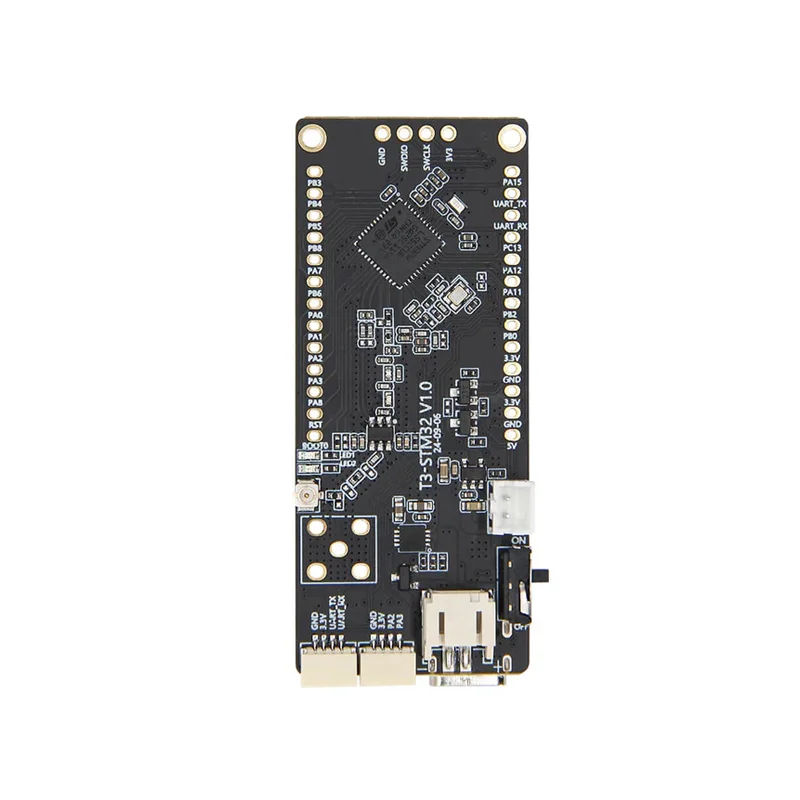
  • Exposed GPIO, I2C, SPI, and UART pins facilitate easy expansion with environmental sensors, actuators, or displays.

Applications

  • Remote environmental monitoring sensors for temperature, humidity, and air quality.
  • Smart agriculture systems for soil moisture sensing and irrigation control over long distances.
  • Asset tracking and logistics management using low-power LoRaWAN networks.
  • Industrial IoT (IIoT) telemetry for machine health monitoring in remote facilities.
  • Smart city applications like parking sensor networks or waste bin level monitoring.

Technical Specifications

Microcontroller / SoCSTM32WL55JC (Dual-core Cortex-M4 @ 48 MHz & Cortex-M0+)
Wireless ProtocolsLoRa, (G)FSK, MSK, BPSK
Frequency Range433 MHz, 868 MHz, 915 MHz (Region specific)
RF Transmit PowerUp to +22 dBm (Typical for LoRa)
Supply Voltage3.3V (via USB Type-C or external pin)
Operating CurrentActive mode: ~50 mA (Typical, MCU+Radio); Sleep mode: <10 µA
InterfacesUSB Type-C (Power/Program/Serial), GPIO, I2C, SPI, UART
Antenna ConnectorIntegrated PCB antenna; Optional external via pad
Display0.96-inch OLED, 128 x 64 pixels, SSD1306 driver
Memory256 KB Flash, 64 KB SRAM
Operating Temperature-40°C to +85°C (Industrial grade typical)
Dimensions66 mm (L) x 27 mm (W)

Frequently Asked Questions

How do I program the LilyGO T3 board using the Arduino IDE?

First, install the STM32duino core via the Arduino Boards Manager. Connect the board via USB-C, select 'LilyGO T3' or 'STM32WL55' as the target, and choose the correct COM port. The integrated ST-LINK allows direct upload without an external programmer. Ensure you have the necessary LoRa library (e.g., MCCI LoRaWAN) installed for wireless functionality.

What is the power consumption in sleep mode, and how can I minimize it?

The STM32WL55 can achieve sleep currents below 10 µA. To minimize power, put the MCU into Stop or Standby mode using the HAL library functions, disable the OLED display via its power pin, and ensure unused GPIOs are configured correctly. Power the board from a 3.3V source via the pins, as the USB interface may draw additional quiescent current.

Can I use an external antenna with this board, and how do I connect it?

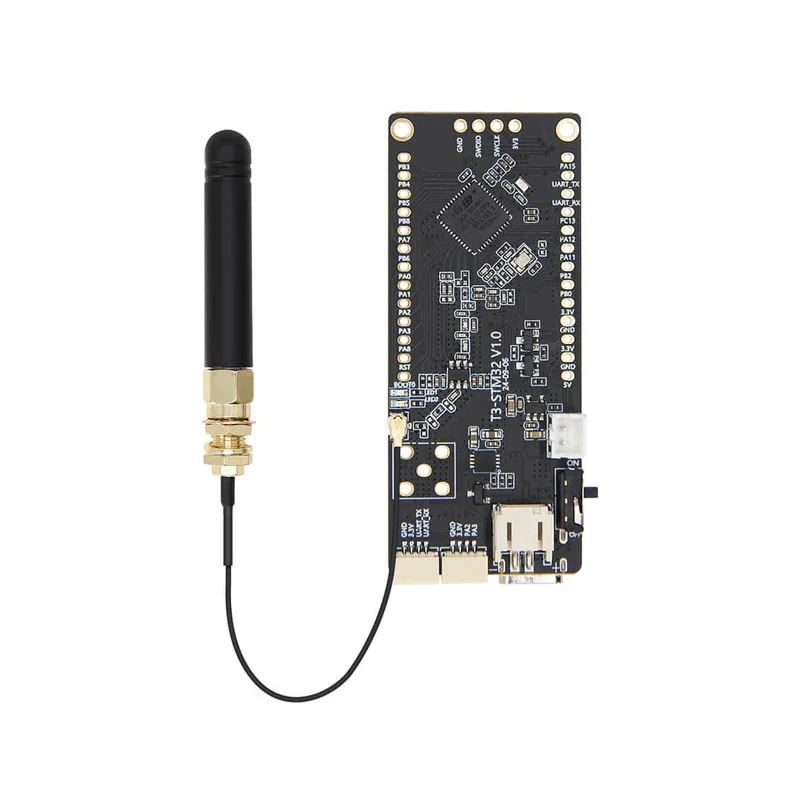
Yes, you can use an external antenna. The board has an integrated PCB antenna, but an RF pad is provided for an external one. Solder a wire or connector (like an IPEX) to the designated RF pad. Ensure the antenna is tuned for your target frequency (868MHz, 915MHz, etc.) and impedance-matched to 50 ohms for optimal LoRa range and performance.

Package Includes

  • 1 x LilyGO T3 STM32 Development Board
  • 1 x USB Cable (Type-C)
  • 2 x Pin Headers
  • 1 x External Antenna (optional, based on listing)

Additional Information

Weight 0.009 kg
Dimensions 6.6 × 2.7 cm