SKU: IOWC-0993
📋 GST Invoice Available

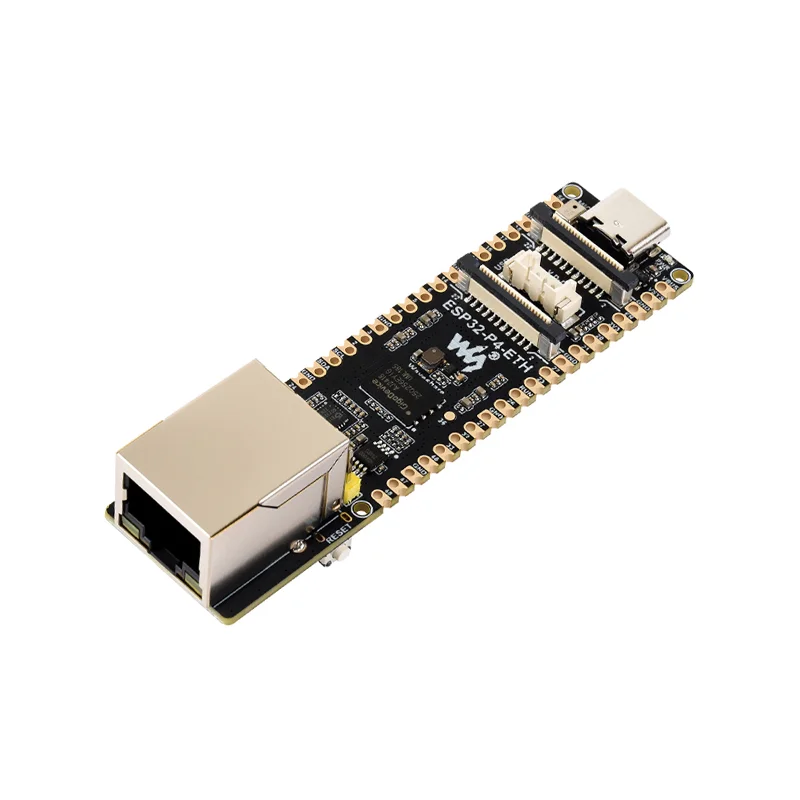
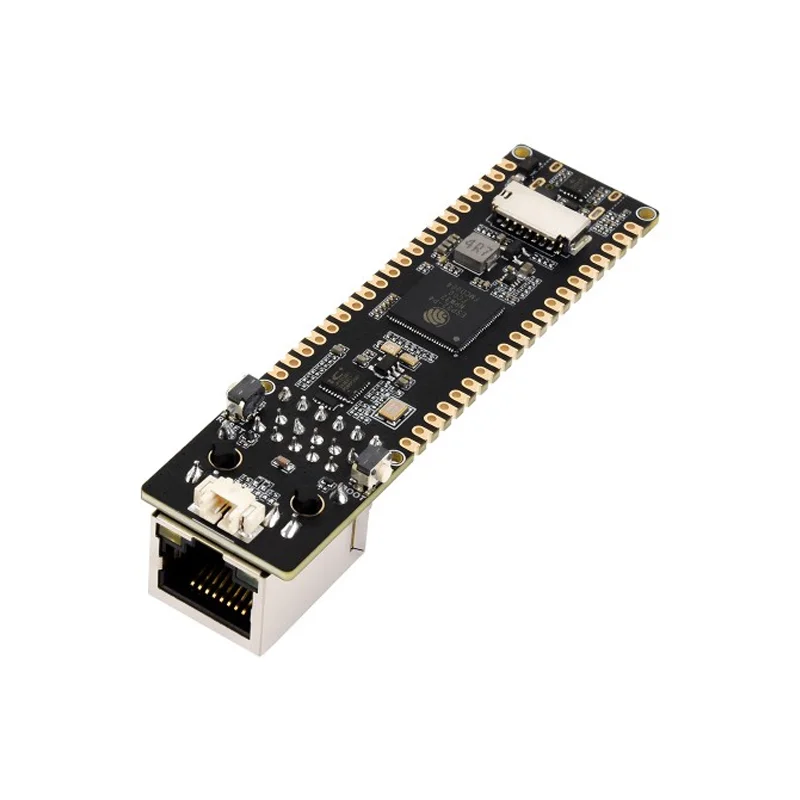
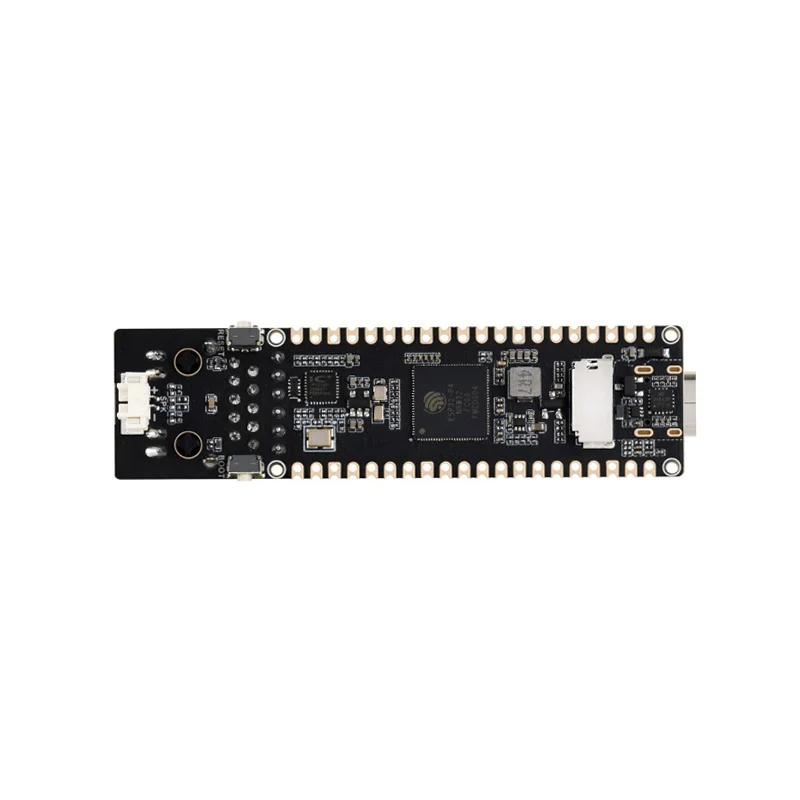
Waveshare ESP32-P4-ETH Development Board w/ Ethernet & Headers

₹2,099.00 (Inclusive of all taxes)
Out of Stock

The Waveshare ESP32-P4-ETH Development Board is a high-performance RISC-V platform featuring dual-core processing, 100Mbps Ethernet with PoE support, and extensive multimedia interfaces (MIPI-CSI/DSI) for advanced AIoT, edge computing, and human-machine interface projects.

Features

  • Dual-core ESP32-P4 RISC-V processor delivers up to 400 MHz clock speed for demanding edge AI and multimedia tasks.
  • Integrated 100Mbps RJ45 Ethernet port with Power-over-Ethernet (PoE) capability for robust, wired network connectivity.
  • Onboard 32MB NOR Flash and 32MB PSRAM provide ample memory for complex applications and data buffering.
  • Comprehensive multimedia support via MIPI-CSI camera and MIPI-DSI display interfaces, plus H.264 hardware encoder.
  • Raspberry Pi Pico HAT-compatible 40-pin GPIO header offers easy expansion with a vast ecosystem of add-on boards.

Out of stock

Description

The Waveshare ESP32-P4-ETH Development Board is engineered for secure, high-performance IoT endpoints requiring substantial local processing and reliable connectivity. At its core is the Espressif ESP32-P4, a dual-core 32-bit RISC-V microcontroller featuring hardware security modules for Secure Boot and Flash Encryption, making it suitable for commercial deployments.

Beyond its processing power, the board integrates a dedicated 100Mbps Ethernet PHY with support for PoE power delivery, enabling single-cable solutions for power and data in industrial settings. The rich peripheral set includes a USB OTG 2.0 port, SDIO 3.0 for TF card storage, microphone and speaker headers, and 27 programmable GPIOs, providing extensive interfacing options for sensors, actuators, and user interfaces.

Key Features

  • High-performance dual-core RISC-V processor (ESP32-P4) optimized for AIoT and multimedia workloads.
  • Integrated wired Ethernet with 100Mbps RJ45 and optional Power-over-Ethernet (PoE) support.
  • Advanced multimedia subsystem with MIPI-CSI for camera input, MIPI-DSI for display output, and a hardware H.264 encoder.
  • Substantial onboard memory with 32MB NOR Flash for program storage and 32MB PSRAM for dynamic data.
  • Hardware-level security features including Secure Boot, Flash Encryption, and cryptographic accelerators.
  • USB OTG 2.0 host/device capability for connecting peripherals or acting as a USB device.
  • Raspberry Pi Pico HAT form factor compatibility via a standard 40-pin GPIO header for easy hardware expansion.
  • Includes SDIO TF card slot for expanded file storage and data logging applications.

Applications

  • AI-powered edge computing devices and interactive kiosks.
  • Secure industrial IoT gateways with wired Ethernet connectivity.
  • Smart display and camera systems for human-machine interfaces (HMI).
  • Local speech recognition and AI interaction hubs.
  • Networked multimedia appliances requiring video encoding/streaming.

Technical Specifications

Microcontroller/SoCEspressif ESP32-P4 (Dual-core RISC-V)
Clock FrequencyUp to 400 MHz
RAM32MB PSRAM
Flash Memory32MB NOR Flash
Ethernet10/100Mbps RJ45 with PoE support
USB InterfaceUSB OTG 2.0
Storage ExpansionSDIO 3.0 TF Card Slot
Multimedia InterfacesMIPI-CSI, MIPI-DSI, H.264 Encoder
Audio InterfacesMicrophone input, Speaker output headers
GPIO27 programmable pins (40-pin Pico HAT header)
Security FeaturesSecure Boot, Flash Encryption, Cryptographic Accelerators
Dimensions (LxW)80mm x 25mm
Weight18g

Frequently Asked Questions

How do I power the ESP32-P4-ETH board, and does it support Power-over-Ethernet?

The board can be powered via its USB-C connector (5V) or through the integrated RJ45 port using an IEEE 802.3af-compatible Power-over-Ethernet (PoE) injector or switch. When using PoE, ensure your network equipment provides the correct voltage; no additional PoE hat is required as the circuitry is onboard. For standard USB power, a 5V/2A supply is recommended for stable operation with all peripherals active.

What development frameworks are supported for programming this board?

You can develop for the ESP32-P4-ETH using the official Espressif IoT Development Framework (ESP-IDF) via VS Code or the command line, which provides full access to all SoC features. Arduino core support for the ESP32-P4 is also available through the Arduino IDE or PlatformIO, offering a simpler library-based approach for rapid prototyping. Ensure you install the latest board definitions and toolchains from Espressif's GitHub repository for proper support.

Can I connect a camera and display simultaneously using the MIPI interfaces?

Yes, the board's ESP32-P4 SoC natively supports concurrent MIPI-CSI (camera serial interface) and MIPI-DSI (display serial interface) operation. You can connect a compatible camera module to the CSI port and a display panel to the DSI port to create a standalone vision system. The hardware H.264 encoder allows you to compress video from the camera for efficient storage or network streaming directly from the board.

What is the purpose of the 40-pin GPIO header, and is it compatible with Raspberry Pi accessories?

The 40-pin GPIO header follows the Raspberry Pi Pico HAT form factor and pinout standard. This allows you to use a wide range of existing "Pico HAT" expansion boards (sensors, displays, actuators) designed for the RP2040, significantly accelerating prototyping. You will need to adapt the software libraries to the ESP32-P4's architecture, but the physical and electrical compatibility simplifies hardware interfacing.

Package Includes

  • 1 x Waveshare ESP32-P4-ETH Development Board (with pre-soldered headers)
  • 1 x 20-pin header

Additional Information

Weight 0.018 kg
Dimensions 8 × 2.5 cm