SKU: IOWC-0991
📋 GST Invoice Available

Waveshare Industrial ESP32-S3 Control Board w/ 8-Channel I/O, RS485, CAN, ETH, PoE

₹5,459.00 (Inclusive of all taxes)
Out of Stock

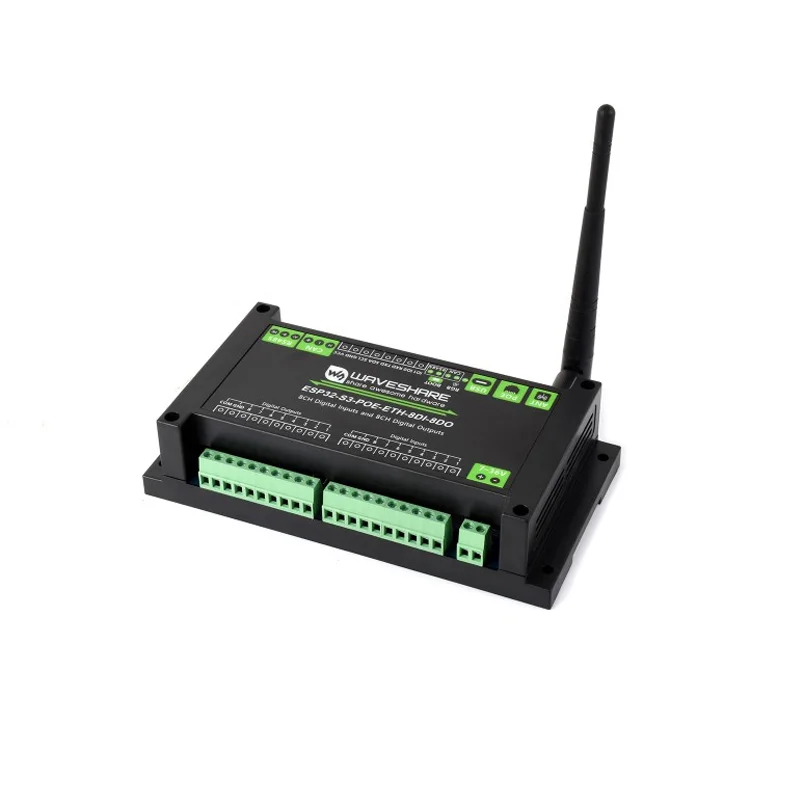
This Waveshare Industrial ESP32-S3 Control Board is a robust, rail-mount IoT gateway built around the dual-core ESP32-S3 with Wi-Fi & BLE, featuring eight opto-isolated digital I/Os, RS-485, CAN, Ethernet, and PoE support for industrial automation and telemetry applications.

Features

  • Dual-core ESP32-S3 processor with integrated 2.4GHz Wi-Fi and Bluetooth LE for wireless connectivity and local control.
  • Eight optocoupler-isolated digital I/O channels, each capable of sinking up to 500mA via Darlington transistors for direct relay or load control.
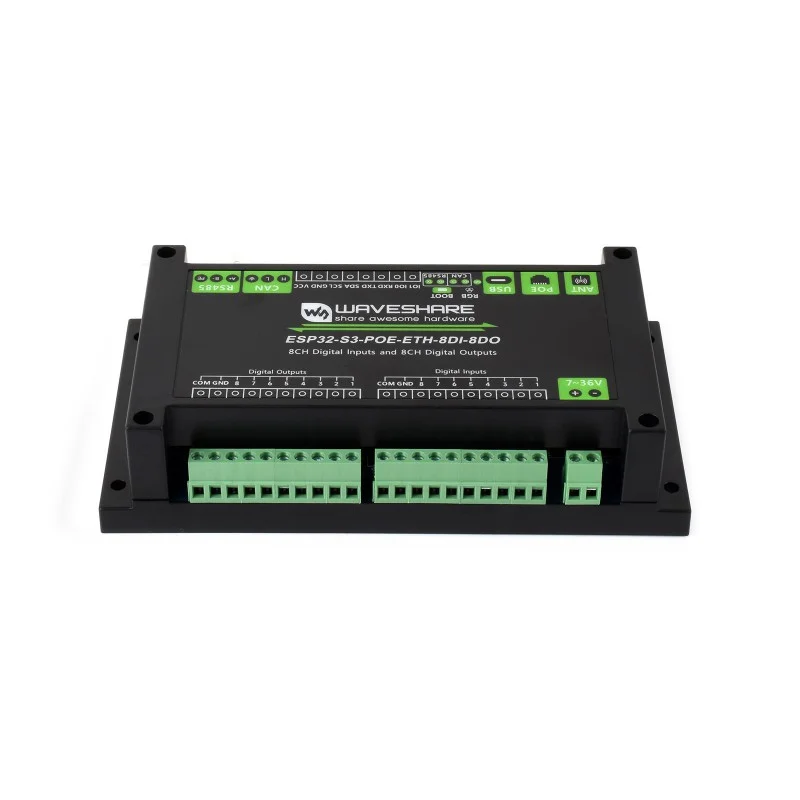
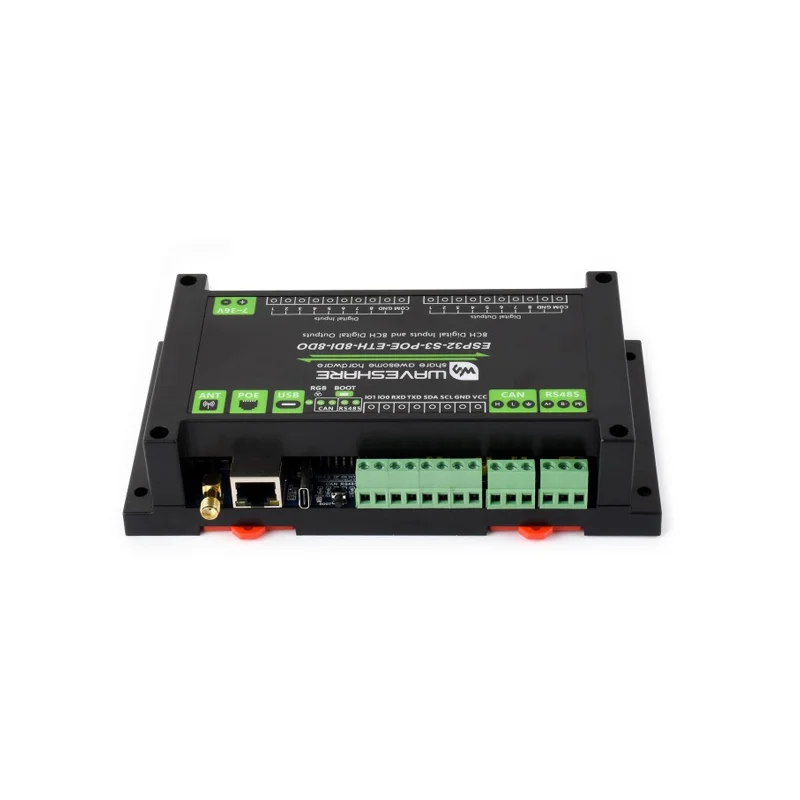
  • Integrated industrial interfaces: isolated RS-485 and CAN buses, plus a W5500-based 10/100Mbps Ethernet port with IEEE 802.3af PoE support.
  • Wide 7–36V DC input range via screw terminal, making it suitable for 12V/24V industrial power rails and harsh electrical environments.
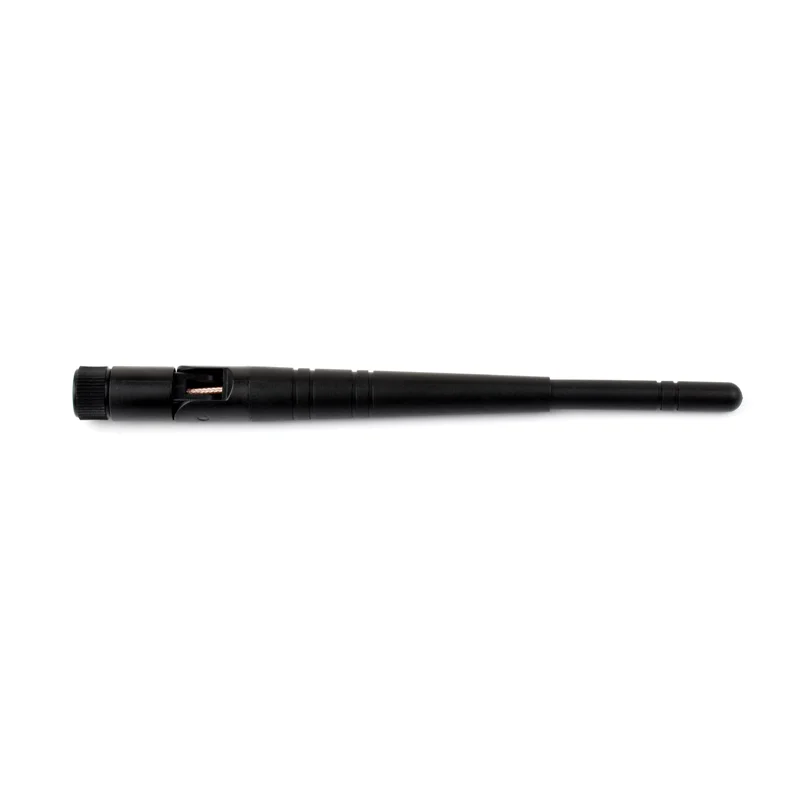
  • Rail-mount ABS enclosure with comprehensive onboard peripherals: USB-C, TF card slot, RTC, buzzer, RGB LEDs, and a 4dBi SMA antenna.

Out of stock

Description

The Waveshare Industrial ESP32-S3 Control Board is engineered for demanding industrial IoT and automation scenarios. Its foundation is the Espressif ESP32-S3 microcontroller, featuring a dual-core Xtensa LX7 processor running at 240 MHz, 16 MB of flash, and 8 MB of PSRAM. This provides ample compute for running complex control logic, network stacks like Modbus TCP, MQTT brokers, or lightweight web servers directly on the edge device.

Communication robustness is ensured through multiple isolated interfaces. The board includes a fully isolated RS-485 transceiver for connecting to Modbus RTU sensors and actuators, an isolated CAN controller for automotive or industrial bus networks, and a W5500 hardwired TCP/IP chip delivering a stable 10/100Mbps Ethernet connection. An integrated PoE module compliant with IEEE 802.3af allows for both data and power delivery over a single Ethernet cable, simplifying installation. The eight digital I/O channels are a standout feature, each protected by optocouplers and driven by Darlington transistors capable of sinking 500mA, enabling direct interface with industrial solenoids, relays, or indicator lamps without external drivers.

Built for reliability, the board incorporates multi-domain isolation: optocoupler isolation for digital I/O and serial buses, digital signal isolation, and a unibody isolated DC-DC converter that provides clean power to the isolated side without needing an external supply. Housed in a DIN-rail mountable ABS case, it includes practical features like a USB-C port for programming and debugging, a microSD (TF) card slot for data logging or firmware updates, a real-time clock (RTC) for time-based scheduling, and status indicators for power, network activity, and I/O states. The wide 7–36V input range ensures compatibility with standard 12V and 24V DC systems common in factories, warehouses, and infrastructure projects.

Key Features

  • Industrial-grade ESP32-S3 core with dual-core 240 MHz CPU, 16 MB flash, and 8 MB PSRAM for demanding edge computing tasks.
  • Eight high-current, opto-isolated digital I/O channels (500mA sink each) for direct control of actuators, relays, and sensors.
  • Comprehensive wired connectivity: isolated RS-485 (Modbus RTU), isolated CAN bus, 10/100Mbps Ethernet (W5500), and IEEE 802.3af PoE support.
  • Robust power design with 7–36V wide-range DC input and multi-layer isolation for noise immunity in electrically noisy environments.
  • Integrated wireless via 2.4 GHz Wi-Fi 4 and Bluetooth Low Energy 5.0 for local configuration, data aggregation, or backup connectivity.
  • Onboard peripherals include a real-time clock (RTC) for scheduling, microSD (TF) card slot for storage, buzzer, RGB LEDs, and status indicators.
  • DIN-rail mountable ABS enclosure with USB-C programming port and SMA connector for the included 4dBi Wi-Fi antenna.
  • Designed for system reliability with optocoupler, digital, and power supply isolation protecting the core logic from external circuit faults.

Applications

  • Industrial Automation & PLC Replacement: Control motors, valves, and pumps via isolated I/Os and communicate via Modbus RTU (RS-485) or Modbus TCP (Ethernet).
  • Building Management Systems (BMS): Monitor digital sensors (door, flood, smoke) and control HVAC relays, with data aggregation via Wi-Fi or Ethernet to a central server.
  • Smart Agriculture & Environmental Monitoring: Deploy in control cabinets to manage irrigation solenoids, read sensor buses, and telemetry data over cellular/Wi-Fi backhaul.
  • Energy Management & Submetering: Interface with pulse-output energy meters, aggregate data, and publish to cloud platforms via MQTT over Ethernet or Wi-Fi.
  • Fleet & Asset Telemetry Gateways: Use CAN bus to read vehicle OBD-II data and RS-485 for tank level sensors, transmitting location and status via 4G/Wi-Fi.

Technical Specifications

Microcontroller/SoCEspressif ESP32-S3 (Xtensa LX7 Dual-Core @ 240 MHz)
Wireless Protocols2.4 GHz Wi-Fi 4 (802.11 b/g/n), Bluetooth Low Energy 5.0
Memory16 MB Flash, 8 MB PSRAM
Digital I/O Channels8x Optocoupler-isolated, Darlington transistor outputs (500mA sink)
Serial InterfacesIsolated RS-485, Isolated CAN, USB-C (Serial/JTAG)
Ethernet10/100 Mbps (W5500 chip via SPI), IEEE 802.3af PoE module
Supply Voltage7–36 V DC (via screw terminal) or 5V via USB-C
Onboard PeripheralsRTC, microSD (TF) card slot, buzzer, RGB LED, status LEDs
Antenna ConnectorSMA female (4dBi antenna included)
Operating TemperatureNot specified (Industrial-grade design assumed)
Dimensions (L x W)175 mm x 95 mm (excluding enclosure mounts)
Weight250 g (board only)

Frequently Asked Questions

How do I program this industrial ESP32-S3 board?

You can program it using the Arduino IDE with the ESP32 board package, ESP-IDF framework, or MicroPython. Connect the provided USB-C cable to your computer. The board should enumerate as a serial COM port. In your development environment, select the 'ESP32-S3' board, the correct COM port, and upload your code. The USB port provides both power and a serial/JTAG interface for programming and debugging.

What is the wiring procedure for the 8 digital I/O channels?

Each I/O channel is accessed via the screw terminal block labeled DI/DO. The output channels use Darlington transistors with a common emitter, meaning they sink current. Connect your load (e.g., relay coil) between the positive supply and the terminal; the board sinks the current to ground when activated. Input channels support both passive (dry contact) and active (voltage) signals, isolated via bi-directional optocouplers. Always ensure your external power supply for loads is within the board's 7-36V input range or use a separate supply.

How do I configure the Ethernet and PoE functionality?

Ethernet is handled by the onboard W5500 chip. In your firmware, use a library like Ethernet3 (for Arduino) or the W5500 driver in ESP-IDF. Configure the SPI pins (defined in the board's pinout) and initialize the chip with a static IP or DHCP. For PoE, ensure you use an IEEE 802.3af compliant injector or switch. When powered via the Ethernet port's PoE, the board's wide-input DC power circuit will regulate it down, and you do not need to connect the separate power terminal. The onboard PoE module handles the power negotiation and isolation automatically.

Package Includes

  • 1 x Waveshare Industrial ESP32-S3 Control Board
  • 1 x 2.4GHz 4dBi SMA Antenna
  • 1 x Screwdriver

Additional Information

Weight 0.25 kg
Dimensions 17.5 × 9.5 cm