SKU: IOWC-0946
📋 GST Invoice Available

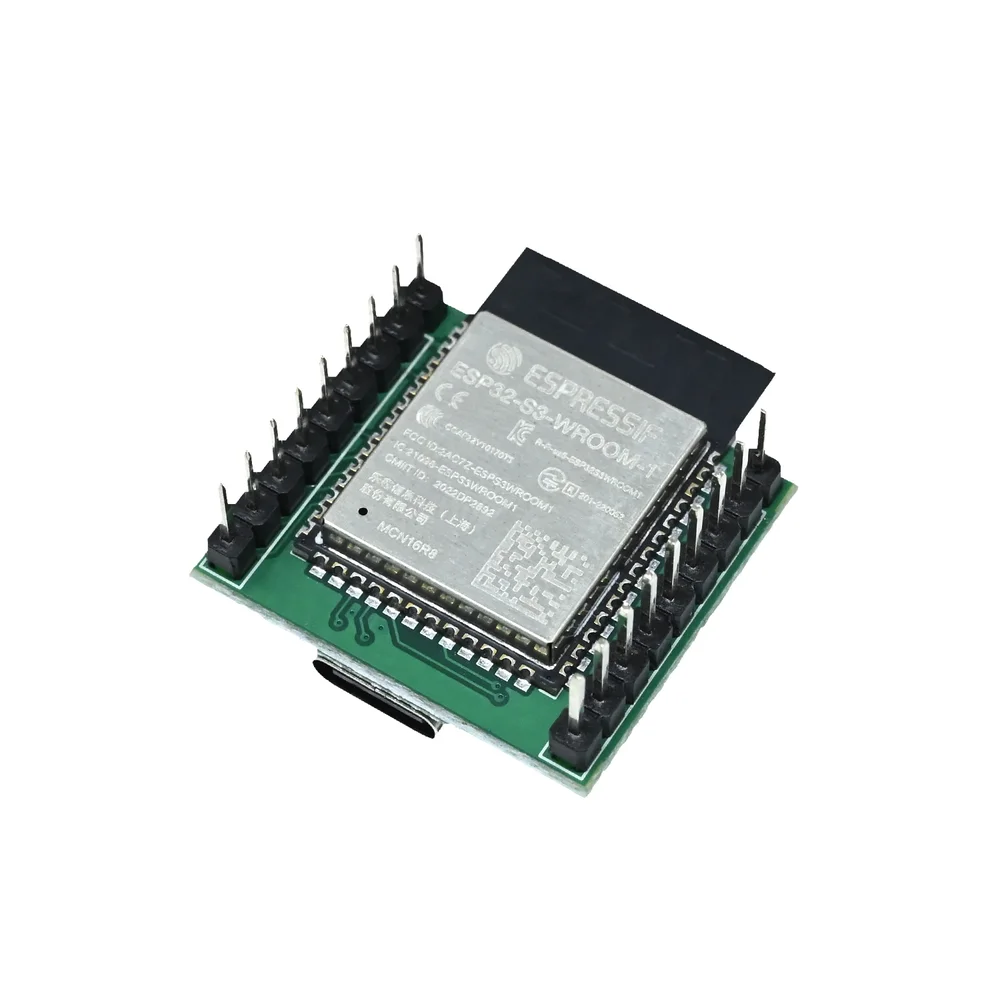
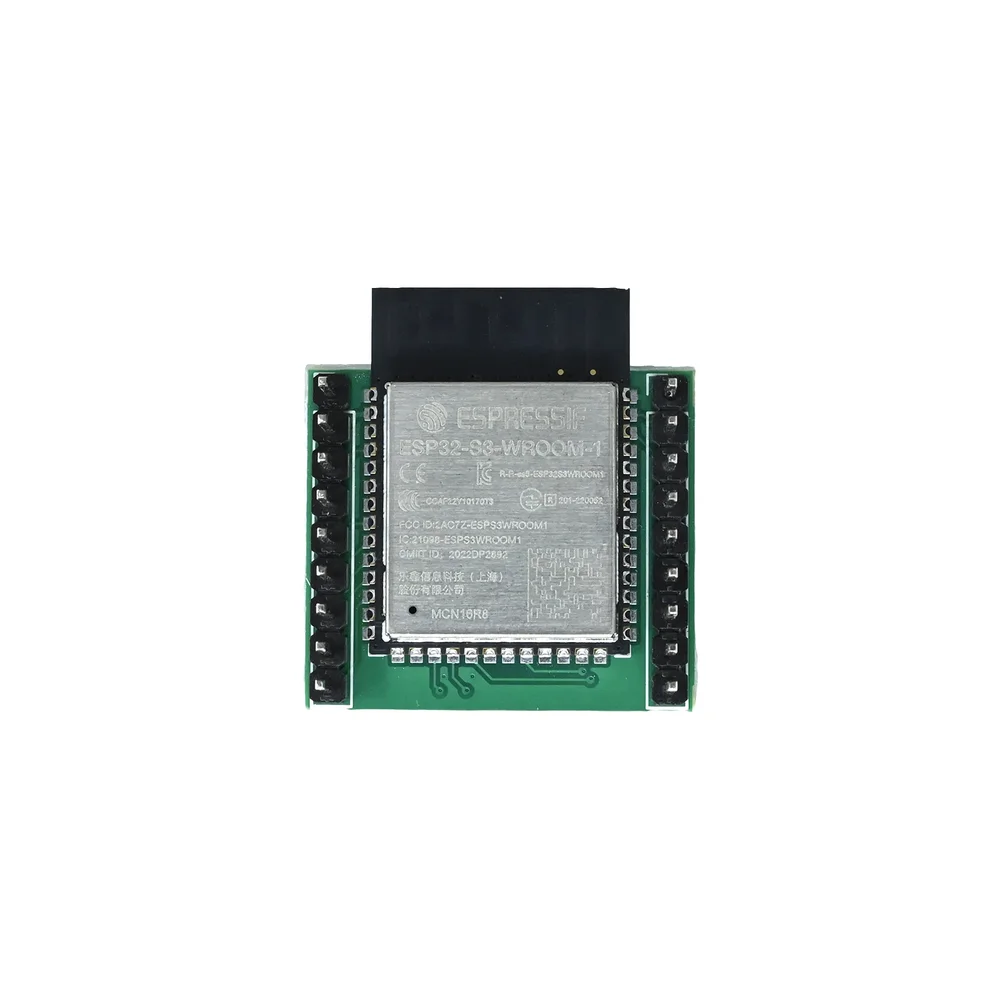
µEDesign µES3 ESP32-S3 WROOM1 Dev Board w/ 16MB Flash, 8MB PSRAM

₹720.00 (Inclusive of all taxes)
Out of Stock

The µEDesign µES3 is an ESP32-S3 WROOM1-based development board featuring a dual-core Xtensa LX7 processor, 16MB Flash, and 8MB PSRAM for AIoT and edge computing tasks. It supports Wi-Fi 2.4GHz and Bluetooth 5.0 BLE, includes native USB-C programming, and is powered via a 5V USB Type-C port.

Features

  • ESP32-S3 WROOM1 Core: Dual-core Xtensa LX7 processor clocked up to 240 MHz, paired with 16MB Flash and 8MB PSRAM for memory-intensive AI, ML, and audio processing workloads.
  • Native USB-C Programming: Integrated USB 2.0 OTG interface eliminates the need for an external USB-to-UART chip, streamlining firmware uploads via ESP-IDF, Arduino IDE, or MicroPython.
  • Dual Wireless Connectivity: Integrated 2.4GHz Wi-Fi (802.11 b/g/n) and Bluetooth 5.0 Low Energy (BLE) provide robust wireless links for IoT sensor nodes, wearables, and smart home devices.
  • Compact Form Factor: Ultra-small footprint (27x24mm) and lightweight design (6g) make it ideal for space-constrained applications like portable gadgets and wearable electronics.
  • Rich Peripheral Set: 14 multifunction GPIO pins support I2C, SPI, UART, 12-bit ADC, touch sensors, PWM, and LCD interfaces for versatile sensor integration and control.

Out of stock

Description

The µEDesign µES3 development board is built around the Espressif ESP32-S3 WROOM1 module, delivering a high-performance platform for advanced embedded and IoT systems. Its dual-core Xtensa LX7 CPU, running at up to 240 MHz, is augmented by substantial external memory—16MB of Flash for firmware and 8MB of PSRAM for data buffers—enabling smooth execution of machine learning inference, audio processing algorithms, and computer vision tasks at the edge.

Wireless connectivity is handled by an integrated 2.4GHz Wi-Fi transceiver and Bluetooth 5.0 BLE radio, both coupled to an efficient PCB antenna. The board’s design emphasizes developer convenience with native USB-C support for direct programming and debugging, removing dependency on external serial adapters. Power is supplied cleanly via the 5V USB-C port and regulated to the core 3.3V operating voltage, supporting low-power sleep modes for battery-operated deployments.

Key Features

  • High-Performance AIoT Platform: Combines a 240MHz dual-core ESP32-S3 with ample 8MB PSRAM to handle TensorFlow Lite Micro models and complex data processing without external memory.
  • Developer-Friendly USB-C Interface: Native USB 2.0 OTG enables direct firmware flashing and serial communication, accelerating development cycles and simplifying field updates.
  • Integrated Dual-Band Wireless: On-module Wi-Fi and BLE 5.0 provide reliable connectivity for IoT sensor networks, wireless control systems, and Bluetooth mesh applications.
  • Ultra-Compact & Lightweight Design: Miniature PCB footprint and 6-gram weight allow integration into wearable health monitors, portable data loggers, and miniaturized smart devices.
  • Comprehensive GPIO & Sensor Support: Exposed pinout includes I2C, SPI, UART, ADC channels, capacitive touch inputs, and PWM outputs for interfacing with displays, environmental sensors, and actuators.
  • Low-Power Edge Optimization: Engineered for efficient power management with deep sleep modes, making it suitable for solar-powered or battery-driven remote monitoring stations.

Applications

  • AIoT & Edge Computing: Deploy for on-device machine learning, voice recognition, and sensor fusion in smart home hubs and industrial gateways.
  • Wearable & Portable Electronics: Ideal for fitness trackers, health monitors, and handheld instruments due to its compact size and BLE connectivity.
  • Wireless Sensor Networks: Use as a central node for environmental monitoring (temperature, humidity) transmitting data via Wi-Fi or BLE to cloud dashboards.
  • Prototyping & Education: Serve as a versatile development platform for learning embedded systems, IoT protocols, and real-time operating systems.

Technical Specifications

Microcontroller/SoCEspressif ESP32-S3 (Xtensa Dual-Core LX7)
Wireless ProtocolsWi-Fi 802.11 b/g/n (2.4GHz), Bluetooth 5.0 BLE
CPU FrequencyUp to 240 MHz
On-Chip Memory384 KB ROM, 512 KB SRAM
External Flash16 MB
External PSRAM8 MB
Supply Voltage3.3V (Core), 5V via USB-C Input
USB InterfaceUSB Type-C with Native Programming & OTG
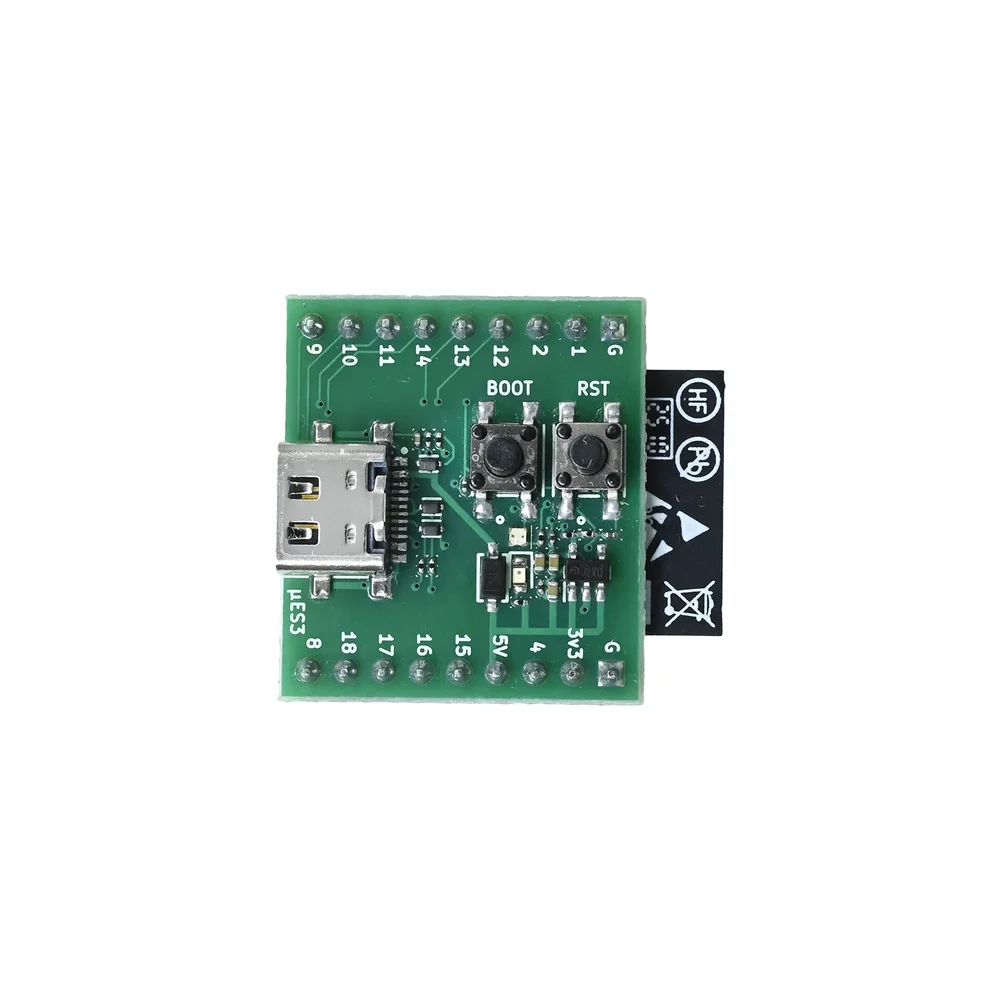
GPIO & Interfaces14x GPIO, I2C, SPI, UART, 2x 12-bit ADC, Touch Sensor, PWM, LCD
AntennaIntegrated PCB Antenna
Control ButtonsBOOT, RESET
IndicatorsPower LED, User LED
Dimensions (mm)27 x 24
Weight6 g

Frequently Asked Questions

How do I program the µEDesign µES3 board?

Connect the board via its USB Type-C port to your computer. Install the ESP-IDF framework, Arduino Core for ESP32, or MicroPython. The native USB interface allows direct flashing without an external USB-to-UART adapter. Use the BOOT button to enter download mode if needed, then upload your compiled firmware through the chosen IDE or esptool.py command line utility.

What is the purpose of the 8MB PSRAM on this board?

The 8MB PSRAM (Pseudo Static RAM) provides additional volatile memory for data-intensive operations. It is essential for buffering high-resolution images in computer vision applications, storing audio samples for processing, and holding intermediate tensors for machine learning inference tasks without overloading the internal SRAM, enabling more complex AI models to run on the edge.

Can I power the µES3 board from a battery or external 3.3V source?

Yes, the board can be powered externally. While the primary input is 5V via the USB-C port, you can supply 3.3V directly to the appropriate GPIO pins, ensuring the regulator is bypassed correctly. For battery operation, connect a LiPo or similar battery (within 3.0V to 4.2V range) through a suitable charging circuit and leverage the ESP32-S3's deep sleep modes to minimize current consumption for long-term deployments.

What wireless antenna does the board use, and can I attach an external one?

The board uses an integrated PCB trace antenna for both Wi-Fi and Bluetooth, which is sufficient for most indoor applications. The ESP32-S3 WROOM1 module's antenna output is not broken out to a connector, so attaching an external antenna typically requires modifying the PCB or using a different module variant. For extended range, ensure the board is positioned with a clear line of sight.

Package Includes

  • 1 x µEDesign µES3 ESP32-S3 WROOM1 Development Board

Additional Information

Weight 0.006 kg
Dimensions 2.4 × 2.7 cm