SKU: IOWC-0874
📋 GST Invoice Available

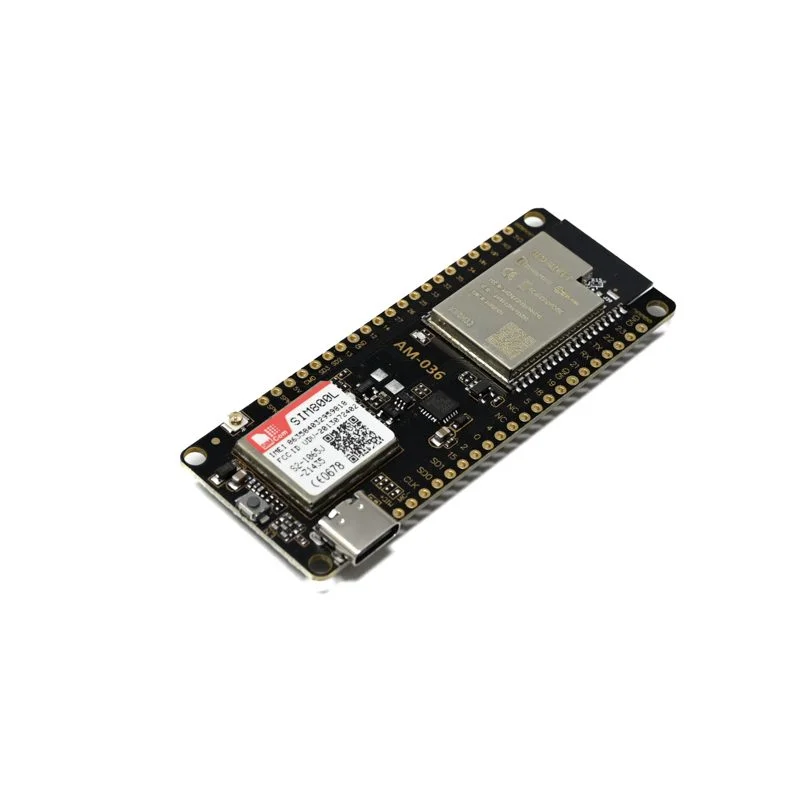
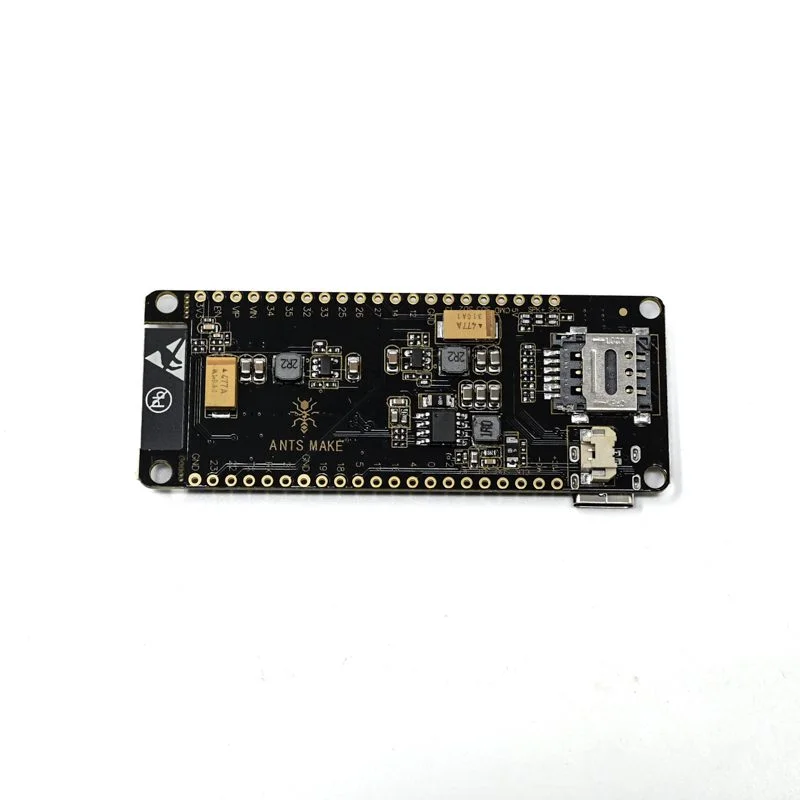
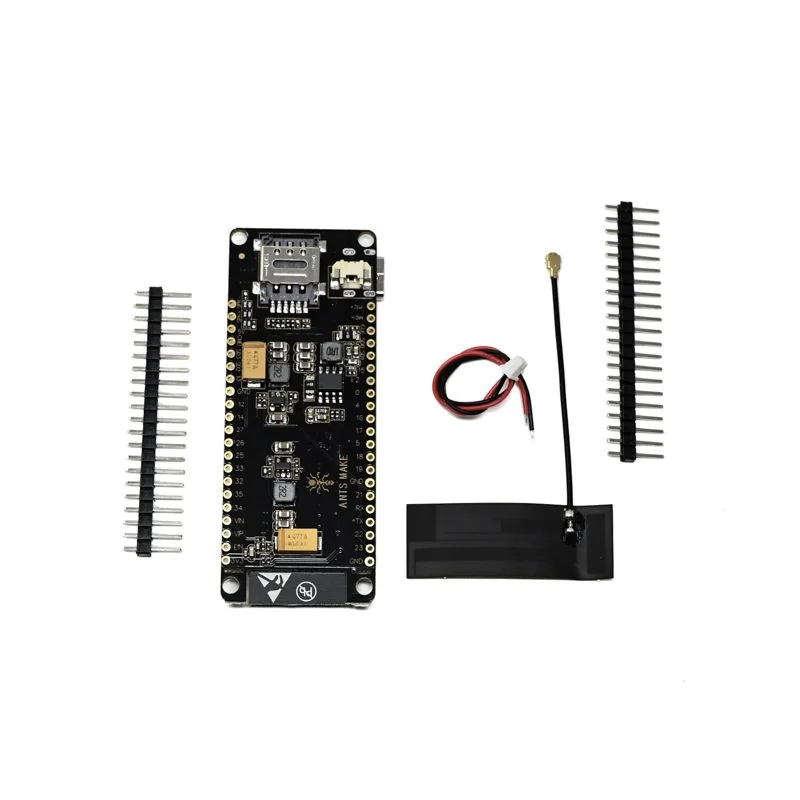
T-Call V1.4 ESP32 SIM800L GSM Module Unsoldered

₹1,939.00 (Inclusive of all taxes)
Out of Stock

The T-Call V1.4 is an ESP32-based development board with integrated SIM800L GSM/GPRS module, providing dual Wi-Fi/Bluetooth and 2G cellular connectivity for remote IoT projects. It is powered via USB Type-C and is compatible with Arduino IDE and ESP-IDF for firmware development.

Features

  • Dual-core ESP32 SoC with 4MB flash & 8MB PSRAM for robust application processing.
  • Integrated SIM800L module for global GSM/GPRS 2G network connectivity and SMS.
  • Supports 802.11 b/g/n Wi-Fi and Bluetooth 4.2 (BR/EDR/BLE) for local wireless communication.
  • USB Type-C port with CP2104 USB-to-TTL bridge for easy programming and 5V power supply.
  • Exposes extensive GPIOs (UART, SPI, I2C, PWM) for connecting sensors and peripherals.

Out of stock

Description

The T-Call V1.4 merges the processing power of Espressif’s ESP32 dual-core microcontroller with the widespread 2G coverage of the SIM800L cellular modem. This integration creates a versatile wireless node capable of operating in environments beyond the reach of Wi-Fi, using GPRS for data transmission and SMS for alerts. The board’s core is a 240MHz Xtensa LX6 processor, backed by substantial memory for complex IoT application logic.

Power is supplied via a 5V/1A USB Type-C connection, with an onboard regulator providing the 2.7V to 3.6V required by the ESP32. The SIM800L module connects via UART, allowing for AT command control. With support for Arduino core and ESP-IDF, developers can rapidly prototype solutions for remote monitoring, telemetry, and bidirectional communication over both cellular and local wireless networks.

Key Features

  • Combined ESP32 Wi-Fi/Bluetooth and SIM800L GSM/GPRS connectivity on a single compact board.
  • Dual-core 32-bit LX6 microprocessor (240MHz) ensures high performance for multitasking IoT applications.
  • Generous 4MB QSPI flash and 8MB PSRAM support data-intensive tasks and OTA firmware updates.
  • CP2104 USB-to-serial chip enables seamless programming and serial debugging via a Type-C cable.
  • Comprehensive GPIO breakout provides interfaces for UART, SPI, I2C, PWM, I2S, and IR control.
  • Operates across a wide industrial temperature range from -40°C to 85°C for harsh environments.
  • Requires only a standard Nano-SIM card for immediate cellular network registration and data transmission.

Applications

  • Remote environmental monitoring stations sending sensor data via GPRS/SMS.
  • Asset tracking and fleet management devices with periodic location updates.
  • Smart agriculture systems for soil moisture and weather data transmission from fields.
  • Industrial telemetry and IIoT for remote equipment status monitoring and alerts.
  • Backup communication gateways that switch to cellular when Wi-Fi is unavailable.

Technical Specifications

Microcontroller/SoCEspressif ESP32 Dual-Core 240MHz LX6
Wireless ProtocolsWi-Fi 802.11 b/g/n, Bluetooth 4.2 BR/EDR/BLE, GSM/GPRS (via SIM800L)
Cellular ModuleSIM800L (2G: GSM 850/900/1800/1900MHz)
Supply Voltage5V via USB Type-C (Onboard regulator to 2.7V-3.6V)
Operating CurrentApprox. 70mA (ESP32 active, dependent on cellular mode)
InterfacesUSB Type-C (CP2104), UART, SPI, I2C, SDIO, PWM, I2S, IR, GPIO
Memory4MB Flash, 8MB PSRAM, 520KB SRAM
SIM Card FormatNano-SIM
Operating Temperature-40°C to 85°C
Dimensions77mm (L) x 29mm (W)

Frequently Asked Questions

How do I power and program the T-Call V1.4 module?

Power the board using a standard 5V/1A USB Type-C cable connected to a computer or wall adapter. The onboard CP2104 USB-to-serial chip will be recognized by most operating systems. Select the correct COM port in the Arduino IDE or ESP-IDF and choose the 'ESP32 Dev Module' board to upload your firmware. Ensure the SIM800L's power is controlled via its designated enable pin in your code.

What AT commands are used to control the SIM800L GSM module?

The SIM800L is controlled via a hardware UART connection to the ESP32 using standard AT commands. Initialize communication with 'AT' to check readiness. Use 'AT+CPIN?' to verify SIM PIN status, 'AT+CREG?' for network registration, and 'AT+CGATT?' for GPRS attachment. For SMS, use 'AT+CMGF=1' for text mode followed by 'AT+CMGS=""' to send. Configure the ESP32's serial port to 9600 or 115200 baud to match the SIM800L's default setting.

Can I use this board for battery-powered IoT applications?

While the board can run from a 5V battery bank via USB, for optimal low-power operation you should supply 3.3V directly to the ESP32's VCC pin, bypassing the onboard 5V regulator. Leverage the ESP32's deep sleep modes to minimize current draw, and use AT commands to put the SIM800L into sleep mode ('AT+CSCLK=2') when idle. Expect sleep currents in the microamp range for the ESP32, but the SIM800L in sleep still draws several milliamps, impacting overall battery life.

Package Includes

  • 1 x T-Call V1.4 ESP32 SIM800L Module (Unsoldered)

Additional Information

Weight 0.017 kg
Dimensions 7.7 × 2.9 cm