SKU: IOWC-0841
📋 GST Invoice Available

AI-Thinker A9G Core Board GSM/GPRS+GPS Development Board

₹2,019.00 (Inclusive of all taxes)
Out of Stock

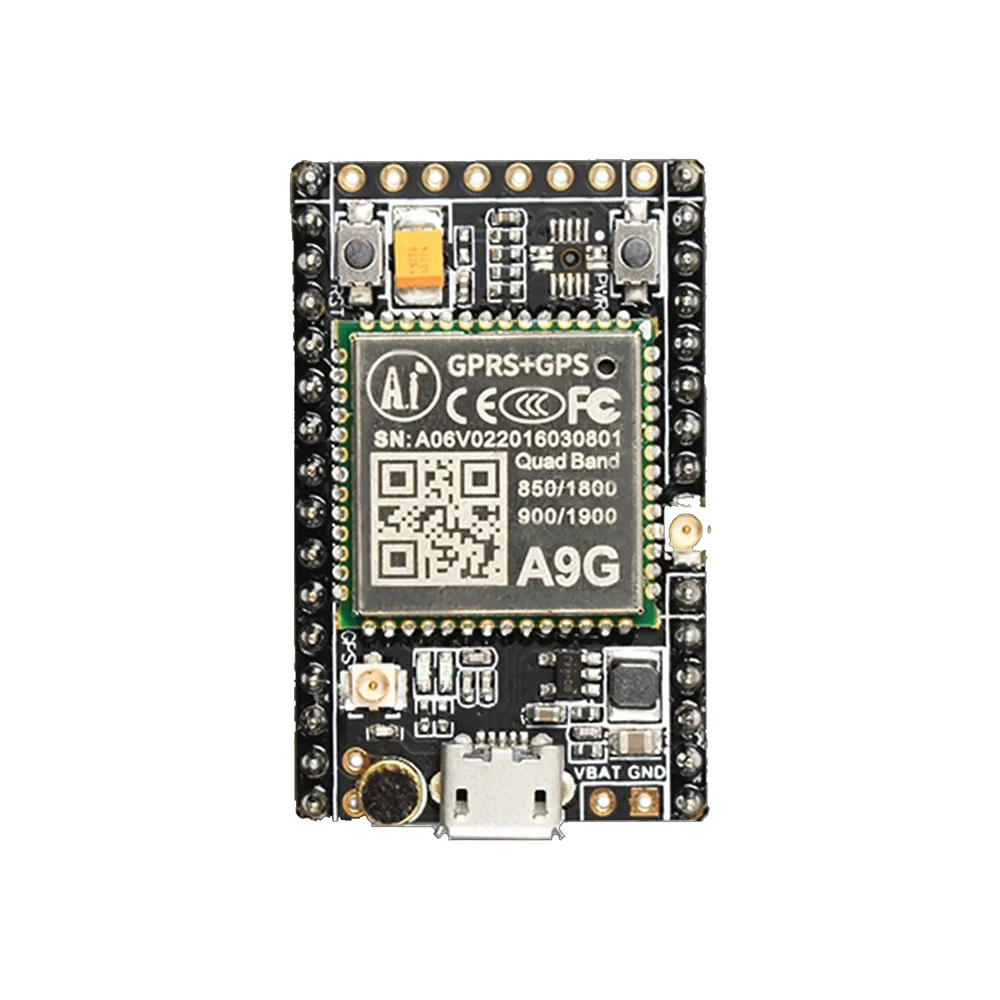
The AI-Thinker A9G Core Board is a GSM/GPRS and GPS development module based on the RDA8955 SoC, supporting quad-band GSM/GPRS (850/900/1800/1900MHz) for voice, SMS, and data connectivity, with integrated GPS for location tracking. It is programmable via AT commands or MicroPython and can be powered by USB or a LiPo battery, making it ideal for remote IoT applications.

Features

  • Quad-band GSM/GPRS module (850/900/1800/1900MHz) supports voice calls, SMS, and GPRS data transmission for global 2G network coverage.
  • Integrated GPS/BDS provides accurate location tracking and positioning data for remote asset monitoring and telemetry applications.
  • Programmable via standard AT commands (GSM 07.07/07.05) and MicroPython SDK for rapid firmware development and IoT system integration.
  • Flexible power supply options via 5V USB or 3.3V–4.2V LiPo battery input, suitable for portable and field-deployed devices.
  • Features 29 GPIOs, digital/analog audio support, and an embedded network stack for connecting sensors, actuators, and peripherals.

Out of stock

Description

The A9G Core Board is a compact GSM/GPRS and GPS development platform built around the RDA8955 system-on-chip (SoC). It provides comprehensive 2G cellular connectivity, enabling voice calls, SMS messaging, and GPRS packet data transmission across all major global frequency bands. The module includes an integrated GPS/BDS receiver for real-time location tracking, making it a complete communication and positioning solution for remote IoT deployments.

Designed for developer flexibility, the board exposes 29 GPIO pins and supports programming through both industry-standard AT command sets and a MicroPython SDK. This allows for rapid prototyping of embedded applications without deep firmware expertise. Its dual power input architecture accepts either 5V USB for bench testing or a 3.3V–4.2V LiPo battery for field operation, with built-in support for digital and analog audio channels enabling voice-based applications.

Key Features

  • Quad-band GSM/GPRS (850/900/1800/1900MHz) ensures compatibility with 2G networks worldwide for reliable voice and data communication.
  • Integrated GPS/BDS satellite positioning receiver provides accurate longitude, latitude, and time data for location-aware IoT solutions.
  • Programmable via AT commands and MicroPython, offering a flexible development path for both simple control scripts and complex embedded applications.
  • Dual power supply support from 5V USB or a 3.3V–4.2V LiPo battery, facilitating both desktop development and portable, battery-powered deployments.
  • Comprehensive audio subsystem supports both digital and analog audio interfaces for voice call functionality and audio playback/recording.
  • 29 configurable GPIO pins provide extensive connectivity for sensors, displays, relays, and other peripheral components.
  • Embedded TCP/IP network protocol stack simplifies GPRS data communication and internet connectivity for MQTT, HTTP, and other IoT protocols.
  • Robust operating temperature range of -20°C to 70°C ensures reliable performance in harsh environmental conditions.

Applications

  • Remote asset tracking and fleet management systems combining GPS location with GPRS data reporting.
  • IoT environmental monitoring stations for agriculture, weather, or industrial telemetry using SMS or GPRS alerts.
  • Personal safety and emergency notification devices with voice call and location-sharing capabilities.
  • Vehicle-mounted telematics and tracking units for logistics, security, and usage-based insurance (UBI).
  • Smart agriculture sensors for soil monitoring, livestock tracking, and irrigation control in areas with only 2G coverage.

Technical Specifications

Module/SoCAI-Thinker A9G (RDA8955)
Wireless ProtocolsGSM/GPRS, GPS/BDS
Frequency RangeGSM: 850/900/1800/1900MHz
Supply Voltage5V USB or 3.3V–4.2V LiPo Battery
Programming InterfaceAT Commands, MicroPython SDK
GPIO29 Pins
Audio SupportDigital & Analog Audio
Operating Temperature-20°C to 70°C
Dimensions40 x 25 x 10 mm
Weight7 g

Frequently Asked Questions

How do I power the A9G module and what are the power requirements?

The A9G module can be powered in two ways: via a 5V USB connection for bench testing or through a 3.3V to 4.2V LiPo battery for portable applications. Ensure your power source can supply sufficient current for transmission bursts. For battery operation, connect the battery's positive and negative terminals to the designated LiPo input pins on the board, observing correct polarity to avoid damage.

How do I program the A9G module and send AT commands?

Connect the board's primary UART TX and RX pins to a USB-to-serial adapter. Use a terminal program like PuTTY or Arduino Serial Monitor at 115200 baud. You can then send standard GSM AT commands (e.g., AT+CPIN?, AT+CSQ) for network operations. For MicroPython, flash the firmware via the provided SDK tools and then upload scripts to develop custom applications using the module's GPIO and network functions.

How do I connect the antennas and get a GPS fix with the A9G?

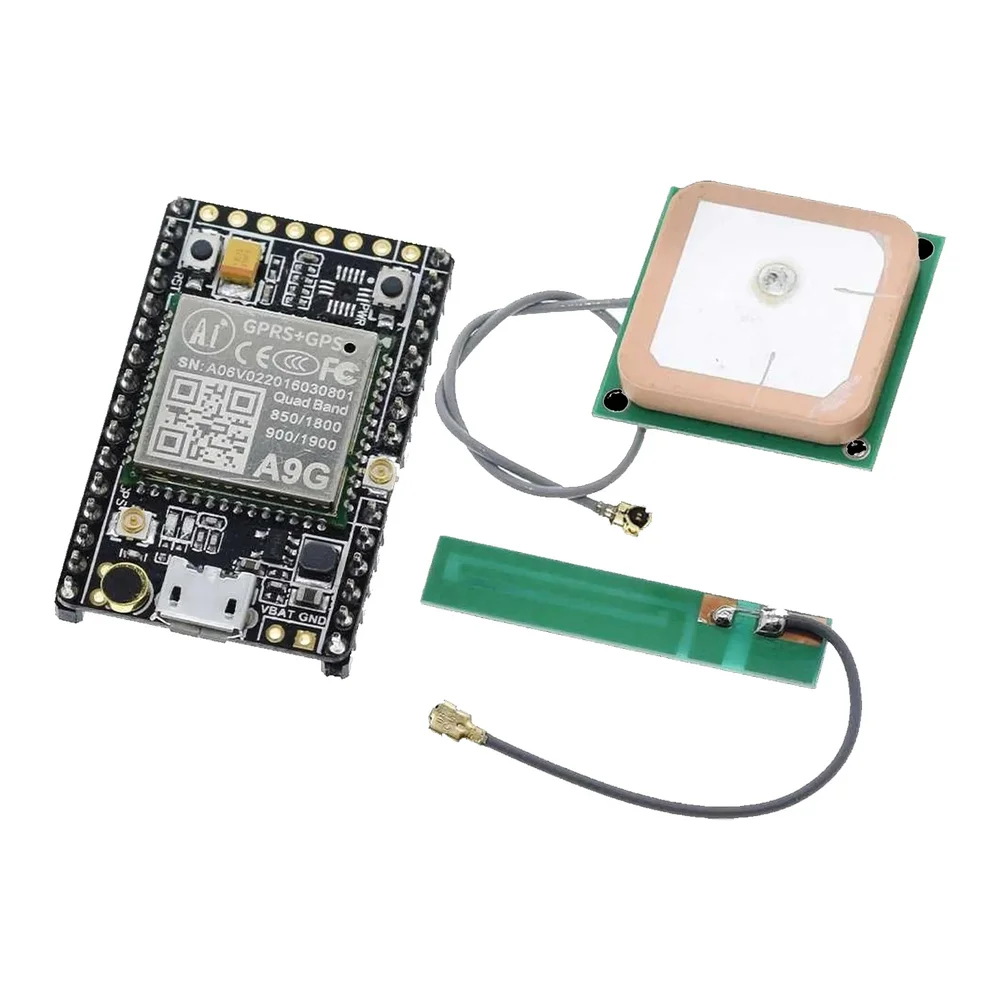
Screw the provided GSM antenna onto the board's GSM antenna connector and the GPS antenna onto the GPS connector. Place the GPS antenna with a clear view of the sky. Power the module and send the AT+GPS=1 command via serial to enable the GPS receiver. Use AT+GPSRD to query raw NMEA data. A valid fix may take several minutes during the first cold start as the module downloads ephemeris data.

Package Includes

  • 1 x A9G Core Board Module GPRS+GSM Development Board
  • 1 x GPS/BDS Antenna
  • 1 x GSM/GPRS Antenna

Additional Information

Weight 0.024 kg
Dimensions 14 × 8 × 3 cm