SKU: IOWC-0597
📋 GST Invoice Available

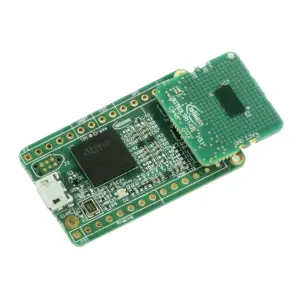
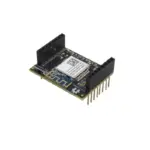
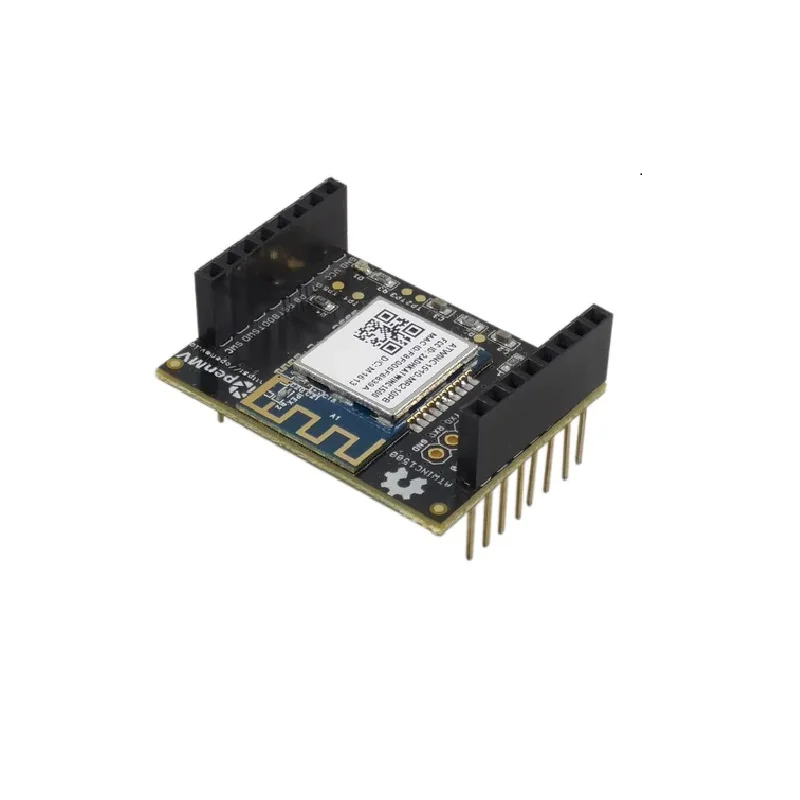
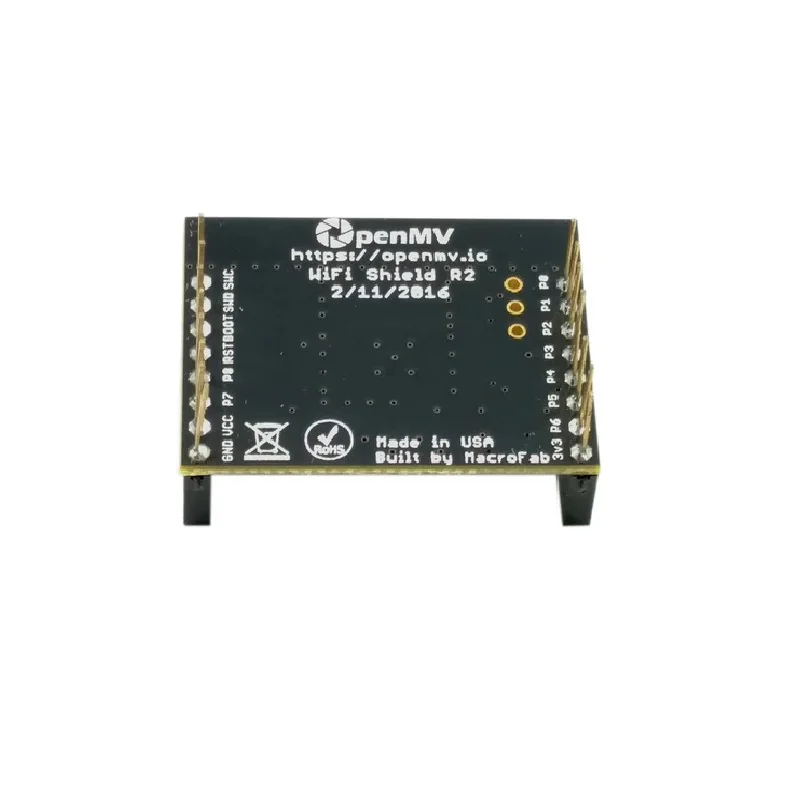
OpenMV WiFi Shield ATWINC1510-MR210xB Module

₹3,459.00 (Inclusive of all taxes)
Out of Stock

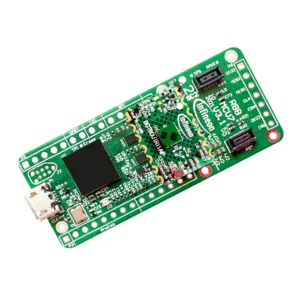
The OpenMV WiFi Shield integrates the ATWINC1510-MR210xB low-power 802.11 b/g/n IoT module, enabling wireless connectivity for OpenMV Cam platforms. It provides an SPI host interface and supports both PCB and external u.FL antennas for streaming JPEG images or handling TCP/UDP data via MicroPython’s socket interface.

Features

  • ATWINC1510-MR210xB 802.11 b/g/n Wi-Fi module optimized for low-power IoT and embedded vision applications.
  • SPI host interface for seamless integration with OpenMV Cam and other microcontroller hosts.
  • Integrated PCB antenna with u.FL connector option for external antenna to enhance range and signal strength.
  • Supports Soft-AP and client modes, WPA/WPA2/WEP security, and enterprise-grade 802.1X authentication.
  • Enables JPEG image streaming to web browsers and TCP/UDP socket communication using MicroPython.

Out of stock

Description

The OpenMV WiFi Shield is a dedicated wireless expansion module built around the ATWINC1510-MR210xB SoC, designed to add robust 2.4 GHz Wi-Fi connectivity to the OpenMV Cam ecosystem. It features a fully integrated RF front-end with power amplifier, low-noise amplifier, and switch, all managed by an on-chip power management unit for optimal energy efficiency in continuous streaming or intermittent data transmission scenarios.

Host communication is handled via a high-speed SPI interface, offloading network processing from the main microcontroller and supporting advanced features like hardware-accelerated frame aggregation. The module’s compact form factor and dual antenna options (integrated PCB or external u.FL) provide flexibility for deployment in space-constrained or range-critical applications, from portable vision systems to fixed industrial monitoring setups.

Key Features

  • Low-power 802.11 b/g/n (2.4 GHz) Wi-Fi module with integrated PA, LNA, and T/R switch.
  • SPI host interface reduces MCU load with on-chip memory management and hardware acceleration.
  • Dual antenna support: onboard printed antenna and u.FL connector for external antenna.
  • Supports Soft-AP, Wi-Fi Direct (legacy), and standard client modes with WPA/WPA2/WEP security.
  • Enterprise-grade security support for WPA/WPA2 802.1X with EAP-TLS, PEAP, and TTLS.
  • Enables real-time JPEG image streaming from OpenMV Cam to web browsers over HTTP.
  • Full TCP/UDP socket support via MicroPython's BSD socket API for custom IoT protocols.
  • Industrial operating temperature range from -40°C to +85°C for reliable deployment.

Applications

  • Wireless streaming of JPEG video and images from OpenMV Cam to web interfaces or cloud platforms.
  • IoT vision systems for remote monitoring, security, and smart home automation.
  • Embedded computer vision projects requiring low-power Wi-Fi for data telemetry and control.
  • Industrial machine vision applications where wireless connectivity reduces wiring complexity.
  • Educational and prototyping platforms for teaching IoT, robotics, and MicroPython networking.

Technical Specifications

Wireless SoC/ModuleATWINC1510-MR210xB
Wireless ProtocolIEEE 802.11 b/g/n (2.4 GHz)
Host InterfaceSPI
Supply Voltage2.7 - 3.6 VDC
Antenna OptionsIntegrated PCB Antenna, u.FL Connector
Operating Temperature-40°C to +85°C
Operating Humidity10% to 95% Non-Condensing
Dimensions (LxWxH)35 x 25 x 10 mm

Frequently Asked Questions

How do I connect the OpenMV WiFi Shield to my OpenMV Cam?

The shield connects via the dedicated expansion header on the OpenMV Cam H7 or similar models. Ensure the board is powered within 2.7V to 3.6V. Use the provided MicroPython firmware libraries to initialize the SPI interface and configure the Wi-Fi network settings through code, specifying SSID, password, and mode (client or Soft-AP). The physical connection is keyed to prevent reverse installation.

What MicroPython commands are used to start streaming images over Wi-Fi?

After initializing the network interface, you can use the OpenMV's built-in `sensor.snapshot().compress()` to get a JPEG buffer. Then, create a socket using `usocket.socket()`, bind it to a port, and listen for connections. For each connected client (like a web browser), send HTTP headers followed by the JPEG data in a multipart response loop. Example scripts are provided in the OpenMV IDE examples for HTTP streaming servers.

Can I use an external antenna with this shield, and how is it connected?

Yes, the shield has a u.FL (IPEX) connector for an external antenna. You must solder or attach a compatible 2.4GHz Wi-Fi antenna with a u.FL plug. The integrated PCB antenna is active by default; connecting an external antenna may automatically disable it depending on the module design. For best range, use a 2.4GHz antenna with appropriate gain, ensuring impedance matching (50 ohms) and proper orientation.

What is the power consumption of the ATWINC1510 module during operation?

The ATWINC1510 is optimized for low-power IoT. Typical operating current depends on mode: transmit peaks can be around 200mA+, receive is lower, and deep sleep can be microamps. For continuous streaming, plan for average currents above 100mA. Power is supplied via the OpenMV Cam's 3.3V rail; ensure your power source can deliver sufficient current, especially when also powering the camera sensor and microcontroller.

Package Includes

  • 1 x OpenMV WiFi Shield

Additional Information

Weight 0.008 kg
Dimensions 3.5 × 2.5 × 1 cm