SKU: IOWC-0478
📋 GST Invoice Available

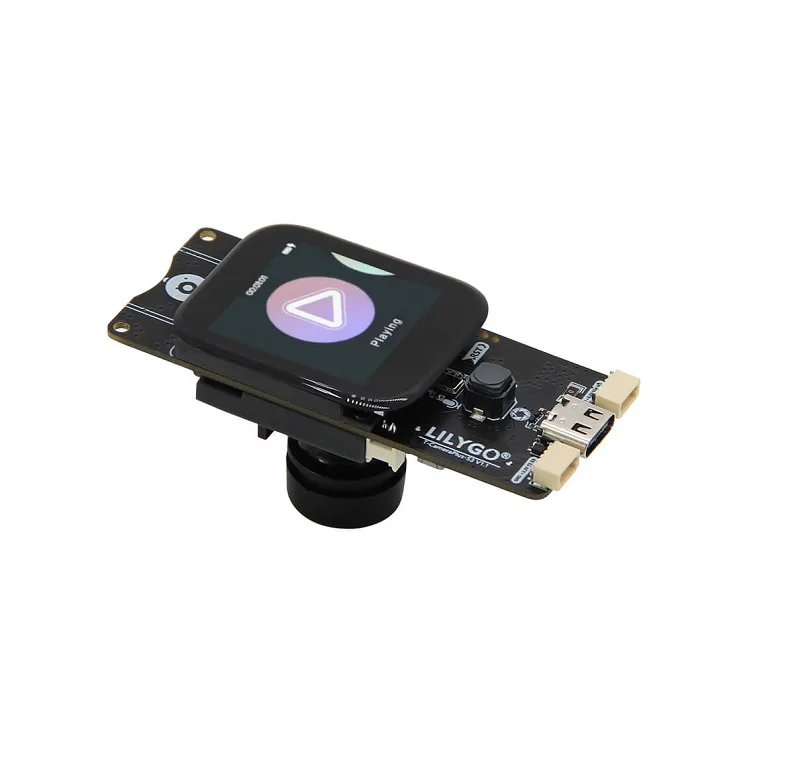
LilyGO T-Camera Plus S3 ESP32-S3R8 Dev Board w/ Mic & Speaker

₹5,139.00 (Inclusive of all taxes)
Out of Stock

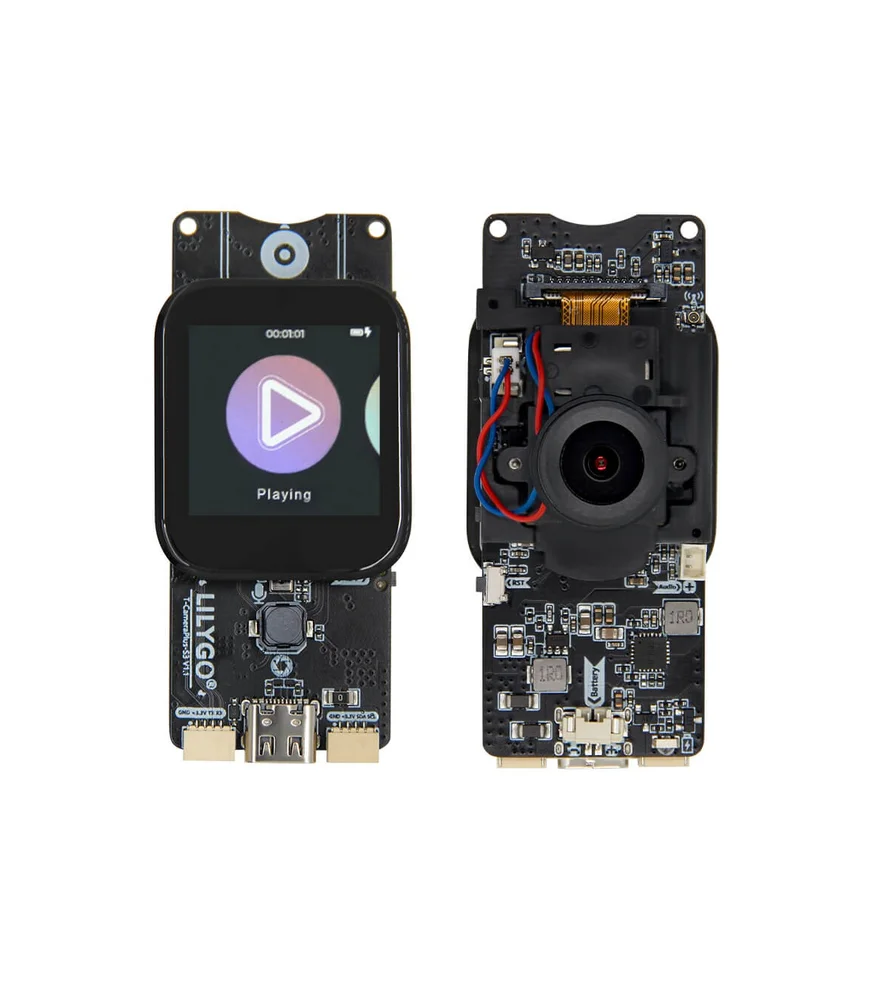
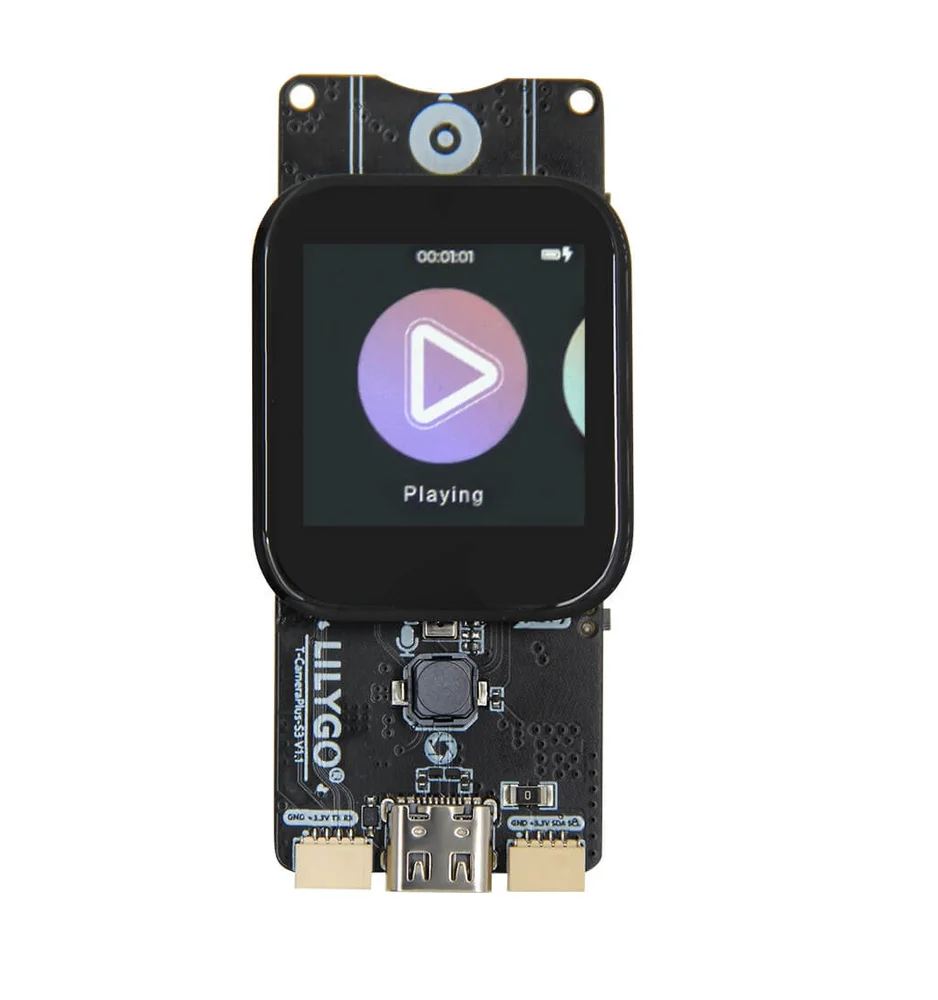
The LilyGO T-Camera Plus S3 is an ESP32-S3R8-based development board featuring a dual-core Xtensa LX7 CPU, 2.4GHz Wi-Fi, BLE 5.0, an onboard microphone, and a MAX98357A DAC for speaker output, designed for IoT vision and audio applications with Arduino IDE and ESP-IDF support.

Features

  • Powered by the ESP32-S3R8 with a dual-core Xtensa LX7 CPU for robust IoT processing and AI at the edge.
  • Integrated 2.4GHz Wi-Fi 802.11 and Bluetooth 5.0 with mesh support for versatile wireless connectivity.
  • Onboard microphone and MAX98357A I2S DAC enable immediate audio input and speaker output for voice applications.
  • Equipped with 8MB PSRAM and 16MB Flash memory for handling complex multimedia and vision data buffers.
  • Low-power design suitable for battery-powered smart camera and sensing nodes.

Out of stock

Description

The LilyGO T-Camera Plus S3 is an integrated development platform built around the Espressif ESP32-S3R8 microcontroller. It combines a high-performance dual-core Xtensa LX7 processor with substantial memory resources—8MB of PSRAM and 16MB of Flash—to support demanding tasks like image processing, voice recognition, and running lightweight ML models. The board’s core strength lies in its convergence of wireless connectivity and multimedia I/O.

It provides full 2.4GHz Wi-Fi and Bluetooth Low Energy 5.0 connectivity, including support for Bluetooth mesh networking, enabling it to function as a node in extensive smart home or industrial IoT systems. The integrated analog microphone and I2S audio DAC (MAX98357A) create a ready-to-use audio pipeline, allowing developers to implement voice control, sound detection, or audio playback without external components. This makes the board particularly suited for building smart security cameras, interactive kiosks, or voice-activated assistants.

Key Features

  • ESP32-S3R8 microcontroller with dual-core Xtensa LX7 CPU for efficient parallel task execution.
  • Comprehensive wireless suite with 2.4GHz Wi-Fi 802.11 b/g/n and Bluetooth 5.0 (including BLE and classic).
  • Integrated analog MEMS microphone for direct sound capture and voice command processing.
  • Onboard MAX98357A I2S DAC with 3W Class D amplifier output for driving a speaker.
  • Ample 8MB PSRAM for graphics buffering and 16MB Flash for application code and file storage.
  • Supports development in Arduino IDE, ESP-IDF, and MicroPython for flexible firmware programming.
  • Low-power operating modes extend battery life in always-on sensing applications.
  • Designed for camera module attachment (typically via FPC connector) for computer vision projects.

Applications

  • Smart security cameras and doorbells with two-way audio.
  • Voice-controlled IoT devices and smart home assistants.
  • Edge AI vision systems for object detection and recognition.
  • Industrial monitoring devices with audio event logging.
  • Interactive multimedia displays and kiosks.

Technical Specifications

Microcontroller / SoCESP32-S3R8 (Dual-core Xtensa LX7)
Wireless ProtocolsWi-Fi 802.11 b/g/n (2.4GHz), Bluetooth 5.0 (BLE & Classic)
PSRAM8 MB
Flash Memory16 MB
Audio InputIntegrated Analog Microphone
Audio OutputMAX98357A I2S DAC with Speaker Driver
Development PlatformsArduino IDE, ESP-IDF, VS Code, MicroPython
Dimensions (Shipping)9 x 6 x 5 cm

Frequently Asked Questions

How do I connect a camera module to the T-Camera Plus S3?

The board typically features a dedicated FPC connector for camera modules like OV2640. You must align the cable's contacts correctly and secure the connector latch. Power the camera from the board's 3.3V rail and configure the correct I2C address and DVP or SPI pins in your firmware, usually within the Arduino IDE using the ESP32 camera library or in ESP-IDF with the camera driver examples.

What is the procedure for audio recording and playback?

Utilize the integrated microphone and MAX98357A DAC via the I2S peripheral. In ESP-IDF, use the I2S driver API to configure sampling rate and bit depth for recording. For playback, stream audio data to the DAC over the same I2S bus. The Arduino-ESP32 framework provides similar I2S functions. Ensure your code manages the audio data buffers stored in the 8MB PSRAM for optimal performance and minimal CPU load during continuous operation.

Can this board be powered by a battery, and what is its sleep current?

Yes, it can be powered via its VIN pin or USB. For battery operation, connect a LiPo to the appropriate terminals, ensuring voltage is within the operating range. To maximize battery life, leverage the ESP32-S3's deep sleep modes. While exact sleep current depends on your configuration (with or without PSRAM retention), typical deep sleep current can be as low as 10-20µA. Use `esp_deep_sleep_start()` in ESP-IDF to enter this state, waking via timer or GPIO.

Package Includes

  • 1 x LilyGO T-Camera Plus S3 Development Board

Additional Information

Weight 0.065 kg
Dimensions 9 × 6 × 5 cm