SKU: IOWC-0343
📋 GST Invoice Available

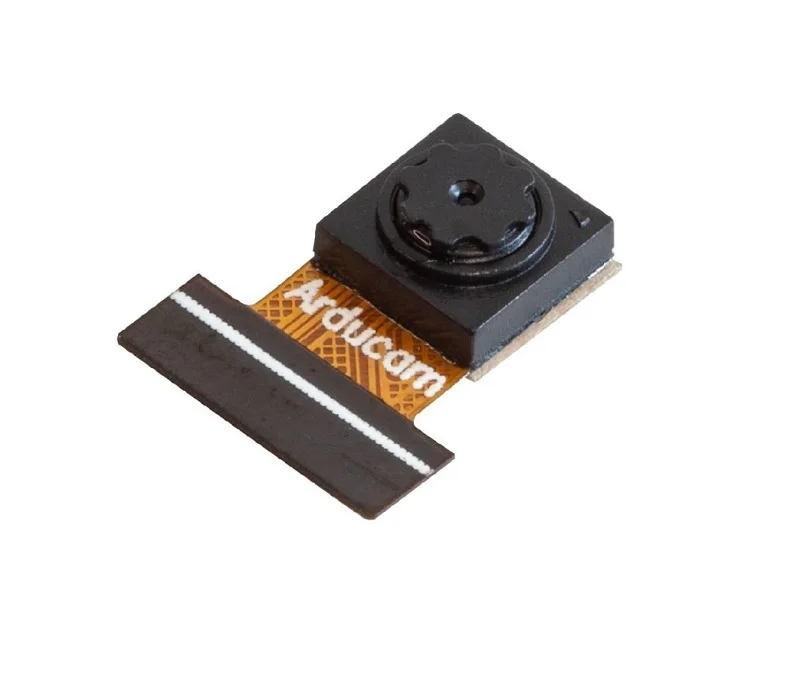
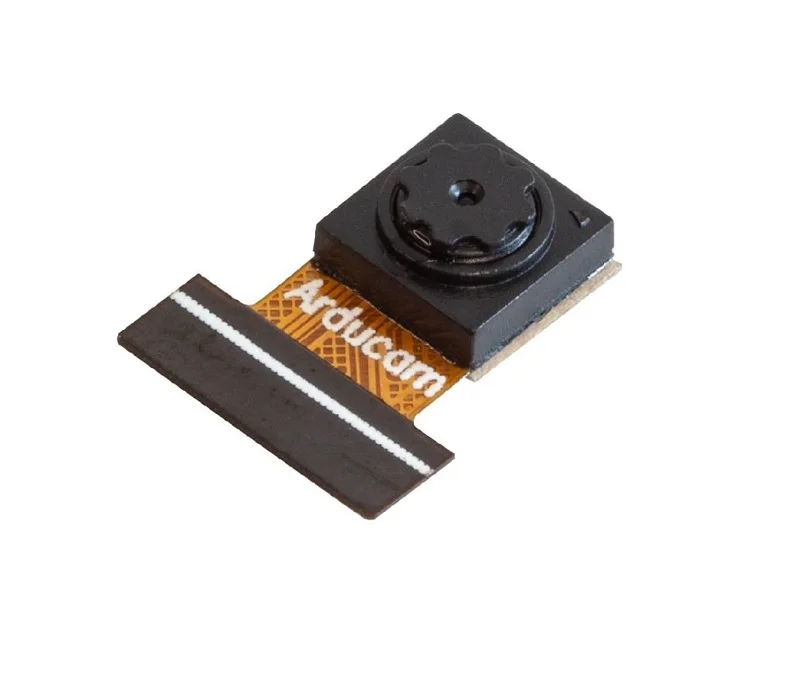
Arducam HM01B0 QVGA CMOS Monochrome Camera Module for RP2040 & Arduino

₹1,099.00 (Inclusive of all taxes)
Out of Stock

The Arducam HM01B0 is an ultralow-power QVGA (320×240) CMOS monochrome camera module designed for ‘Always On’ computer vision applications. It interfaces directly with RP2040-based boards (e.g., Raspberry Pi Pico) and Arduino platforms via I2C and a flexible video data interface.

Features

  • Ultralow Power CMOS Sensor: HM01B0 ULPIS architecture enables battery-efficient, always-on vision for gesture recognition, object tracking, and ambient sensing.
  • QVGA Monochrome Resolution: Delivers 320×240 pixel images with high sensitivity 3.6µm BrightSense pixel technology for clear grayscale capture.
  • Direct RP2040 & Arduino Compatibility: Simple I2C control and flexible 1/4/8-bit video data interface for seamless integration with popular microcontroller ecosystems.
  • Advanced Programmable Control: Features programmable exposure, analog/digital gain, frame rate, and automatic exposure/gain control with 50/60Hz flicker avoidance.
  • Integrated Motion Detection: On-chip motion detection circuit with programmable ROI and threshold, providing a digital interrupt to conserve system power.

Out of stock

Description

The Arducam HM01B0 QVGA CMOS Monochrome Camera Module is engineered for embedded vision applications where ultra-low power consumption is critical. Its HM01B0 sensor utilizes a specialized Ultralow Power Image Sensor (ULPIS) architecture and 3.6µm pixel technology to maintain high sensitivity while minimizing energy draw, making it ideal for always-on battery-powered devices.

Communication and control are handled via a standard I2C serial interface, while video data is output through a configurable 1-bit, 4-bit, or 8-bit parallel interface with frame and line sync signals. This flexibility allows developers to optimize the balance between data throughput and pin usage on resource-constrained microcontrollers like the RP2040 or various Arduino boards. The module supports features like electronic rolling shutter, programmable black level calibration, and windowed readout.

Key Features

  • Ultralow Power Image Sensor (ULPIS) designed for Always-On vision applications.
  • High-sensitivity 3.6µm BrightSense monochrome pixel technology.
  • QVGA (320x240) resolution with support for windowed readout, vertical flip, and horizontal mirror.
  • Programmable exposure, analog gain (up to 8x), digital gain (up to 4x), frame size, and frame rate.
  • Automatic exposure and gain control loop with 50/60Hz flicker avoidance.
  • Flexible 1-bit, 4-bit, and 8-bit video data interface with video frame and line sync.
  • On-chip motion detection with programmable Region of Interest (ROI) and threshold, outputting a digital interrupt.
  • I2C 2-wire serial interface for register configuration and control.

Applications

  • Battery-powered always-on computer vision devices.
  • Gesture recognition and proximity sensing interfaces.
  • Simple object identification and tracking systems.
  • Intelligent ambient light sensing and monitoring.
  • Motion-activated wake-up and interrupt systems for IoT sensors.

Technical Specifications

Sensor ModelHM01B0 QVGA CMOS
ResolutionQVGA (320 x 240 pixels)
Pixel Size3.6 µm x 3.6 µm
Shutter TypeElectronic Rolling Shutter
InterfaceI2C (Control), 1/4/8-bit Parallel (Video Data)
CompatibilityRP2040 (Raspberry Pi Pico), Arduino
Key FeatureUltralow Power Consumption, On-Chip Motion Detection
Mounting81mm diagonal two-hole center distance

Frequently Asked Questions

How do I interface the HM01B0 camera with a Raspberry Pi Pico (RP2040)?

Connect the module's I2C pins (SCL, SDA) to the Pico's I2C bus for control and configuration. The video data pins (e.g., VSYNC, HSYNC, PIXCLK, and DATA) must be connected to GPIOs configured as inputs. You will need to use a library, like Arducam's provided examples, to initialize the sensor via I2C registers and then read the parallel video data stream from the GPIOs, managing the sync signals to capture complete frames.

What is the power consumption of the HM01B0 sensor during operation?

The HM01B0 is specifically designed as an Ultralow Power Image Sensor (ULPIS). While exact current figures depend on configuration (frame rate, gain, window size), it consumes orders of magnitude less power than standard image sensors. This enables 'always-on' vision functionality in battery-powered projects, as the sensor can run continuously while the main microcontroller sleeps, waking it via the motion detection interrupt only when activity is detected.

Can I adjust the exposure and gain settings programmatically?

Yes, the HM01B0 offers extensive programmability via its I2C interface. You can write to specific registers to set the analog gain (up to 8x), digital gain (up to 4x), exposure time, frame size (including QVGA windowing), and frame rate. It also supports an automatic exposure and gain control (AEC/AGC) loop that can be enabled, and includes flicker avoidance for 50Hz or 60Hz lighting environments.

How does the integrated motion detection feature work?

The on-chip motion detection circuit allows you to define a Region of Interest (ROI) within the frame and set a pixel difference threshold. The sensor continuously compares consecutive frames within this ROI. When the difference exceeds your threshold, it triggers a digital output pin, which can be configured as an interrupt to a host microcontroller. This allows the main processor to remain in deep sleep, conserving significant power, and only wake to process imagery when motion is detected.

Package Includes

  • 1 x Arducam HM01B0 QVGA CMOS Monochrome Camera Module

Additional Information

Weight 0.01 kg
Dimensions 6 × 4 × 2 cm