SKU: IOWC-0066
📋 GST Invoice Available

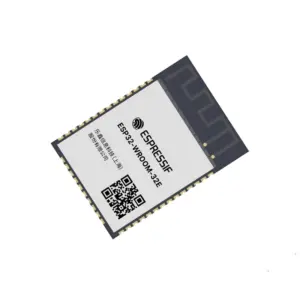
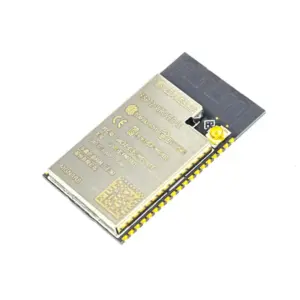
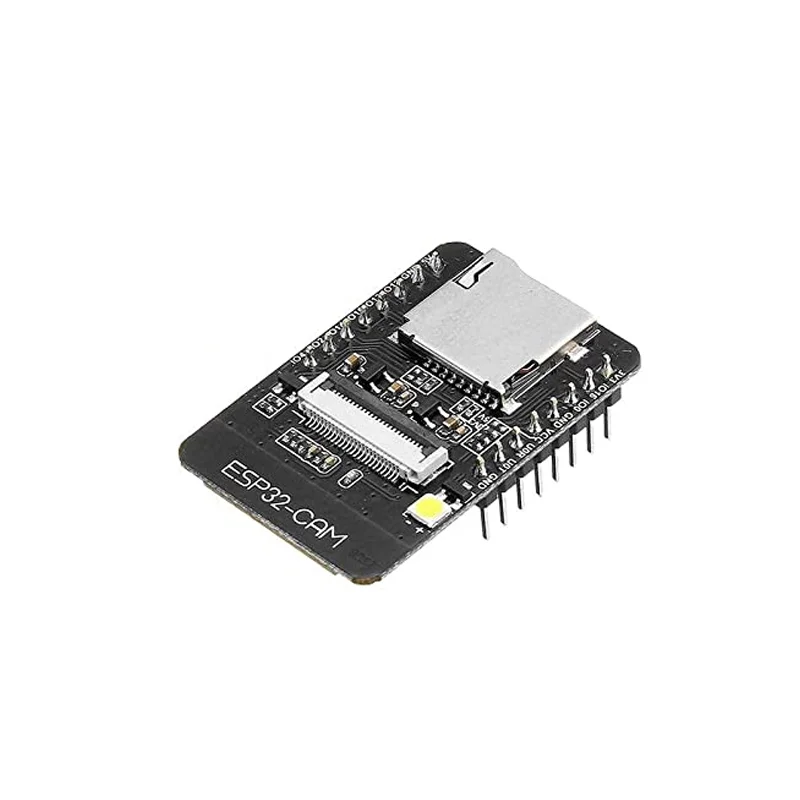
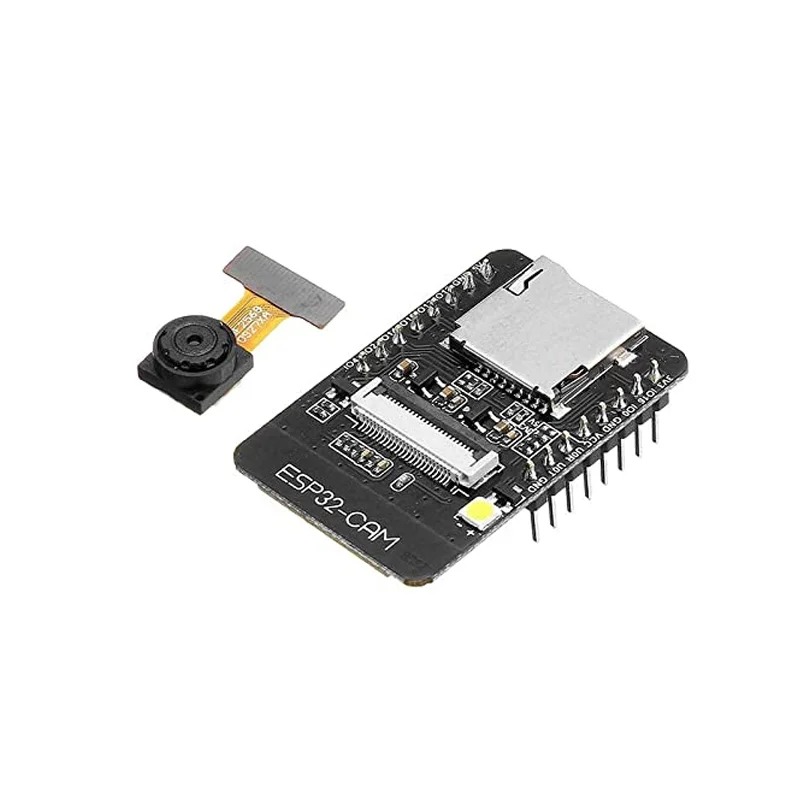
ESP32-CAM WiFi + Bluetooth Module with OV2640 2MP Camera

₹739.00 (Inclusive of all taxes)
Out of Stock

The ESP32-CAM is an all-in-one development module featuring an ESP32 SoC with dual-core processing, Wi-Fi/Bluetooth connectivity, and an integrated OV2640 2MP camera, designed for IoT vision applications like face recognition and video streaming.

Features

  • Integrated OV2640 2MP camera sensor for image capture and video streaming over Wi-Fi.
  • Powered by a dual-core ESP32 SoC with 240MHz CPU, 520KB SRAM, and 4MB PSRAM for demanding applications.
  • Dual wireless connectivity with 802.11 b/g/n Wi-Fi and Bluetooth/BLE for flexible IoT networking.
  • Supports SmartConfig/AirKiss for easy Wi-Fi provisioning and FOTA for remote firmware updates.
  • Compact form factor (38mm x 21mm) with microSD card slot for local image storage.

Out of stock

Description

The ESP32-CAM module combines Espressif’s powerful ESP32 dual-core microcontroller with a dedicated OV2640 camera sensor, creating a compact platform for embedded computer vision. It runs FreeRTOS with the LwIP TCP/IP stack, providing robust networking capabilities for building connected camera projects.

Its integrated 4MB PSRAM is crucial for handling image buffers, enabling applications like face recognition, video streaming, and time-lapse photography. The module supports STA, AP, and STA+AP Wi-Fi modes, allowing it to connect to existing networks or create its own access point for direct device communication.

Key Features

  • All-in-one solution with ESP32 SoC, camera, and antenna for rapid IoT vision prototyping.
  • OV2640 sensor supports multiple output formats (JPEG, RGB, YUV) and resolutions up to 1600x1200.
  • Dedicated 4MB PSRAM expands memory for processing high-resolution image data.
  • Integrated Wi-Fi and Bluetooth enable wireless image transfer, remote control, and BLE beacon functionality.
  • One-click Wi-Fi network configuration via SmartConfig (Android) or AirKiss (iOS) apps.
  • MicroSD card slot provides expanded storage for images, video clips, or serving web files.
  • Support for FOTA (Firmware Over-The-Air) updates allows for remote deployment and maintenance.
  • Multiple low-power sleep modes extend battery life in portable or solar-powered applications.

Applications

  • Smart home security with IP camera streaming and motion-triggered capture.
  • Face recognition doorbells, access control systems, and interactive kiosks.
  • IoT wildlife monitoring, time-lapse photography, and remote site inspection.
  • Video intercom systems, baby monitors, and pet cameras with cloud connectivity.
  • Industrial machine vision for simple object detection, barcode scanning, or process monitoring.

Technical Specifications

Microcontroller/SoCEspressif ESP32 (Dual-core Xtensa LX6, up to 240MHz)
Wireless ProtocolsWi-Fi 802.11 b/g/n, Bluetooth 4.2 BR/EDR and BLE
Camera SensorOV2640, 2 Megapixel
Memory520KB SRAM, 4MB PSRAM
Supply Voltage5V (via onboard regulator)
Operating CurrentApprox. 180mA (average during Wi-Fi transmission with camera active)
InterfacesUART, I2C, I2S, SPI, microSD card slot, Camera parallel interface
Antenna ConnectorIntegrated PCB antenna
Operating Temperature-40°C to +85°C (typical for ESP32)
Dimensions38mm (L) x 21mm (W)

Frequently Asked Questions

How do I program the ESP32-CAM module?

You can program the ESP32-CAM using the Arduino IDE with the ESP32 board package installed or the official Espressif IDF framework. Connect the module's GPIO0 to GND to enter download mode, then use a USB-to-serial adapter (like an FTDI board) connected to its UART pins (TX, RX, GND) to flash your compiled firmware. Ensure you select the correct board model (e.g., AI-Thinker ESP32-CAM) in your development environment. The module typically requires a stable 5V power supply during programming and operation.

What is the purpose of the 4MB PSRAM on this board?

The 4MB PSRAM (Pseudo Static RAM) is essential for handling the large image data buffers produced by the OV2640 camera. The ESP32's internal SRAM is insufficient for high-resolution JPEG frames. The PSRAM acts as external memory, allowing the ESP32 to store and process complete images for applications like face recognition, video streaming, or saving pictures to an SD card. You must enable PSRAM support in your code (e.g., in Arduino IDE: Tools > PSRAM: 'Enabled') to utilize this memory.

Can I use a different camera module with the ESP32-CAM board?

No, the camera sensor is permanently soldered onto the ESP32-CAM module. The OV2640 is integrated directly onto the PCB via a parallel DVP (Digital Video Port) interface. If you need a different sensor (like an OV7670 or a higher-resolution module), you would require a different development board, such as a standard ESP32 DevKit paired with a separate camera module that connects via the same parallel interface or uses a different protocol like MIPI CSI.

How do I provide power to the ESP32-CAM module?

The ESP32-CAM is powered via its 5V and GND pins. You must supply a stable 5V DC power source capable of delivering at least 500mA, especially when the camera and Wi-Fi are active. A common method is to use a USB-to-serial programming adapter that provides 5V, or a dedicated 5V regulator circuit. Avoid using the 3.3V pin as the primary power input, as the onboard voltage regulator needs the higher 5V input to function correctly and power all components.

Does the ESP32-CAM support video streaming?

Yes, the ESP32-CAM can stream video over Wi-Fi. You can implement a video stream server using libraries like ESP32-CAM's built-in example in the Arduino IDE, which creates an HTTP server that serves an MJPG stream. The frame rate and resolution depend on your Wi-Fi signal strength and selected image quality settings. For stable streaming, a reliable network connection and optimized code (using the PSRAM effectively) are necessary. It is commonly used for live monitoring feeds accessible via a web browser.

Package Includes

  • 1 x ESP32-CAM WiFi + Bluetooth Module
  • 1 x OV2640 Camera Module

Additional Information

Weight 0.005 kg
Dimensions 3.8 × 2.1 cm