SKU: IOWC-0046
📋 GST Invoice Available

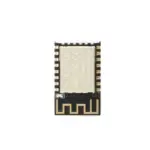
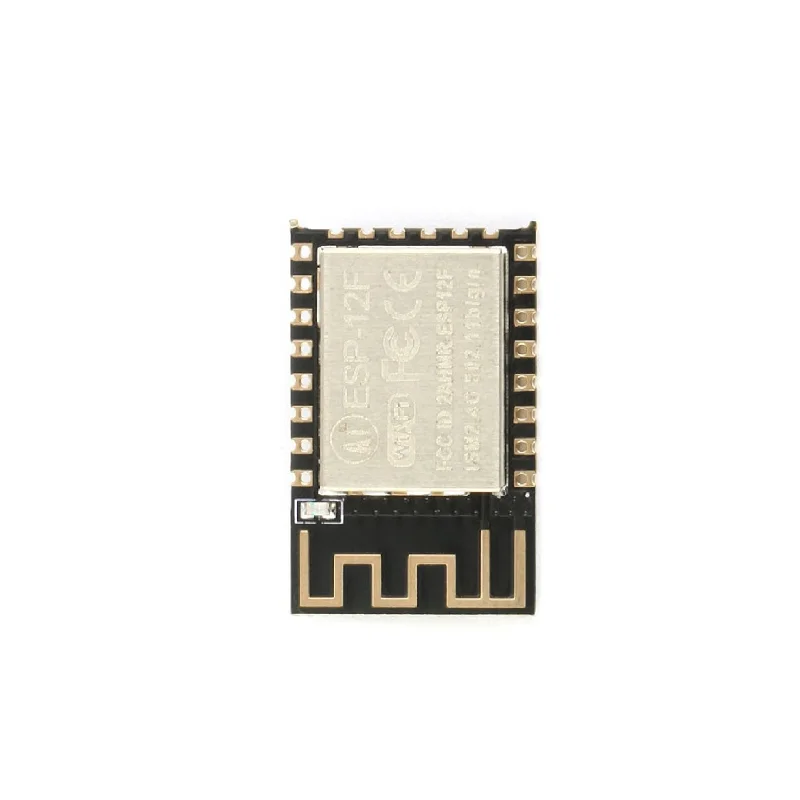
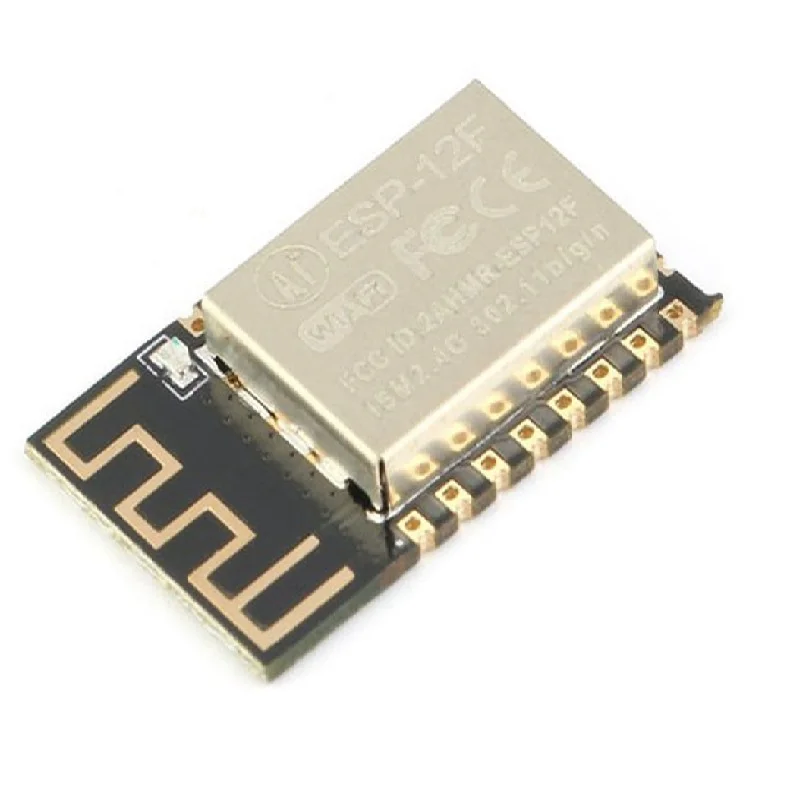
AI-Thinker ESP-12F ESP8266 Serial WiFi Module

₹259.00 (Inclusive of all taxes)
Out of Stock

The AI-Thinker ESP-12F is a compact, surface-mount WiFi module based on the ESP8266 SoC, integrating a 32-bit processor, RF front-end, and PCB antenna for embedding IEEE 802.11 b/g/n connectivity into IoT devices. It operates on 3.3V and is programmable via AT commands or as a standalone application processor using the Arduino IDE or ESP-IDF.

Features

  • ESP8266 Core: Features a Tensilica L106 32-bit RISC processor running up to 160 MHz with integrated WiFi MAC/BB/RF/PA/LNA for a complete wireless solution.
  • Compact SMD Design: Comes in a 22-pin SMD package (24x16x3 mm) with a 3dBi integrated PCB antenna, ideal for space-constrained PCB integration.
  • Low Power Operation: Supports multiple sleep modes with deep sleep current as low as 20µA, enabling battery-powered IoT sensor nodes and remote monitors.
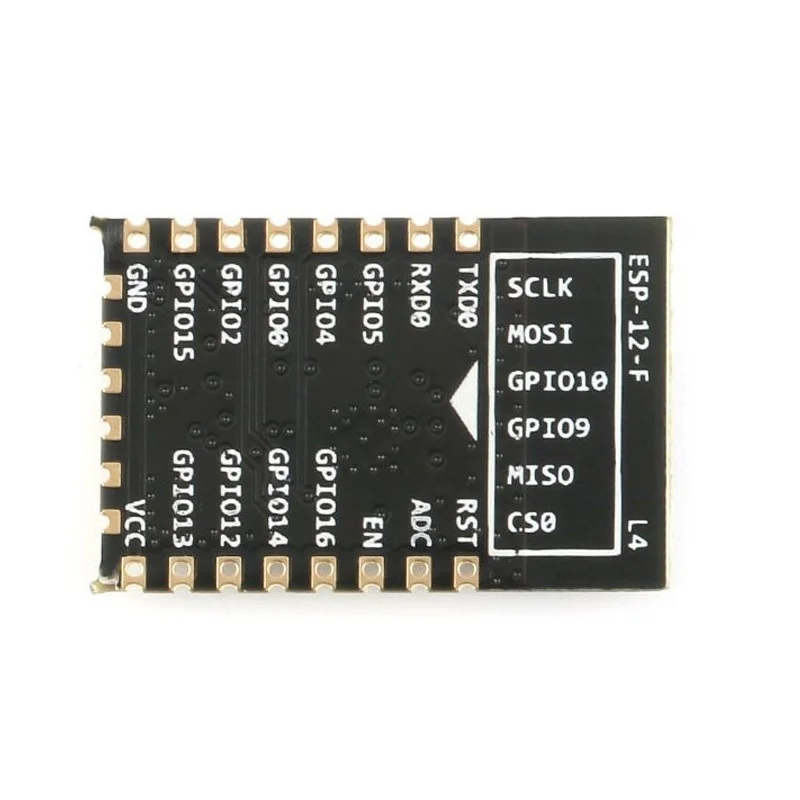
  • Rich Peripheral Set: Provides UART, GPIO, I2C, PWM, and a 10-bit ADC interface for connecting sensors, actuators, and other external components.
  • Network Protocol Stack: Built-in full TCP/IP stack and LWIP support STA, AP, and STA+AP modes, facilitating direct cloud connectivity and local wireless networks.

Out of stock

Description

The ESP-12F module from AI-Thinker encapsulates the popular ESP8266 WiFi SoC into a production-ready, surface-mount form factor. Its integrated architecture includes a powerful 32-bit microcontroller capable of serving as the primary application processor, eliminating the need for an external host MCU in many designs. The module handles all WiFi physical layer processing, including RF transmission and reception via its onboard PCB antenna, simplifying RF layout challenges for developers.

Power management is a key feature, with configurable sleep patterns that drastically reduce average current consumption, making it suitable for always-on, battery-operated endpoints. The module’s firmware can be developed using the Arduino core, ESP-IDF, or NodeMCU, and supports Over-The-Air (FOTA) updates for remote maintenance. Its UART interface supports baud rates up to 4 Mbps for high-speed communication with a host processor when used in slave mode.

Key Features

  • Complete WiFi SOC: Integrates Tensilica CPU, RF front-end, antenna, and protocol stack in a single 22-pin SMD module.
  • High-Performance Processor: 32-bit MCU clockable up to 160 MHz with RTOS support for handling application logic and network tasks.
  • Integrated RF Chain: Built-in Power Amplifier (PA), Low-Noise Amplifier (LNA), and PCB antenna simplify design and reduce BOM cost.
  • Advanced Power Modes: Features active, modem-sleep, light-sleep, and deep-sleep modes, with deep sleep current as low as 20 microamps.
  • Comprehensive Connectivity: Offers multiple GPIOs, I2C, PWM, ADC, and high-speed UART for interfacing with sensors, displays, and serial devices.
  • Robust Network Support: Embedded LWIP TCP/IP stack supports client, access point, and simultaneous modes with WEP/WPA/WPA2 security.
  • Developer-Friendly: Programmable via AT commands or as a standalone system using popular frameworks like Arduino, ESP-IDF, or MicroPython.
  • Remote Management: Supports Firmware Over-The-Air (FOTA) updates and Smart Config for easy network provisioning.

Applications

  • Smart Home Automation: Embed into light switches, smart plugs, and environmental sensors for local WiFi control and cloud reporting.
  • Industrial Telemetry: Serve as a wireless data bridge for reading sensors over serial (UART/GPIO) and transmitting data to SCADA or MQTT brokers.
  • Consumer IoT Devices: Power WiFi-enabled gadgets like weather stations, pet feeders, and remote controls with integrated processing.
  • Prototyping & Education: Use as a core component in maker projects and electronics courses for teaching IoT and wireless networking concepts.

Technical Specifications

Microcontroller/SoCESP8266 (Tensilica L106 32-bit RISC)
Wireless ProtocolsIEEE 802.11 b/g/n
Frequency Range2412 - 2484 MHz
RF Transmit Power802.11b: 16±2 dBm @11Mbps, 802.11g: 14±2 dBm @54Mbps, 802.11n: 13±2 dBm @HT20, MCS7
Receiving SensitivityCCK 1 Mbps: -90 dBm, CCK 11 Mbps: -85 dBm, OFDM 54 Mbps: -70 dBm, HT20 MCS7: -67 dBm
Supply Voltage3.0V - 3.6V DC
Operating Current~80 mA (max)
Deep Sleep Current~20 µA
InterfacesUART, GPIO, I2C, PWM, 10-bit ADC
Antenna ConnectorIntegrated 3dBi PCB Antenna
Operating Temperature-20°C to +85°C
Dimensions (LxWxH)24 mm x 16 mm x 3 mm

Frequently Asked Questions

How do I program the ESP-12F module for standalone operation?

To program the ESP-12F as a standalone device, you need a USB-to-serial adapter (e.g., FTDI) connected to its TX, RX, GPIO0, and EN pins. Pull GPIO0 low to enter flash mode, then use the Arduino IDE with the ESP8266 board package or ESP-IDF to write and upload your firmware. Ensure a stable 3.3V power supply during flashing and operation, as the module is not 5V tolerant.

What is the default UART baud rate and how do I send AT commands?

The default factory baud rate for the AT command firmware is 115200 bps. Connect the module's UART_TXD and UART_RXD pins to a serial adapter, power it with 3.3V, and open a terminal. Send "AT\r\n" to check communication. You can change the baud rate using the AT+UART command. Ensure GPIO0 is high during boot for normal AT command operation, not flashing mode.

Can I use an external antenna with the ESP-12F module?

The standard ESP-12F has a fixed, integrated PCB antenna and no external connector. For projects requiring an external antenna, consider the ESP-12E variant which has a pad for an IPEX connector. Modifying the ESP-12F to use an external antenna involves precise PCB trace cutting and soldering, which is not recommended due to impedance matching challenges and risk of damaging the RF section.

Package Includes

  • 1 x AI-Thinker ESP-12F ESP8266 Serial WiFi Module

Additional Information

Weight 0.003 kg
Dimensions 2.4 × 1.6 × 0.3 cm