SKU: IOWC-0674
📋 GST Invoice Available

Waveshare ESP32-S3 1.54-Inch e-Paper AIoT Development Board

₹2,239.00 (Inclusive of all taxes)
Out of Stock

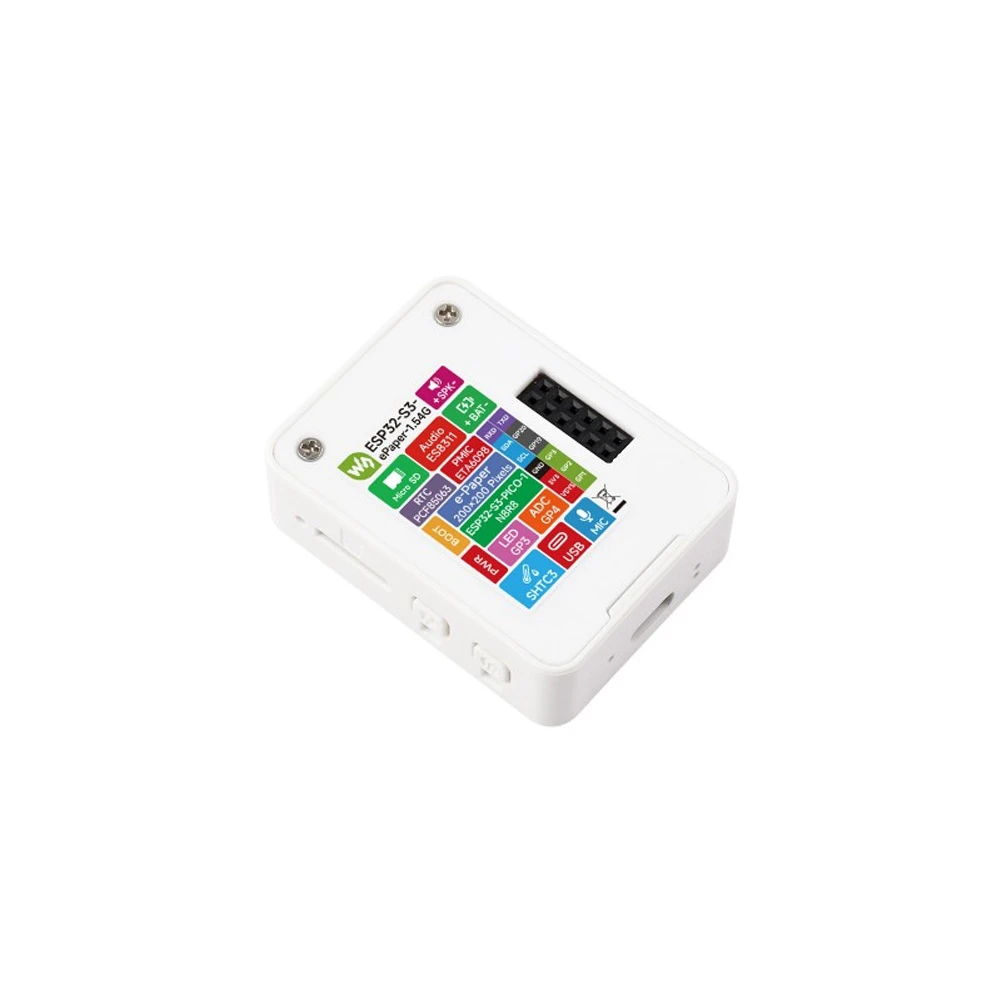
The Waveshare ESP32-S3 1.54-inch e-Paper AIoT Development Board integrates a dual-core ESP32-S3 processor, Wi-Fi/Bluetooth 5 LE connectivity, and a four-color e-paper display for ultra-low-power smart device development, compatible with ESP-IDF and Arduino IDE.

Features

  • ESP32-S3 dual-core LX7 processor running at up to 240MHz with 8MB Flash & PSRAM for robust IoT application processing.
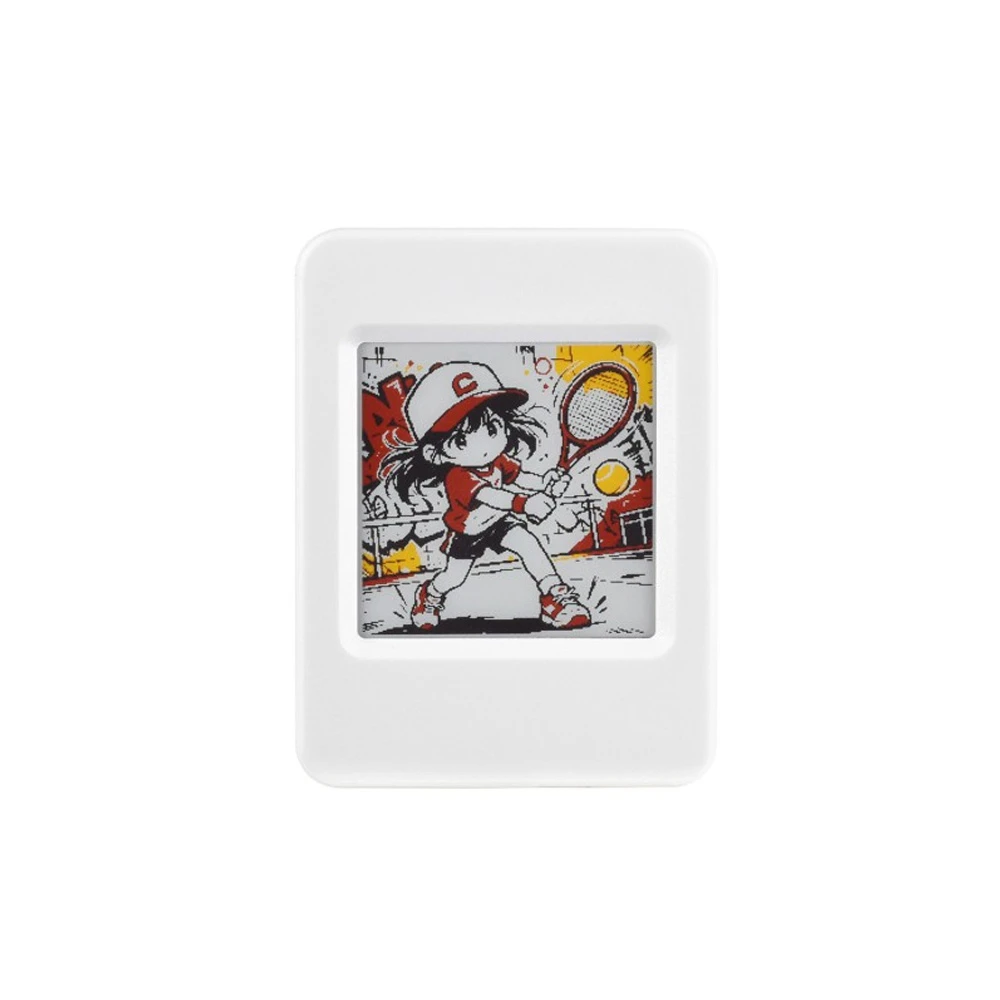
  • 1.54-inch four-color e-paper display (200×200 resolution) provides clear, sunlight-readable visuals with minimal power consumption.
  • Integrated Wi-Fi 802.11 b/g/n and Bluetooth 5 LE for wireless connectivity in smart home and portable monitoring projects.
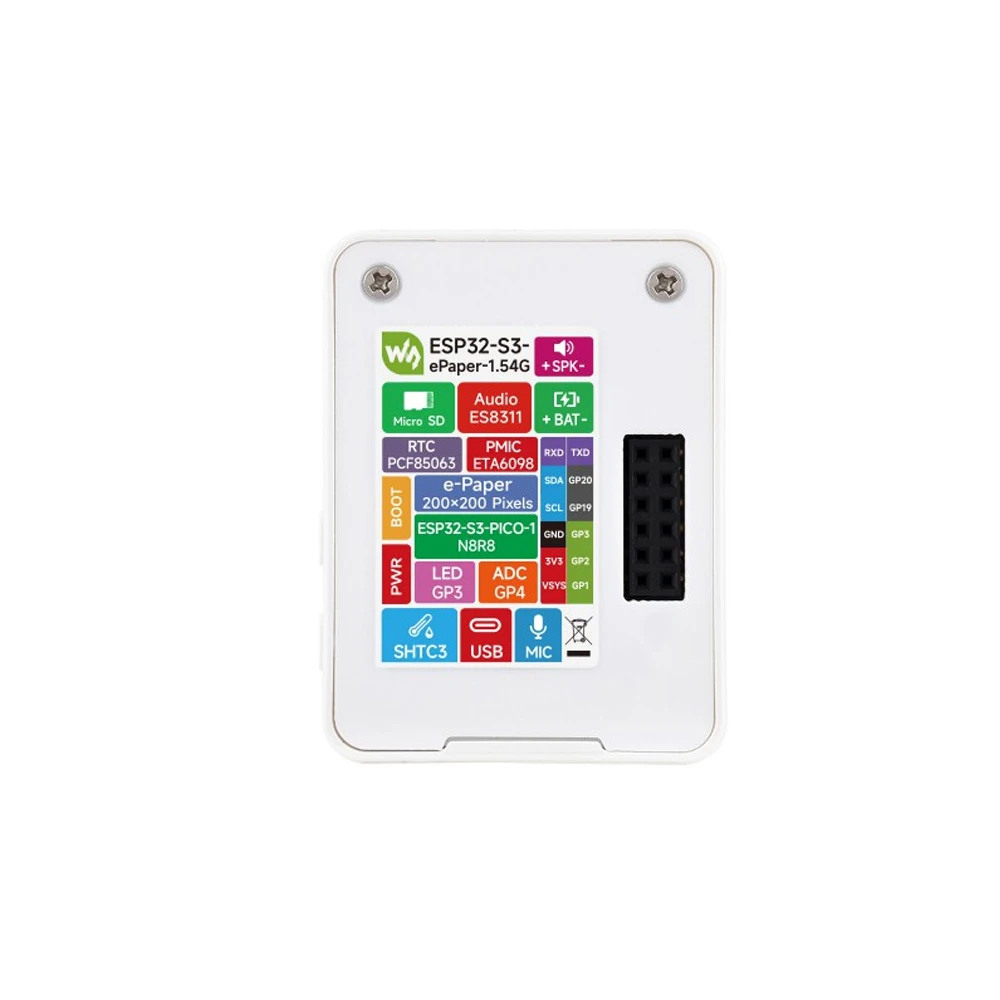
  • Onboard ES8311 audio codec, microphone, SHTC3 sensor, and TF card slot enable voice AI, environmental sensing, and data logging.
  • Supports development via ESP-IDF and Arduino IDE with accessible GPIO, I2C, and UART interfaces for rapid prototyping.

Out of stock

Description

The Waveshare ESP32-S3 1.54-inch e-Paper AIoT Development Board is a feature-rich platform designed for energy-efficient, visually interactive IoT endpoints. It combines the computational power of Espressif’s ESP32-S3 dual-core processor with a passively reflective e-paper screen, creating an ideal base for battery-operated smart displays, wireless sensor nodes, and voice-interactive gadgets.

Its architecture supports advanced power management, leveraging the e-paper’s zero-power hold state and the ESP32-S3’s deep sleep modes for extended field deployment. The integrated suite of peripherals—including an audio codec, environmental sensor, and real-time clock—facilitates the development of all-in-one solutions without external component clutter, streamlining the path from prototype to production.

Key Features

  • Ultra-low-power four-color e-paper display for persistent, sunlight-readable information without constant power draw.
  • Comprehensive wireless suite with 2.4GHz Wi-Fi and Bluetooth 5 LE for IoT connectivity and device pairing.
  • Integrated audio pipeline featuring an ES8311 codec and microphone for voice assistant and audio processing applications.
  • Onboard environmental monitoring via the SHTC3 digital temperature and humidity sensor.
  • Expandable storage through a standard TF card slot for data logging and asset storage.
  • Precise timekeeping enabled by a dedicated PCF85063 real-time clock (RTC) chip.
  • Developer-friendly with full support for Espressif's ESP-IDF framework and the Arduino IDE.
  • Convenient USB Type-C interface for power, programming, and serial communication.

Applications

  • Ultra-low-power smart displays and electronic shelf labels (ESLs) for retail and logistics.
  • Portable environmental monitoring stations with wireless data reporting.
  • Battery-operated voice assistant devices and smart home control panels.
  • DIY IoT projects requiring persistent, readable output without backlighting.
  • Wireless data loggers and field sensor nodes with local display capabilities.

Technical Specifications

Microcontroller / SoCESP32-S3-PICO-1-N8R8 (Xtensa LX7 Dual-Core)
Operating FrequencyUp to 240MHz
Flash Memory8MB
PSRAM8MB
Display Type1.54-inch e-Paper (Four-Color)
Display Resolution200 x 200 pixels
Display ColorsRed, Yellow, Black, White
Wireless ProtocolsWi-Fi 802.11 b/g/n, Bluetooth 5 LE
Audio CodecES8311
SensorSHTC3 Temperature & Humidity
Storage InterfaceTF Card Slot
USB InterfaceType-C
Expansion InterfacesGPIO, UART, I2C, SPI
Battery InterfaceMX1.25 2-pin (for 3.7V Li-ion)
Development SupportESP-IDF, Arduino IDE
Dimensions53 x 40 x 17 mm

Frequently Asked Questions

What development frameworks are supported for programming this board?

The board is fully supported by Espressif's official ESP-IDF (IoT Development Framework) and the Arduino IDE via the ESP32 core. You can develop applications in C/C++ using ESP-IDF for maximum control or use the Arduino ecosystem for its extensive libraries and simpler workflow. Setup involves installing the appropriate board package and selecting the correct target (e.g., ESP32-S3 Dev Module) in your chosen IDE.

How do I power the board and what is the battery specification?

You can power the board via the onboard USB Type-C port or by connecting a 3.7V lithium-ion/polymer battery to the MX1.25 2-pin header (battery not included). The board includes power management circuitry for charging and voltage regulation. When using battery power, leverage the ESP32-S3's deep sleep modes and the e-paper's zero-power retention to maximize operational life, as the display only consumes energy during refresh cycles.

How do I connect and use the onboard microphone and audio output?

The onboard ES8311 audio codec manages the microphone input and speaker output. For audio playback, connect a speaker to the MX1.25 2-pin speaker header. Use the I2S and audio driver libraries within ESP-IDF or the Arduino ESP32-AudioI2S library to capture audio from the mic or stream to the speaker. The codec is configured over I2C, and example code is typically provided in the Waveshare wiki or GitHub repository.

Can the e-paper display be partially refreshed to update faster?

Yes, the display controller supports partial refresh modes which are significantly faster than a full refresh. A full refresh may take around 20 seconds to clear ghosting, while a fast partial refresh can be completed in approximately 15 seconds. You must use the specific driver functions for the display (like `epd_poweron()` and `epd_clear()`) provided in the Waveshare display library to manage these modes effectively and avoid image retention issues.

Package Includes

  • 1 x Waveshare ESP32-S3 1.54-inch e-Paper (G) AIoT Development Board

Additional Information

Weight 0.02 kg
Dimensions 10 × 10 × 3 cm