SKU: SENS-2858
📋 GST Invoice Available

SparkFun Qwiic Soil Moisture Sensor - Resistivity-Based Probe

₹1,799.00 (Inclusive of all taxes)
Out of Stock

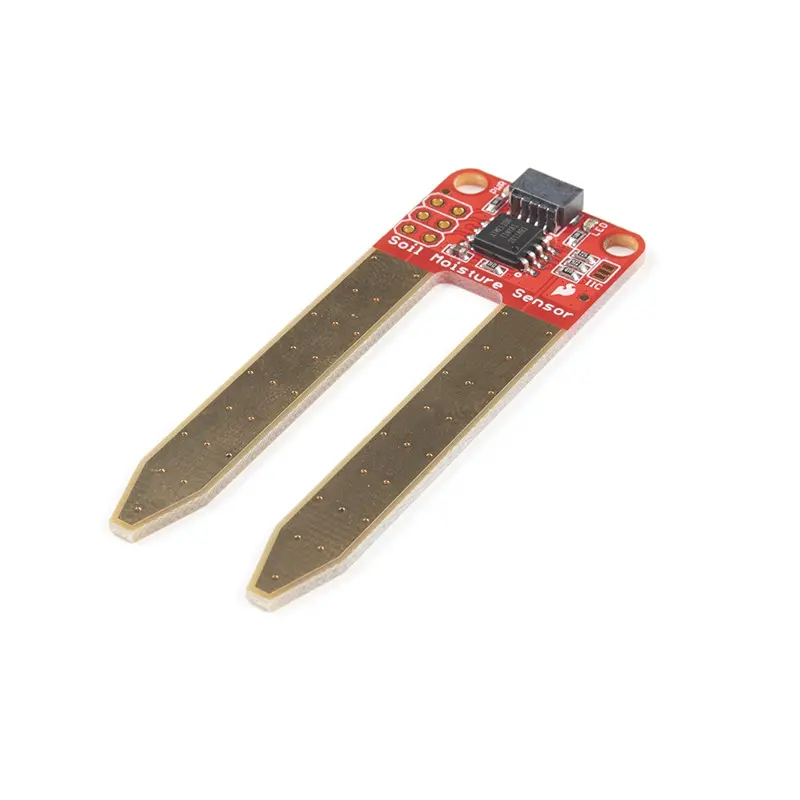
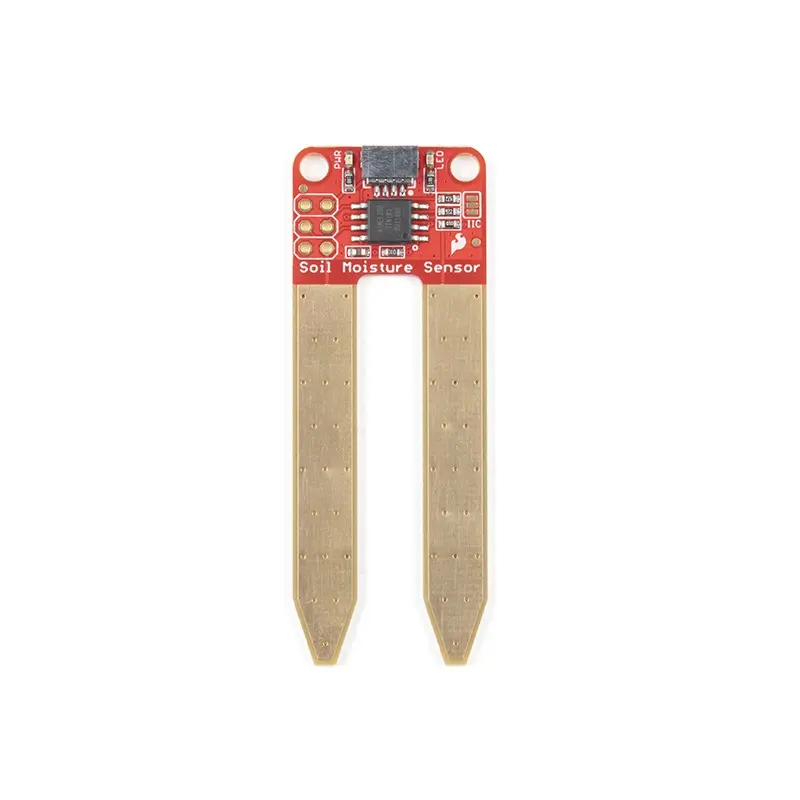
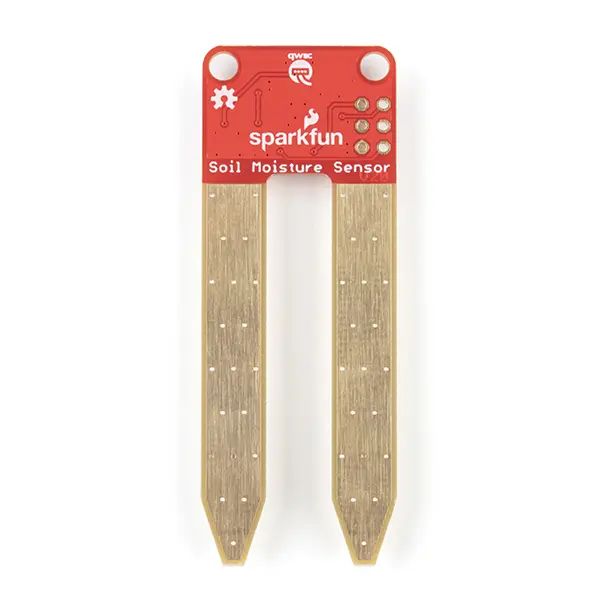
The SparkFun Qwiic Soil Moisture Sensor is a resistivity-based breakout module for detecting water content in soil and other porous materials, featuring a Qwiic connector for easy I2C interfacing with Arduino, Raspberry Pi, and other 3.3V/5V development boards.

Features

  • Soil moisture detection via resistivity measurement between two large exposed electrode pads.
  • Integrated Qwiic connector enables plug-and-play I2C communication, eliminating soldering.
  • Gold-plated (ENIG) PCB finish enhances corrosion resistance for extended sensor lifespan in damp environments.
  • Simple 3.3V or 5V logic compatibility with a straightforward analog or digital output signal.
  • Compact form factor designed for easy integration into gardening, agriculture, and environmental monitoring projects.

Out of stock

Description

This sensor operates on the principle of electrical resistivity. The two exposed conductive pads act as probes, forming a variable resistor whose value changes with the moisture content of the surrounding material (e.g., soil). Higher moisture improves conductivity, lowering the resistance between the pads, which is reflected in the output signal (SIG). This analog output can be directly read by a microcontroller’s ADC pin for quantitative moisture level assessment.

Designed for durability in wet conditions, the sensor’s PCB features an Electroless Nickel Immersion Gold (ENIG) finish, which significantly reduces oxidation and corrosion compared to standard HASL finishes. This makes it suitable for long-term, embedded use in automated plant watering systems, smart agriculture, and environmental science projects.

Key Features

  • Resistivity-Based Sensing: Measures soil moisture through changes in electrical conductivity between two exposed electrode pads.
  • Qwiic (I2C) Ecosystem: Integrated Qwiic connector allows for daisy-chaining and tool-free connection to a wide range of compatible microcontrollers and SBCs.
  • Corrosion-Resistant Construction: Gold-plated (ENIG) PCB surface treatment provides enhanced protection against moisture and chemical degradation.
  • Simple Interface: Requires only power (VCC), ground (GND), and a signal (SIG) connection for basic operation, with Qwiic enabling digital communication.
  • Broad Compatibility: Operates at 3.3V or 5V logic levels, making it suitable for Arduino, Raspberry Pi, ESP32, and other popular platforms.
  • Optimized Performance-to-Cost Ratio: Delivers reliable soil moisture sensing in a durable, easy-to-use package for hobbyist and educational applications.

Applications

  • Automated drip irrigation and smart plant watering systems for home gardens or greenhouses.
  • Soil moisture monitoring in precision agriculture and crop research projects.
  • Environmental data logging for ecological studies and weather stations.
  • Educational demonstrations of sensor principles and basic electronics in STEM curricula.
  • Integration into IoT platforms for remote monitoring of potted plants or urban farming setups.

Technical Specifications

Manufacturer Part NumberSEN-17731
BrandSparkFun
Sensor TypeSoil Moisture Sensor
Sensing PrincipleElectrical Resistivity
Output SignalAnalog (SIG) / I2C via Qwiic
InterfaceQwiic Connector, Breakout Pins
PCB FinishENIG (Electroless Nickel Immersion Gold)
Operating Voltage3.3V - 5V DC
Dimensions (Shipping)7 x 4 x 1 cm
Weight (Shipping)0.005 kg

Frequently Asked Questions

What is the operating voltage range for this SparkFun soil moisture sensor?

The sensor is designed to operate from a 3.3V to 5V DC power supply, making it directly compatible with most Arduino boards, Raspberry Pi GPIO (using 3.3V), ESP32, and other common microcontroller platforms without requiring a level shifter.

How do I connect and read data from the Qwiic Soil Moisture Sensor?

For the simplest connection, use a Qwiic cable to link the sensor's connector to another Qwiic-enabled device (like a SparkFun RedBoard Qwiic). This establishes I2C communication. Alternatively, you can use the breakout pins: connect VCC to 3.3V/5V, GND to ground, and the SIG pin to an analog input pin on your microcontroller to read the raw resistive output.

Why does the sensor have a gold (ENIG) finish, and how does it help?

The Electroless Nickel Immersion Gold (ENIG) plating on the PCB's exposed pads and traces provides superior corrosion resistance compared to standard solder finishes. This is critical for a sensor constantly exposed to damp soil and electrolytes, as it significantly slows oxidation, prolonging the sensor's operational lifespan and maintaining measurement accuracy.

Can this sensor be left buried in soil permanently?

While the ENIG finish improves durability, permanent burial is not recommended for long-term industrial use. For extended projects, periodic inspection and cleaning are advised. For best results, consider using it in a protected housing or as part of a system where the sensor PCB itself is not in constant, direct contact with saturated soil.

What does the output signal (SIG) represent, and how do I calibrate it?

The SIG pin provides an analog voltage that correlates with the resistance between the probe pads. Higher moisture (lower resistance) results in a higher output voltage. Calibration involves taking readings in "dry" and "water-saturated" soil conditions specific to your medium to map the sensor's output range to a meaningful moisture percentage or index for your application.

Package Includes

  • 1 x SparkFun Qwiic Soil Moisture Sensor

Additional Information

Weight 0.005 kg
Dimensions 4 × 7 × 1 cm