SKU: IOWC-1289
📋 GST Invoice Available

Sipeed Tang Nano 4K FPGA Development Board w/ Cortex-M3 & HDMI

₹1,859.00 (Inclusive of all taxes)
Out of Stock

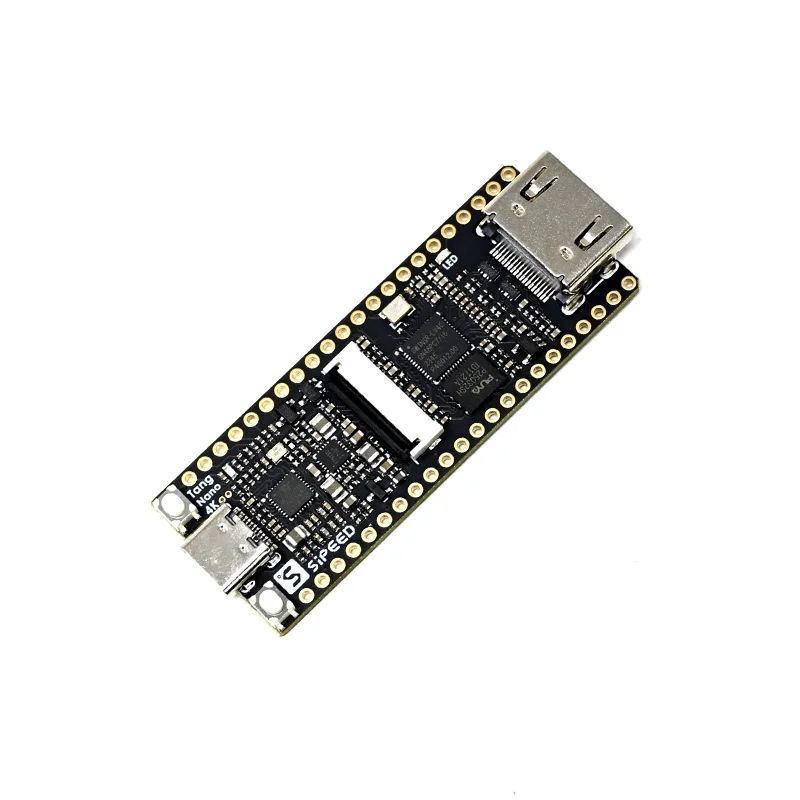
The Sipeed Tang Nano 4K is a compact FPGA development board based on the Gowin GW1NSR-LV4C chip, integrating a Cortex-M3 hardcore, HDMI output, and a camera interface for embedded vision and digital logic projects.

Features

  • Gowin GW1NSR-LV4C FPGA with 4608 LUTs and an integrated ARM Cortex-M3 hardcore for hybrid FPGA/MCU development.
  • Onboard HDMI interface and DVP camera port for direct video input/output and embedded vision applications.
  • Integrated USB-JTAG debugger simplifies programming and real-time debugging via a single Type-C cable.
  • Compact 60 x 22.86 mm form factor with 44 user I/Os, 2 PLLs, and 180Kb Block SRAM for dense logic designs.
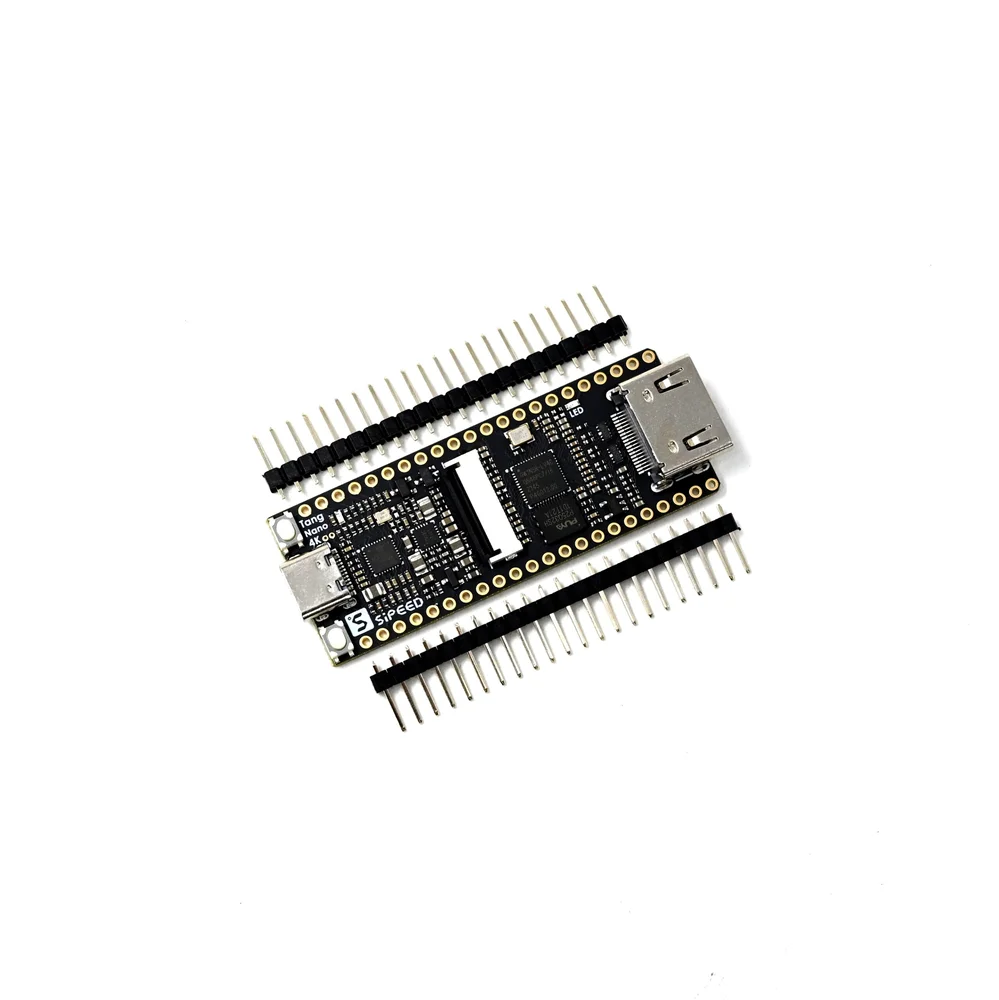
  • Includes 256Kb user flash, 4 I/O banks, and ships with pre-soldered headers and a Type-C data cable for immediate prototyping.

Out of stock

Description

The Sipeed Tang Nano 4K is a feature-rich development platform centered on the Gowin Little Bee series GW1NSR-LV4C FPGA. This chip combines 4608 four-input look-up tables (LUTs) with an embedded ARM Cortex-M3 processor core, enabling developers to implement custom digital logic alongside real-time microcontroller tasks. The board’s architecture is designed for rapid prototyping, offering direct access to critical peripherals like a Digital Video Port (DVP) for camera sensors and a full HDMI output for display, making it suitable for video processing pipelines.

Power and connectivity are streamlined through a single USB Type-C port, which handles both power delivery and FPGA programming via the integrated USB-JTAG debugger. The board’s 44 user I/O pins are organized across four banks, providing flexibility for interfacing with external ADCs, sensors, or communication modules. With 180Kbits of block SRAM and 256Kbits of user-configurable flash, the Tang Nano 4K supports complex state machines and data buffering applications without external memory.

Key Features

  • Hybrid FPGA+MCU platform featuring Gowin's GW1NSR-LV4C FPGA with an integrated ARM Cortex-M3 hardcore.
  • Direct video interfacing via dedicated DVP camera port and HDMI output for embedded vision and display projects.
  • Onboard USB-JTAG programming and debug interface eliminates the need for external programmers.
  • High logic density with 4608 LUTs, 3456 registers, and 180Kb of embedded block RAM for complex digital designs.
  • Flexible clock management with two onboard Phase-Locked Loops (PLLs) for frequency synthesis.
  • Comprehensive I/O expansion through 44 user GPIOs distributed across four configurable I/O banks.
  • Non-volatile configuration storage with 256Kbits of user flash memory.
  • Ultra-compact PCB footprint (60mm x 22.86mm) ideal for space-constrained embedded systems and portable devices.

Applications

  • Embedded vision systems and simple image processing pipelines using camera sensors.
  • Digital signal processing (DSP) implementations and hardware acceleration for algorithms.
  • Prototyping custom digital interfaces (SPI, I2C, UART) and glue logic for IoT systems.
  • Educational projects for learning FPGA design, Verilog/VHDL, and hardware/software co-design.
  • Development of video output devices, HDMI test pattern generators, or display controllers.

Technical Specifications

FPGA ChipGowin GW1NSR-LV4C
Logic Units (LUTs)4608
Embedded ProcessorARM Cortex-M3 Hardcore
Registers3456
Block SRAM180 Kbits
User Flash256 Kbits
Video InterfacesHDMI Output, DVP Camera Input
Programming/DebugOnboard USB-JTAG (Type-C)
User I/O44 Pins
I/O Banks4
PLLs2
Board Dimensions60 x 22.86 mm

Frequently Asked Questions

What software is used to program the Tang Nano 4K FPGA?

You program the Tang Nano 4K using Gowin's official EDA toolchain, Gowin YunYuan (V1.9.9 or later). This software supports Verilog and VHDL for FPGA synthesis and place-and-route, while the integrated Cortex-M3 core can be programmed using standard ARM toolchains like Keil MDK or GCC with the appropriate linker scripts for the onboard memory map.

How do I connect a camera to the DVP interface?

Connect a compatible digital video parallel (DVP) camera module, such as an OV2640, to the 24-pin DVP connector on the board. Ensure you match the pinout for data lines, horizontal/vertical sync, pixel clock, and power. You will need to configure the FPGA logic to generate the correct sensor clock (XCLK) and implement a DVP decoder in HDL to capture the streaming video data into the block RAM for processing.

Can the onboard Cortex-M3 core and FPGA logic run simultaneously?

Yes, the Cortex-M3 hardcore and the user-configured FPGA fabric can operate concurrently. The M3 core has dedicated memory and can communicate with the FPGA logic via the AHB bus or through mapped GPIO registers. This allows the M3 to handle real-time tasks and system management while the FPGA accelerates custom hardware functions like video processing or signal modulation.

What is the power supply requirement for the Tang Nano 4K?

The board is powered solely through the USB Type-C port, which provides 5V. The onboard regulators convert this to the required core voltages for the FPGA and M3. Ensure your USB port can supply at least 500mA for typical operation. For projects using all I/Os or driving external loads, consider using a powered USB hub or a dedicated 5V/1A supply connected via the Type-C cable.

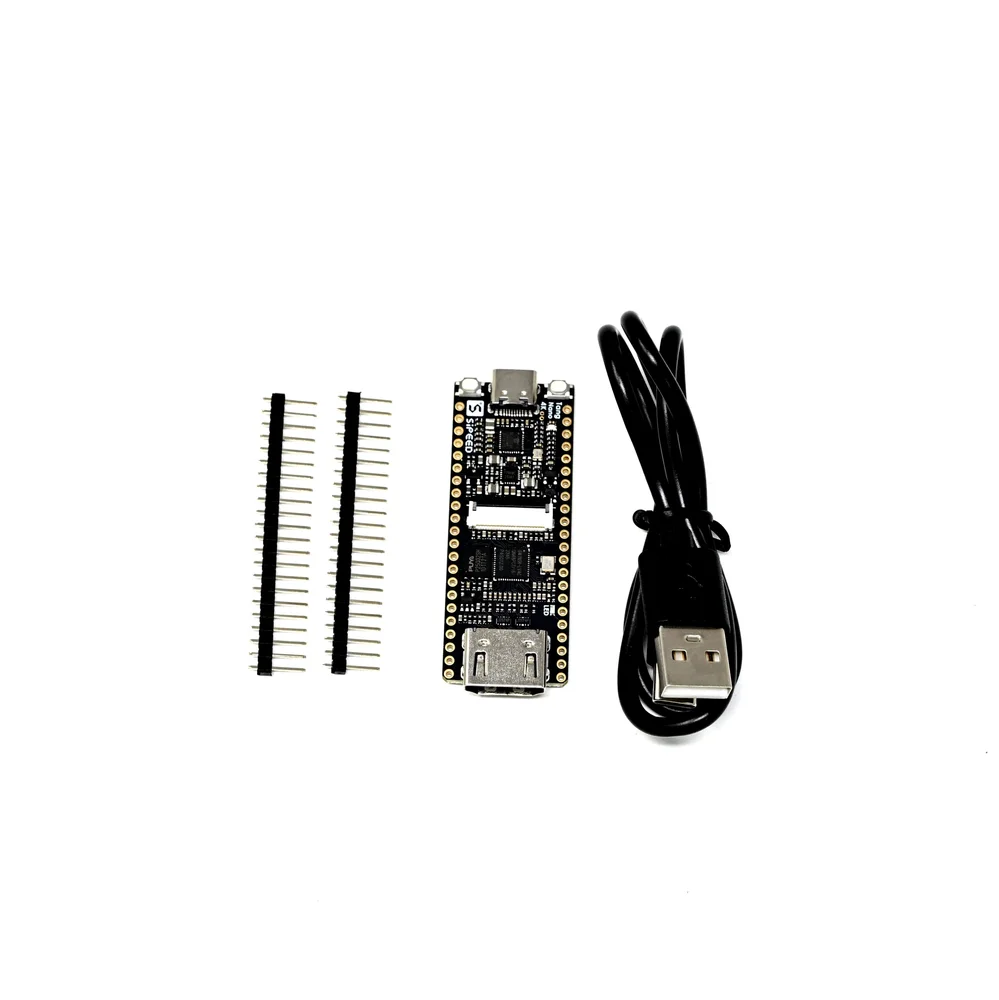
Package Includes

  • 1 x Sipeed Tang Nano 4K Core Board
  • 1 x Type-C Data Cable
  • 2 x 22-Pin 2.54mm Header

Additional Information

Weight 0.045 kg
Dimensions 8 × 6 × 3 cm