SKU: IOWC-1419
📋 GST Invoice Available

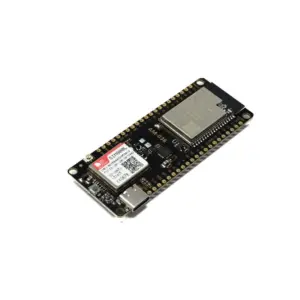
LilyGO T-Call ESP32 SIM800L 2G Module w/ PMU & Antenna

₹3,039.00 (Inclusive of all taxes)
Out of Stock

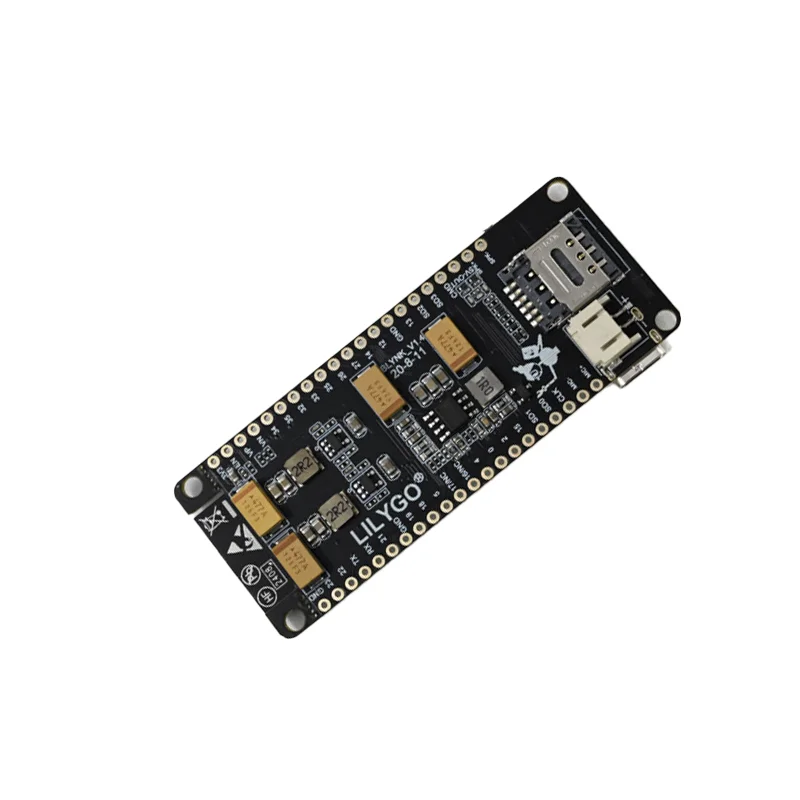
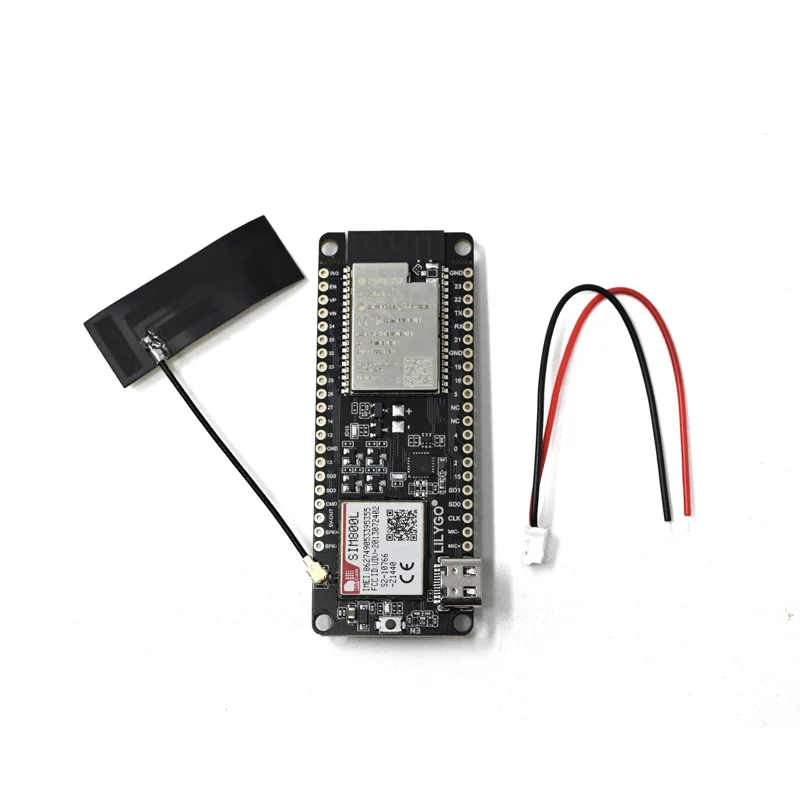
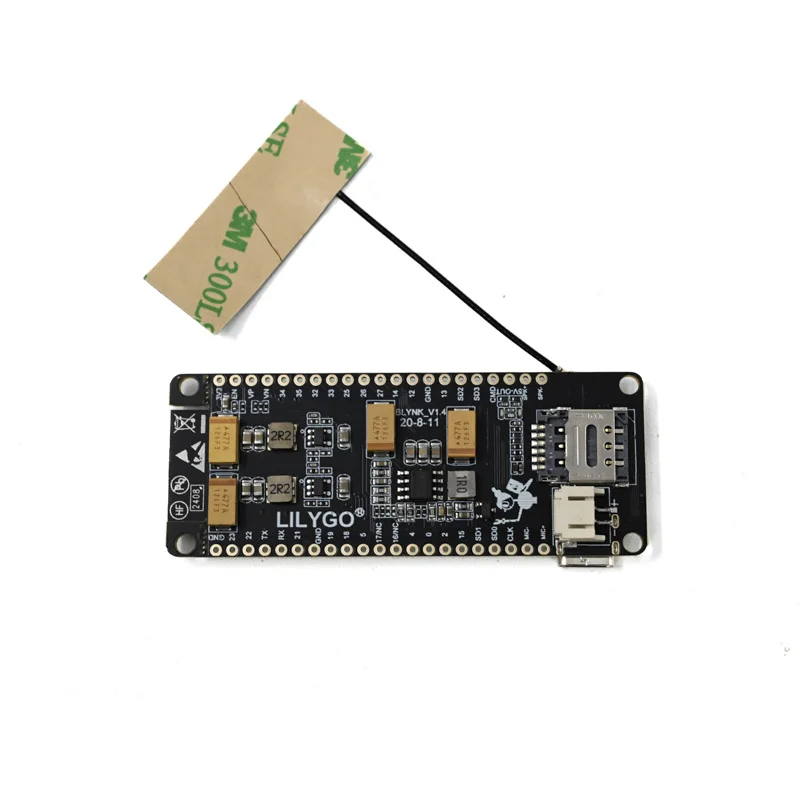
The LilyGO T-Call is an ESP32-WROVER-B development board with an integrated SIM800L 2G/GPRS module, PMU for LiPo battery charging, and onboard antenna, designed for global IoT deployments requiring cellular connectivity.

Features

  • Integrated ESP32-WROVER-B SoC with 8MB PSRAM for complex IoT firmware and dual-core processing at 240MHz.
  • Onboard SIM800L 2G/GPRS module provides global cellular connectivity for SMS, voice, and data transmission.
  • Built-in Power Management Unit (PMU) supports direct 3.7V LiPo battery connection and charging via USB Type-C.
  • Includes onboard GSM antenna and SIM card slot for rapid deployment without external RF components.
  • USB-to-serial via CP2104 and unsoldered headers offer flexible prototyping and firmware flashing via Arduino IDE or ESP-IDF.

Out of stock

Description

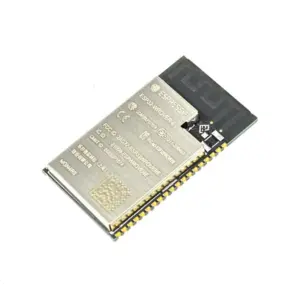
The LilyGO T-Call merges the processing power of Espressif’s ESP32 with the ubiquitous cellular coverage of the SIM800L 2G module. Its core is the ESP-WROVER-B, featuring dual-core LX6 processors, 4MB flash, and 8MB PSRAM, enabling robust application logic and data buffering for IoT gateways. The integrated SIM800L operates on global 2G bands (850/900/1800/1900MHz), supporting GPRS data, SMS, and voice calls, with an onboard chip antenna simplifying RF design.

Power management is handled by a dedicated PMU circuit, allowing seamless operation from a 3.7V LiPo battery with charging via the USB Type-C port. The board provides standard 5V/1A input, regulating down to the 2.7-3.6V operating range for the core components. With its CP2104 USB-to-serial bridge, 40MHz crystal reference, and unsoldered GPIO headers, it’s built for developers to rapidly prototype cellular-connected sensors, trackers, and remote control systems using familiar frameworks like Arduino, ESP-IDF, or MicroPython.

Key Features

  • ESP32-WROVER-B microcontroller with dual-core 240MHz processor, 4MB QSPI flash, and 8MB PSRAM for high-performance IoT applications.
  • Integrated SIM800L quad-band (850/900/1800/1900MHz) GSM/GPRS module for global 2G cellular connectivity.
  • Onboard Power Management Unit (PMU) for single LiPo battery operation with built-in charging via USB Type-C.
  • Pre-installed chip antenna for the GSM module eliminates the need for external antenna assembly.
  • USB Type-C interface with CP2104 USB-to-serial converter for reliable programming and serial communication.
  • Supports 802.11 b/g/n Wi-Fi and Bluetooth 4.2 (BR/EDR/BLE) for local wireless connectivity alongside cellular.
  • Unsoldered pin headers provide full access to ESP32 GPIOs, UARTs for AT commands to SIM800L, and ADC for battery monitoring.

Applications

  • Remote environmental monitoring sensors with cellular data backhaul in areas without Wi-Fi.
  • Asset tracking and fleet management devices using GPS (via external module) and GPRS for location reporting.
  • SMS-based alert systems for industrial equipment, security alarms, or agricultural sensors.
  • IoT gateways that aggregate local sensor data (via BLE/Wi-Fi) and transmit via cellular networks.
  • Battery-powered field telemetry units for utilities, agriculture, or scientific research.

Technical Specifications

Microcontroller/SoCEspressif ESP32-WROVER-B (240MHz dual-core LX6)
Wireless ProtocolsWi-Fi 802.11 b/g/n, Bluetooth 4.2 BR/EDR/BLE, GSM/GPRS (via SIM800L)
Cellular FrequencySIM800L Quad-band: 850/900/1800/1900 MHz
RF Transmit PowerGSM: Class 4 (2W @ 850/900MHz), Class 1 (1W @ 1800/1900MHz); Wi-Fi: Up to 22 dBm
Supply Voltage5V via USB Type-C (1A recommended)
Operating Voltage2.7V - 3.6V
Battery Support3.7V LiPo with integrated PMU charging circuit (500mA max)
InterfacesUSB Type-C (CP2104 UART), Unsoldered GPIO headers, SIM card slot
Antenna ConnectorIntegrated chip antenna for GSM; PCB antenna for Wi-Fi/BT
Operating Temperature-40°C to +85°C
Dimensions75mm x 30mm (approx.)

Frequently Asked Questions

How do I program the LilyGO T-Call ESP32 board?

Connect the board via the provided USB Type-C cable to your computer. The CP2104 USB-to-serial chip should be automatically recognized. In the Arduino IDE, select the ESP32 Dev Module board, choose the correct COM port, and set the upload speed. You can also use ESP-IDF or PlatformIO for more advanced development. Ensure the SIM800L is powered separately or via the board's 5V input during programming.

What AT commands are used to control the SIM800L module?

The SIM800L communicates with the ESP32 via a hardware UART (typically GPIO 16 for RX and 17 for TX). Use standard GSM 07.07/07.05 AT commands. Start with 'AT' to check communication, then 'AT+CPIN?' to verify SIM status, 'AT+CREG?' for network registration, and 'AT+CMGF=1' to set SMS text mode. Send data via GPRS using 'AT+CIPSTART' commands. Always ensure the module is powered with sufficient current (up to 2A peak) for transmission.

How do I power the board with a LiPo battery and what is the battery life?

Connect a standard 3.7V LiPo battery to the onboard JST PH connector. The integrated PMU manages charging when USB is connected (500mA max). Battery life depends on ESP32 sleep modes and SIM800L usage. For long operation, use ESP32 deep sleep (consuming ~10µA) and wake periodically. During active GPRS transmission, the SIM800L can draw over 1A peaks, so a high-capacity battery (e.g., 2000mAh+) is recommended for field deployments.

Package Includes

  • 1 x LilyGO T-Call ESP32 SIM800L Module (Unsoldered)

Additional Information

Weight 0.016 kg
Dimensions 7.5 × 3 cm