SKU: IOWC-1752
📋 GST Invoice Available

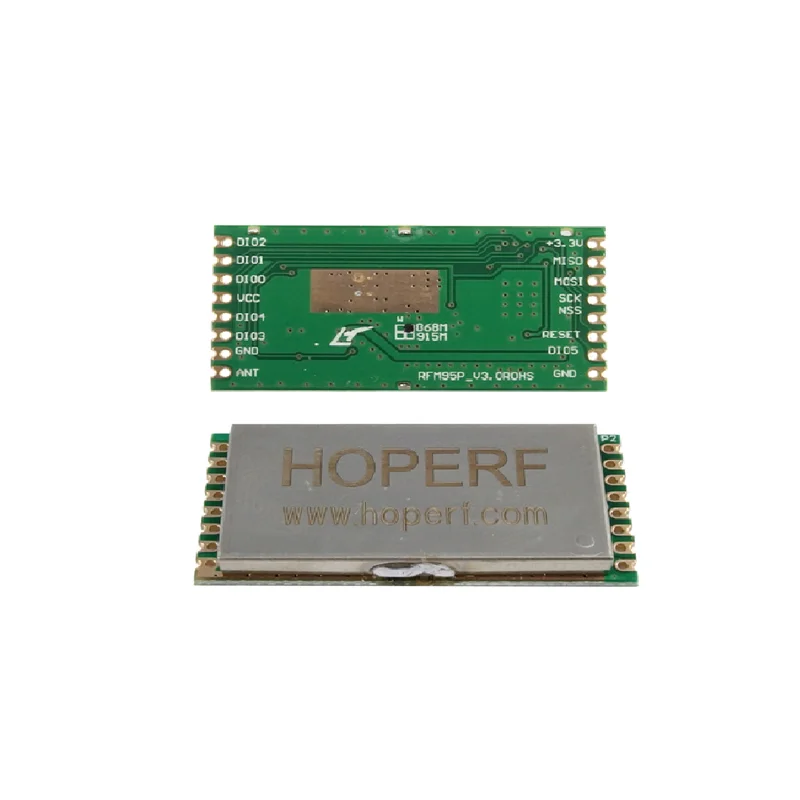
HopeRF RFM95PW-868S2 LoRa Module 868MHz

₹1,429.00 (Inclusive of all taxes)
Out of Stock

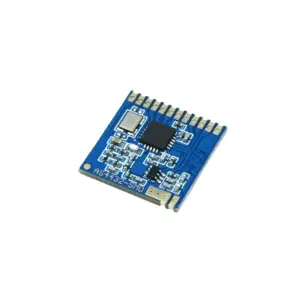
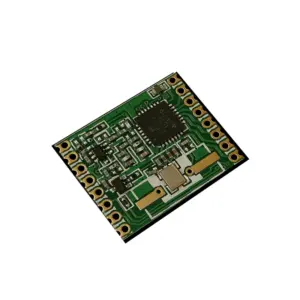
The HopeRF RFM95PW-868S2 is a compact, high-performance LoRa transceiver module operating at 868MHz, designed for long-range, low-power IoT applications. It features Semtech’s LoRa modulation, +30dBm output power, and -148dBm sensitivity, making it ideal for integration into sensor nodes, gateways, and remote telemetry systems via SPI interface.

Features

  • 868MHz LoRa Transceiver: Features Semtech’s LoRa modulation for extended range and robust communication in sub-1GHz ISM bands, ideal for European deployments.
  • High RF Performance: Delivers +30dBm transmit power and a remarkable -148dBm receive sensitivity for a maximum link budget of 166dB, ensuring reliable long-distance links.
  • Flexible Modulation Support: Supports LoRa, FSK, GFSK, MSK, GMSK, and OOK modulations, providing versatility for different protocol and data rate requirements.
  • Integrated Packet Engine: Includes a built-in packet handler with CRC for data integrity, simplifying firmware development for reliable data transmission.
  • SPI Interface & Low Power: Communicates via half-duplex SPI and includes features like automatic channel activity detection (CAD) and a temperature sensor for efficient system management.

Out of stock

Description

The HopeRF RFM95PW-868S2 is a core building block for LPWAN networks, leveraging the proven RF98/RF96 chipset to implement the LoRa physical layer. Its design prioritizes both range and power efficiency, enabling battery-operated sensor nodes to transmit data over several kilometers in open terrain. The module’s advanced modem features, including a built-in bit synchronizer and fast AFC, ensure stable communication even in noisy RF environments.

Engineered for seamless integration, the module operates from a single 3.3V supply and communicates through a standard SPI interface, making it compatible with a wide range of microcontrollers like ESP32, STM32, and Arduino platforms. The integrated packet engine handles payloads up to 256 bytes, offloading complex timing and synchronization tasks from the host MCU. This combination of high performance, low current consumption in sleep modes, and a compact form factor makes it a premier choice for industrial telemetry, smart agriculture, automated meter reading, and asset tracking systems.

Key Features

  • Implements Semtech LoRa modulation for exceptional interference immunity and long-range capability.
  • High-power RF front-end with +30dBm (1W) output for maximum signal penetration.
  • Ultra-low receive sensitivity of -148dBm for capturing weak signals at extreme distances.
  • Supports multiple modulation schemes (FSK, GFSK, MSK, GMSK, OOK, LoRa) for protocol flexibility.
  • Integrated packet handler with CRC error checking simplifies application-layer data framing.
  • Automatic Channel Activity Detection (CAD) and RF sensing enable ultra-low power listening.
  • Built-in temperature sensor and low-battery indicator aid in system monitoring.
  • Compact SMD package (35.4x18x3.85mm) designed for high-volume, space-constrained PCB integration.

Applications

  • Long-Range Sensor Networks: Deploy in remote environmental monitoring for soil moisture, weather stations, and water quality sensing.
  • Smart Metering & AMI: Ideal for automated meter reading (AMR) systems for gas, water, and electricity utilities.
  • Industrial IoT & Telemetry: Monitor tank levels, machine health, and production data across large factory floors or outdoor sites.
  • Asset Tracking & Logistics: Track the location and status of pallets, containers, and vehicles across wide areas.
  • Smart Agriculture: Enable wireless control and data collection from irrigation systems, livestock monitors, and crop sensors.
  • Home & Building Automation: Create robust wireless links for security systems, garage door controllers, and perimeter monitoring.

Technical Specifications

Core Chipset / TechnologySemtech RF98/RF96 (LoRa)
Operating Frequency868 MHz
Modulation SupportLoRa, FSK, GFSK, MSK, GMSK, OOK
Maximum Transmit Power+30 dBm
Receiver Sensitivity-148 dBm (typical, LoRa)
Maximum Link Budget166 dB
Supply Voltage3.3 V
Data InterfaceHalf-Duplex SPI
Maximum Packet Size256 bytes
Programmable Bit RateUp to 300 kbps (FSK)
Dimensions (LxWxH)35.4 x 18 x 3.85 mm
Package TypeSurface Mount Device (SMD)

Frequently Asked Questions

What microcontroller interfaces are compatible with the RFM95PW-868S2 module?

The module communicates via a standard half-duplex SPI interface, making it directly compatible with most modern microcontrollers like ESP32, STM32, Arduino (Uno, Mega), Raspberry Pi (using GPIO for SPI), and Nordic Semiconductor nRF52 series. You will need to connect the module's SCK, MISO, MOSI, and NSS (chip select) pins to your MCU's corresponding SPI pins. Popular libraries like RadioHead or the Semtech SX127x LoRa driver for Arduino IDE simplify the initialization and packet handling process, allowing you to focus on your application logic.

How do I configure the transmit power and data rate for LoRa communication?

Transmit power and LoRa data rate (configured via spreading factor, bandwidth, and coding rate) are set through specific register writes over the SPI interface. Using a library like RadioHead, you typically call functions like `setTxPower(20, true)` for +20dBm output. The data rate is controlled by setting the spreading factor (SF7 to SF12), bandwidth (125 kHz, 250 kHz, etc.), and coding rate. Lower spreading factors (e.g., SF7) provide higher data rates but shorter range, while higher SF values (e.g., SF12) maximize range at the cost of speed and airtime. Always ensure matching parameters between transmitter and receiver nodes.

What is the typical power consumption during transmission and reception?

Power consumption is dominated by the RF power amplifier during transmission. At the maximum +30dBm (1W) output, the module can draw over 100mA from the 3.3V supply. At lower power settings (e.g., +14dBm), current draw drops significantly to around 30-40mA. In receive mode, the current consumption is typically between 10-15mA. The module supports sleep modes where current draw can be reduced to microamps, which is critical for battery-powered nodes. Effective power management involves putting the module into sleep between transmission/reception cycles and utilizing the built-in CAD mode for low-power packet detection.

Does this module require an external antenna, and what type is recommended?

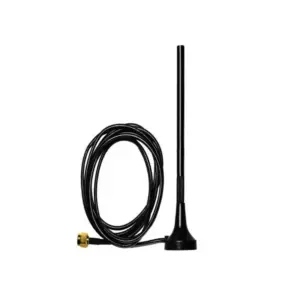
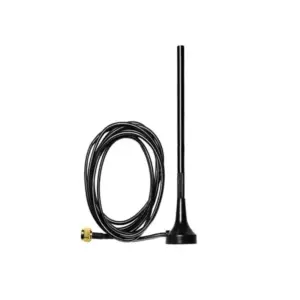
Yes, the RFM95PW-868S2 requires an external antenna connected to its RF pad or pin. For the 868MHz band, a quarter-wave whip antenna (approximately 8.2cm long) or a properly tuned helical antenna is recommended. You must use an antenna with an impedance of 50 ohms. For optimal performance and to avoid damaging the RF front-end, ensure the antenna is correctly matched and soldered. The use of an SMA or IPEX connector depends on your specific board design; many carrier boards break out the RF trace to a connector for easier antenna attachment and swapping.

Package Includes

  • 1 x HopeRF RFM95PW-868S2 LoRa Module

Additional Information

Weight 0.003 kg
Dimensions 3.54 × 1.8 × 0.385 cm