SKU: SENS-3034
📋 GST Invoice Available

DFRobot Gravity Analog Heart Rate ECG Sensor - AD8232 Chip, 3.3-6V Input

₹2,299.00 (Inclusive of all taxes)
Out of Stock

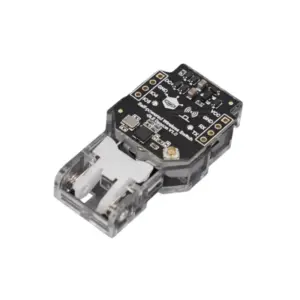
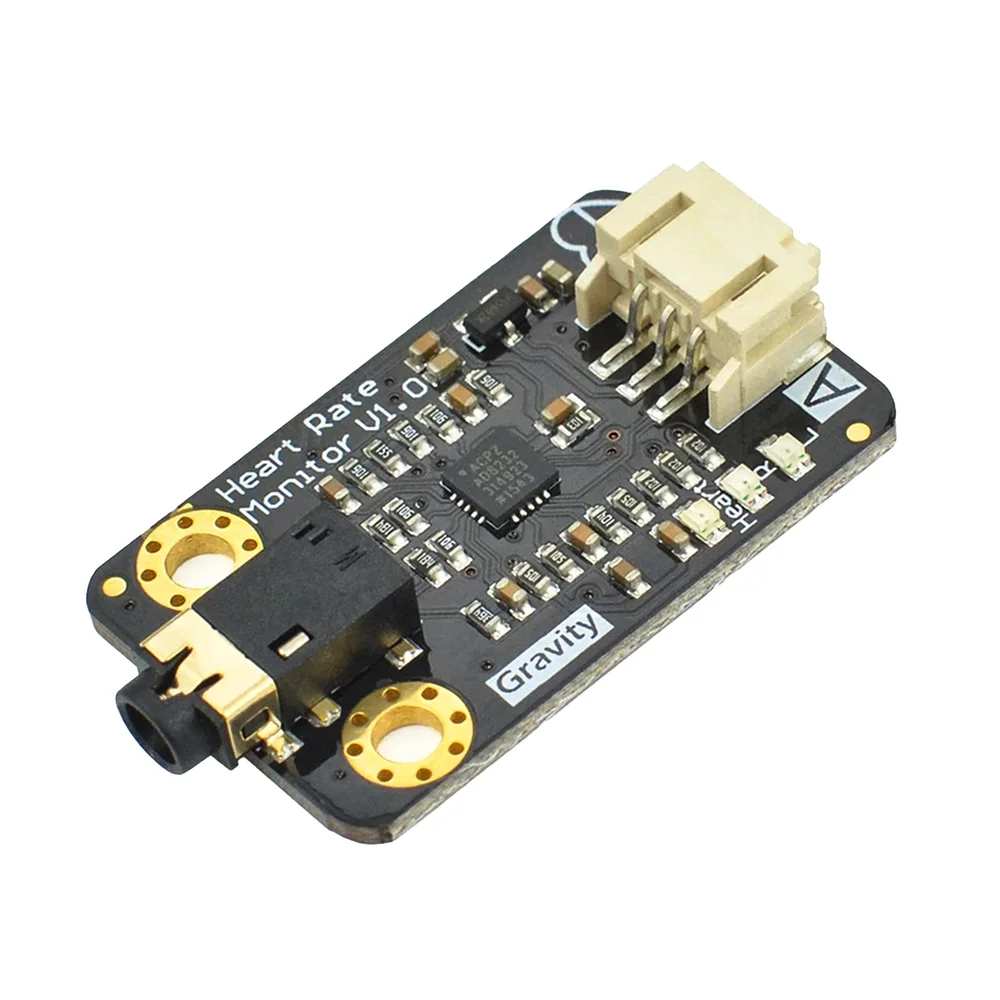
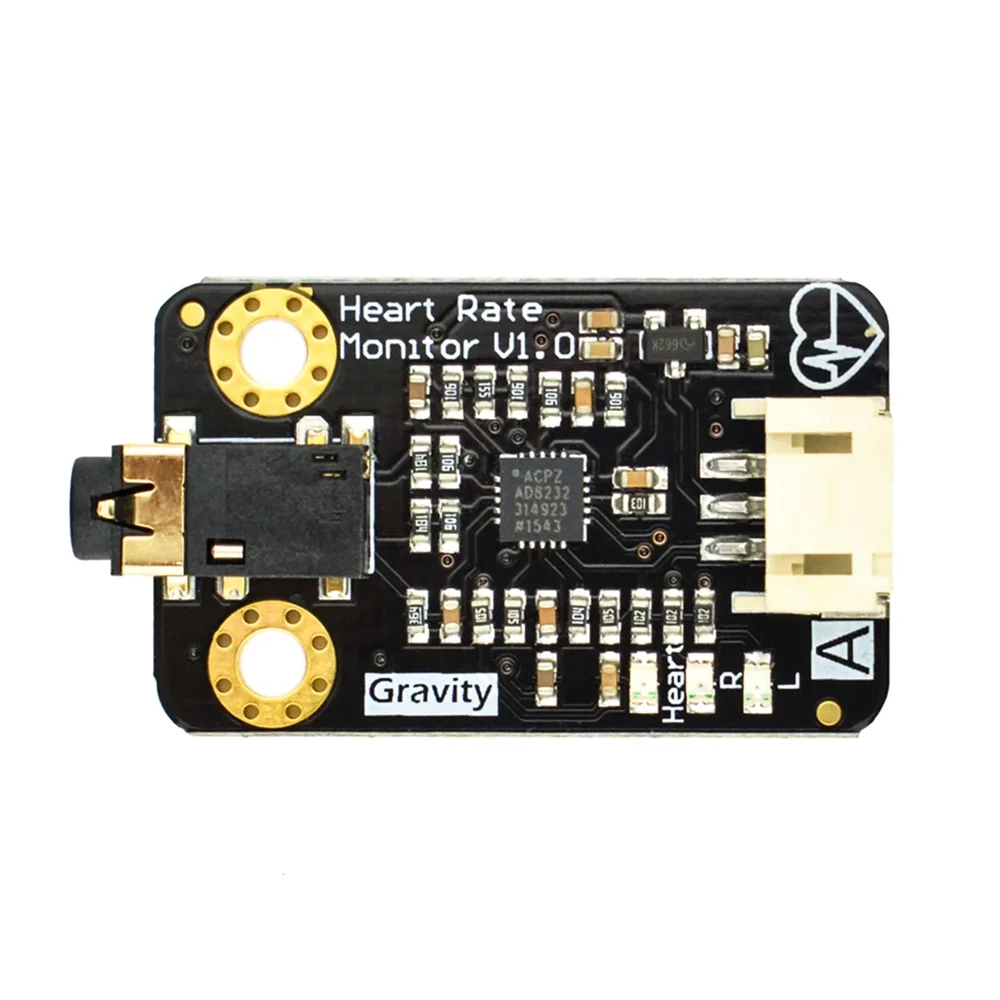
The DFRobot Gravity Analog Heart Rate ECG Sensor is a biopotential monitoring module featuring the AD8232 signal conditioning IC. It outputs a clean analog voltage signal (0-3.3V) representing the heart’s electrical activity, making it compatible with Arduino, Raspberry Pi, and other 3.3V/5V microcontroller platforms for ECG waveform acquisition.

Features

  • AD8232 IC for high-quality ECG signal conditioning and noise filtering.
  • Analog output (0-3.3V) for direct ADC connection to microcontrollers.
  • Wide 3.3-6V operating range with under 10mA current consumption.
  • Gravity 3-pin interface for plug-and-play connectivity with DFRobot shields.
  • Compatible with standard 3-lead ECG electrode placement.

Out of stock

Description

This sensor module is designed to capture and condition the faint electrical signals generated by the heart. The integrated AD8232 chip acts as an operational amplifier dedicated to ECG applications, providing filtering and gain to isolate the QRS complex and other key intervals from muscle noise and baseline wander. The resulting clean analog signal can be sampled by a microcontroller’s ADC for real-time heart rate calculation or waveform visualization.

The module operates from a single 3.3V to 6V supply, with a 5V recommendation for optimal performance. Its low sub-10mA current draw makes it suitable for portable or wearable prototype designs. The standard Gravity 3-pin connector (Analog, VCC, GND) simplifies wiring and integrates seamlessly with DFRobot’s ecosystem of shields and data loggers.

Key Features

  • Core AD8232 ECG signal conditioner from Analog Devices.
  • Delivers a stable, filtered 0-3.3V analog output proportional to cardiac electrical potential.
  • Low-power operation (<10mA) supports battery-powered monitoring applications.
  • 3.3V/5V logic compatibility ensures broad MCU platform support (Arduino, ESP32, Raspberry Pi).
  • Gravity-standard interface enables rapid prototyping without soldering.
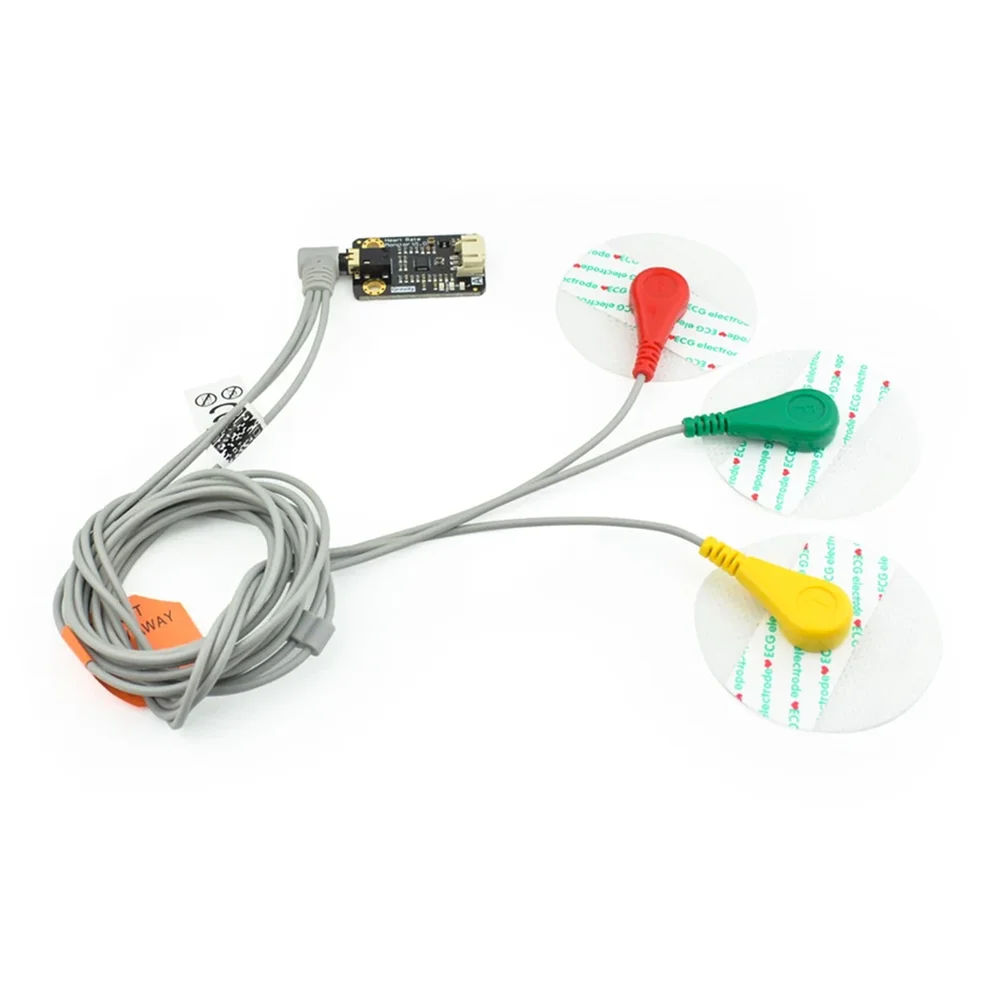
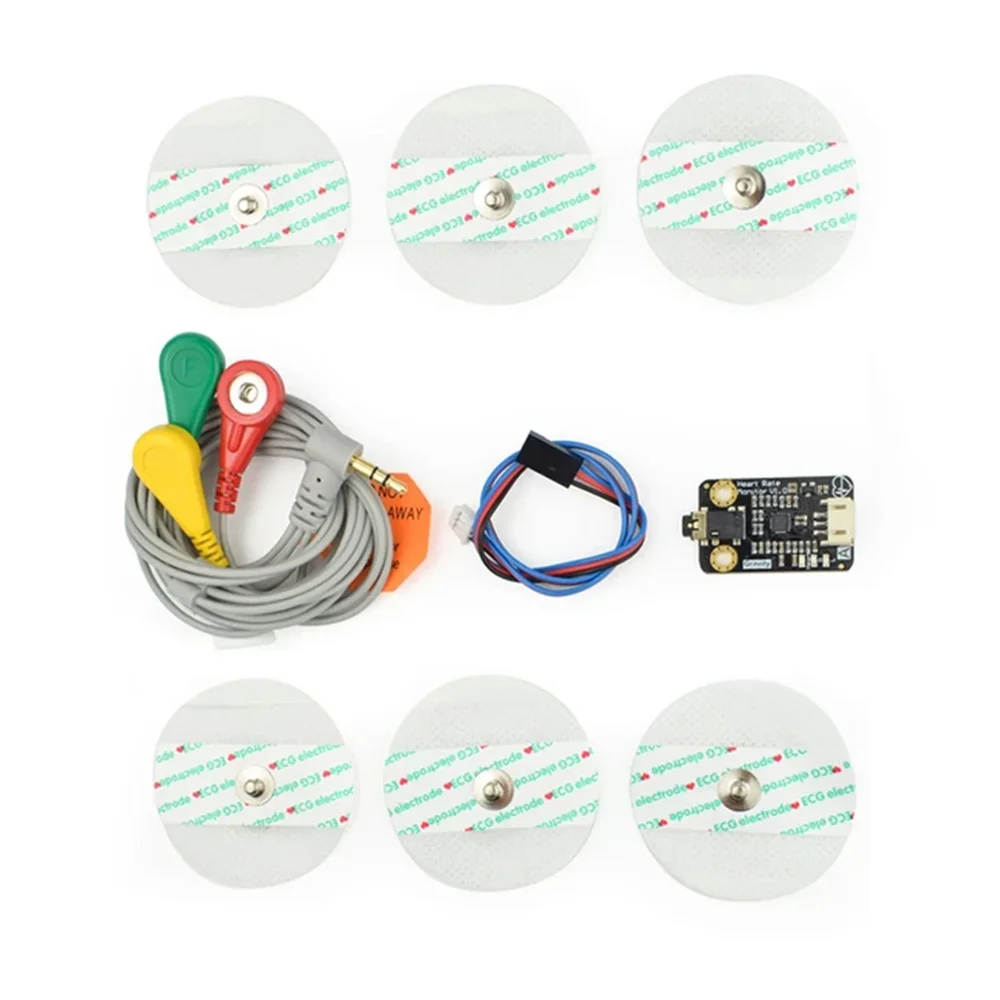
  • Designed for use with disposable or reusable 3-electrode lead sets.

Applications

  • Prototyping wearable heart rate monitors and fitness trackers.
  • Educational projects for visualizing ECG waveforms and heart rate variability (HRV).
  • Embedded medical device development for basic cardiac activity monitoring.
  • Biometric data acquisition in human-computer interaction research.
  • Integrating heart rate feedback into Arduino or Raspberry Pi-based health dashboards.

Technical Specifications

Operating Voltage3.3V to 6V DC (5V recommended)
Output SignalAnalog Voltage (0-3.3V)
InterfaceGravity Analog (3-pin)
Operating Current< 10 mA
Core ICAD8232
Measurement PrincipleElectrocardiography (ECG)
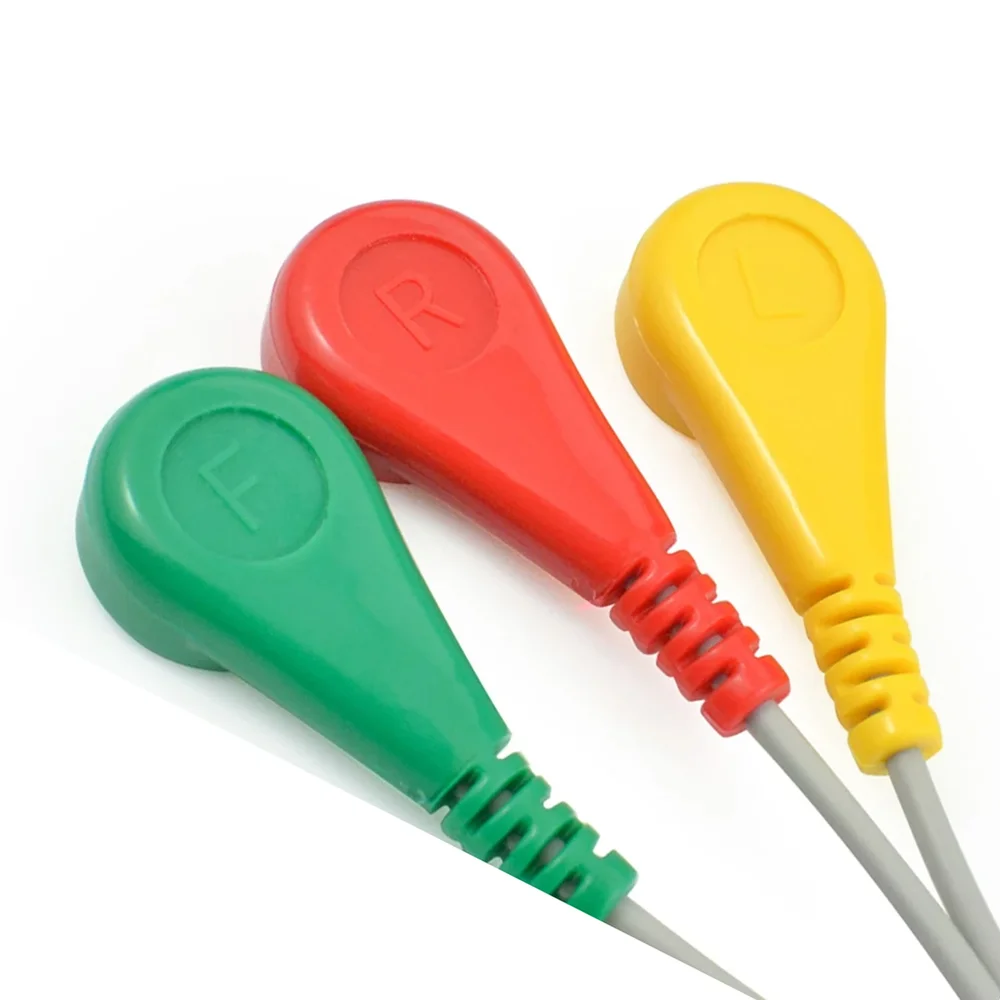
Electrode Connectors3-lead snap terminals
Dimensions (L x W)35 mm x 22 mm
WeightApprox. 0.054 kg

Frequently Asked Questions

What is the purpose of the AD8232 chip on this sensor?

The AD8232 is a dedicated integrated signal conditioner for ECG and other biopotential measurements. It amplifies the microvolt-level signals from the electrodes, applies high-pass filtering to remove motion artifact and DC offset, and includes a low-pass filter for noise reduction. This results in a clean, readable analog voltage output representing the heart's QRS complex.

How do I connect this sensor to an Arduino for heart rate reading?

Connect the module's Gravity 3-pin cable to your Arduino: VCC to 5V, GND to GND, and the Signal (S) pin to an analog input pin (e.g., A0). Attach three ECG electrodes to the patient and connect their leads to the module's snap terminals. In your Arduino sketch, use analogRead() on the chosen pin to sample the voltage waveform, then implement an algorithm to detect peaks and calculate beats per minute (BPM).

Can I use this sensor with a 3.3V system like an ESP32 or Raspberry Pi?

Yes, the module is fully compatible with 3.3V logic microcontrollers. You can power it with 3.3V from the ESP32 or Pi's GPIO header. The analog output range remains 0-3.3V, which matches the ADC reference voltage of these 3.3V systems, ensuring full-scale readings without risk of damage. Ensure your power supply can deliver the required <10mA current.

What type of electrodes should I use with this ECG sensor module?

Use standard disposable or reusable pre-gelled ECG electrodes with snap connectors. The module has three snap terminals typically labeled for Right Arm (RA), Left Arm (LA), and Right Leg (RL) leads, following a simplified three-lead configuration. Ensure good skin contact and proper lead placement (e.g., RA on right wrist, LA on left wrist, RL on right ankle) for a clear signal.

Package Includes

  • 1 x DFRobot Gravity Analog Heart Rate Monitor Sensor Module

Additional Information

Weight 0.054 kg
Dimensions 3.5 × 2.2 cm