SKU: IOWC-1891
📋 GST Invoice Available

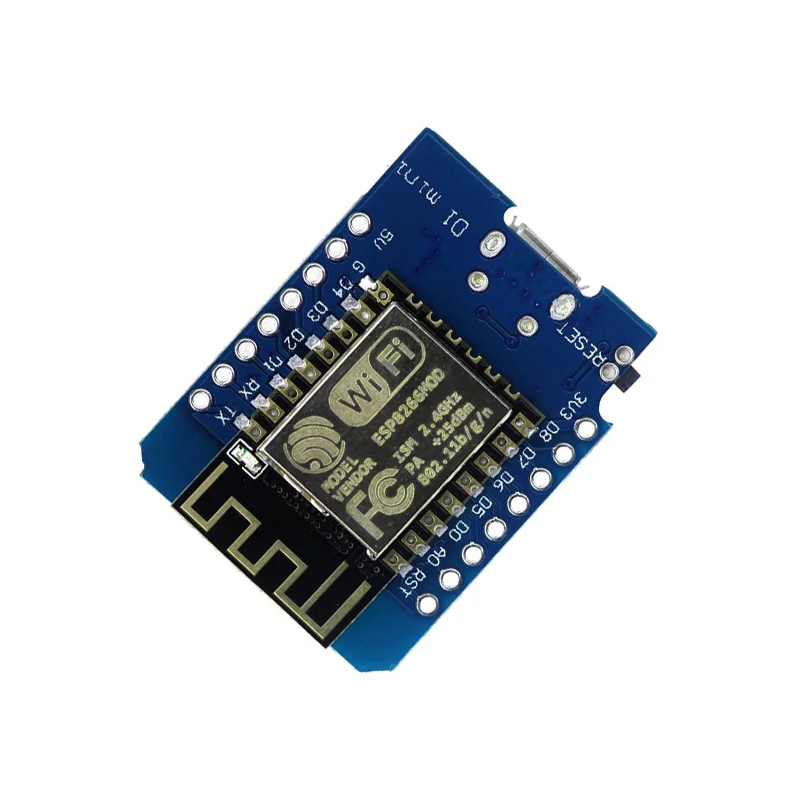
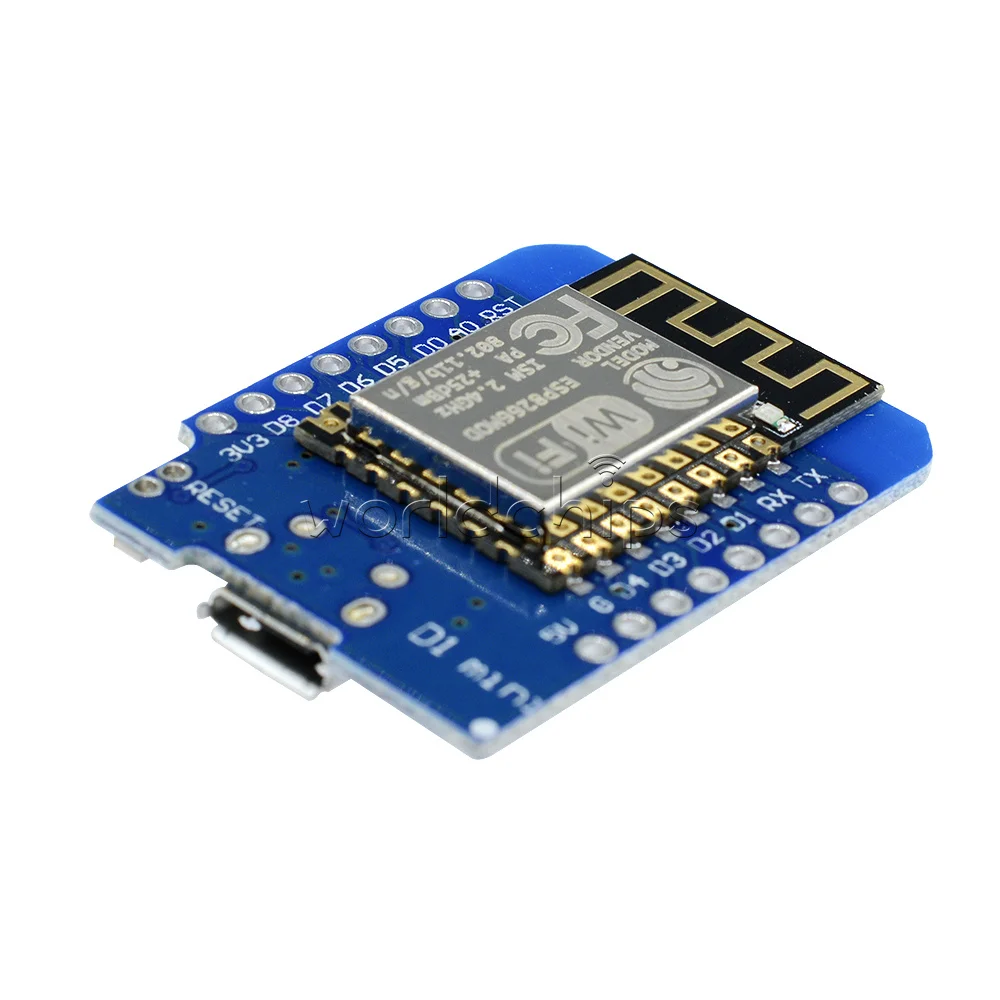
D1 Mini V2 NodeMcu ESP8266 WiFi IoT Development Board

₹209.00 (Inclusive of all taxes)
Out of Stock

The D1 Mini V2 is a compact ESP8266-based development board designed for rapid IoT prototyping, featuring 4MB of flash memory and programmable via the Arduino IDE or Lua with a micro USB connection.

Features

  • Compact ESP8266EX-based board with 4MB flash for Lua scripting and Arduino IDE development.
  • 11 digital I/O pins with interrupt, PWM, I2C, and one-wire support (except D0) plus one 3.3V analog input.
  • Integrated micro USB port for easy programming, power, and serial communication.
  • Enhanced RF stability with a 30% larger radiating area and simplified flash mode entry via BRT circuit.
  • Ideal for WiFi-enabled IoT projects, supporting direct network integration for smart home and sensor node applications.

Out of stock

Description

The D1 Mini V2 NodeMcu is a highly integrated WiFi development board centered on the ESP8266EX SoC. It provides a complete system-on-chip solution with built-in TCP/IP stack, enabling straightforward connectivity to local networks for IoT control and data exchange. The board is pre-flashed with NodeMCU firmware, allowing for immediate Lua scripting, and is fully compatible with the Arduino IDE and Espressif SDK for deeper embedded development.

Designed for reliability, the board incorporates a Bias Resistor Transistor (BRT) to simplify entering flash mode and features an enlarged PCB antenna area for improved WiFi signal stability and range. Its small form factor and breadboard-friendly pin headers make it suitable for space-constrained prototypes and final products, from smart home switches to environmental monitoring nodes.

Key Features

  • Compact form factor (35mm x 26mm) for breadboard-friendly IoT prototyping and integration.
  • Onboard micro USB connector supplies power and provides a direct serial programming interface.
  • Pre-installed NodeMCU Lua firmware with 4MB flash for over-the-air (OTA) updates and file system storage.
  • Enhanced RF performance with a optimized PCB antenna design for stronger, more stable WiFi connections.
  • Broad development ecosystem support including Arduino IDE, ESP8266 core, and native Espressif SDK.
  • Comprehensive GPIO access with multi-protocol support (I2C, SPI, PWM, one-wire) on most pins.
  • Low-power operation capabilities for battery-powered wireless sensor applications.

Applications

  • Smart home automation and WiFi-controlled relays/switches.
  • IoT sensor nodes for environmental data logging (temperature, humidity).
  • Wireless data gateways and MQTT clients for cloud connectivity.
  • Prototyping and educational projects for embedded systems and networking.

Technical Specifications

Microcontroller/SoCESP8266EX
Wireless ProtocolWi-Fi 802.11 b/g/n
Flash Memory4 MB
Digital I/O Pins11 (with interrupt/PWM/I2C/one-wire)
Analog Input1 (3.3V max)
USB InterfaceMicro USB
Supply Voltage5V via USB, 3.3V regulated I/O
Dimensions35mm x 26mm (approx.)
Weight10g

Frequently Asked Questions

How do I program the D1 Mini V2 board using the Arduino IDE?

First, install the ESP8266 board package via the Arduino Boards Manager. Connect the board via micro USB, select 'NodeMCU 1.0 (ESP-12E Module)' as your board, choose the correct COM port, and set the upload speed to 115200 baud. You can then write and upload sketches using the standard Arduino workflow, utilizing the board's digital and analog pins for your IoT application.

What is the purpose of the BRT (Bias Resistor Transistor) on this board?

The Bias Resistor Transistor simplifies the process of entering the board's flash programming mode. It helps manage the GPIO0 and RESET signals automatically when the board is powered on or reset via USB, reducing the need for manual button presses or jumper changes when uploading new firmware, making the development cycle faster and more user-friendly.

Can I power the D1 Mini V2 board directly from a 3.3V source instead of USB?

Yes, you can supply 3.3V directly to the 3.3V pin, but you must ensure a clean, regulated power source capable of providing at least 500mA during RF transmission. The onboard voltage regulator is bypassed in this case. Avoid applying 5V to any pin except the VIN pin when using an external 5V supply. Always connect ground for a complete circuit.

How do I use the Lua interpreter (NodeMCU firmware) on this board?

The board comes pre-flashed with NodeMCU Lua firmware. Use a serial terminal program (like ESPlorer or Arduino Serial Monitor) at 115200 baud to interact with the Lua interpreter. You can write Lua scripts directly to control GPIO, connect to WiFi networks, and handle network requests. To flash a custom Lua build, use tools like nodemcu-uploader or the esptool.py command-line utility.

Package Includes

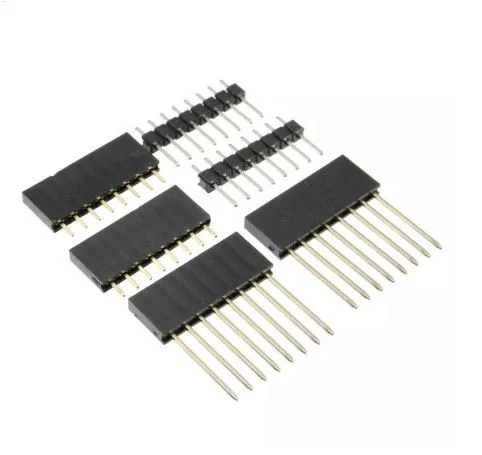
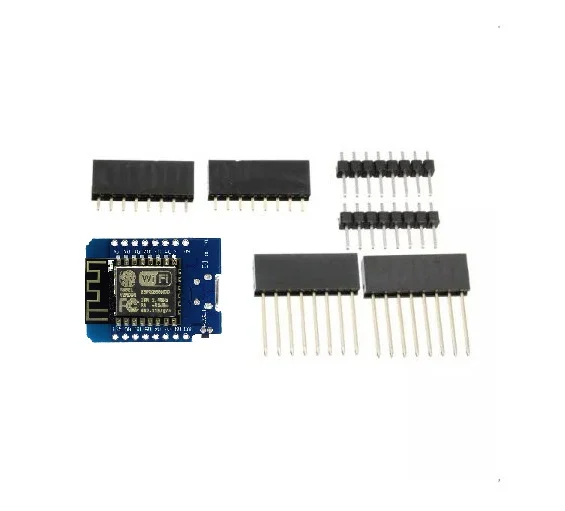
  • 1 x D1 Mini V2 NodeMcu ESP8266 Development Board
  • 2 x Long Female Pin Headers
  • 2 x Short Female Pin Headers
  • 2 x Standard Pin Headers

Additional Information

Weight 0.01 kg
Dimensions 3.5 × 2.6 cm