SKU: SENS-3191
📋 GST Invoice Available

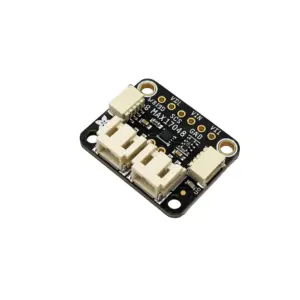
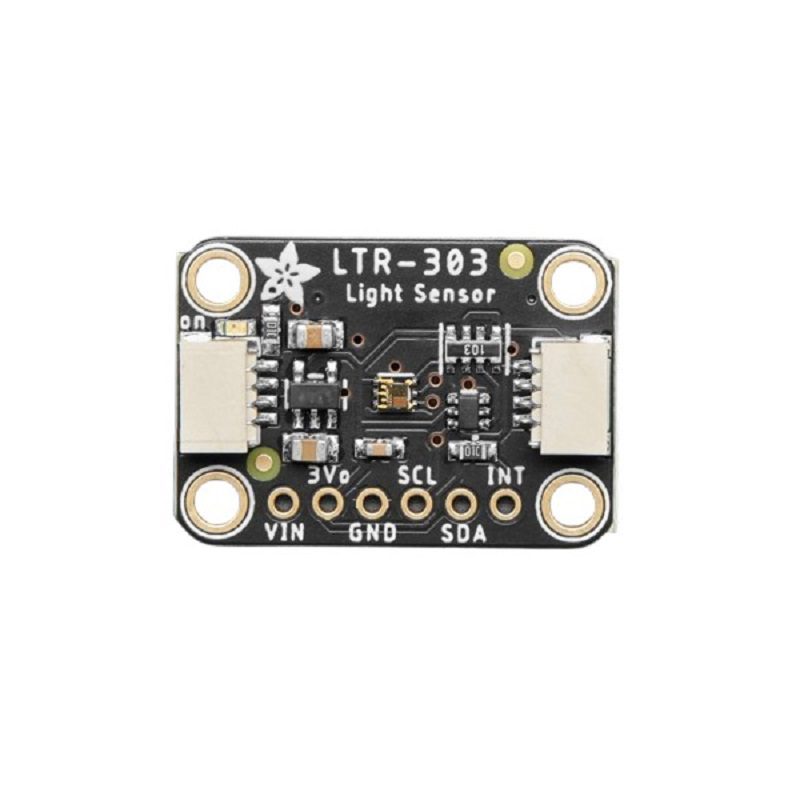
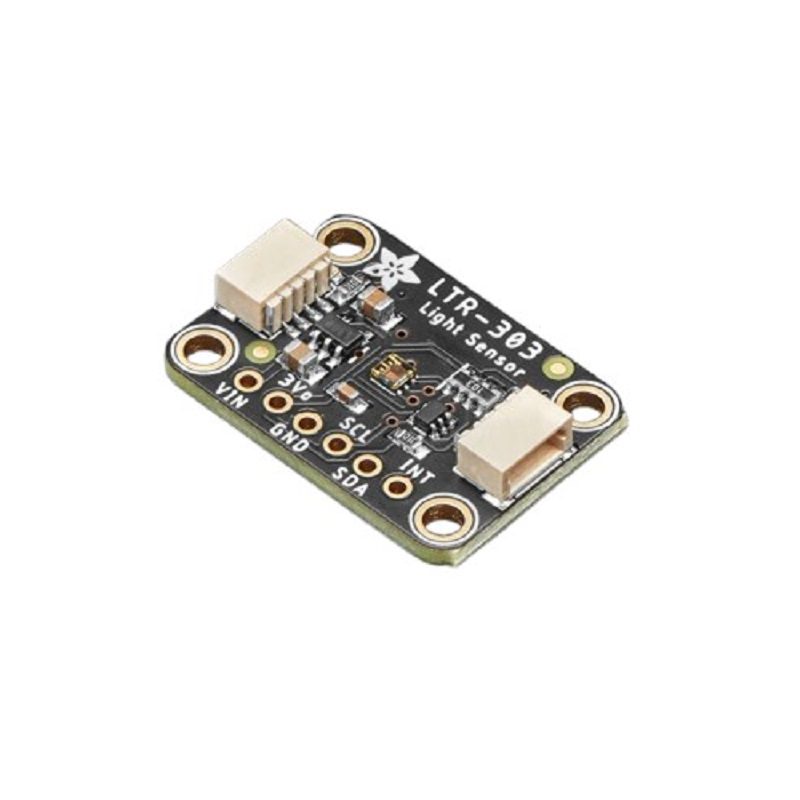
Adafruit LTR-303 Digital Light Sensor Module - STEMMA QT / Qwiic I2C

₹719.00 (Inclusive of all taxes)
Out of Stock

The Adafruit LTR-303 is a high-precision digital ambient light sensor module with an I2C interface and STEMMA QT/Qwiic connector. It provides 16-bit resolution lux measurements across six dynamic ranges (0.01 to 64k lux) and is compatible with 3.3V/5V systems like Arduino, Raspberry Pi, and ESP32.

Features

  • High-resolution 16-bit digital light sensor (LTR-303ALS) with human-eye spectral response.
  • I2C interface (address 0x29) with Fast Mode (400kHz) and interrupt output capability.
  • Six configurable dynamic ranges from 0.01 lux to 64,000 lux for precise ambient light measurement.
  • Wide 3.3V to 5V DC operating range with onboard voltage regulation and STEMMA QT/Qwiic connectivity.
  • Built-in temperature compensation and automatic rejection of 50/60 Hz lighting flicker.

Out of stock

Description

The Adafruit LTR-303 Light Sensor Module integrates the LTR-303ALS digital ambient light sensor, designed to closely match the photopic response of the human eye. It provides accurate lux measurements by separately detecting infrared and visible+IR light, enabling precise ambient light level monitoring for display backlight control and environmental sensing.

The module features a configurable gain and integration time architecture, offering six dynamic measurement ranges for optimal performance from dark rooms to direct sunlight. Its I2C interface supports fast communication and includes an interrupt pin for low-power, event-driven operation, making it suitable for battery-powered IoT devices and embedded systems.

Key Features

  • Precision LTR-303ALS sensor with 16-bit effective resolution for accurate light intensity measurement.
  • I2C interface with fixed address 0x29, supporting Fast Mode at up to 400 kbit/s.
  • Six dynamically selectable measurement ranges from 0.01 lux to 64k lux.
  • Integrated temperature compensation circuit for stable performance across -30°C to +70°C.
  • Immunity to IR/UV light sources and automatic rejection of 50/60 Hz AC lighting flicker.
  • Low active power consumption with a programmable standby mode for energy-efficient designs.
  • Onboard 3.3V regulator and level shifting for safe 3.3V to 5V system compatibility.
  • STEMMA QT / Qwiic compatible 4-pin connector for solderless prototyping and system integration.

Applications

  • Automatic display brightness adjustment for smartphones, tablets, and industrial HMIs.
  • Ambient light sensing in smart home IoT devices and environmental monitoring stations.
  • Light-following and obstacle avoidance for educational and robotics platforms.
  • Energy management systems for daylight harvesting in smart lighting controls.
  • Portable instrumentation and data loggers for precise environmental light measurement.

Technical Specifications

Sensor ModelLTR-303ALS
InterfaceI2C (Address 0x29, Fixed)
I2C SpeedUp to 400 kHz (Fast Mode)
Operating Voltage3.3 V to 5 V DC
Measurement Range0.01 lux to 64,000 lux (6 Dynamic Ranges)
Resolution16-bit Effective
Spectral ResponseClose to Human Eye (Photopic)
Output FeaturesInterrupt Pin
Operating Temperature-30°C to +70°C
ConnectorSTEMMA QT / Qwiic Compatible
Board Dimensions (L x W)25.3 mm x 17.7 mm
Board Weight1.9 g

Frequently Asked Questions

What is the I2C address of the Adafruit LTR-303 sensor module?

The LTR-303 sensor on this module has a fixed I2C address of 0x29. This address cannot be changed, so only one sensor can be used on a single I2C bus without an external multiplexer.

Is this sensor compatible with both 3.3V and 5V microcontroller systems?

Yes. The module includes onboard voltage regulation and level shifting, making it fully compatible with logic levels from 3.3V to 5V. You can safely connect it to Arduino (5V), Raspberry Pi (3.3V), ESP32, and other development boards.

How do I connect this module without soldering?

Use a STEMMA QT or SparkFun Qwiic compatible cable (not included) to connect the module's 4-pin JST SH connector directly to a host board with a matching port. This provides power, ground, SDA, and SCL connections for plug-and-play I2C communication.

What is the purpose of the interrupt pin on this sensor?

The interrupt pin allows for low-power, event-driven operation. You can configure the sensor with upper and lower light threshold limits. When the measured lux value crosses these limits, the interrupt pin triggers, waking up a microcontroller from sleep without requiring constant polling.

Can this sensor measure light in direct sunlight?

Yes. The LTR-303 sensor features six configurable dynamic ranges, with the highest range supporting measurements up to 64,000 lux, which covers typical direct sunlight conditions. You must select the appropriate gain setting via I2C commands to avoid saturation.

Package Includes

  • 1 x Adafruit LTR-303 Light Sensor Module

Additional Information

Weight 0.0019 kg
Dimensions 2.53 × 1.77 cm