SKU: SENS-3020
📋 GST Invoice Available

DFRobot Gravity Lab Grade Analog Electrical Conductivity Sensor Meter V2 K1 - BNC Probe, 0-20ms/cm

₹8,249.00 (Inclusive of all taxes)
Out of Stock

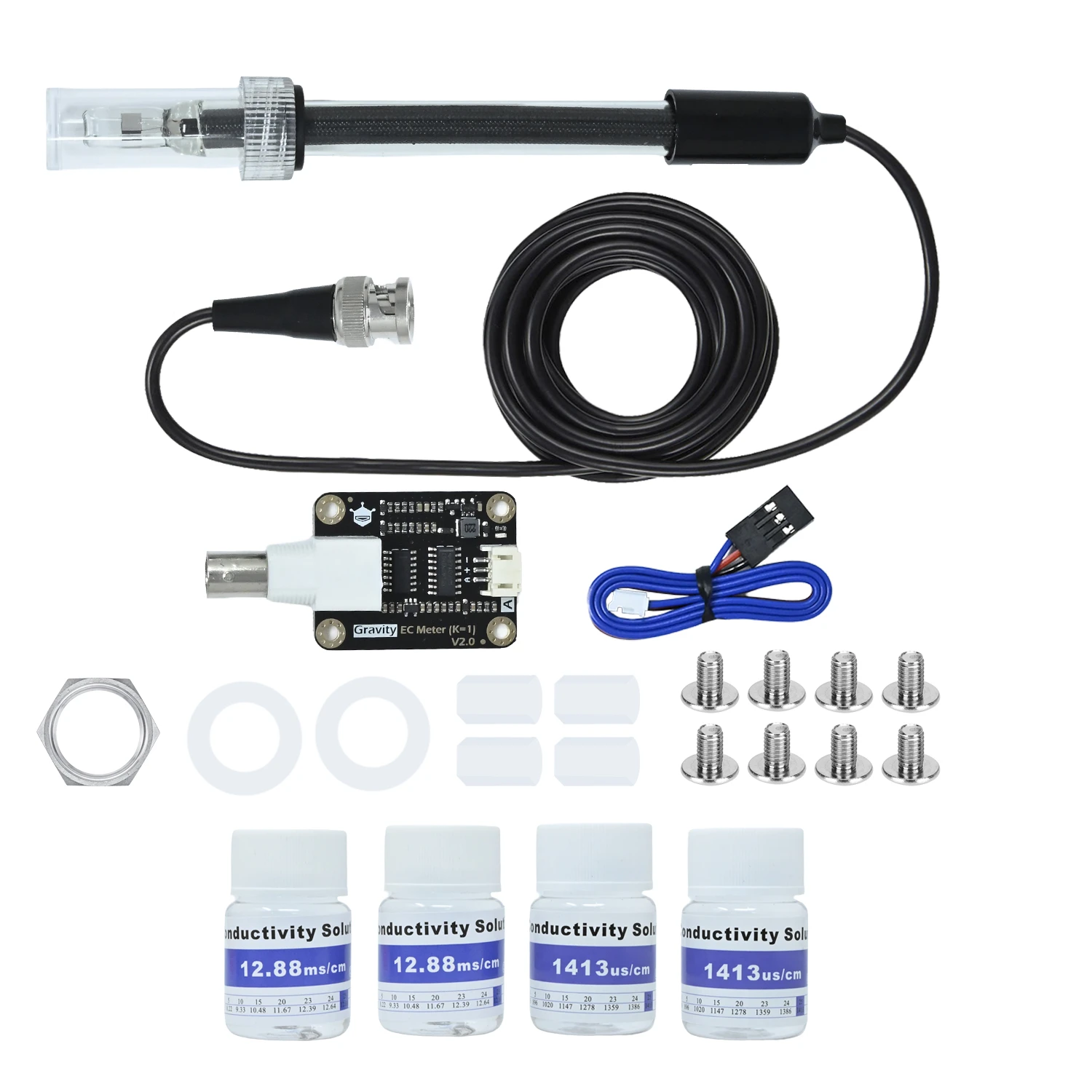
The DFRobot Gravity Lab Grade Analog Electrical Conductivity Sensor Meter V2 is a precision instrument for measuring solution conductivity (0-20ms/cm) with a 0-3.4V analog output. It features a 3.0-5.0V wide voltage input for compatibility with 5V and 3.3V microcontrollers like Arduino, Raspberry Pi, and ESP32, and includes a 1m cable with BNC connector for plug-and-play integration.

Features

  • Lab-grade BNC probe for precise electrical conductivity (EC) measurement from 0 to 20ms/cm.
  • 3.0-5.0V wide voltage input compatible with 5V/3.3V Arduino, Raspberry Pi, and ESP32 boards.
  • 0-3.4V analog output signal with hardware filtering for stable, low-jitter readings.
  • AC excitation source minimizes electrode polarization, enhancing accuracy and probe longevity.
  • Integrated software library supports two-point calibration, automatic buffer recognition, and temperature compensation.

Out of stock

Description

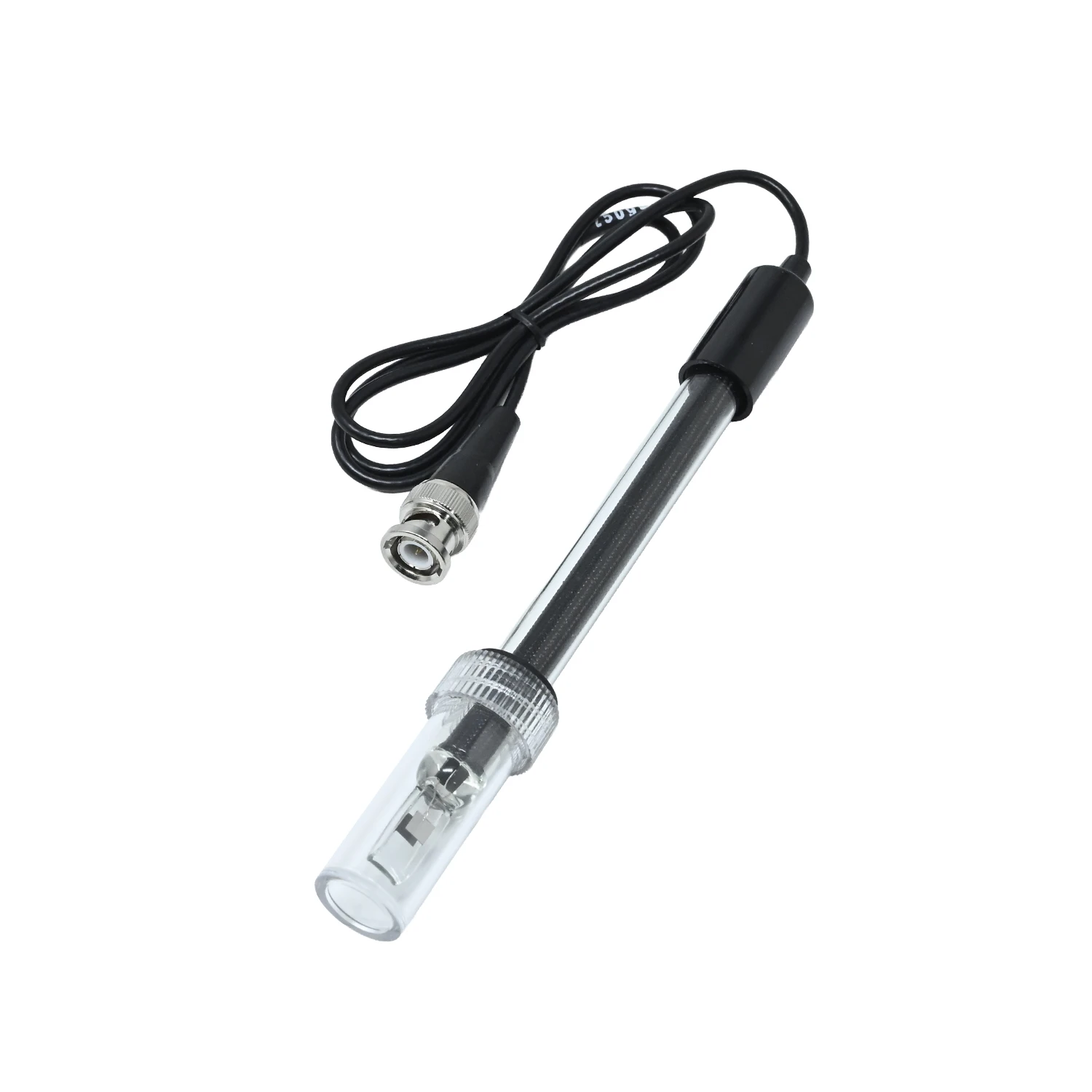
The DFRobot Gravity EC Sensor Meter V2 employs a laboratory-grade probe with a BNC connector to measure the electrical conductivity of aqueous solutions. Its operation is based on an AC excitation signal applied through the probe, which effectively reduces the polarization effect common in DC measurements, thereby improving measurement precision and extending the electrode’s operational life beyond six months with typical use.

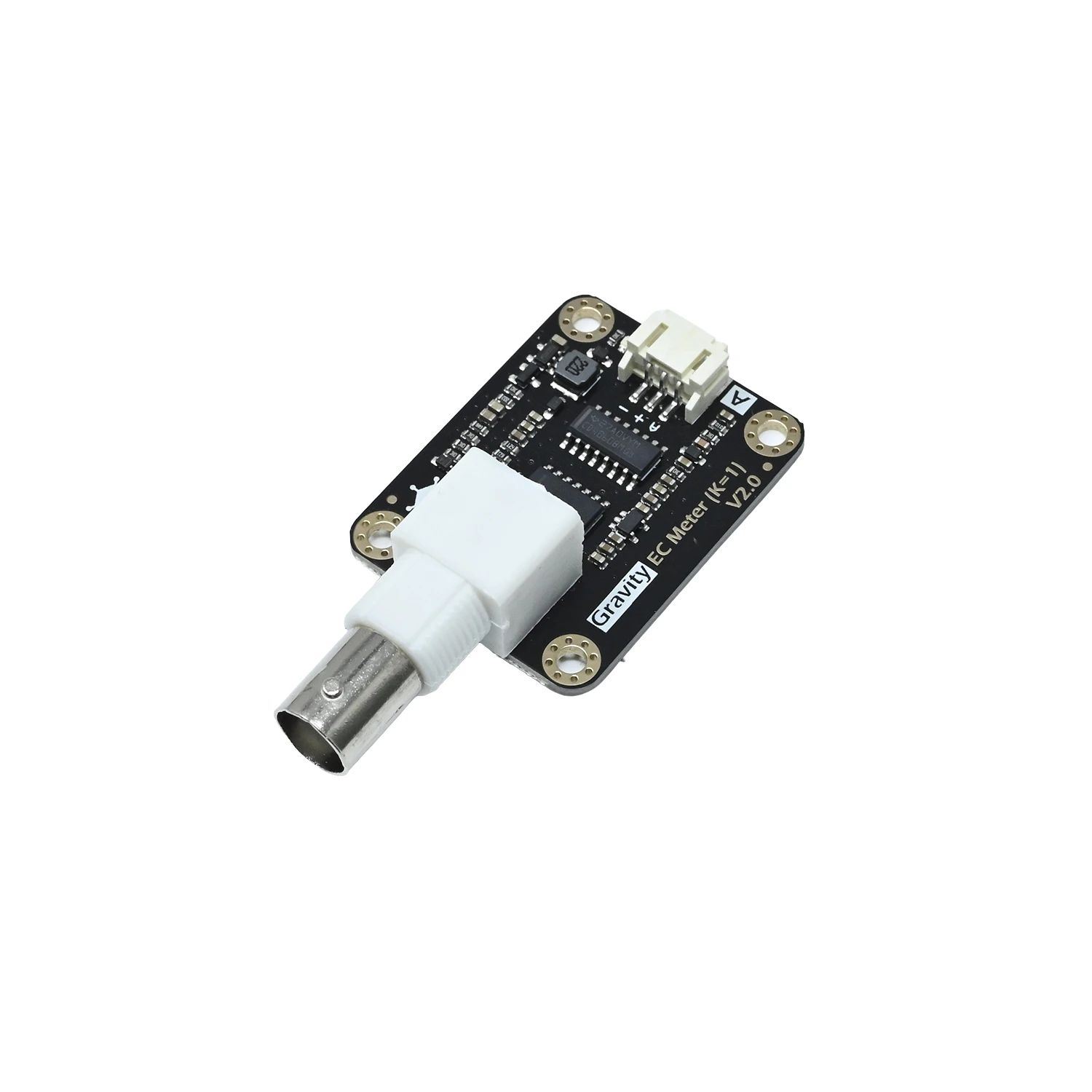
The onboard signal conditioning circuitry provides a hardware-filtered, low-jitter analog voltage output proportional to the conductivity, ranging from 0 to 3.4V. This sensor is designed for seamless integration into data acquisition systems, featuring a standardized Gravity interface connector and a uniform form factor for easy mechanical mounting. The accompanying software library simplifies calibration with a two-point method, automatic standard solution identification, and built-in temperature compensation algorithms for accurate results across its 0–40°C operating range.

Key Features

  • Laboratory-grade BNC conductivity probe for high-accuracy measurements.
  • AC excitation source significantly reduces electrode polarization and drift.
  • Hardware-filtered 0-3.4V analog output ensures stable signal with minimal noise.
  • Wide 3.0-5.0V operating voltage for flexible power supply options.
  • Plug-and-play design with Gravity interface connector and 1-meter cable.
  • Comprehensive software support includes two-point calibration and temperature compensation.
  • Compact PCB dimensions (42mm x 32mm) facilitate integration into enclosures and fixtures.
  • Durable construction optimized for long-term use in aqueous environments.

Applications

  • Hydroponic and aquaponic nutrient solution monitoring and control systems.
  • Aquaculture water quality management for salinity and dissolved solids measurement.
  • Environmental water testing in lakes, rivers, and wastewater treatment facilities.
  • Laboratory analysis of solution purity and ion concentration.
  • Precision agriculture for soil leachate and irrigation water quality assessment.

Technical Specifications

Operating Voltage3.0 to 5.0 VDC
Output Signal0 to 3.4V Analog
Detection Range0 to 20 ms/cm
Measurement Accuracy±5% of Full Scale (F.S.)
Probe ConnectorBNC
Probe GradeLaboratory Grade
Cable Length1 meter
Operating Temperature0 to 40 °C
Probe Life>0.5 years (dependent on usage frequency)
Board Dimensions42 mm x 32 mm (1.65 in x 1.26 in)

Frequently Asked Questions

What is the output signal of this EC sensor and how do I connect it to an Arduino?

The sensor provides a 0-3.4V analog output signal. Connect the sensor's Gravity interface (VCC, GND, SIG) to your Arduino's corresponding 5V/3.3V, GND, and an analog input pin (e.g., A0). The BNC probe connects separately to the module. Use the provided DFRobot library to read the analog voltage and convert it to conductivity values in ms/cm.

How do I calibrate the sensor and does it require special solutions?

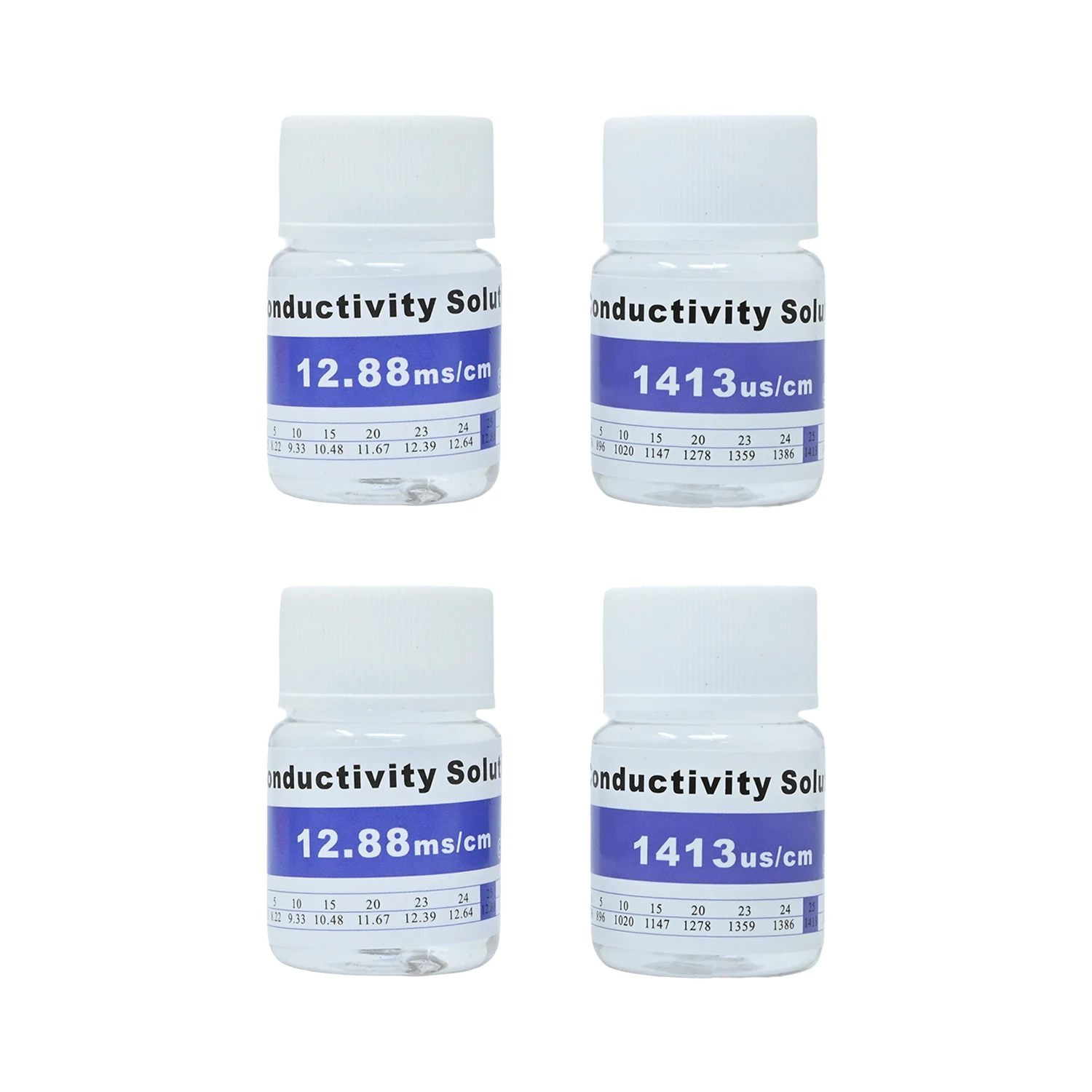
Calibration uses a two-point method with standard conductivity buffer solutions. The included software library can automatically identify common standard buffers (e.g., 1413μS/cm, 12.88mS/cm). Follow the library instructions to immerse the probe in the first standard solution, run the calibration command, then repeat with the second standard. The library integrates temperature compensation automatically during measurement.

Why does the sensor use an AC excitation source instead of DC?

The AC (alternating current) excitation source is crucial for conductivity measurement to minimize electrode polarization. A DC signal would cause ions to accumulate on the electrode surfaces, creating a counter-voltage that drifts and reduces accuracy. The AC signal constantly reverses direction, preventing this buildup and ensuring stable, precise readings over time, thereby also extending the probe's operational life.

What is the operating voltage range and is it 3.3V logic compatible?

Yes, the sensor supports a wide voltage input range of 3.0V to 5.0V DC. This makes it fully compatible with both 5V systems (like most Arduinos) and 3.3V logic microcontrollers such as the Raspberry Pi, ESP32, or STM32 boards. Ensure your power supply provides a clean voltage within this range for optimal performance.

Package Includes

  • 1 x DFRobot Gravity Lab Grade Analog Electrical Conductivity Sensor Module
  • 1 x BNC Probe with 1-meter cable

Additional Information

Weight 0.322 kg
Dimensions 24 × 14 × 7 cm