SKU: SENS-0472
📋 GST Invoice Available

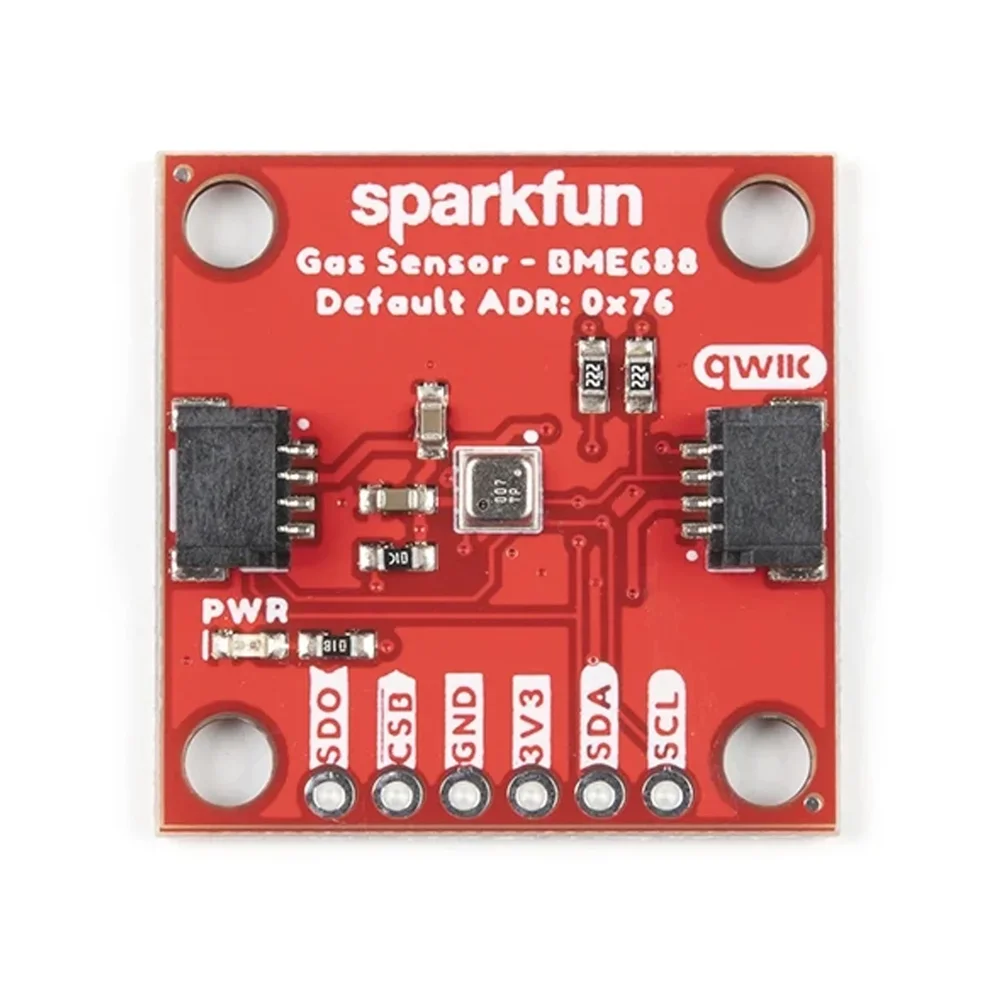
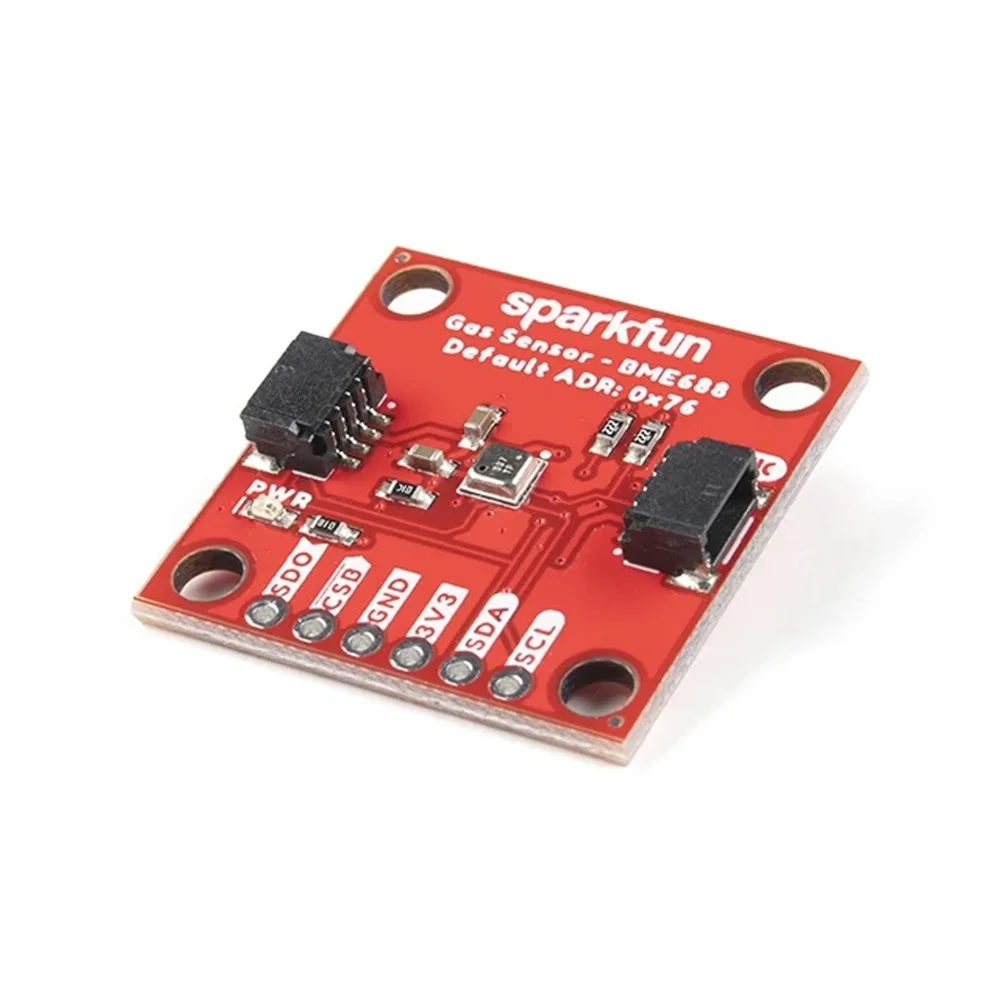
SparkFun BME688 Environmental Sensor Breakout - Gas/Temp/Humidity/Pressure (Qwiic)

₹4,879.00 (Inclusive of all taxes)
Out of Stock

The SparkFun BME688 Environmental Sensor Breakout integrates a high-precision gas, temperature, humidity, and barometric pressure sensor on a compact 1-inch board. It features Qwiic connectors for solder-free I2C connectivity and supports SPI, making it compatible with Arduino, Raspberry Pi, ESP32, and other 3.3V/5V microcontroller platforms for comprehensive environmental monitoring.

Features

  • Quad-sensor integration: gas (VOCs, VSCs, CO, H2), temperature, humidity, and barometric pressure.
  • Dual communication interfaces: I2C (via Qwiic) and SPI for flexible system integration.
  • High-sensitivity gas detection at parts-per-billion (ppb) levels with a 10.8 sec/scan speed.
  • Wide operating ranges: -40°C to +85°C, 0-100% RH, and 300-1100 hPa pressure.
  • Low-power operation suitable for battery-powered IoT and portable monitoring devices.

Out of stock

Description

The SparkFun BME688 Environmental Sensor Breakout is built around the Bosch Sensortec BME688, a 4-in-1 digital MEMS sensor. It employs a micro-hotplate metal oxide (MOX) gas sensor for detecting a broad spectrum of volatile organic compounds (VOCs), volatile sulfur compounds (VSCs), carbon monoxide, and hydrogen. The integrated temperature, humidity, and barometric pressure sensors provide essential environmental compensation and standalone measurement capabilities.

The board’s signal conditioning and 24-bit ADC deliver calibrated digital outputs via I2C or SPI. The inclusion of two Qwiic connectors enables rapid, daisy-chainable prototyping without soldering. Its 1-inch square form factor and low-voltage operation (1.71V to 3.6V) make it ideal for embedding into space-constrained and power-sensitive designs for precise air quality assessment and environmental data logging.

Key Features

  • Bosch BME688 MEMS-based quad-sensor for comprehensive environmental profiling.
  • High-sensitivity MOX gas sensor capable of detecting gases at ppb-level concentrations.
  • Integrated temperature and humidity sensing for accurate environmental compensation of gas readings.
  • Precision barometric pressure sensor with an absolute accuracy of ±60 Pa.
  • Dual Qwiic connectors for plug-and-play I2C connectivity and easy system daisy-chaining.
  • Support for both I2C (default) and SPI digital communication protocols.
  • Optimized low-power modes with current consumption as low as 2.1 µA for battery-operated applications.
  • Compact, ready-to-use breakout board design with pre-populated pull-up resistors and decoupling capacitors.

Applications

  • Indoor Air Quality (IAQ) monitoring systems for VOCs and CO detection in smart buildings.
  • Portable environmental data loggers and personal air quality monitors for occupational health.
  • Weather stations and microclimate monitoring nodes integrating pressure, temperature, and humidity.
  • HVAC system control and optimization using real-time environmental feedback.
  • IoT sensor nodes for smart agriculture and greenhouse condition monitoring.

Technical Specifications

Sensor ModelBME688
Communication InterfaceI2C (Qwiic), SPI
Operating Voltage1.71V – 3.6V
Relative Humidity Range0% – 100%
Humidity Accuracy±3% RH
Temperature Range-40°C to +85°C
Temperature Accuracy±1.0°C
Pressure Range300 hPa – 1100 hPa
Pressure Accuracy±60 Pa
Standard Gas Scan Speed10.8 sec/scan
Current Consumption2.1 µA – 18 mA
Board Dimensions1 in × 1 in (25.4 mm × 25.4 mm)
Weight5 g

Frequently Asked Questions

What is the primary gas detection capability of the BME688 sensor?

The BME688's integrated metal oxide (MOX) gas sensor is highly sensitive to a wide range of volatile organic compounds (VOCs), volatile sulfur compounds (VSCs), carbon monoxide (CO), and hydrogen (H2) at parts-per-billion (ppb) concentration levels. It provides a gas scan result as a digital index, with a standard scan time of approximately 10.8 seconds.

Can I use this breakout with a 5V Arduino board like the Uno?

Yes, but you must account for logic level translation. The BME688 sensor IC operates from 1.71V to 3.6V. While the Qwiic bus on this breakout is designed for 3.3V, you can safely connect it to a 5V Arduino's I2C pins if you use a Qwiic cable with a built-in logic level converter or add an external level-shifting module to protect the sensor.

What is the difference between I2C and SPI communication on this board?

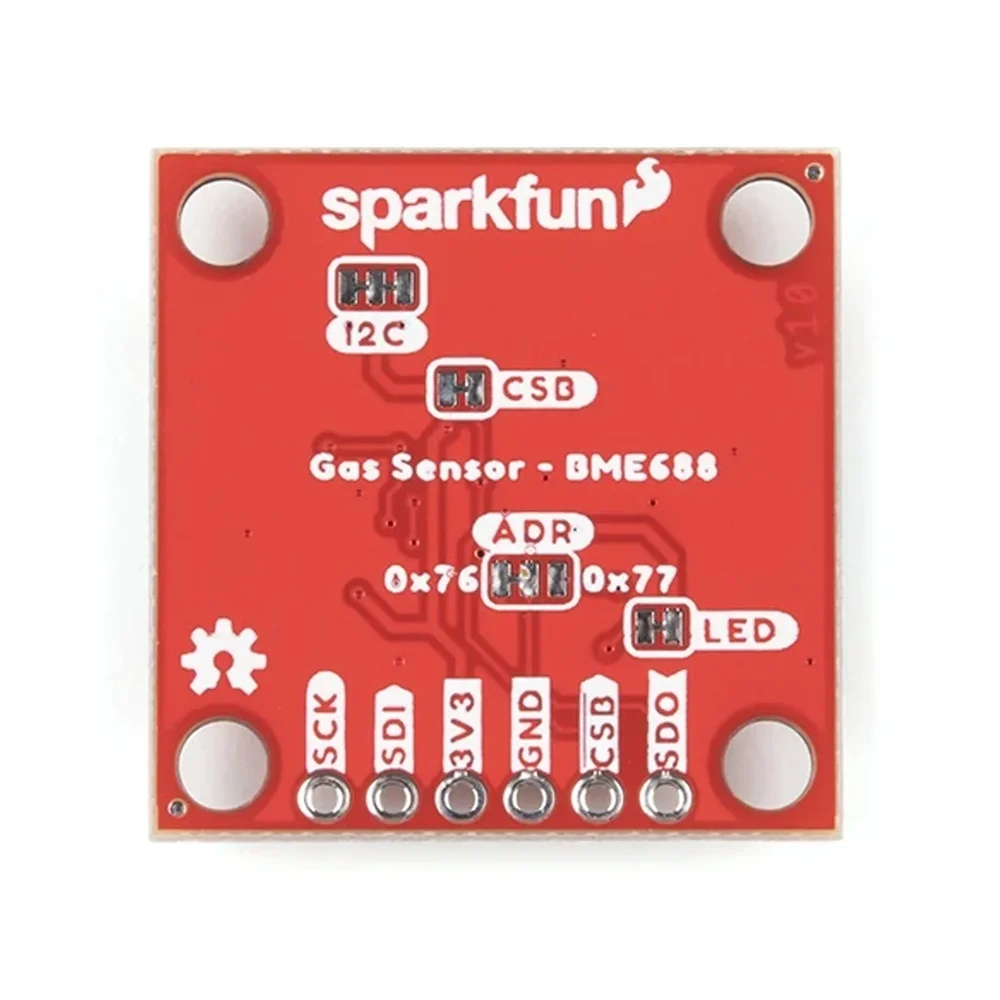
The board supports both protocols. I2C is the default, enabled via the onboard Qwiic connectors, using 7-bit addressing and two wires (SDA, SCL). SPI offers higher-speed data transfer using four dedicated lines (CS, SDO, SDI, SCK) and is selected by soldering a Jumper on the board. The choice depends on your microcontroller's available peripherals and required data rate.

Does the sensor require calibration for gas measurements?

The BME688 provides factory-calibrated digital outputs for temperature, humidity, and pressure. For gas sensing, it outputs a relative gas index or resistance ratio. While it does not require user calibration for basic operation, achieving quantitative gas concentration readings typically requires a baseline establishment and calibration routine in your specific environment due to the MOX sensor's sensitivity to ambient conditions.

Package Includes

  • 1 x SparkFun BME688 Environmental Sensor Breakout Board (Qwiic)

Additional Information

Weight 0.005 kg
Dimensions 2.54 × 2.54 cm