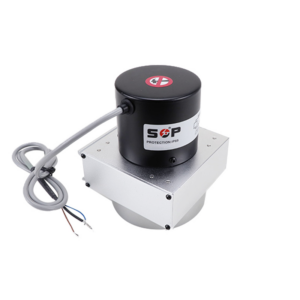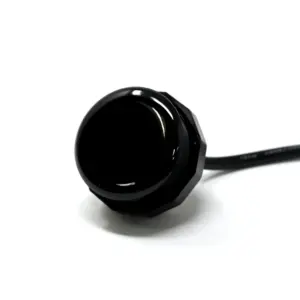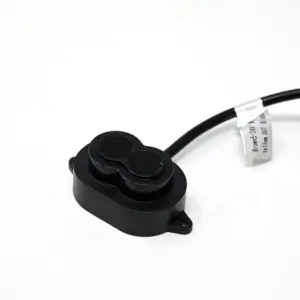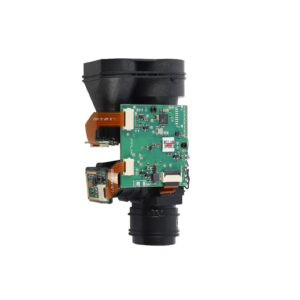
SKU: SENS-0250
📋 GST Invoice Available

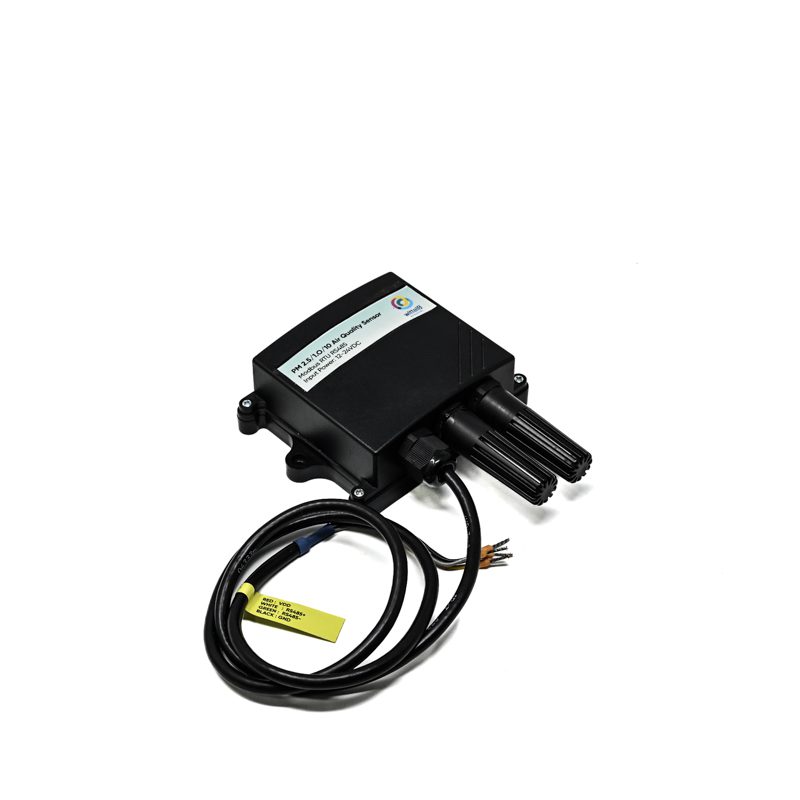
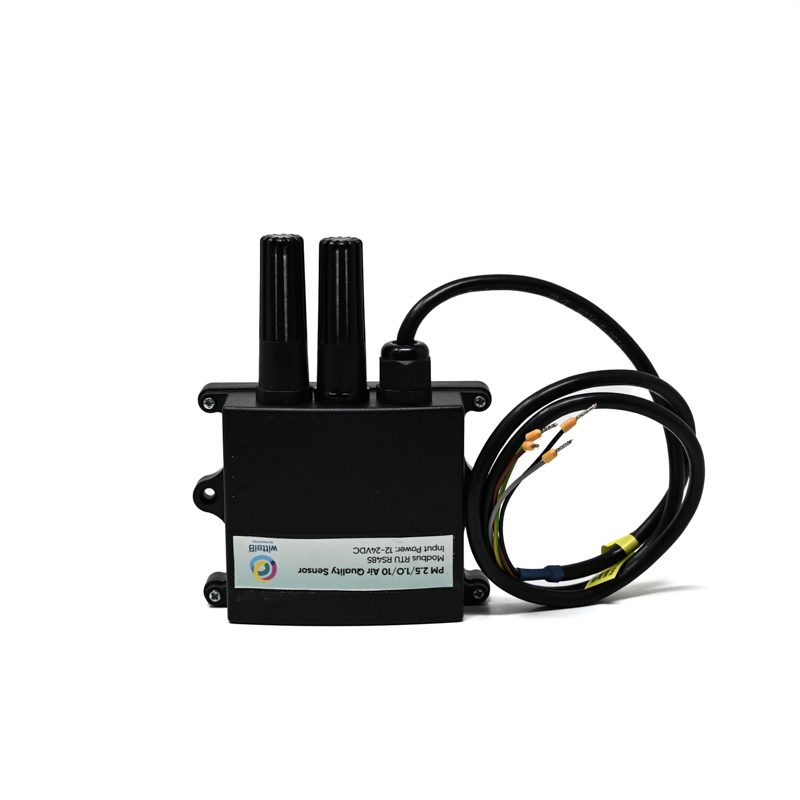
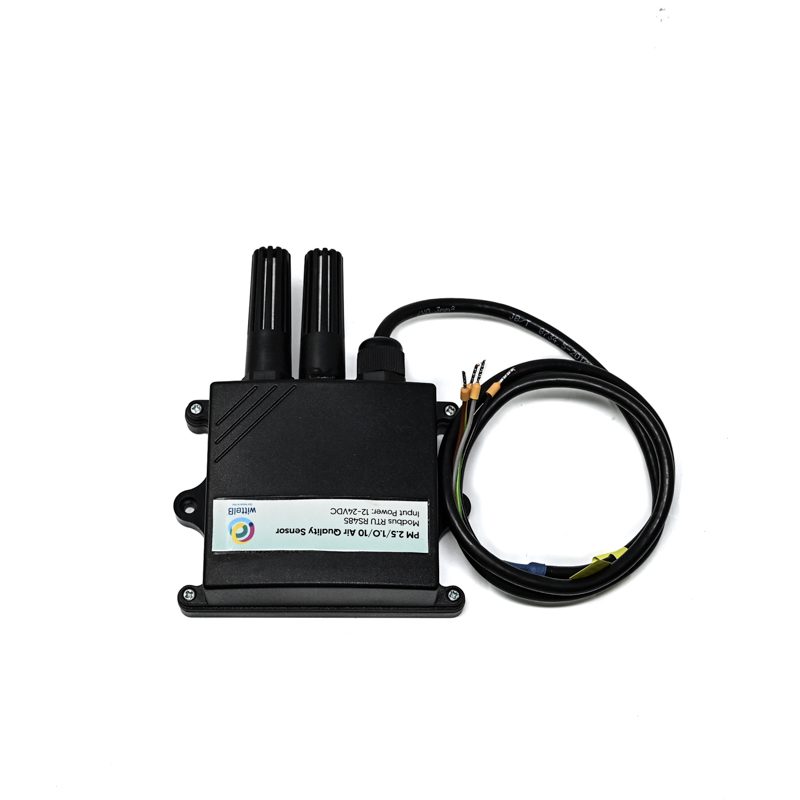
Wittelb WIN-SN-PM2.5/1/10-M Particulate Matter Sensor - Modbus RS485, 12-24V DC

₹6,948.00 (Inclusive of all taxes)
Out of Stock

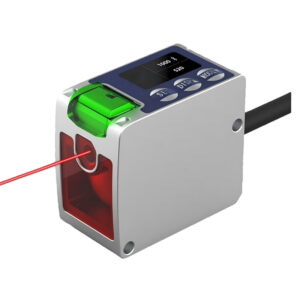
The Wittelb WIN-SN-PM2.5/1/10-M is a professional-grade particulate matter sensor module designed for industrial and IoT air quality monitoring systems. It provides simultaneous measurement of PM1.0, PM2.5, and PM10 concentrations via a Modbus RS485 interface, compatible with PLCs, SCADA, and embedded controllers like Raspberry Pi with RS485 adapters.

Features

  • Simultaneously measures PM1.0, PM2.5, and PM10 concentrations from 0 to 1000 µg/m³.
  • Industrial Modbus RTU over RS485 interface for robust, long-distance communication.
  • Wide operating range of -10°C to 60°C and 0% to 80% relative humidity.
  • High accuracy: ±5 µg/m³ for PM1.0/PM2.5, ±25 µg/m³ for PM10.
  • Low power consumption with a 12-24V DC supply voltage and 1000mA max current.

Out of stock

Description

The WIN-SN-PM2.5/1/10-M sensor utilizes a laser scattering principle to detect and quantify airborne particulate matter. An internal fan draws air through the sensing chamber, where a laser diode illuminates particles. A photodetector measures the scattered light intensity, which is processed by an onboard microcontroller to calculate mass concentrations for three Particle size fractions.

This sensor is engineered for long-term stability and reliable performance in demanding environments such as industrial facilities, HVAC ducting, and outdoor air quality stations. The RS485 Modbus protocol allows for easy daisy-chaining of multiple sensors and seamless integration into larger monitoring networks, providing configurable settings for address, baud rate, and data format.

Key Features

  • Triple-Parameter Sensing: Delivers real-time data for PM1.0, PM2.5, and PM10 mass concentrations.
  • Industrial Communication: Modbus RTU over RS485 ensures noise-immune data transmission over distances up to 1200 meters.
  • Environmental Robustness: Operates reliably across a wide temperature and humidity range, suitable for harsh indoor and sheltered outdoor applications.
  • High Precision Optics: Laser-based detection system provides consistent and accurate readings with minimal drift.
  • Compact & Durable Housing: The enclosed design protects sensitive internal components from dust and environmental contaminants.
  • Configurable Parameters: Modbus registers allow customization of sensor address, baud rate, parity, and output data format.
  • Optimized Airflow: Integrated fan ensures consistent sample flow for representative measurements.

Applications

  • Industrial air quality monitoring and compliance reporting within manufacturing facilities.
  • HVAC system efficiency monitoring and filter change alerts in commercial buildings.
  • Outdoor environmental monitoring stations for urban air quality assessment.
  • Indoor air quality (IAQ) monitoring in smart buildings, schools, and hospitals.
  • Integration into IoT-based environmental sensing networks for data logging and analytics.

Technical Specifications

Manufacturer Part NumberWIN-SN-PM2.5/1/10-M
Measurement ParametersPM1.0, PM2.5, PM10
Measurement Range0 - 1000 µg/m³
Accuracy (PM1.0/PM2.5)±5 µg/m³
Accuracy (PM10)±25 µg/m³
Communication InterfaceRS485 (Modbus RTU)
Supply Voltage12 - 24V DC
Maximum Operating Current1000 mA
Operating Temperature-10°C to 60°C
Operating Humidity0% to 80% RH (non-condensing)
Dimensions (L x W x H)19 x 13.5 x 8.5 cm
Weight0.332 kg

Frequently Asked Questions

What is the communication protocol and how do I connect this sensor to an Arduino or Raspberry Pi?

This sensor uses the Modbus RTU protocol over an RS485 serial interface. To connect to a 5V Arduino or 3.3V Raspberry Pi, you will need an external RS485 to TTL/UART converter module (e.g., MAX485). Wire the sensor's RS485 A/B lines to the converter, then connect the converter's TX/RX to your microcontroller's serial pins. Use a Modbus library (like ModbusMaster for Arduino) to read the holding registers for PM1.0, PM2.5, and PM10 values.

What is the power supply requirement and how much current does it draw?

The sensor requires a 12-24V DC power supply. The maximum operating current is 1000mA (1A), so your power adapter or supply must be capable of delivering at least 12W (12V * 1A) at the lower end of the voltage range. Ensure stable, clean DC power for optimal sensor performance and to avoid communication errors.

Can this sensor be used outdoors, and what are its environmental limits?

Yes, it can be used in sheltered outdoor applications. Its operating range is -10°C to 60°C and 0% to 80% relative humidity (non-condensing). For fully exposed outdoor use, it is recommended to install it in a protective, ventilated enclosure that shields it from direct rain and sunlight while allowing for adequate airflow for sampling.

How do I configure the Modbus settings like baud rate and device address?

The sensor's Modbus parameters (slave address, baud rate, parity, stop bits) are configurable via specific Modbus holding registers as defined in the product's datasheet. You need to send a Modbus write command to these registers using a Modbus master device or software tool before deployment to set your desired network configuration.

What is the measurement principle and does the sensor require regular calibration?

It uses a laser scattering (optical) principle. A fan draws air through a chamber where particles pass through a laser beam. A photodetector measures the scattered light, and an algorithm calculates mass concentration. The sensor is factory calibrated and is designed for long-term stability. Periodic verification against a reference instrument is recommended for critical applications, but routine user calibration is not typically required.

Package Includes

  • 1 x WIN-SN-PM2.5/1/10-M Particulate Matter Sensor Module

Additional Information

Weight 0.332 kg
Dimensions 19 × 13.5 × 8.5 cm