SKU: IOWC-1883
📋 GST Invoice Available

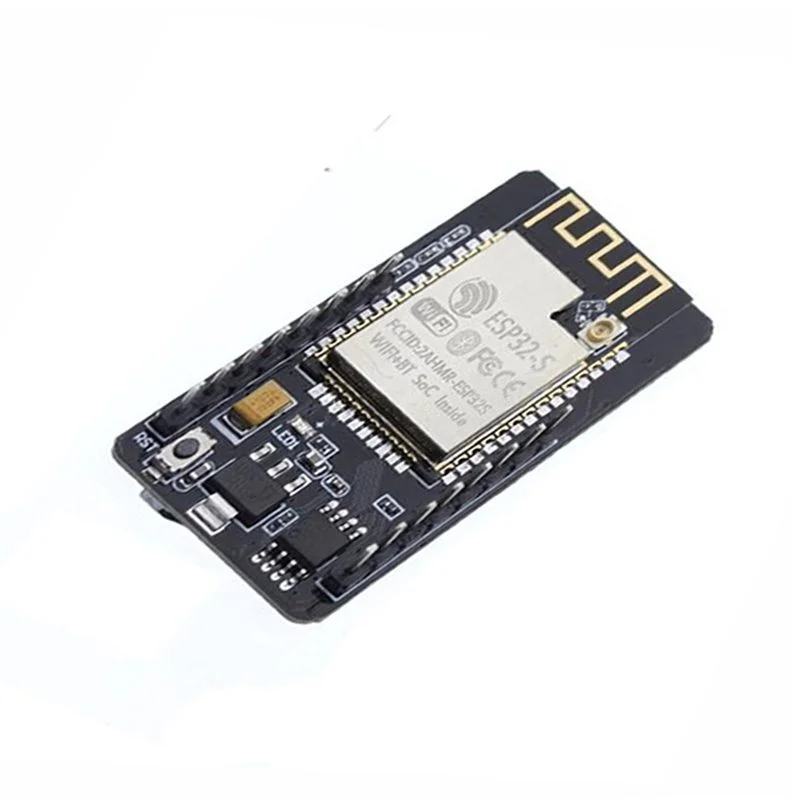
ESP32-CAM WiFi Bluetooth Module w/ OV3660 2MP Camera

₹729.00 (Inclusive of all taxes)
Out of Stock

The ESP32-CAM is a compact development board integrating an ESP32-S SoC with an OV3660 2MP camera module, designed for IoT computer vision applications like face recognition and wireless monitoring, programmable via Arduino IDE or ESP-IDF.

Features

  • Integrates ESP32-S SoC with 802.11 b/g/n Wi-Fi and Bluetooth 4.2 BR/EDR/BLE for dual wireless connectivity.
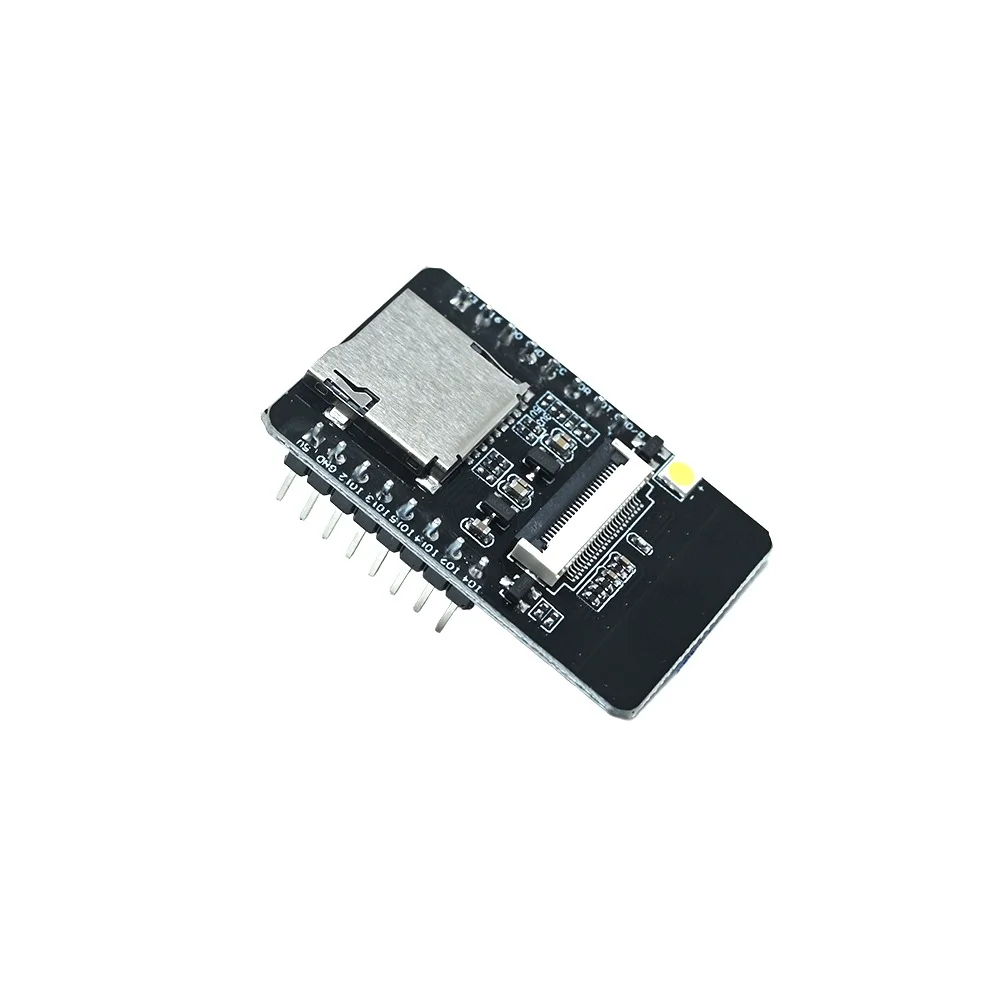
  • Features a pre-connected OV3660 2MP camera sensor with FPC connector and built-in LED flash for image capture.
  • Includes 4MB PSRAM and 32Mbit SPI flash for buffering high-resolution JPEG images and firmware storage.
  • Supports microSD card slot for external storage up to 4GB, ideal for logging images or video clips.
  • Offers multiple low-power sleep modes with deep-sleep current as low as 6mA @ 5V for battery-operated deployments.

Out of stock

Description

The ESP32-CAM module combines Espressif’s ESP32-S wireless microcontroller with an OV3660 CMOS camera sensor on a single 40x27mm board. It serves as a complete, minimal-footprint system for embedding vision capabilities into IoT nodes. The ESP32-S provides dual-core Xtensa LX6 processors clockable up to 240MHz, 520KB SRAM, and integrated 802.11b/g/n Wi-Fi with Bluetooth 4.2, enabling standalone image capture, processing, and wireless transmission.

Power management is optimized for always-on applications, supporting modem-sleep, light-sleep, and deep-sleep modes to minimize average current draw. The board exposes 16 GPIOs via through-hole pins for UART, SPI, I2C, PWM, and ADC interfaces, allowing expansion with sensors, actuators, or displays. Its design facilitates direct integration into backplanes or enclosures for rapid product development in smart home, industrial monitoring, and security applications.

Key Features

  • All-in-one ESP32-S based camera module with onboard PCB antenna and u.FL connector for external antenna.
  • OV3660 sensor delivers 2MP still images in JPEG format, supported by a dedicated camera FPC interface.
  • Integrated LED flash provides illumination for low-light environments, controllable via GPIO.
  • Extended memory with 4MB PSRAM enables efficient handling of image frames and complex algorithms.
  • MicroSD card slot supports FAT32 filesystem for storing captured images, video, or sensor logs.
  • Supports Wi-Fi STA, AP, and STA+AP modes with Smart Config for easy network provisioning.
  • Compatible with Arduino core for ESP32, ESP-IDF, and MicroPython for flexible firmware development.
  • Features serial port-based FOTA (Firmware Over-The-Air) for remote firmware updates.

Applications

  • Smart home security cameras and wireless doorbell monitors with motion detection.
  • Industrial machine vision for quality inspection and wireless telemetry.
  • IoT face recognition systems for access control and attendance logging.
  • Wildlife monitoring and remote environmental sensing with image capture.
  • Educational projects for embedded computer vision and AI on the edge.

Technical Specifications

Microcontroller/SoCESP32-S (Dual-core Xtensa LX6)
Wireless ProtocolsWi-Fi 802.11 b/g/n, Bluetooth 4.2 BR/EDR & BLE
Frequency Range2.4GHz (2412–2484 MHz)
Camera SensorOV3660, 2MP
Image Output FormatJPEG, BMP, Grayscale
Memory520KB SRAM, 4MB PSRAM, 32Mbit SPI Flash
External StorageMicroSD Card Slot (up to 4GB)
Supply Voltage5V via pin header
Operating Current~180mA @5V (Flash LED off)
Deep-Sleep Current6mA @5V (min)
InterfacesUART, SPI, I2C, PWM, ADC, Camera FPC
Antenna ConnectorPCB antenna, u.FL connector
Operating Temperature-20°C to 85°C
Dimensions40 x 27 x 12 mm (LxWxH)

Frequently Asked Questions

How do I power the ESP32-CAM module and what is the typical current draw?

Power the module via the 5V pin header. Typical operating current is around 180mA @5V with the camera active but flash LED off. For battery operation, utilize deep-sleep mode which draws a minimum of 6mA, significantly extending runtime between charges.

What software frameworks are supported for programming the ESP32-CAM?

The board is fully compatible with the Arduino core for ESP32, Espressif's official ESP-IDF, and MicroPython. For camera functionality, you'll need to install specific libraries like the ESP32 Camera Driver in Arduino or configure the camera sensor in ESP-IDF using the provided example projects.

How do I connect an external antenna to improve Wi-Fi range?

The module includes a u.FL connector. Carefully solder a u.FL to SMA pigtail cable to the connector, then attach a 2.4GHz Wi-Fi antenna with an SMA female connector. Ensure the PCB antenna trace is not damaged, as it serves as the default antenna.

Can I use a different camera sensor with the ESP32-CAM board?

The board's FPC connector and firmware are specifically designed for the OV3660 sensor included in the package. Using other OV series sensors (like OV2640) may require hardware modifications and significant driver changes, which is not recommended for beginners.

What is the procedure for saving images to the microSD card?

Format a microSD card (up to 4GB) as FAT32. Insert it into the slot on the ESP32-CAM. In your code, use the SD_MMC or SD library to initialize the card filesystem. After capturing a frame with the camera, write the JPEG buffer to a file on the card using standard file write operations.

Package Includes

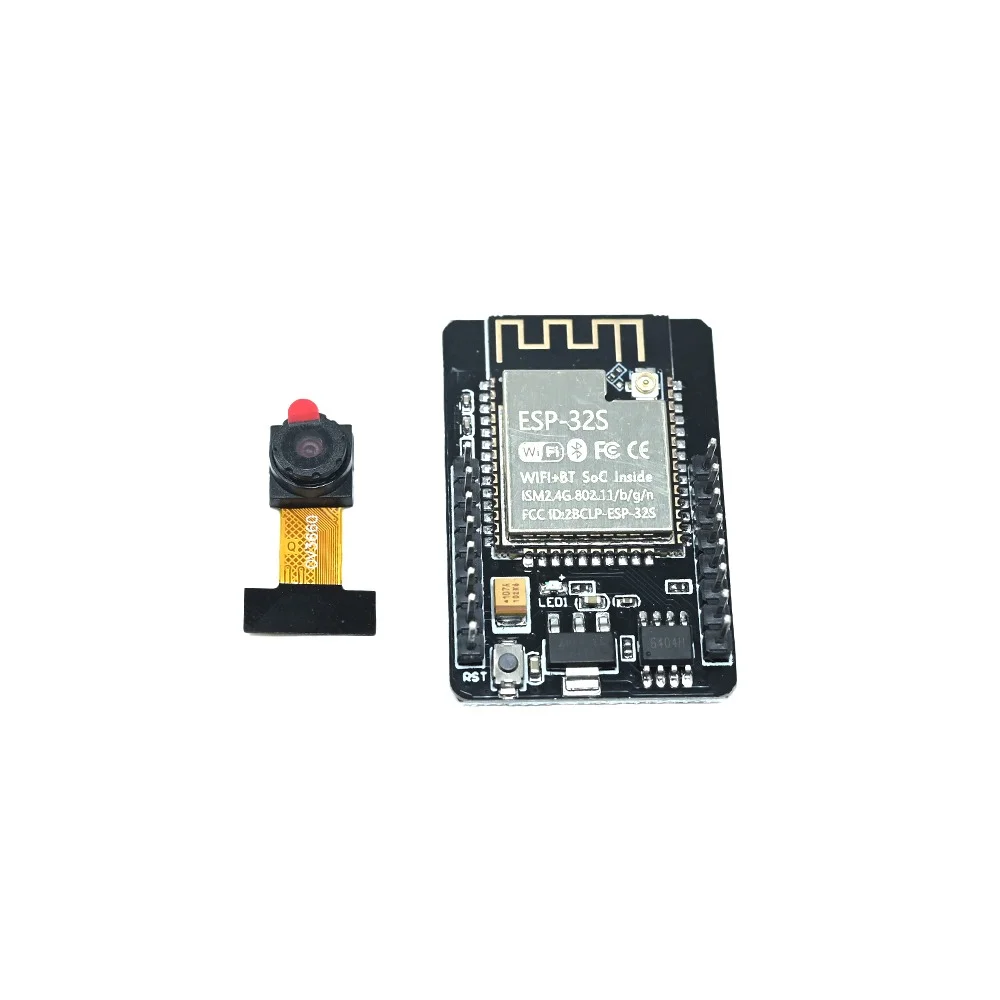
  • 1 x ESP32-CAM WiFi Module
  • 1 x OV3660 Camera Module (2MP)

Additional Information

Weight 0.082 kg
Dimensions 4 × 2.7 × 1.2 cm