SKU: IOWC-1879
📋 GST Invoice Available

Wemos ESP8266 D1 Pro Mini 16MB External Antenna Connector

₹719.00 (Inclusive of all taxes)
Out of Stock

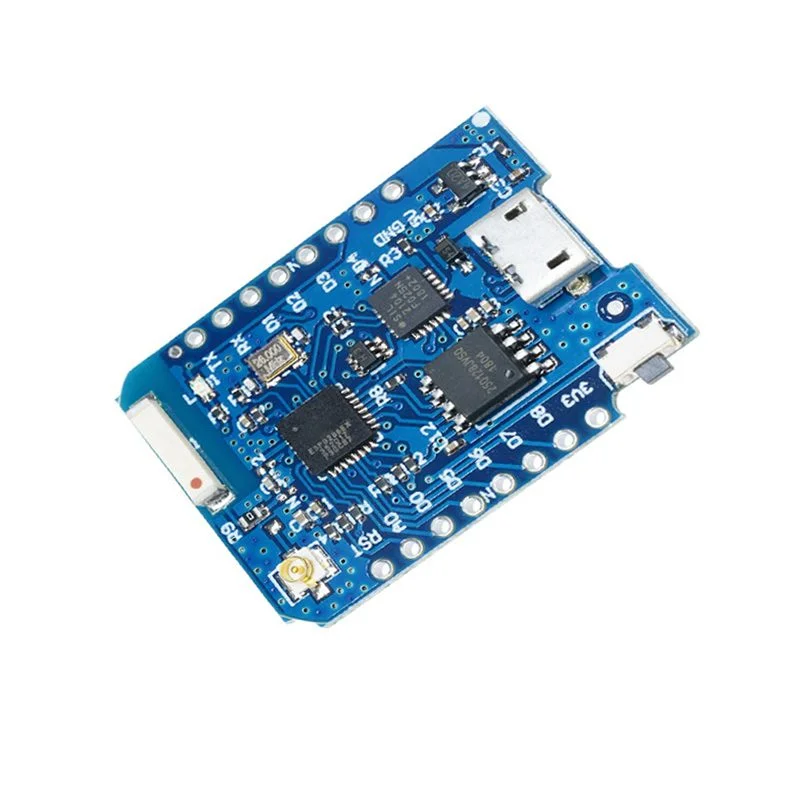
The Wemos D1 Pro Mini is an ESP8266-based development board featuring 16MB flash, a CP2104 USB-to-UART bridge, and dual antenna options (ceramic and external connector) for flexible Wi-Fi IoT prototyping in Arduino IDE and MicroPython.

Features

  • ESP8266 Wi-Fi SoC with integrated TCP/IP stack for direct network connectivity.
  • 16MB (128Mbit) flash memory for extensive program and file system storage.
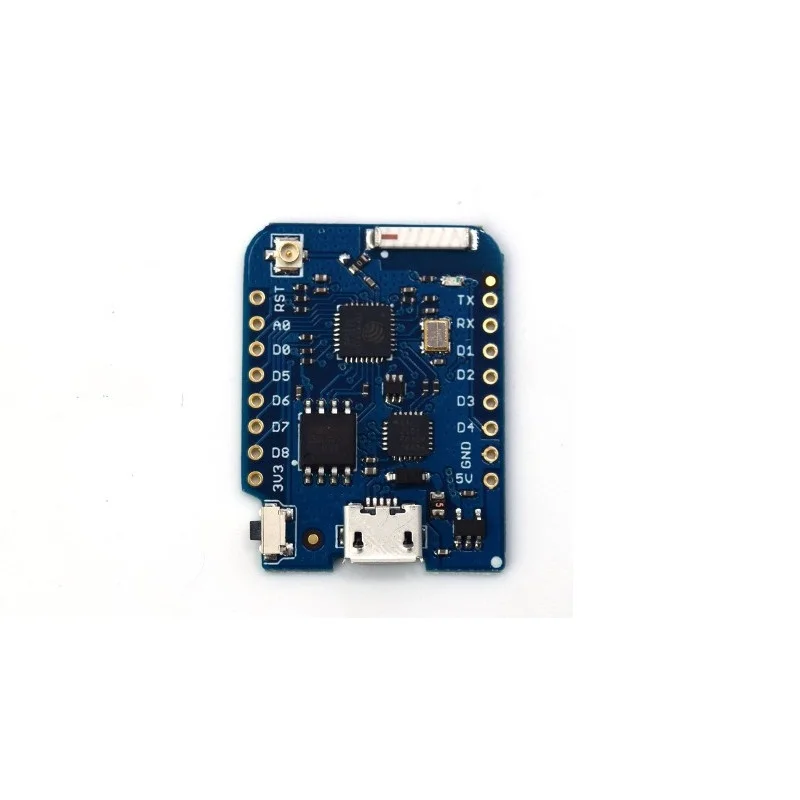
  • Dual antenna system: built-in ceramic antenna and U.FL/IPEX connector for external antenna.
  • CP2104 USB-to-UART IC provides stable serial communication and programming.
  • Compact 34mm x 25mm footprint with 11 digital I/O, PWM, I2C, and 1 analog input.

Out of stock

Description

The Wemos D1 Pro Mini is a compact, feature-enhanced version of the popular ESP8266 development board. It integrates the full capabilities of the ESP8266 Wi-Fi microcontroller, including a 32-bit Tensilica processor and integrated Wi-Fi radio, into a breadboard-friendly form factor. The board is distinguished by its substantial 16MB flash memory, which is ideal for data logging, OTA updates, and hosting web servers with large assets.

Power management is handled via a 3.3V regulator, accepting a 5V input from the micro-USB port. The inclusion of both a built-in ceramic antenna and a U.FL connector for an external antenna provides developers with flexibility to optimize signal range and reliability for specific deployment environments, from indoor smart home devices to outdoor sensor nodes.

Key Features

  • Enhanced memory capacity with 16MB flash for complex IoT applications and OTA updates.
  • Dual antenna support allows switching between integrated ceramic and high-gain external antennas.
  • Stable programming and serial debug via the onboard CP2104 USB-to-UART bridge chip.
  • Comprehensive GPIO breakout with support for PWM, I2C, SPI, and one-wire protocols.
  • Compact and lightweight design perfect for space-constrained projects and final product integration.
  • Fully compatible with the Arduino IDE, ESP-IDF, and MicroPython development frameworks.

Applications

  • Smart home automation nodes (lights, sensors, switches).
  • Wi-Fi enabled data loggers and environmental monitors.
  • Prototyping IoT devices with web server or MQTT client functionality.
  • Remote control and telemetry systems for DIY projects.
  • Educational platforms for learning embedded systems and wireless networking.

Technical Specifications

Microcontroller/SoCESP8266
Wireless ProtocolWi-Fi 802.11 b/g/n
Flash Memory16 MB (128 Mbit)
Supply Voltage5V via Micro-USB, 3.3V regulated
Digital I/O Pins11
Analog Input Pins1 (3.2V max)
USB-to-UART ICCP2104
Antenna OptionsBuilt-in Ceramic, U.FL External Connector
InterfacesI2C, SPI, PWM, One-Wire, UART
Dimensions34mm x 25mm x 15mm
Weight8g

Frequently Asked Questions

How do I program the Wemos D1 Pro Mini using the Arduino IDE?

First, install the ESP8266 board package via the Arduino Boards Manager. Select 'Wemos D1 R2 & mini' as your board. Connect the board via micro-USB, ensure the CP2104 drivers are installed, and select the correct COM port. You can then upload sketches that utilize the ESP8266WiFi library for network connectivity. The board operates at 3.3V logic, so ensure any connected peripherals are compatible.

How do I switch between the built-in and external antennas?

The board has a small surface-mount resistor (or zero-ohm link) near the U.FL connector that acts as an antenna selector. By default, it is connected to the built-in ceramic antenna. To use an external antenna, you must desolder this resistor and bridge the connection to the U.FL connector pad. Always power off the board before making this modification to avoid damaging the RF circuitry.

What is the purpose of the large 16MB flash memory on this board?

The 16MB flash provides ample space for your application code, file systems (like SPIFFS or LittleFS), and Over-The-Air (OTA) update binaries. This is significantly larger than typical 4MB boards, enabling you to store extensive web page assets, data logs, or multiple application images. In the Arduino IDE, you may need to adjust the 'Flash Size' setting in the board menu to '16MB' to utilize the full capacity.

What are the power requirements and sleep modes for battery operation?

The board is powered via its micro-USB port at 5V, with an onboard regulator supplying 3.3V to the ESP8266. For deep sleep operation to conserve battery, you can connect a 3.3V source directly to the 3.3V pin, bypassing the regulator. The ESP8266 can enter modem-sleep, light-sleep, and deep-sleep modes, with deep sleep reducing current to approximately 20µA. Ensure you have a wake-up source configured, such as a timer or external pin interrupt.

Package Includes

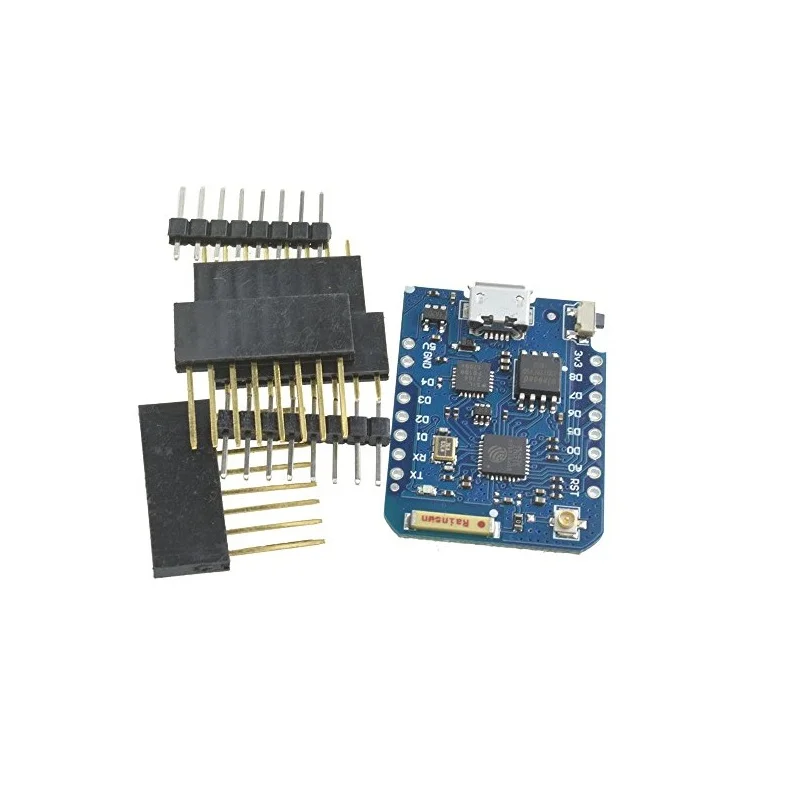
  • 1 x Wemos D1 mini Pro Board
  • 2 x Long Female Header Pins
  • 2 x Short Female Header Pins
  • 2 x Standard Male Header Pins

Additional Information

Weight 0.008 kg
Dimensions 3.4 × 2.5 × 1.5 cm