SKU: IOWC-1846
📋 GST Invoice Available

ESP-12F/ESP-12E Serial WiFi Adapter Module 5V

₹136.00 (Inclusive of all taxes)
Out of Stock

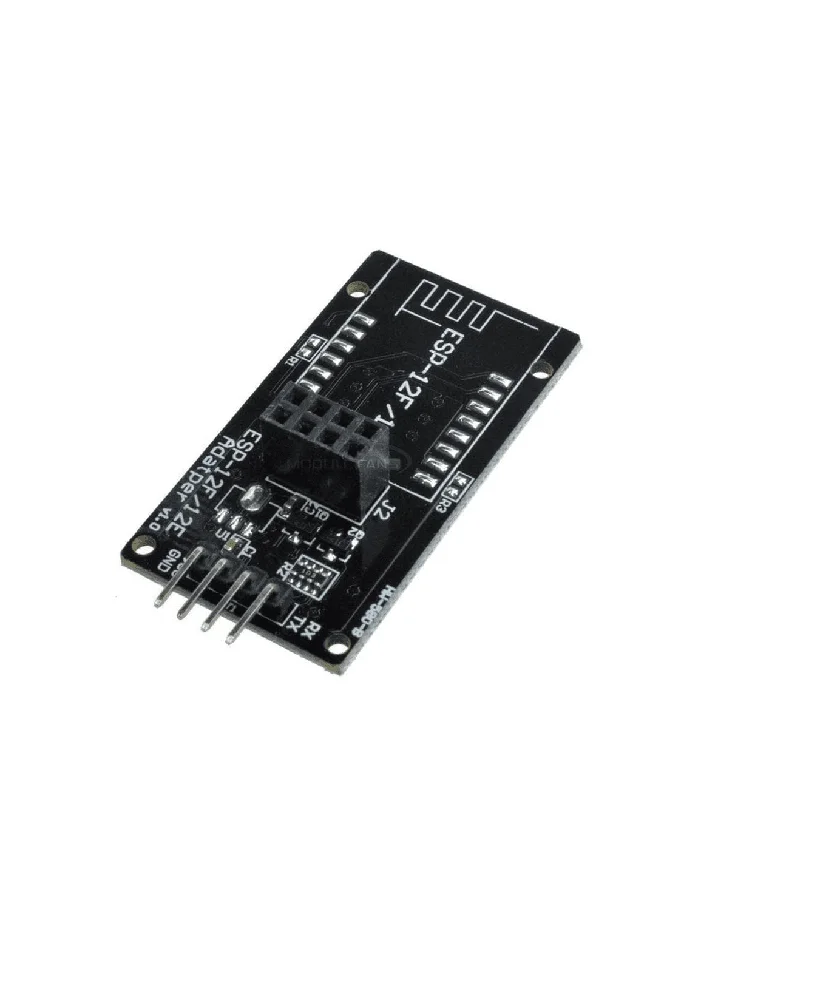
The ESP-12F/ESP-12E Serial WiFi Adapter Module is a compact breakout board that integrates an ESP8266 module with a CH340 USB-to-serial converter and a 5V-to-3.3V regulator, enabling easy programming and integration with 5V systems like Arduino for rapid IoT prototyping.

Features

  • Integrated ESP8266 ESP-12E/F module for robust 2.4GHz Wi-Fi connectivity (802.11 b/g/n).
  • Onboard CH340 USB-to-Serial chip simplifies firmware flashing and serial communication via a standard USB port.
  • Built-in 5V to 3.3V LDO regulator allows safe, direct connection to 5V microcontrollers and power supplies.
  • Compact, plug-and-play design with status LEDs for easy debugging and hardware interfacing.
  • Level-shifted I/O pins ensure 3.3V/5V logic compatibility for seamless integration with various development boards.

Out of stock

Description

The ESP-12F/ESP-12E Serial WiFi Adapter Module serves as a dedicated interface board for the popular ESP8266-based Wi-Fi modules. It provides a complete solution for developers by incorporating a stable voltage regulator, a USB-serial bridge, and a clear pinout, eliminating the need for external level shifters or power conditioning circuits. This makes it an essential tool for quickly bringing ESP8266-powered IoT concepts to life.

Designed for reliability in prototyping environments, the adapter board features a robust power management system that delivers a clean 3.3V supply to the ESP module from a 4.5V to 5.5V input range. The inclusion of the CH340 interface chip ensures broad driver compatibility with Windows, macOS, and Linux, facilitating straightforward firmware updates via the Arduino IDE, ESP-IDF, or other development frameworks. Its compact footprint and labeled GPIO headers streamline the connection of sensors, actuators, and peripherals.

Key Features

  • Complete breakout solution for ESP-12E or ESP-12F Wi-Fi modules, ready for prototyping.
  • Integrated CH340G USB-to-TTL serial converter enables direct programming and debugging via USB.
  • Onboard AMS1117 3.3V LDO voltage regulator ensures stable power for the ESP8266 core.
  • Logic level shifting circuitry allows safe interfacing between the 3.3V ESP module and 5V microcontroller GPIO.
  • Status LEDs for power and serial communication provide visual feedback during operation.
  • Standard 0.1" pin headers expose all critical ESP8266 pins (GPIO, TX, RX, EN, RST) for easy access.
  • Compact PCB design minimizes space usage on a breadboard or within an enclosure.

Applications

  • Rapid prototyping of Wi-Fi-enabled IoT devices and smart home automation nodes.
  • Creating wireless sensor networks for environmental monitoring (temperature, humidity).
  • Building web servers, MQTT clients, or REST API endpoints for data logging and control.
  • Developing Wi-Fi-controlled gadgets, robots, or DIY electronics projects.
  • Educational tool for learning embedded systems, wireless networking, and IoT concepts.

Technical Specifications

Wi-Fi Module / SoCESP8266 (ESP-12E or ESP-12F variant)
Wireless ProtocolIEEE 802.11 b/g/n (2.4GHz)
Supply Voltage (Input)4.5V - 5.5V DC
Core Voltage (Output)3.3V (via onboard LDO)
Interface Logic Voltage3.3V / 5V compatible (level shifted)
USB-to-Serial ICCH340G
Operating Current0 - 240 mA (typical)
Primary InterfacesUSB Type-A (for programming), GPIO pin headers
AntennaIntegrated PCB antenna (on ESP-12E/F module)
Dimensions (approx.)Approx. 6 x 5 cm

Frequently Asked Questions

How do I program this ESP-12F adapter using the Arduino IDE?

First, install the CH340 driver for your OS. Connect the module via USB, select the correct COM port in the Arduino IDE. Under Boards Manager, install the 'esp8266' platform. Choose 'Generic ESP8266 Module' as your board. You can now upload sketches directly. Ensure the jumper settings (if any) are correct for flashing mode, typically with GPIO0 pulled low during reset.

Can I power this module directly from an Arduino's 5V pin?

Yes, you can connect the adapter's 5V input pin to the Arduino's 5V pin and GND to GND. The onboard regulator will step this down to 3.3V for the ESP8266. Ensure your Arduino's power supply can provide sufficient current, as the ESP8266 can draw peaks up to 240mA during Wi-Fi transmission. Avoid using the 3.3V pin on the Arduino, as it may not supply enough current.

What is the purpose of the onboard CH340 chip, and how do I use it?

The CH340 chip is a USB-to-serial converter. It creates a virtual COM port on your computer when connected via USB, allowing you to flash firmware to the ESP8266 and establish serial communication (UART) for debugging or data exchange. After installing the necessary driver, the module will appear as a serial device. You can use it with the Arduino IDE, PlatformIO, or ESP-IDF for programming and with serial monitors like PuTTY for output.

Package Includes

  • 1 x ESP-12F/ESP-12E Serial WiFi Adapter Module (5V)

Additional Information

Weight 0.005 kg
Dimensions 5 × 6 × 1 cm