SKU: IOWC-1814
📋 GST Invoice Available

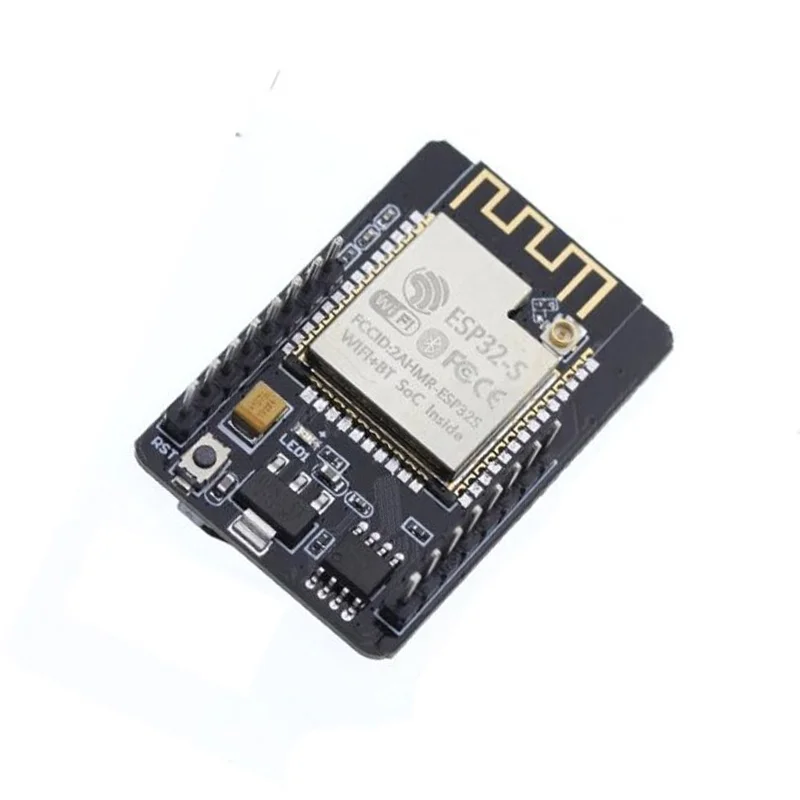
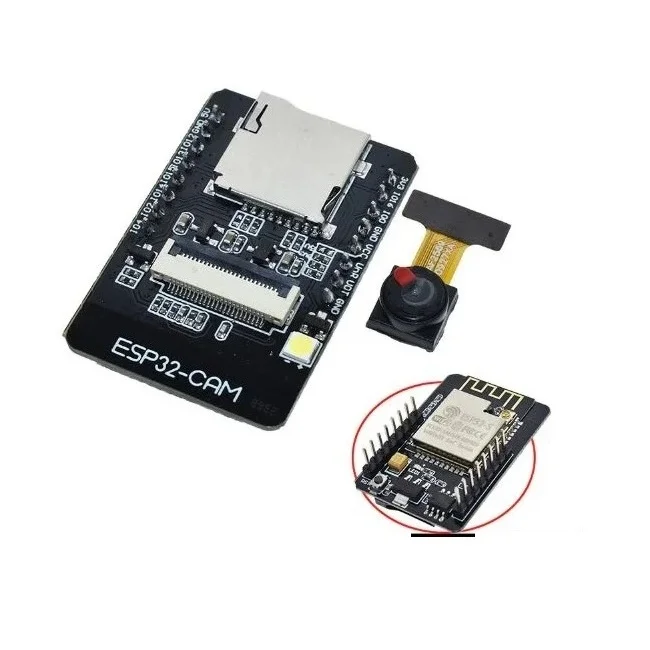
ESP32 CAM WiFi Module Bluetooth Development Board

₹609.00 (Inclusive of all taxes)
Out of Stock

The ESP32 CAM WiFi Module is a compact development board based on the ESP32-S SoC, integrating 802.11 b/g/n Wi-Fi and Bluetooth 4.2 LE. It features a microSD card slot, extensive GPIO, and is designed for low-power IoT applications using the Arduino IDE or ESP-IDF framework.

Features

  • ESP32-S SoC with dual-core 32-bit LX6 CPU up to 160MHz, 520KB SRAM, and external 2MB PSRAM for image processing.
  • Integrated 802.11 b/g/n Wi-Fi and Bluetooth 4.2 BR/EDR/BLE with onboard PCB antenna and u.FL connector for external antenna.
  • Dedicated camera interface supports OV2640 and OV7670 sensors, enabling face recognition and wireless image upload.
  • Includes microSD card slot for external storage up to 4GB and 16x GPIO holes providing UART, SPI, I2C, and PWM interfaces.
  • Low-power design with deep sleep currents as low as 6mA, powered via 5V pin header, ideal for battery-operated IoT devices.

Out of stock

Description

The ESP32 CAM WiFi Module Bluetooth is a highly integrated development platform centered on the Espressif ESP32-S system-on-chip. Its compact 40mm x 27mm footprint houses a powerful dual-core processor capable of clock speeds up to 160MHz, paired with 520KB of internal SRAM and an external 2MB PSRAM, specifically optimized for buffering and processing image data from connected camera sensors like the OV2640.

Wireless connectivity is provided by a complete 2.4GHz RF system supporting 802.11 b/g/n Wi-Fi in STA, AP, or STA+AP modes and Bluetooth 4.2 with both Classic and Low Energy (BLE) profiles. The board includes an onboard PCB antenna and a u.FL connector for attaching higher-gain external antennas to extend wireless range. Power management is a key feature, with support for multiple sleep modes enabling deep sleep currents as low as 6mA, making it suitable for always-on, battery-powered surveillance and telemetry applications.

Key Features

  • Compact AIoT development board with ESP32-S dual-core processor and dedicated camera interface.
  • Integrated 2.4GHz Wi-Fi 802.11 b/g/n and Bluetooth 4.2 BR/EDR/BLE for dual-mode wireless connectivity.
  • Onboard PCB antenna and u.FL connector for flexible antenna deployment and improved signal strength.
  • External 2MB PSRAM supports high-resolution image processing and buffer storage for camera applications.
  • MicroSD card slot provides up to 4GB of removable storage for images, data logging, and firmware.
  • 16 exposed GPIO pins offer UART, SPI, I2C, PWM, ADC, and DAC interfaces for sensor and actuator expansion.
  • Supports Smart Config and AirKiss for easy network provisioning and FOTA for remote firmware updates.
  • Low-power architecture with deep sleep mode enables long-term deployment in battery-operated IoT nodes.

Applications

  • Smart home security cameras and wireless video doorbells.
  • Industrial wireless monitoring and machine vision systems.
  • IoT telemetry devices with image capture and Wi-Fi upload.
  • Face recognition and access control systems.
  • Battery-powered wildlife or environmental monitoring cameras.

Technical Specifications

Microcontroller/SoCESP32-S Dual-Core LX6 up to 160MHz
Wireless ProtocolsWi-Fi 802.11 b/g/n, Bluetooth 4.2 BR/EDR & BLE
Frequency Range2412 ~ 2484 MHz
Antenna ConnectorOnboard PCB antenna & u.FL connector
Memory520KB SRAM, 2MB PSRAM, 32Mbit SPI Flash
External StoragemicroSD card slot (up to 4GB)
InterfacesUART, SPI, I2C, PWM, ADC, DAC, Camera I/F
Supported CamerasOV2640, OV7670
Supply Voltage5V via pin header
Operating CurrentVaries with mode; Deep Sleep ~6mA
DimensionsApprox. 40mm x 27mm (board footprint)

Frequently Asked Questions

How do I power the ESP32 CAM module and what is the typical current draw?

The module is powered via its 5V pin header. While operating current varies with Wi-Fi usage and CPU load, it can reach several hundred milliamps during active transmission. For battery operation, utilize its deep sleep modes which can reduce current consumption to approximately 6mA, significantly extending project lifespan between charges. Always ensure your power supply can deliver at least 500mA for stable operation during camera and Wi-Fi use.

What cameras are compatible and how do I connect an OV2640 sensor?

The board natively supports OV2640 and OV7670 camera modules via its dedicated camera interface connector. To connect an OV2640, align the camera's ribbon cable with the board's 24-pin FPC connector, ensuring the pin-1 indicators match. You will need to configure the camera driver in your code (using the ESP32 camera library in Arduino IDE or ESP-IDF) and ensure the correct pin definitions for D0-D7, VSYNC, HREF, PCLK, and XCLK are set in your project's camera configuration file.

How do I program the ESP32 CAM module using the Arduino IDE?

First, install the ESP32 board support via the Arduino Boards Manager. Connect the module's GPIO0 to GND to enter download mode, then connect a USB-to-serial adapter (e.g., FTDI) to the U0TXD, U0RXD, GND, and 5V pins. Select 'AI-Thinker ESP32-CAM' as your board in the Tools menu. Set the upload speed to 115200 baud. With GPIO0 grounded, press the reset button, then immediately upload your sketch. After uploading, disconnect GPIO0 from GND and reset the board to run your program.

Package Includes

  • 1 x ESP32 CAM WiFi Module Bluetooth (without camera module)

Additional Information

Weight 0.05 kg
Dimensions 10 × 7 × 4 cm