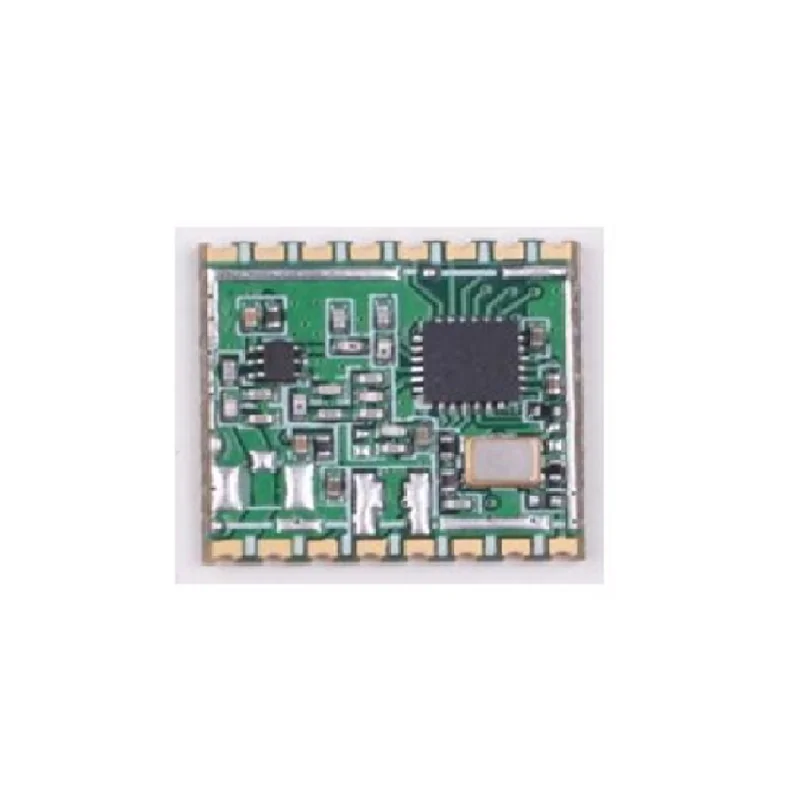
HopeRF RFM90W-433S2R LoRa Module
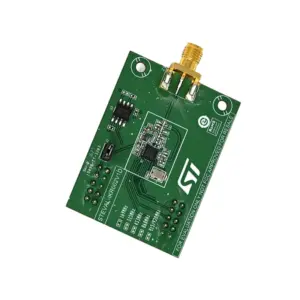
The HopeRF RFM90W-433S2R is a sub-GHz LoRa radio transceiver module operating at 433MHz, designed for long-range, low-power IoT applications. It supports LoRa and (G)FSK modulation for LPWAN and legacy protocols, featuring a high +22dBm output power and ultra-low 8mA receive current for extended battery life.
Features
- High-Efficiency LoRa Transceiver: Features the RFM90 IC with LoRa® modulation for robust, long-range communication up to +22dBm output, ideal for LPWAN deployments.
- Ultra-Low Power Consumption: Achieves just 8mA active receive current and 600nA register retention sleep current, enabling multi-year battery operation for remote sensors.
- Global Frequency Flexibility: Continuous coverage from 150MHz to 960MHz supports worldwide sub-GHz ISM bands, including 433MHz, 868MHz, and 915MHz.
- Dual Modulation Support: Compatible with both LoRa for maximum range and (G)FSK/(G)MSK for high-speed (up to 300kbps) legacy system integration.
- Compact & Robust Design: 16x16mm module footprint with excellent blocking immunity and compliance with ETSI, FCC, and ARIB radio regulations.
Out of stock
The HopeRF RFM90W-433S2R is a professional-grade sub-GHz radio transceiver module built around the Semtech SX1276/78-compatible RFM90 IC. Engineered for long-range wireless sensor networks and LPWAN applications, it provides a complete RF solution in a compact 16x16mm form factor. The module’s architecture is optimized for extreme power efficiency, featuring highly configurable operating modes that allow developers to balance range, data rate, and battery life.
It delivers a maximum RF output power of +22dBm via its integrated power amplifier, coupled with a sensitivity of -148dBm for LoRa, enabling reliable links over several kilometers in clear conditions. The fully integrated frequency synthesizer offers precise control with a 0.95 Hz step, allowing fine-tuning for specific regional band plans. Its support for automatic Channel Activity Detection (CAD) and preamble detection simplifies the implementation of low-duty-cycle listening protocols, which is critical for battery-powered sensor nodes in IoT ecosystems.
Additional Information
| Weight | 0.01 kg |
|---|---|
| Dimensions | 1.6 × 1.6 cm |