SKU: IOWC-1693
📋 GST Invoice Available

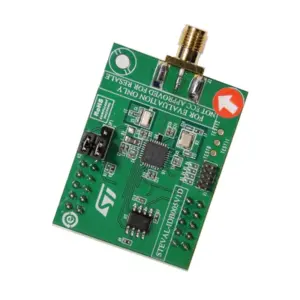
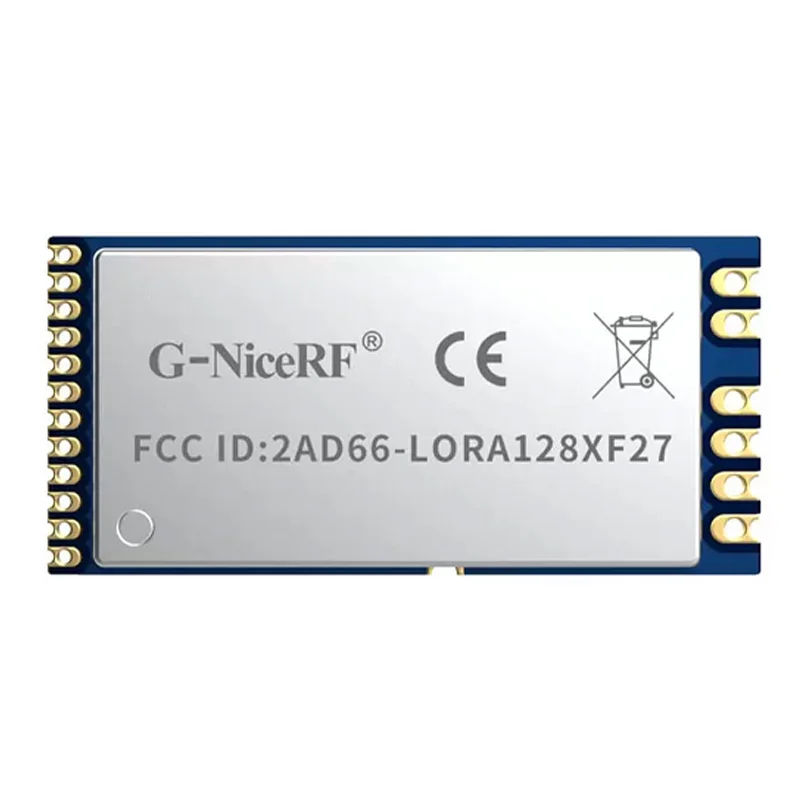
G-NiceRF LoRa1280F27 SX1280 500mW 2.4GHz LoRa Module

₹1,429.00 (Inclusive of all taxes)
Out of Stock

The G-NiceRF LoRa1280F27 is a high-power 2.4GHz LoRa transceiver module based on the Semtech SX1280 chip, offering up to 500mW (+27 dBm) output power and -132 dBm sensitivity for robust, long-range wireless links via an SPI interface.

Features

  • High-power 500mW (+27 dBm) SX1280 LoRa transceiver for exceptional 2.4GHz range and signal penetration.
  • Excellent receiver sensitivity of -132 dBm ensures reliable communication in noisy or obstructed environments.
  • Integrated 0.5ppm TCXO crystal oscillator guarantees stable frequency operation from -40°C to +85°C.
  • Simple SPI interface allows for straightforward integration with microcontrollers like ESP32, STM32, or Raspberry Pi.
  • FCC ID and CE-RED certified, ensuring compliance for commercial and industrial wireless deployments.

Out of stock

Description

The G-NiceRF LoRa1280F27 module leverages the Semtech SX1280 RF IC to deliver high-performance LoRa communication in the 2.4GHz ISM band. Its architecture includes a built-in low-noise amplifier (LNA) and a high-precision temperature-compensated crystal oscillator (TCXO) for stable frequency generation, critical for maintaining link integrity across its wide -40°C to +85°C operating range.

With a configurable output power up to +27 dBm (500mW) and a receiver sensitivity as low as -132 dBm, this module is engineered for challenging long-distance IoT applications where other wireless protocols fail. The wide 2.0V to 5.5V supply voltage range accommodates various power sources, from single-cell LiPo batteries to regulated 3.3V or 5V systems, while the SPI host interface simplifies firmware development and system integration.

Key Features

  • High-power 500mW (+27 dBm) RF output for maximum range and signal robustness.
  • Ultra-high sensitivity down to -132 dBm ensures reliable data reception at extreme distances.
  • Integrated 0.5ppm TCXO provides excellent frequency stability against temperature drift.
  • SPI digital interface for easy connection to host microcontrollers and SBCs.
  • Wide 2.0V to 5.5V operating voltage supports flexible power supply design.
  • Industrial-grade operating temperature range from -40°C to +85°C.
  • FCC and CE-RED certified for regulatory compliance in commercial products.
  • Supports LoRa modulation with data rates from 0.476 kbps to 202 kbps.

Applications

  • Long-range wireless sensor networks for industrial telemetry and environmental monitoring.
  • Asset tracking and logistics management systems requiring robust 2.4GHz links.
  • Smart home and building automation for reliable control signals through walls.
  • Remote health monitoring and medical device data transmission.
  • Agricultural IoT networks for soil moisture, weather, and irrigation control.

Technical Specifications

RF ChipsetSemtech SX1280
Wireless ProtocolLoRa
Frequency Range2400 - 2500 MHz
RF Transmit PowerUp to +27 dBm (500mW)
Receiver Sensitivity-132 dBm (LoRa)
Data Rate0.476 - 202 kbps
Supply Voltage2.0V - 5.5V
Host InterfaceSPI
Crystal Oscillator0.5ppm TCXO
Operating Temperature-40°C to +85°C
CertificationsFCC ID, CE-RED
Dimensions (approx.)9 x 7 x 1 cm

Frequently Asked Questions

How do I interface the LoRa1280F27 module with my microcontroller?

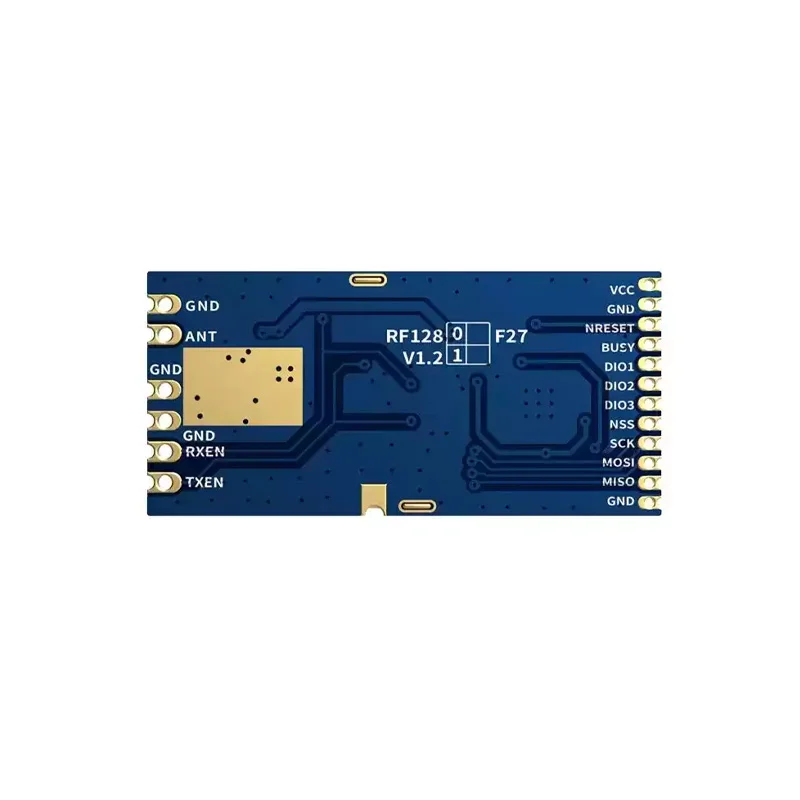
The module connects via a standard 4-wire SPI interface (MOSI, MISO, SCK, CS). You must also connect the module's BUSY and DIO1 pins to GPIOs on your host MCU (e.g., ESP32, STM32) for interrupt-driven communication. Initialize the SPI peripheral at the appropriate clock speed, then use a library like RadioLib or the Semtech SX1280 driver to handle packet transmission, reception, and RF parameter configuration through register writes.

What is the typical power consumption during transmission and reception?

At its maximum +27 dBm (500mW) output power, the module will draw significant current, likely over 300mA from the 3.3V supply. In receive mode with the LNA active, expect a current draw in the range of 15-20mA. For battery-powered applications, you must implement deep sleep modes on both the module and your host microcontroller, waking only for brief transmission windows. Always provide a stable, low-noise power supply capable of supplying peak current bursts.

Can I use this module with Arduino or ESP32 development boards?

Yes, it is fully compatible with Arduino IDE (using the RadioLib library) and ESP-IDF. For an ESP32, connect the module's SPI pins to the default VSPI bus (GPIO 23, 19, 18, 5) and assign two free GPIOs for BUSY and DIO1. Ensure your code configures the correct LoRa spreading factor, bandwidth, and coding rate to match your network's other nodes. The wide 2.0V-5.5V voltage range means you can power it directly from the 3.3V pin of most development boards.

What antenna should I use with this 2.4GHz LoRa module?

You need a 2.4GHz antenna with an impedance of 50 ohms. The module likely has a pad for a chip antenna or an IPEX connector for an external antenna. For maximum range, use a external dipole or omni-directional antenna with a suitable gain (e.g., 2-3 dBi). Ensure the antenna is tuned for the 2.4-2.5 GHz band and uses a low-loss cable if connected via a pigtail. Proper antenna matching is critical to achieving the advertised -132 dBm sensitivity and efficient RF power radiation.

Package Includes

  • 1 x G-NiceRF LoRa1280F27 SX1280 500mW LoRa Module

Additional Information

Weight 0.005 kg
Dimensions 9 × 7 × 1 cm