SKU: IOWC-1617
📋 GST Invoice Available

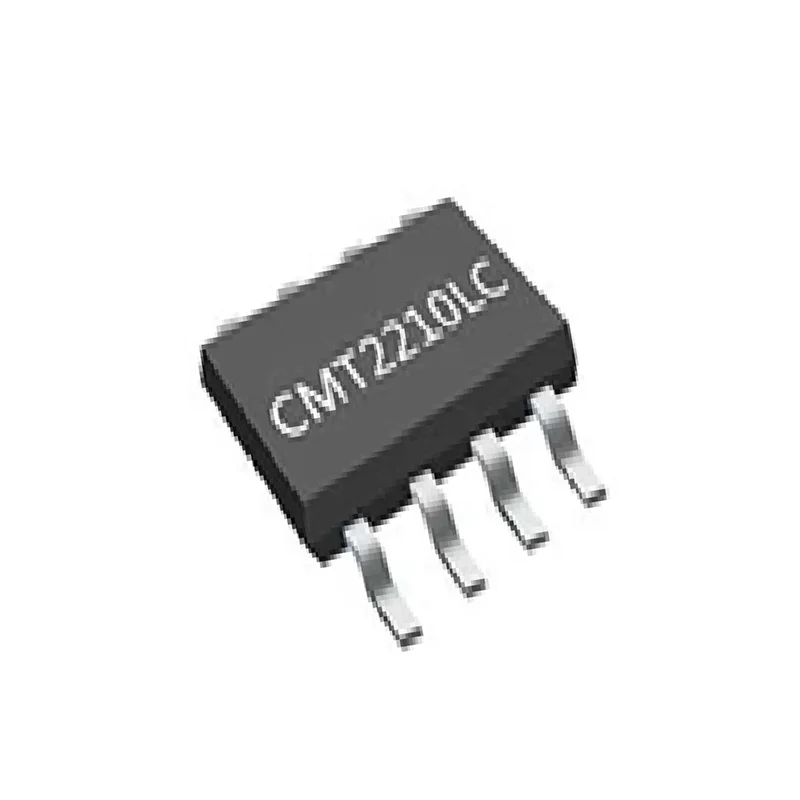
HopeRF CMT2210LH-ESR OOK RF Receiver Chipset 315/433/868/915MHz

₹30.00 (Inclusive of all taxes)
Out of Stock

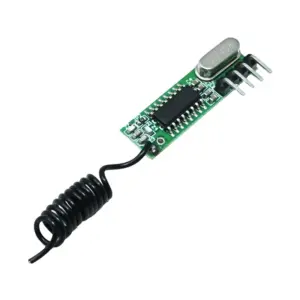
The HopeRF CMT2210LH-ESR is a low-power, high-performance OOK RF receiver chipset designed for simple wireless links in the 300-480MHz ISM bands, including 315MHz, 433.92MHz, 868MHz, and 915MHz. It operates as a plug-and-play solution, requiring no register configuration, and is ideal for pairing with low-cost MCU-based transmitters.

Features

  • Plug-and-play OOK receiver chipset for 300-480MHz ISM bands (315/433/868/915MHz).
  • Excellent sensitivity of -109 dBm at 3.0 kbps for reliable long-range reception.
  • Dual voltage mode operation: 3.0-5.5V (High) or 2.0-3.6V (Low) for flexible power supply design.
  • Low power consumption of only 4.5 mA at 433.92 MHz, ideal for battery-powered IoT nodes.
  • Supports data rates from 0.5 to 40 kbps, factory-optimized for 1-5 kbps for simple sensor telemetry.

Out of stock

Description

The HopeRF CMT2210LH-ESR is a dedicated OOK (On-Off Keying) demodulator RF receiver chipset engineered for cost-effective, low-power wireless communication in sub-1GHz ISM bands. Its architecture is designed for simplicity, taking a direct RF input from the antenna and providing a demodulated data output, eliminating the need for complex software configuration or external MCU management of the RF front-end.

Operating across the 300-480MHz spectrum, the chipset’s center frequency is determined by the external crystal, allowing designers to target specific regional bands like 315MHz for security systems or 868MHz for European IoT deployments. With a high image rejection ratio of 30 dB and a receiver bandwidth of 330 kHz, it ensures stable operation in noisy RF environments. The chipset’s dual-voltage pin configuration allows seamless integration into both 5V and 3.3V embedded systems, making it a versatile core component for wireless sensor nodes, remote controls, and alarm systems.

Key Features

  • True plug-and-play OOK receiver requiring no register configuration or software drivers.
  • Covers major global ISM frequency points: 315MHz, 433.92MHz, 868MHz, and 915MHz.
  • High receiver sensitivity (-109 dBm) maximizes communication range and link reliability.
  • Selectable dual-voltage operation via PCB jumper for high-voltage (3.0-5.5V) or low-voltage (2.0-3.6V) modes.
  • Optimized for low current consumption (4.5 mA @ 433.92MHz) to extend battery life in remote sensors.
  • Wide supported data rate range from 0.5 kbps to 40 kbps for flexible application design.
  • Robust 30 dB image rejection ratio improves resistance to out-of-band interference.
  • Can handle strong input signals up to +10 dBm without damage or desensitization.

Applications

  • Consumer electronics and appliances for low-cost remote control.
  • Home security, building automation, and wireless alarm systems.
  • Direct replacement for infrared (IR) receivers in remote controls.
  • Industrial wireless monitoring, control, and telemetry systems.
  • Wireless meter reading (AMR) and lighting control systems.
  • Remote Keyless Entry (RKE) for automotive and access control.

Technical Specifications

Chipset ModelCMT2210LH-ESR
Wireless ProtocolOOK (On-Off Keying)
Frequency Range300 - 480 MHz (315 / 433.92 / 868 / 915 MHz points)
RF Sensitivity-109 dBm (@ 3.0 kbps, 0.1% BER)
Receiver Bandwidth330 kHz
Image Rejection Ratio30 dB
Max Input Signal+10 dBm
Data Rate Range0.5 - 40 kbps
Supply Voltage (High Mode)3.0 – 5.5 V
Supply Voltage (Low Mode)2.0 – 3.6 V
Operating Current4.5 mA (@ 433.92 MHz)
Crystal Frequency Tolerance±20 ppm

Frequently Asked Questions

How do I set the operating frequency for the CMT2210LH receiver chip?

The operating frequency of the CMT2210LH is determined by the external crystal oscillator connected to it. You must select a crystal with the fundamental frequency corresponding to your desired RF channel (e.g., 433.92 MHz). The specific crystal frequency needed can be calculated or found using CMOSTEK's RFPDK software tool. There is no register configuration; the chip is truly plug-and-play once the correct crystal is installed on your PCB.

What is the difference between High Voltage Mode and Low Voltage Mode, and how do I select them?

The chip supports two voltage ranges for flexibility. High Voltage Mode operates from 3.0V to 5.5V, typical for 5V microcontroller systems. Low Voltage Mode operates from 2.0V to 3.6V, ideal for 3.3V or battery-powered designs. Selection is done via a hardware jumper on your PCB: leaving the VDD5V and VDDL pins open-circuit configures High Voltage Mode; shorting them together configures Low Voltage Mode. Ensure your power supply matches the selected mode.

What microcontroller interface is required to use this OOK receiver chip?

The interface is extremely simple. The chip outputs the demodulated digital data signal on its DATA output pin. You simply connect this pin to a GPIO input pin on your microcontroller (e.g., an Arduino, STM32, or ESP32). No SPI, I2C, or UART communication is needed. Your firmware only needs to read this digital pin to receive the transmitted data, typically using pin-change interrupts or polling for optimal performance in your application.

Can I use this chip for bidirectional communication or only as a receiver?

The CMT2210LH is a receive-only chip. It is designed specifically for OOK demodulation. For a complete bidirectional link, you must pair it with a compatible transmitter chip, such as one from the HopeRF CMT211x or CMT215x family. Together, they form a cost-effective transceiver solution. This chip is ideal for applications like remote controls, sensor data reception, or alarm systems where the node only needs to receive commands or telemetry.

Package Includes

  • 1 x HopeRF CMT2210LH-ESR Receiver Chipset

Additional Information

Weight 0.02 kg
Dimensions 6 × 8 × 3 cm