SKU: IOWC-1414
📋 GST Invoice Available

SparkFun Artemis Development Kit with Himax Camera

₹3,889.00 (Inclusive of all taxes)
Out of Stock

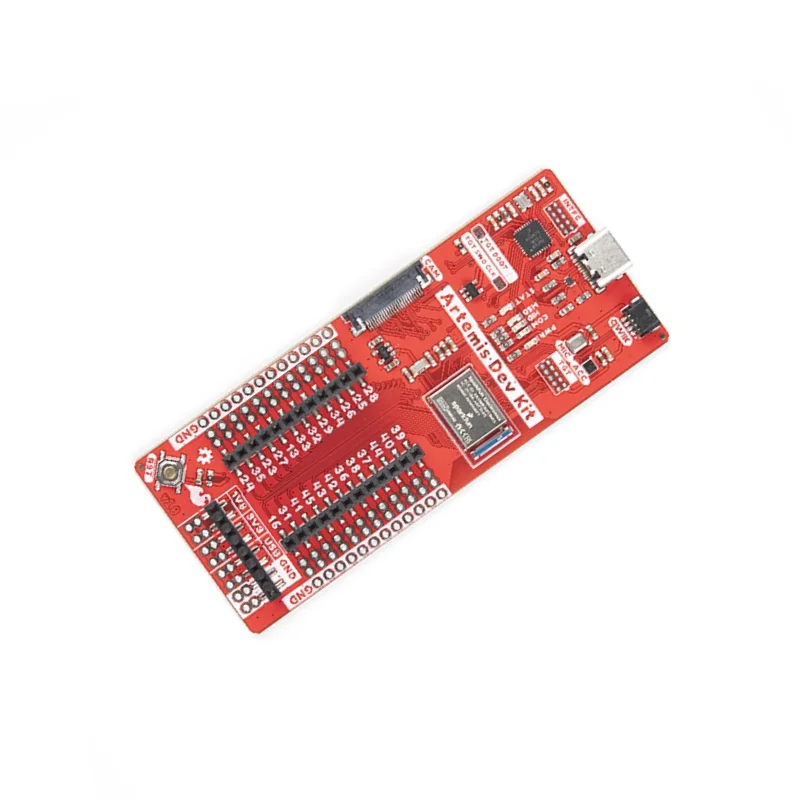
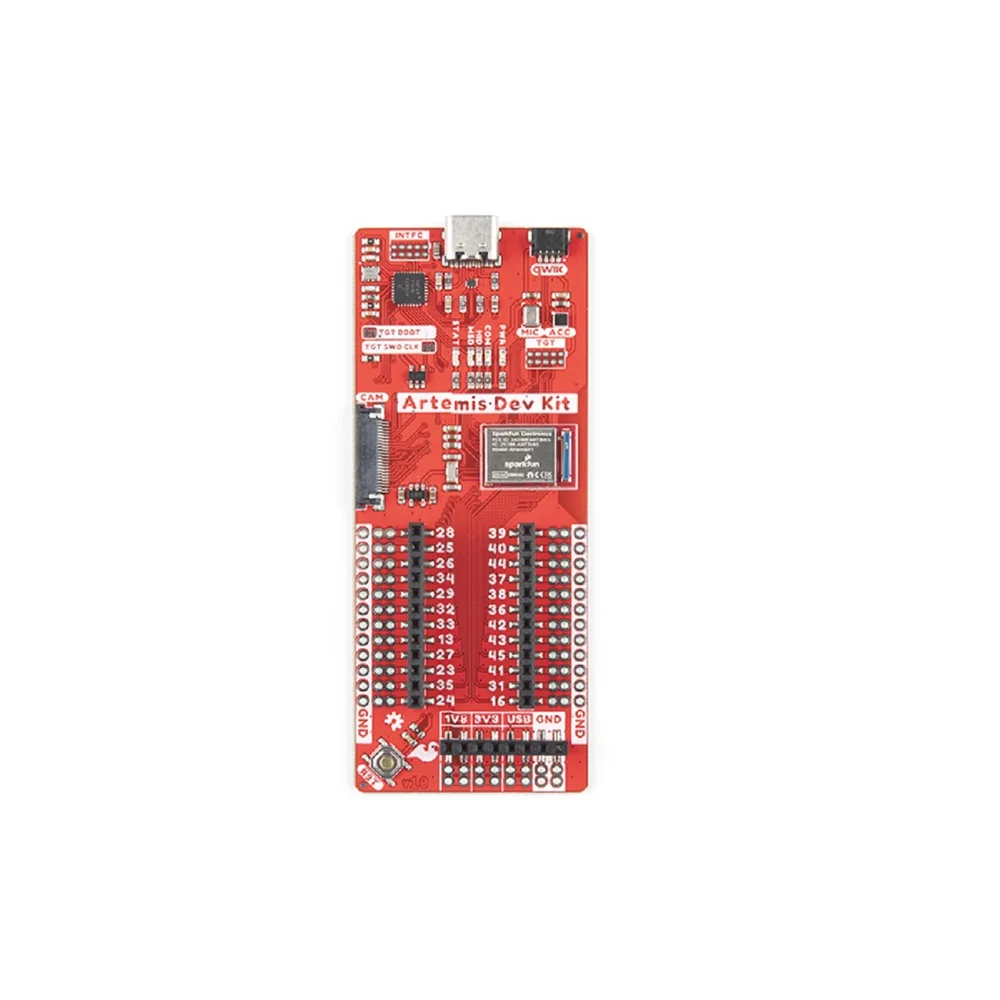
The SparkFun Artemis Development Kit with Camera is a feature-rich platform centered on the FCC-certified Artemis Module, integrating a Cortex-M4F with BLE 5.0 and a Himax camera for embedded vision applications. It supports programming via Arduino IDE, Arm Mbed OS, or AmbiqSDK for low-power IoT development.

Features

  • Features the SparkFun Artemis Module with an Ambiq Apollo3 Blue Cortex-M4F MCU, BLE 5.0, and ultra-low power consumption (~6µA/MHz).
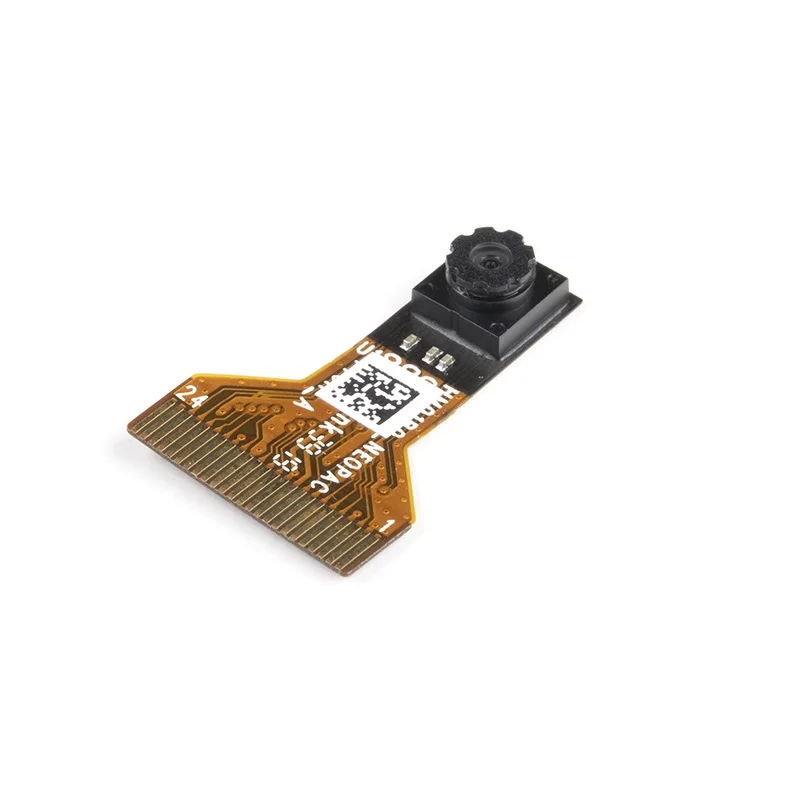
  • Includes a Himax HM01B0 monochrome camera module for embedded computer vision and TinyML applications.
  • Offers versatile programming via drag-and-drop MSD, Arduino IDE, Arm Mbed OS, and the AmbiqSDK.
  • Provides comprehensive debug interfaces including SWD and JTAG programming headers for advanced development.
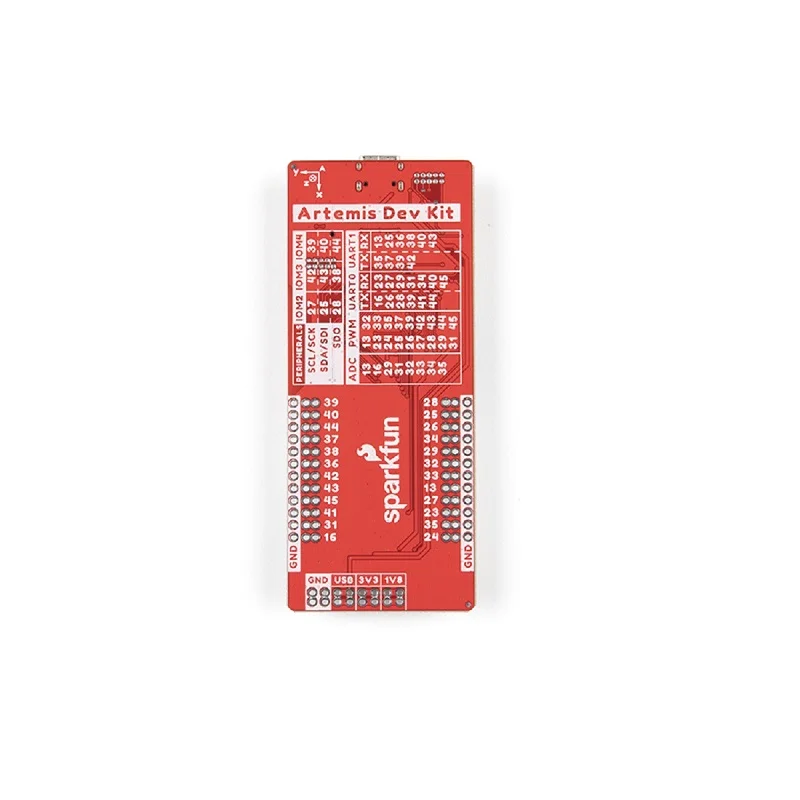
  • Delivers robust connectivity with two independent UART ports and three configurable I2C/SPI peripheral buses.

Out of stock

Description

The SparkFun Artemis Development Kit is a comprehensive hardware platform designed to unlock the full potential of the Artemis Module for IoT and edge AI applications. At its core is the Artemis Module, featuring an Ambiq Apollo3 Blue microcontroller with an Arm Cortex-M4F core, capable of running at 48MHz with a 96MHz turbo mode while achieving remarkably low power consumption. This FCC/IC/CE-certified module includes 1MB of flash and 384KB of RAM, providing ample space for complex firmware.

This kit enhances the module with a dedicated Himax HM01B0 camera sensor, enabling on-device image capture and processing for machine vision projects. The onboard NXP Semiconductors Kinetis KL26 (Cortex-M0+) MCU manages the advanced USB-C interface, presenting the board as a Mass Storage Device for drag-and-drop programming, a Human Interface Device for debugging, and a Communication Port for serial UART. This architecture simplifies the development workflow, making it accessible for both beginners and professionals deploying low-power, vision-enabled wireless sensor nodes.

Key Features

  • Ultra-low-power Ambiq Apollo3 Blue Cortex-M4F core with BLE 5.0 wireless connectivity.
  • Integrated Himax HM01B0 monochrome QVGA camera for embedded vision and TinyML.
  • Advanced USB-C interface powered by an NXP Semiconductors Kinetis KL26 MCU for MSD, HID, and COM port functionality.
  • Support for multiple development frameworks: Arduino IDE, Arm Mbed OS, and vendor-specific AmbiqSDK.
  • Comprehensive hardware debug access via exposed SWD and JTAG programming test points.
  • Multiple serial communication buses: two independent UARTs and three configurable I2C/SPI buses.
  • Fully certified (FCC/IC/CE) Artemis Module ensures compliance for commercial product development.
  • Drag-and-drop programming simplifies firmware updates without requiring dedicated programmers.

Applications

  • Low-power IoT sensor nodes with wireless data transmission via BLE 5.0.
  • Embedded computer vision and TinyML projects for object detection or presence sensing.
  • Prototyping wearable devices and smart home products requiring vision and connectivity.
  • Educational platforms for learning microcontroller programming, BLE, and machine learning at the edge.
  • Industrial monitoring systems that require periodic image capture and telemetry reporting.

Technical Specifications

Main ProcessorAmbiq Apollo3 Blue Arm Cortex-M4F (on Artemis Module)
USB Interface MCUNXP Semiconductors Kinetis KL26 Arm Cortex-M0+
Wireless ProtocolBluetooth Low Energy (BLE) 5.0
Camera SensorHimax HM01B0 Monochrome QVGA
Maximum Clock Frequency48 MHz (96 MHz Turbo Mode Available)
Flash Memory (Artemis)1 MB
SRAM (Artemis)384 KB
Flash Memory (KL26)128 KB
SRAM (KL26)16 KB
Supply Voltage3.3V @ 600mA (via USB-C)
InterfacesUSB-C, SWD, JTAG, 2x UART, 3x I2C/SPI
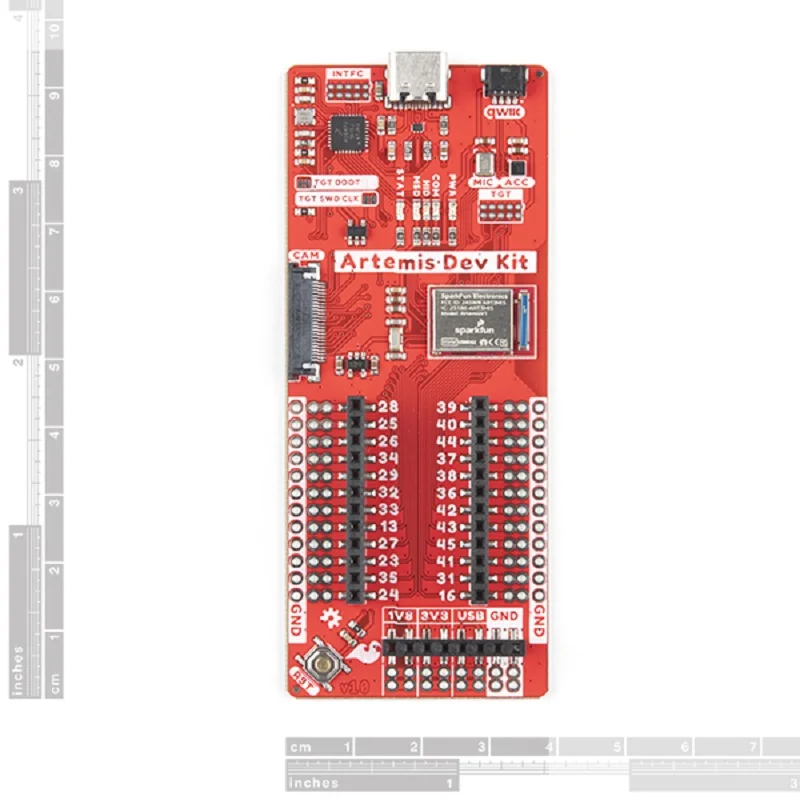
Dimensions95 mm x 38 mm
Weight20 g

Frequently Asked Questions

How do I program the SparkFun Artemis Development Kit?

You can program the kit using multiple methods. For beginners, use the drag-and-drop Mass Storage Device (MSD) mode by copying a compiled binary to the board's drive. For advanced development, use the Arduino IDE with the SparkFun Apollo3 boards package, Arm Mbed OS through Mbed Studio/CLI, or the native AmbiqSDK. The USB-C connection also provides a serial COM port for debugging output and a HID interface for advanced debugging tools.

What is the power consumption of the Artemis Module?

The Ambiq Apollo3 Blue MCU on the Artemis Module is designed for extreme low power, consuming approximately 6 microamps per Megahertz (µA/MHz) in active mode. This enables operation at less than 5 milliwatts total system power. The module supports deep sleep modes for battery-powered applications, making it suitable for always-on sensor nodes and wearable devices where energy efficiency is critical for long-term deployment.

What specifications does the included Himax camera have?

The kit includes a Himax HM01B0 monochrome (grayscale) camera sensor. It has a QVGA resolution of 320x240 pixels and supports a digital video interface. It's designed for low-power operation and is commonly used for basic machine vision, face detection, object tracking, and other TinyML applications on resource-constrained microcontrollers. The sensor communicates over a dedicated bus to the Artemis Module's GPIOs.

How do I access the debug interfaces (SWD/JTAG) on this board?

The Artemis Dev Kit exposes both SWD (Serial Wire Debug) and JTAG (Joint Test Action Group) interfaces via labeled through-hole pads (PTH). You can connect a compatible debug probe (like an ST-Link, Segger, or the SparkFun BlackMagic Probe) to these pads to perform live debugging, step-through code execution, and memory inspection. The SWD interface is the more common two-wire standard for Cortex-M cores.

Package Includes

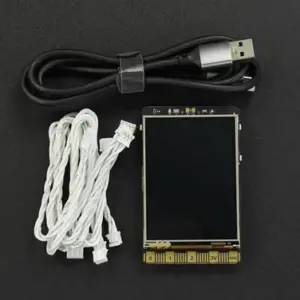
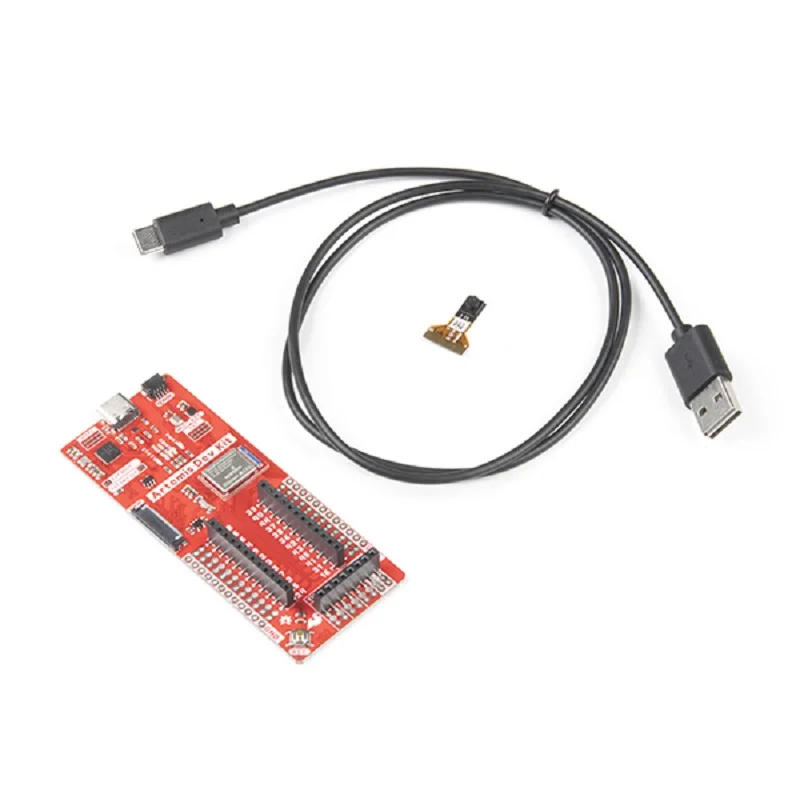
  • 1 x SparkFun Artemis Development Board (with integrated camera)
  • 1 x Himax HM01B0 Camera Module
  • 1 x USB-C Cable

Additional Information

Weight 0.02 kg
Dimensions 9.5 × 3.8 cm