SKU: IOWC-1247
📋 GST Invoice Available

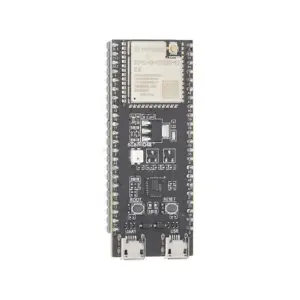
LilyGO T-RSS3 ESP32-S3 Development Board w/ RS232 & RS485 5V Module

₹3,359.00 (Inclusive of all taxes)
Out of Stock

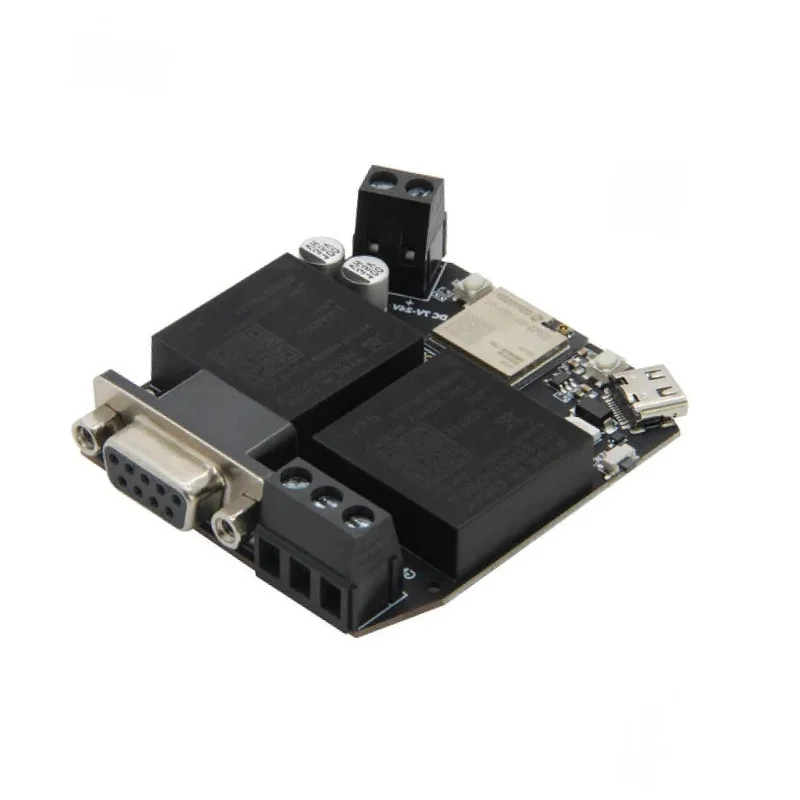
The LilyGO T-RSS3 is an ESP32-S3-powered development board integrating isolated RS232 and RS485 transceiver modules, designed for robust industrial IoT and automation projects. It provides a 5V power rail, Wi-Fi/Bluetooth 5.0 connectivity, and is programmable via Arduino IDE or ESP-IDF.

Features

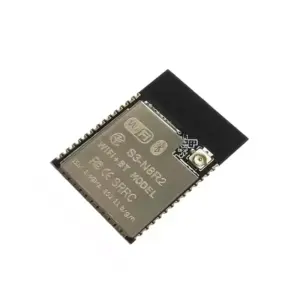
  • ESP32-S3 Dual-Core MCU: Features the Xtensa LX7 processor with 8MB flash for high-performance IoT applications and edge computing tasks.
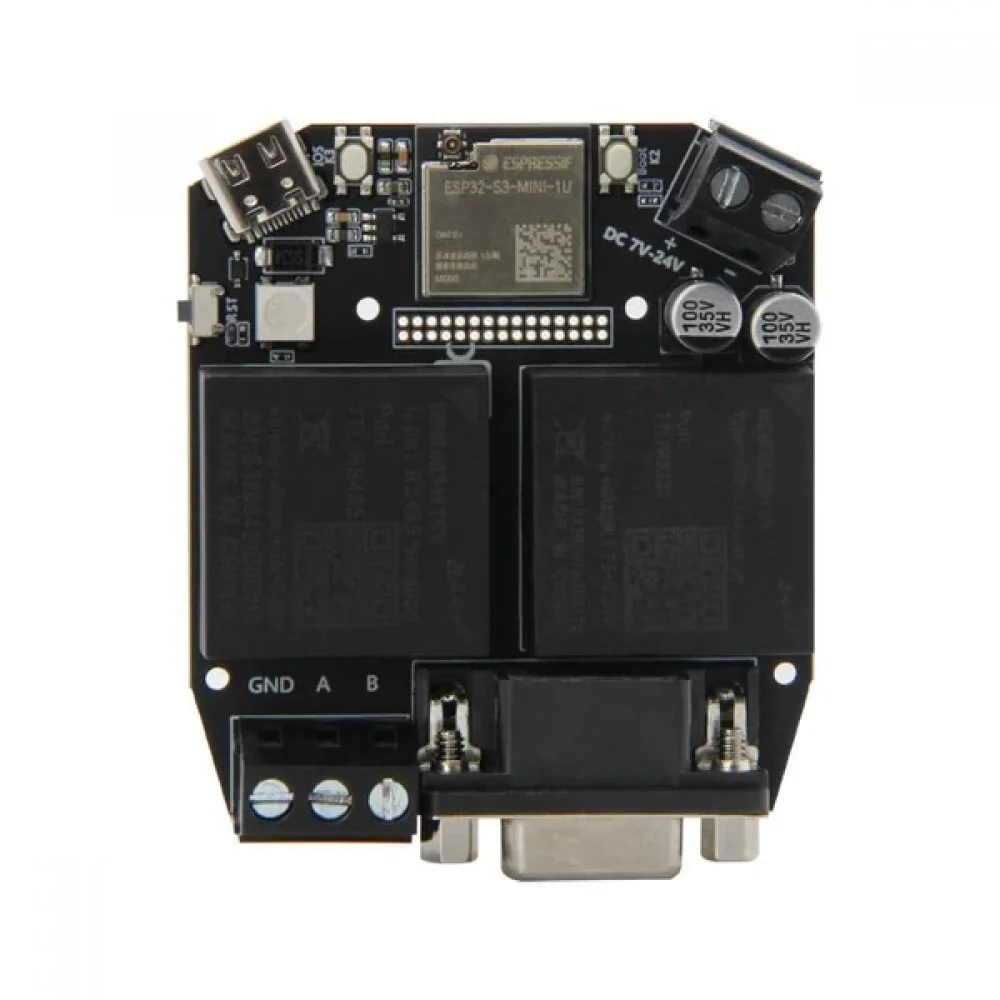
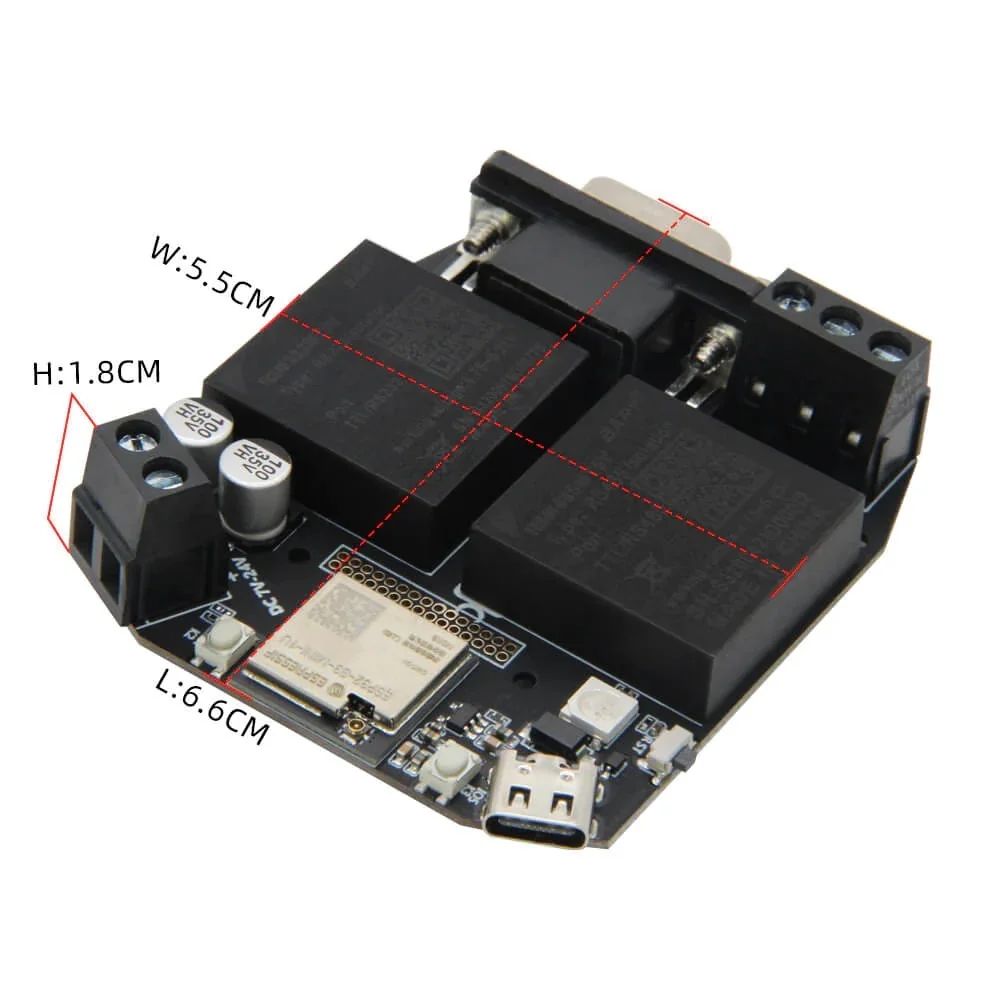
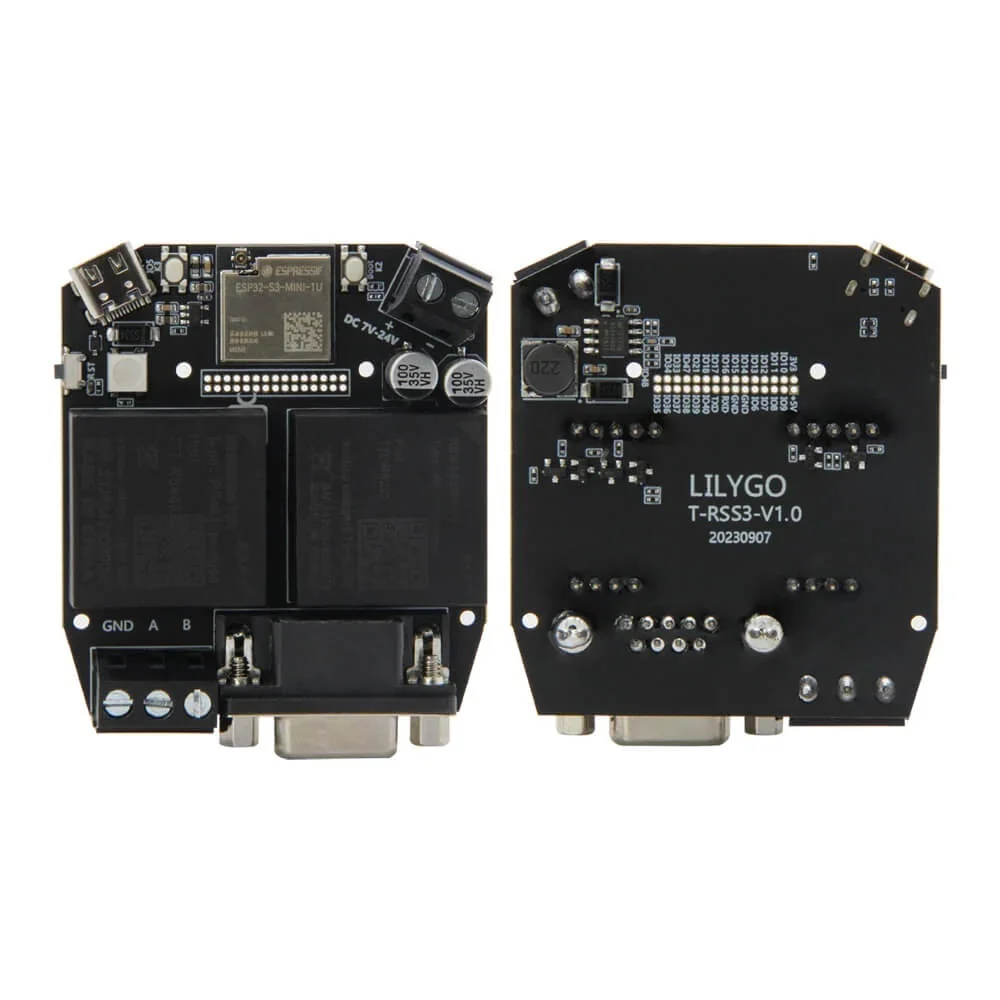
  • Integrated Industrial Serial Interfaces: Includes onboard RSM232MT5V and RSM485MT5V modules with 3000V isolation for reliable RS232 (DB9) and RS485 communication.
  • Robust Wireless Connectivity: Equipped with 2.4GHz Wi-Fi and Bluetooth 5.0 (LE) for local networking, device control, and wireless data transmission.
  • Wide-Range DC Power Input: Accepts 7V to 24V DC input, making it suitable for industrial and automotive environments with unstable power supplies.
  • Developer-Friendly Features: Includes a programmable WS2812 RGB LED (GPIO1), Reset/Boot/IO2 buttons, and a modern USB Type-C programming connector.

Out of stock

Description

The LilyGO T-RSS3 development board merges the computational power of the ESP32-S3 microcontroller with robust, isolated serial communication capabilities. It is engineered for developers building industrial control systems, smart agriculture monitors, building automation gateways, or any application requiring reliable long-distance wired data links alongside wireless connectivity. The board’s integrated RSM232MT5V and RSM485MT5V modules provide galvanic isolation up to 3000V, protecting the sensitive ESP32-S3 core from electrical noise, surges, and ground loops common in industrial settings.

Powered by a wide-input 7-24V DC supply, the board delivers stable 5V power to both the MCU and the isolation modules, supporting communication rates from 1200 to 256000 bps. The inclusion of Wi-Fi and Bluetooth 5.0 enables seamless integration into local networks for remote monitoring, configuration via smartphone apps, or data aggregation to cloud platforms. With support for Arduino and ESP-IDF development frameworks, it accelerates prototyping and deployment of secure, connected solutions.

Key Features

  • Industrial-Grade Serial Isolation: Integrated RS232 and RS485 transceivers feature 3000V isolation, ensuring signal integrity and protecting the MCU in electrically noisy environments.
  • High-Performance Wireless Core: Leverages the ESP32-S3 with dual-core LX7 CPU and 8MB flash for complex tasks like data processing, protocol conversion, and running lightweight web servers.
  • Flexible Power Architecture: Accepts a wide 7V to 24V DC input range, ideal for direct connection to 12V/24V industrial power rails, solar panels, or battery packs.
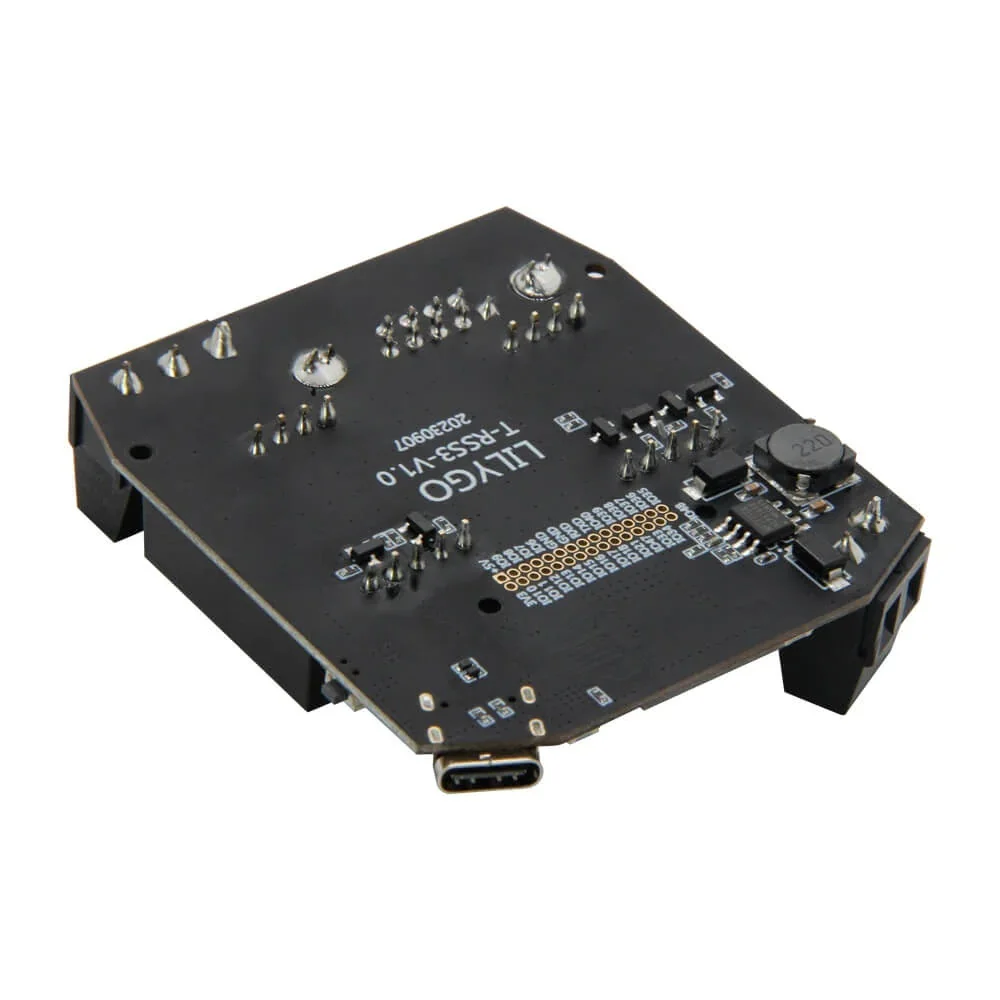
  • Modern Development Interface: USB Type-C port provides convenient power and serial programming/debugging, compatible with most modern computers and cables.
  • Visual Feedback & Debugging: Onboard WS2812 addressable RGB LED connected to GPIO1 offers a versatile indicator for status, errors, or custom visualizations.
  • Comprehensive Button Set: Dedicated Reset and Boot buttons (GPIO0) plus a user-accessible IO2 button simplify firmware flashing and user input implementation.
  • Dual Serial Protocol Support: Communicate with legacy RS232 devices (like PLCs or scanners) and modern RS485 networks (Modbus RTU, DMX512) simultaneously from a single board.

Applications

  • Industrial Automation Gateways: Acts as a Modbus RTU/TCP gateway, connecting RS485 sensor networks to Wi-Fi for SCADA and IIoT monitoring.
  • Building Management Systems: Interfaces with HVAC controllers, access control panels, and energy meters via RS232/RS485 for centralized smart building control.
  • Remote Telemetry Units (RTUs): Deployed in agriculture, water treatment, or oil & gas for collecting data from serial sensors and transmitting via cellular/Wi-Fi.
  • Legacy Equipment Modernization: Adds wireless connectivity and cloud data logging to older industrial machinery with serial communication ports.
  • Prototyping & Education: An ideal platform for engineering students and developers to learn about industrial communication protocols and IoT system design.

Technical Specifications

Microcontroller / SoCESP32-S3 dual-core Xtensa LX7
Wireless ProtocolsWi-Fi 802.11 b/g/n, Bluetooth 5.0 (LE)
Flash Memory8 MB
Serial InterfacesIsolated RS232 (RSM232MT5V), Isolated RS485 (RSM485MT5V)
Isolation Voltage3000 V
Communication Rate1200 - 256000 bps
Supply Voltage (Input)7 - 24 V DC
Isolation Output5V / 50mA (0.5W)
Programming InterfaceUSB Type-C
Onboard IndicatorsWS2812 RGB LED (GPIO1)
ButtonsReset, Boot (GPIO0), IO2
Development PlatformsArduino IDE, ESP-IDF
Dimensions (Shipping)7 x 7 x 3 cm
Weight (Shipping)0.02 kg

Frequently Asked Questions

How do I power the LilyGO T-RSS3 board and what is the input range?

The board accepts a wide DC input voltage range of 7V to 24V. Connect your power supply's positive lead to the DC input terminal and the negative to GND. The onboard regulator steps this down to provide stable 5V power to the ESP32-S3 and the isolated RS232/RS485 transceiver modules. Ensure your power supply can deliver sufficient current for your connected peripherals beyond the board's base consumption.

Which GPIO pins are used for the RS232 and RS485 communication interfaces?

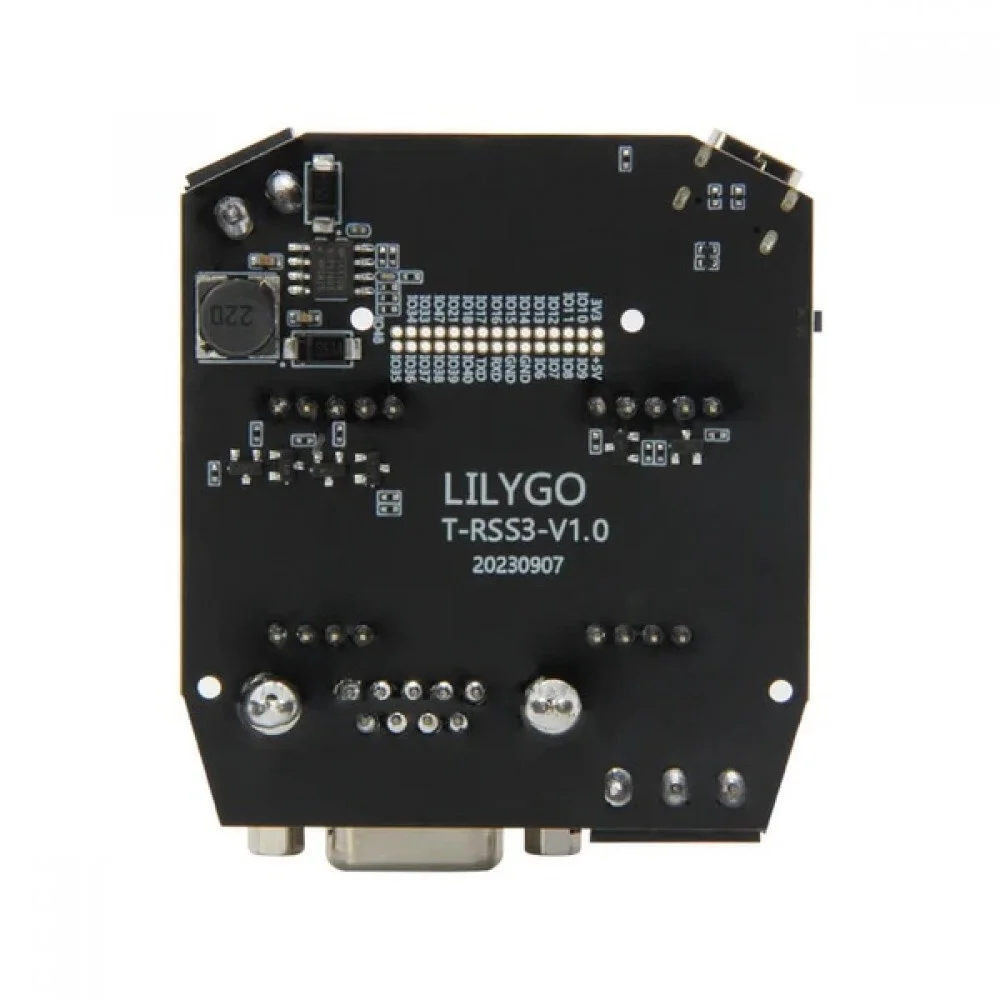
The integrated RSM232MT5V and RSM485MT5V modules connect to the ESP32-S3 via UART TTL lines. You will need to check the board's pinout diagram, but typically, a specific UART port (e.g., UART1 or UART2) is hardwired to these modules. In your Arduino or ESP-IDF code, you must initialize the corresponding Serial object using the predefined pins. The isolation modules handle the level conversion and signal driving for the RS232 DB9 and RS485 terminals.

Can I use both the RS232 and RS485 interfaces simultaneously on this board?

Yes, the LilyGO T-RSS3 is designed to operate both isolated serial interfaces concurrently. Each module uses a separate UART channel from the ESP32-S3. This allows you to communicate with an RS232 device (like a barcode scanner) and an RS485 network (like Modbus sensors) at the same time. You must manage both serial streams in your firmware, ensuring correct baud rate settings (configurable from 1200 to 256000 bps) and protocol handling for each independent data link.

What development environments are supported for programming this board?

The board is fully compatible with the Arduino IDE using the ESP32 board package and the official Espressif ESP-IDF framework. For Arduino, select 'ESP32S3 Dev Module' as your board. For ESP-IDF, target the ESP32-S3 chip. The USB Type-C port provides both power and a serial programming/debugging interface. Remember to install the necessary USB drivers (CP210x or similar) and hold the BOOT (GPIO0) button while pressing Reset to enter download mode for initial firmware flashing.

Package Includes

  • 1 x LilyGO T-RSS3 ESP32-S3 Development Board with RS232 & RS485 Modules

Additional Information

Weight 0.02 kg
Dimensions 7 × 7 × 3 cm