SKU: IOWC-1144
📋 GST Invoice Available

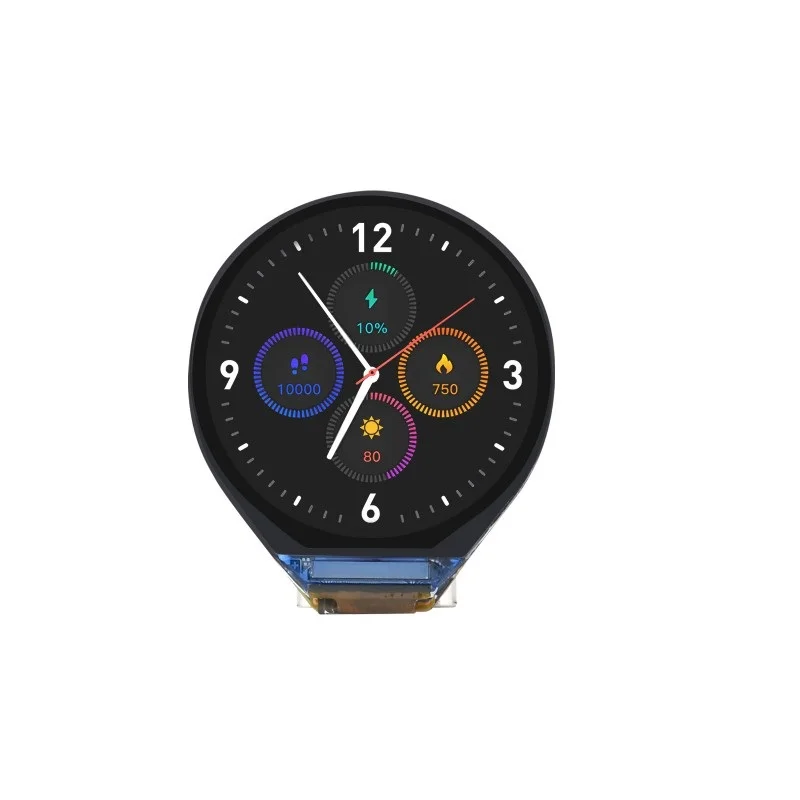
Waveshare ESP32-C3 0.71-Inch Round Display Development Board

₹1,219.00 (Inclusive of all taxes)
Out of Stock

The Waveshare ESP32-C3 0.71-Inch Round Display Development Board integrates a RISC-V ESP32-C3 SoC with Wi-Fi/Bluetooth 5 and a compact IPS LCD, designed for low-power HMI and IoT applications. It supports Arduino IDE and ESP-IDF for rapid prototyping of GUI projects like smart watches and AI emulation eyes.

Features

  • RISC-V ESP32-C3FH4 SoC with 160MHz CPU, 400KB SRAM, and 4MB Flash for embedded Wi-Fi/Bluetooth 5 applications.
  • Integrated 0.71-inch IPS round LCD (160×160) with GC9D01 driver via 4-wire SPI for smooth LVGL GUI development.
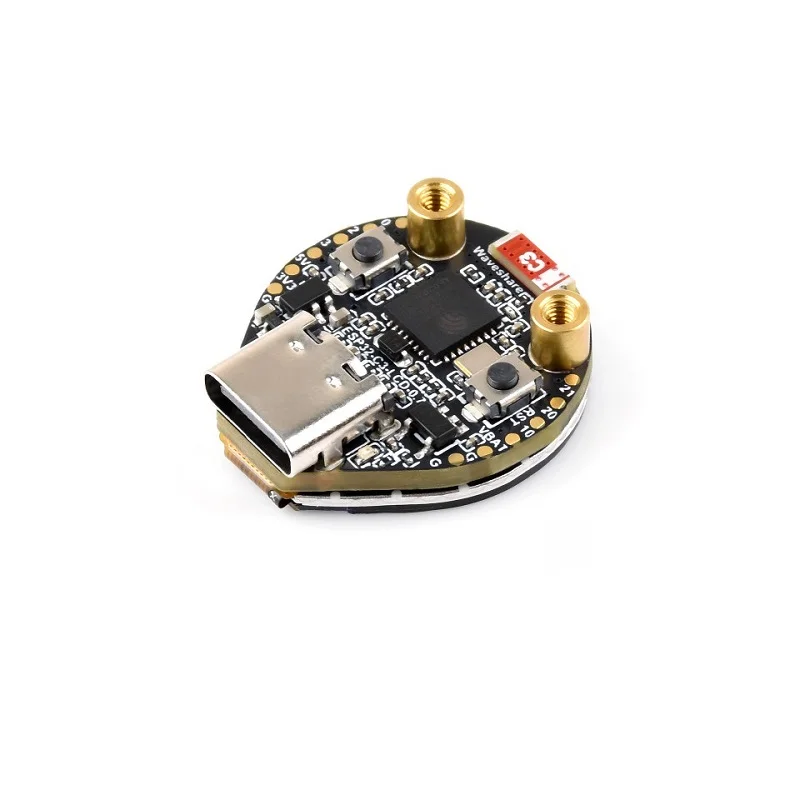
  • Onboard battery recharge management circuit with VBAT pads for direct Li-ion cell connection and portable projects.
  • Low-power design supports flexible clock gating and multiple sleep modes for extended battery-operated sensing.
  • Exposed GPIO solder pads for peripheral expansion, enabling custom sensor integration and HMI interfaces.

Out of stock

Description

This compact development board combines Espressif’s ESP32-C3 RISC-V microcontroller with a high-quality round IPS display, creating a complete platform for Human-Machine Interface (HMI) and IoT edge devices. The single-core processor delivers efficient performance for wireless connectivity tasks while the integrated display driver and SPI interface allow for fluid graphical animations using frameworks like LVGL.

Power management is a core feature, with dedicated circuitry for charging and monitoring a connected lithium battery, making it ideal for wearable and portable designs. The board’s architecture emphasizes low energy consumption through configurable power domains, enabling long-term deployment in smart home automation, personal health monitors, and interactive sensor nodes.

Key Features

  • ESP32-C3FH4 SoC with RISC-V 32-bit core, 160MHz clock speed, and integrated 2.4GHz Wi-Fi (802.11 b/g/n) & Bluetooth 5 LE radio.
  • 0.71-inch round IPS LCD display with 160x160 resolution and GC9D01 driver for crisp graphics and wide viewing angles.
  • Comprehensive power system: 3.3V operating voltage, onboard Li-ion battery charger, and VBAT pads for direct cell connection.
  • Extended memory: 400KB SRAM, 384KB ROM, and 4MB Flash for application code and GUI assets.
  • Flexible I/O expansion via exposed GPIO solder pads, supporting SPI, I2C, UART, and ADC interfaces.
  • Optimized for low-power operation with multiple sleep modes and clock control for battery-powered IoT nodes.
  • Fully compatible with Espressif ESP-IDF, Arduino Core for ESP32, and MicroPython for rapid firmware development.

Applications

  • Wearable tech and smartwatch prototypes with custom GUI and wireless notifications.
  • Low-power AI emulation eyes and interactive toys with animated displays.
  • Portable IoT sensor nodes with local display for environmental data visualization.
  • Smart home control panels and compact wireless remote interfaces.
  • Educational tools for learning embedded GUI development with ESP32 and LVGL.

Technical Specifications

Microcontroller/SoCESP32-C3FH4 (RISC-V 32-bit, up to 160MHz)
Wireless ProtocolsWi-Fi 2.4GHz 802.11 b/g/n, Bluetooth 5.0 LE
Memory400KB SRAM, 384KB ROM, 4MB Flash
Display0.71-inch IPS Round LCD, 160 x 160 pixels
Display DriverGC9D01 (4-wire SPI interface)
Supply Voltage3.3V
Operating Current (Typical)20mA (Backlight on)
Power ManagementIntegrated Li-ion battery charger, VBAT pads
InterfacesSPI (Display), Exposed GPIO pads
Dimensions22.3mm (Width) x 20.12mm (Length)

Frequently Asked Questions

How do I program this ESP32-C3 display board and which frameworks are supported?

You can program it using the official Espressif IoT Development Framework (ESP-IDF) or the Arduino Core for ESP32 via the Arduino IDE. Install the necessary board definitions for the ESP32-C3. Connect the board via USB, select the correct COM port and target (e.g., 'ESP32-C3 Dev Module'), then upload your code. The 4-wire SPI display is compatible with libraries like TFT_eSPI or LVGL for graphics. Ensure your power source is 3.3V or use the VBAT pins with a battery for portable operation.

What is the procedure for connecting an external lithium battery to the VBAT pads?

Solder the positive terminal of your 3.7V Li-ion or Li-polymer battery to the VBAT+ pad and the negative terminal to the GND pad on the board. The integrated charging circuit will manage power input and battery charging when USB is connected. For optimal low-power operation, configure the ESP32-C3's deep sleep modes in your firmware to minimize current draw during idle periods, significantly extending battery life in field deployments.

Can I use this board with MicroPython for rapid GUI prototyping?

Yes, you can flash MicroPython firmware built for the ESP32-C3 onto the board. After installing MicroPython, use tools like ampy or Thonny IDE to upload scripts. You will need a separate driver library for the GC9D01 display, which can be implemented via SPI commands. For more advanced GUI work, using ESP-IDF with the LVGL library is recommended for smoother animations and better memory management on the limited 400KB SRAM.

Package Includes

  • 1 x Waveshare ESP32-C3 0.71-Inch Round Display Development Board

Additional Information

Weight 0.013 kg
Dimensions 2.012 × 2.23 cm