SKU: IOWC-1139
📋 GST Invoice Available

Waveshare RP2350-Plus-16MB-M Development Board w/ RP2350A Dual-Core MCU

₹859.00 (Inclusive of all taxes)
Out of Stock

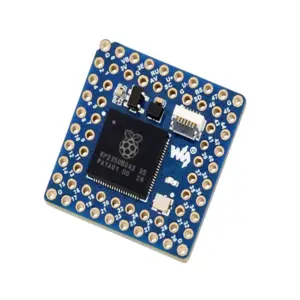
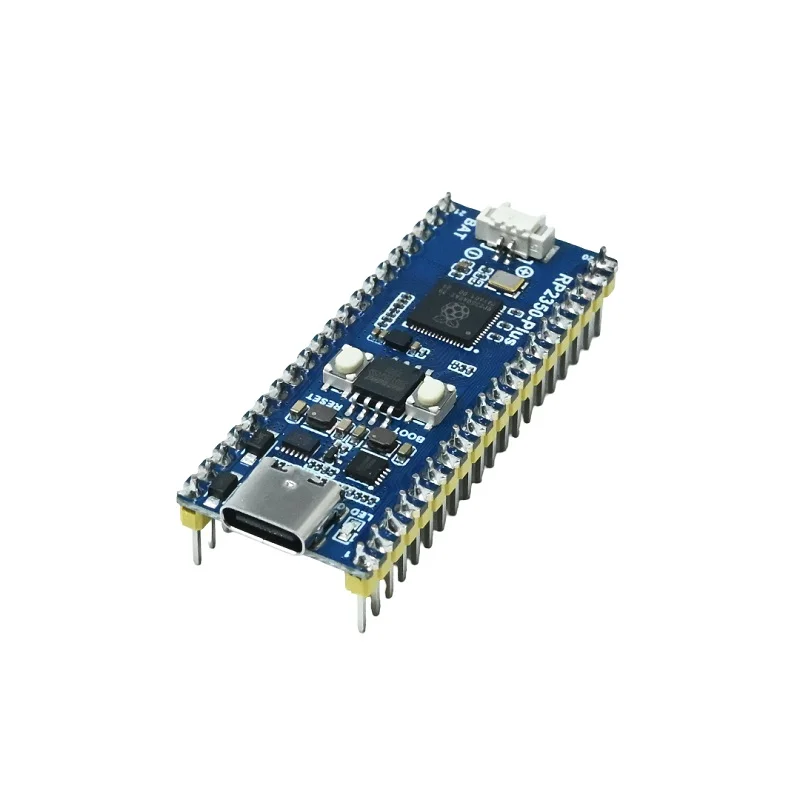
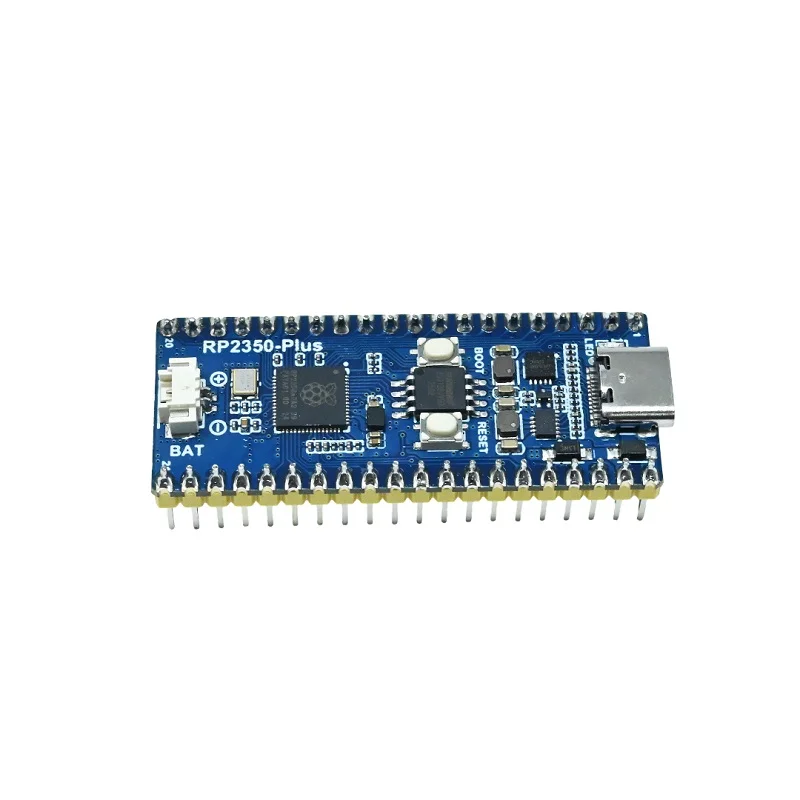
The Waveshare RP2350-Plus-16MB-M is a Pico-like development board built around the Raspberry Pi RP2350A dual-core, dual-architecture microcontroller. It features 16MB flash, a USB Type-C interface for drag-and-drop programming, and a robust 2A DC-DC power system, making it ideal for embedded projects requiring high performance and low power operation.

Features

  • Dual-Core RP2350A MCU: Combines an Arm Cortex-M33 and a Hazard 3 RISC-V core, clocked up to 150 MHz for flexible, high-performance computing.
  • Ample Memory & Storage: Equipped with 520KB SRAM and 16MB of on-board flash memory for complex applications and data logging.
  • Robust Power Management: Integrates an MP28164 buck-boost converter supporting up to 2A load current and includes a header for lithium battery charging/discharging.
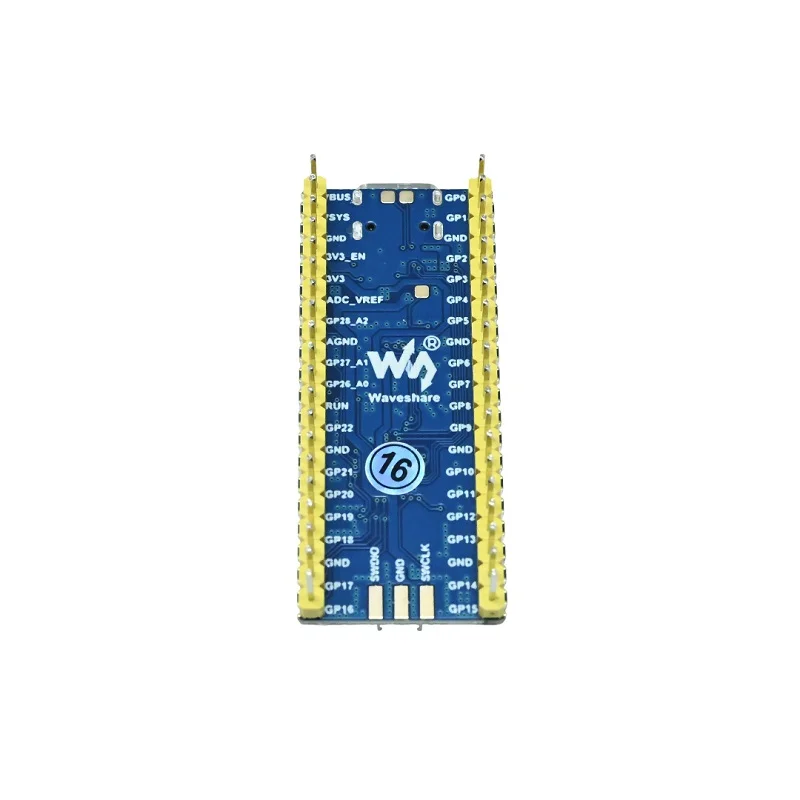
  • Rich Peripheral Set: Offers 26 multi-function GPIO pins, 2x SPI, 2x I2C, 2x UART, 4x ADC, 16x PWM channels, and 12 PIO state machines for extensive hardware interfacing.
  • Developer-Friendly Design: Features pre-soldered headers, USB Type-C for mass storage programming, and supports low-power sleep/dormant modes for energy-efficient applications.

Out of stock

Description

The Waveshare RP2350-Plus-16MB-M is a feature-packed development platform centered on the innovative Raspberry Pi RP2350A microcontroller. This chip’s heterogeneous dual-core design pairs an Arm Cortex-M33 with a Hazard 3 RISC-V processor, enabling developers to allocate tasks efficiently across different instruction set architectures for optimized performance in mixed workloads, all running at speeds up to 150 MHz.

Power delivery is handled by a sophisticated MP28164 DC-DC buck-boost converter, ensuring stable operation from a wide input voltage range and capable of supplying up to 2A for power-hungry peripherals. The board includes a dedicated connector for managing a single-cell Li-ion or Li-poly battery, supporting both charging and discharging, which is crucial for portable and low-power IoT nodes. Its comprehensive I/O suite, including multiple serial interfaces, ADCs, and the unique Programmable I/O (PIO) blocks, provides exceptional flexibility for connecting sensors, displays, and actuators.

Key Features

  • Heterogeneous Dual-Core Processor: Leverage the Arm Cortex-M33 for real-time tasks and the RISC-V core for custom logic or parallel processing.
  • High-Capacity On-Board Storage: 16MB flash memory accommodates large firmware binaries, file systems, or multimedia assets without external memory.
  • Advanced Power System: Integrated buck-boost converter and battery management circuit support operation from USB, external DC sources, or rechargeable batteries.
  • Extensive Programmable I/O: 12 dedicated PIO state machines allow for the creation of custom serial protocols or precise timing interfaces without CPU overhead.
  • Simplified Firmware Deployment: Appears as a USB mass storage device for drag-and-drop firmware updates, streamlining the development workflow.
  • Integrated Monitoring: Built-in temperature sensor and accurate clock/timers aid in system health monitoring and time-critical applications.
  • Pre-Soldered Connectivity: Headers are pre-installed for immediate prototyping, saving time and effort in project setup.

Applications

  • Embedded Systems Prototyping: Rapid development of custom controllers, dataloggers, and automation systems.
  • IoT Sensor Nodes: Building low-power, battery-operated environmental monitors leveraging the dual-core efficiency and PIO blocks.
  • Educational Platforms: Teaching microcontroller concepts, heterogeneous computing, and RISC-V architecture.
  • Robotics & Motor Control: Utilizing multiple PWM channels and serial interfaces for driving motors and reading encoders.
  • Human-Machine Interfaces (HMI): Foundation for projects requiring USB host capability or connections to displays and touch inputs.

Technical Specifications

MicrocontrollerRaspberry Pi RP2350A Dual-Core (Arm Cortex-M33 + Hazard 3 RISC-V)
CPU Clock SpeedUp to 150 MHz
SRAM520KB
Flash Memory16MB
USB InterfaceUSB 1.1 (Device/Host), Type-C Connector
Power Management ICMP28164 DC-DC Buck-Boost (Up to 2A)
GPIO Pins26 Multi-function pins
Serial Interfaces2x SPI, 2x I2C, 2x UART
Analog Inputs4x ADC channels
PWM Channels16
PIO State Machines12
Programming MethodDrag-and-drop via USB Mass Storage
Low Power ModesSleep, Dormant
Additional FeaturesTemperature Sensor, Battery Charge/Discharge Header

Frequently Asked Questions

How do I program the Waveshare RP2350-Plus board?

The board supports drag-and-drop programming via USB mass storage. Connect it to your computer with a USB Type-C cable, and it will appear as a removable drive. Simply copy your UF2 firmware file to this drive, and the board will automatically reboot and run the new code. Development can be done using the official Raspberry Pi Pico C/C++ SDK or MicroPython, configured for the RP2350 target.

What is the purpose of the dual-core RP2350A microcontroller?

The RP2350A combines an Arm Cortex-M33 core and a Hazard 3 RISC-V core. This heterogeneous architecture allows developers to partition tasks efficiently—for example, running real-time control tasks on the Arm core and custom signal processing or protocol handling on the RISC-V core. This can lead to better performance and power efficiency in complex embedded applications compared to a single-core solution.

Can I power this board from a battery?

Yes, the board includes a dedicated header (typically labeled BAT) for connecting a single-cell lithium-ion or lithium-polymer battery (3.7V nominal). The integrated power management circuitry supports battery charging via the USB Type-C port and provides stable power to the board from the battery. This makes it suitable for portable and low-power IoT deployments where mains power is unavailable.

What are the PIO (Programmable I/O) state machines used for?

The 12 PIO state machines are dedicated hardware blocks that can execute small, fast programs to interface with external devices independently of the main CPU cores. They are extremely useful for implementing custom serial protocols (like DVI, LED strips), precise pulse generation/measurement, or bit-banging interfaces without consuming CPU cycles, thereby freeing the cores for application logic and improving overall system responsiveness.

Package Includes

  • 1 x Waveshare RP2350-Plus-16MB-M Development Board

Additional Information

Weight 0.015 kg
Dimensions 11 × 7 × 2 cm