SKU: IOWC-1109
📋 GST Invoice Available

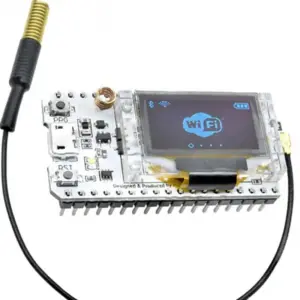
LilyGO T-Camera S3 ESP32-S3 OV2640 OLED PIR Mic Dev Board

₹2,939.00 (Inclusive of all taxes)
Out of Stock

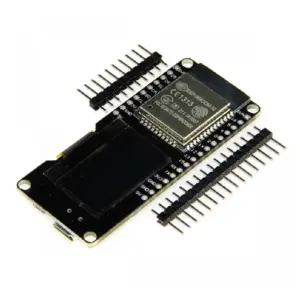
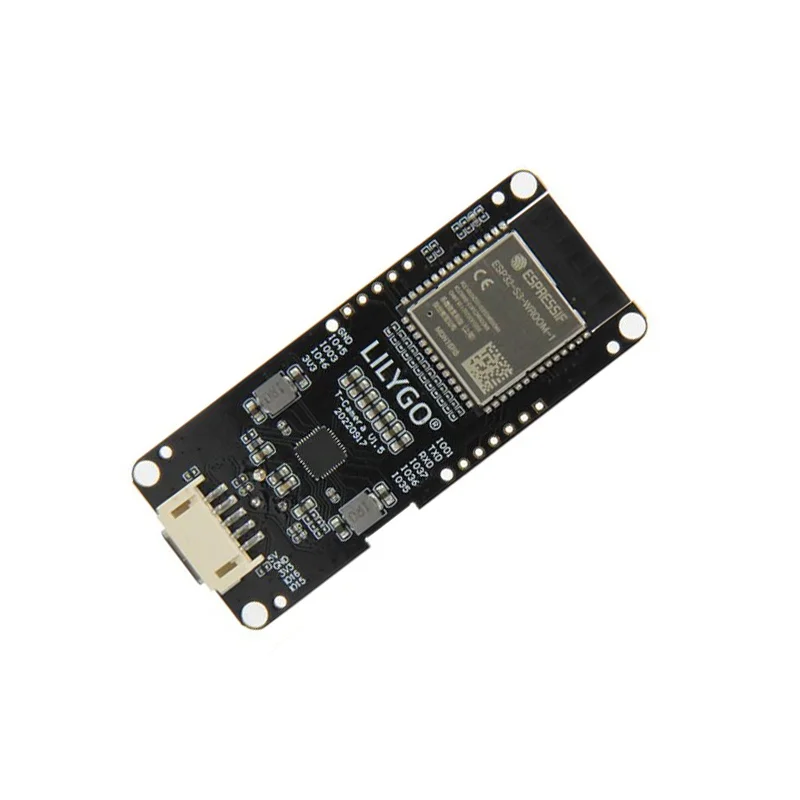
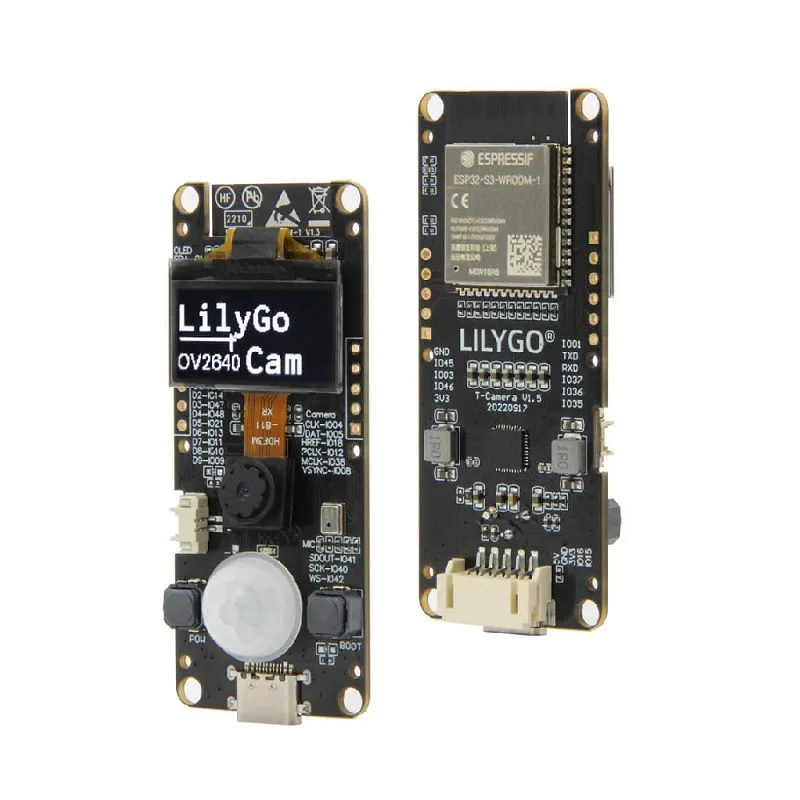
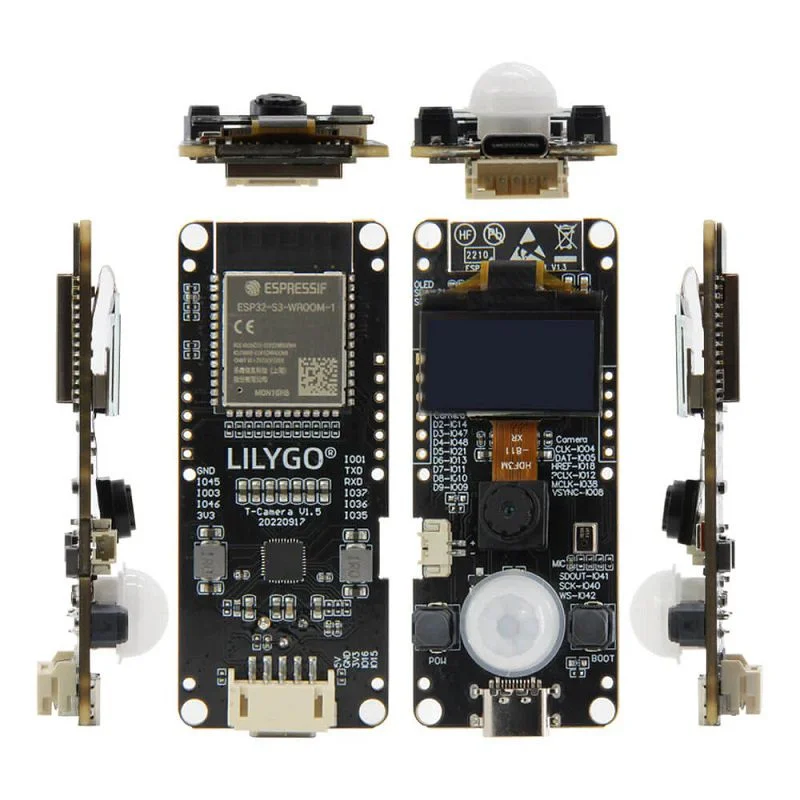
The LilyGO T-Camera S3 is an ESP32-S3FN1 6R8 dual-core development board with an integrated OV2640 camera, 0.96-inch OLED display, PIR motion sensor, and microphone, designed for building IoT vision and audio applications with Arduino IDE, MicroPython, or ESP-IDF.

Features

  • ESP32-S3FN1 Dual-Core Processor: High-performance 240 MHz dual-core SoC with 8MB PSRAM and 16MB Flash for AI and computer vision tasks.
  • Integrated OV2640 Camera: 2-megapixel sensor for image/video capture, with optional upgrade to 5MP OV5640 for higher resolution.
  • Onboard 0.96-inch OLED Display: 128×64 pixel screen for real-time status, sensor data, or image preview without external monitors.
  • Multi-Sensor Suite: Includes a PIR motion detector and a microphone for motion-activated and audio-based IoT applications.
  • Dual Wireless Connectivity: Features 802.11 Wi-Fi and Bluetooth 5.0 LE for wireless data transmission and device control.

Out of stock

Description

The LilyGO T-Camera S3 development board integrates the powerful ESP32-S3FN1 6R8 dual-core microprocessor, delivering 240 MHz clock speed for demanding edge computing workloads like real-time image processing and TinyML inference. Its architecture is enhanced with 8MB of external PSRAM, providing the necessary buffer for high-resolution camera frames and machine learning models, alongside 16MB of flash memory for application code and data logging.

Designed as a complete sensing platform, the board combines a 2-megapixel OV2640 camera module, a 0.96-inch OLED display for visual feedback, a passive infrared (PIR) sensor for occupancy detection, and an onboard microphone for audio capture. This multi-modal sensor fusion, coupled with Wi-Fi 802.11 and Bluetooth 5.0 LE connectivity, makes it an ideal foundation for smart security systems, interactive IoT devices, and AI-powered vision projects. The board operates from a 3.3V supply and supports deep sleep modes for battery-powered deployments.

Key Features

  • ESP32-S3FN1 dual-core processor optimized for AI and machine learning inference at the edge.
  • Integrated OV2640 camera sensor (2MP) with support for optional OV5640 (5MP) upgrade.
  • 0.96-inch OLED display (128x64) for direct visualization of data or system status.
  • Onboard PIR motion sensor enables touchless trigger and presence detection applications.
  • Built-in microphone for audio capture, voice activation, and sound level monitoring.
  • 8MB PSRAM ensures smooth handling of image buffers and complex neural network models.
  • 16MB Flash memory provides ample space for firmware, web server files, and data storage.
  • Dual wireless connectivity via 2.4GHz Wi-Fi (802.11 b/g/n) and Bluetooth 5.0 LE.

Applications

  • Smart security cameras and doorbells with motion-triggered recording and live streaming.
  • AI vision projects for object detection, face recognition, and QR code scanning using MicroPython or ESP-IDF.
  • IoT environmental monitors with visual confirmation via OLED and wireless data upload.
  • Interactive smart home devices combining voice commands, motion sensing, and visual feedback.
  • Prototyping edge AI devices for industrial automation, retail analytics, or educational demos.

Technical Specifications

Microcontroller/SoCESP32-S3FN1 (Dual-core, 240 MHz)
Wireless ProtocolsWi-Fi 802.11 b/g/n, Bluetooth 5.0 LE
Camera SensorOV2640 (2MP), Optional OV5640 (5MP)
Display0.96-inch OLED, 128x64 resolution
Additional SensorsPIR Motion Sensor, Microphone
Memory512KB SRAM, 8MB PSRAM, 16MB Flash
Supply Voltage3.3V
Operating Temperature-40°C to 85°C
DimensionsApprox. 7 x 4 cm (Board)

Frequently Asked Questions

What programming frameworks are supported for the LilyGO T-Camera S3?

The board is fully compatible with the Arduino IDE using the ESP32 board manager, Espressif's official ESP-IDF framework for advanced features, and MicroPython for rapid scripting. You'll need to install the appropriate board definitions and libraries for the camera, display, and sensors to begin development. Drivers for the OV2640 and OLED are available in the official LilyGO GitHub repository.

How do I power the T-Camera S3 and what is its typical current draw?

Supply 3.3V DC to the board's designated power pins. The operating current varies significantly based on active components: Wi-Fi transmission and camera streaming can draw 200-300mA, while deep sleep with the PIR sensor as a wake-up source can reduce consumption to microamps. For battery operation, connect a 3.7V LiPo to the appropriate terminals and utilize the ESP32-S3's deep sleep modes to maximize lifespan.

Can I upgrade the camera to the optional OV5640 5-megapixel sensor?

Yes, the board supports an optional OV5640 camera module. You must physically replace the OV2640 module, ensuring the connector alignment is correct. Firmware changes are required as the sensor driver and configuration registers differ. Use the sensor-specific examples from the Arducam or Espressif libraries, adjusting the resolution and frame rate settings in your code to match the OV5640's capabilities.

How do I interface with the onboard PIR motion sensor and microphone?

The PIR sensor output is connected to a configurable GPIO pin; read it as a digital input to detect motion. The microphone's analog audio output is routed to an ADC pin; sample it to capture sound levels or waveforms. Example code in the LilyGO GitHub repo demonstrates reading both sensors. For audio processing, consider using the ESP-ADF (Audio Development Framework) for more advanced features like wake-word detection.

Package Includes

  • 1 x LilyGO T-Camera S3 Development Board
  • 2 x Header Connectors
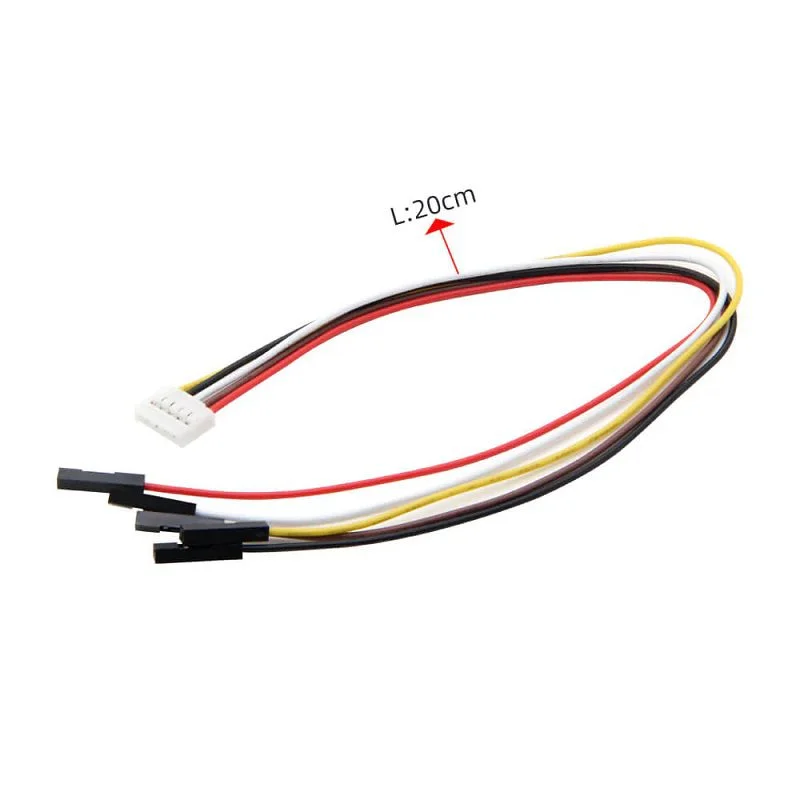
  • 2 x Connector Cables

Additional Information

Weight 0.03 kg
Dimensions 4 × 7 × 5 cm