SKU: IOWC-1095
📋 GST Invoice Available

WeAct Studio RP2350A_V20 Raspberry Pi RP2350A ARM Cortex-M0+ Dev Board

₹499.00 (Inclusive of all taxes)
Out of Stock

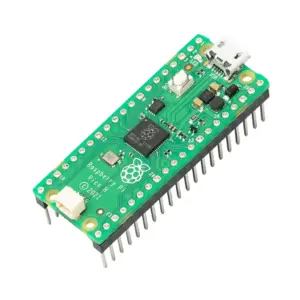
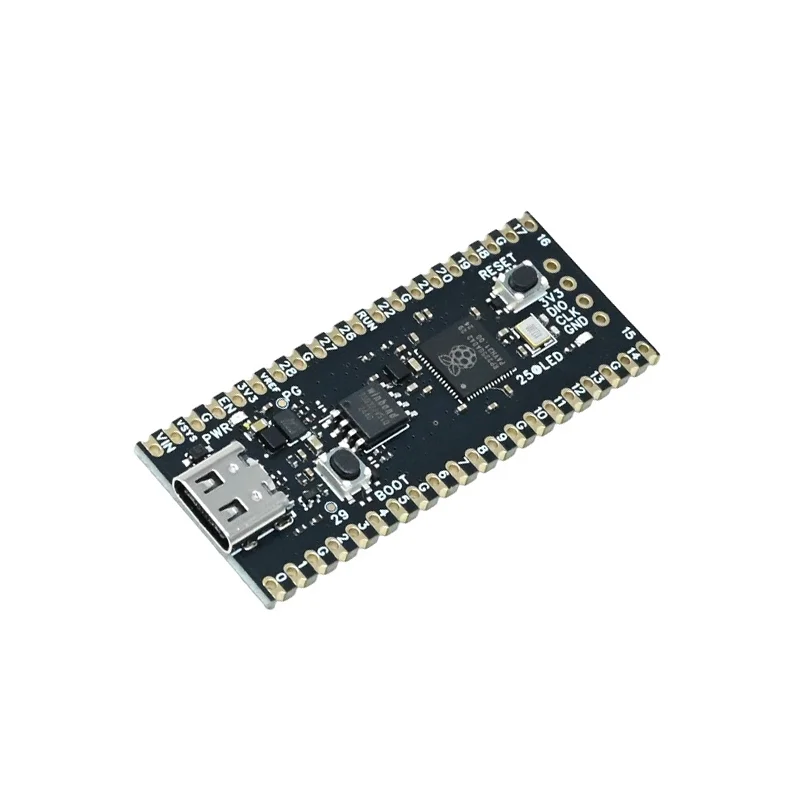
The WeAct Studio RP2350A_V20 is a compact, breadboard-friendly development board powered by the Raspberry Pi RP2350A dual-core ARM Cortex-M0+ microcontroller, featuring 520KB SRAM and 4MB QSPI flash for embedded C/C++ and MicroPython projects.

Features

  • Powered by the Raspberry Pi RP2350A dual-core ARM Cortex-M0+ MCU, clocked up to 150 MHz for responsive embedded control.
  • Features 520KB of on-chip SRAM and 4MB of external QSPI flash for ample program and data storage.
  • Compact 21mm x 51mm form factor with 2.54mm pitch headers, designed for seamless breadboard integration.
  • Modern USB Type-C port provides reliable power delivery and direct programming/debugging connectivity.
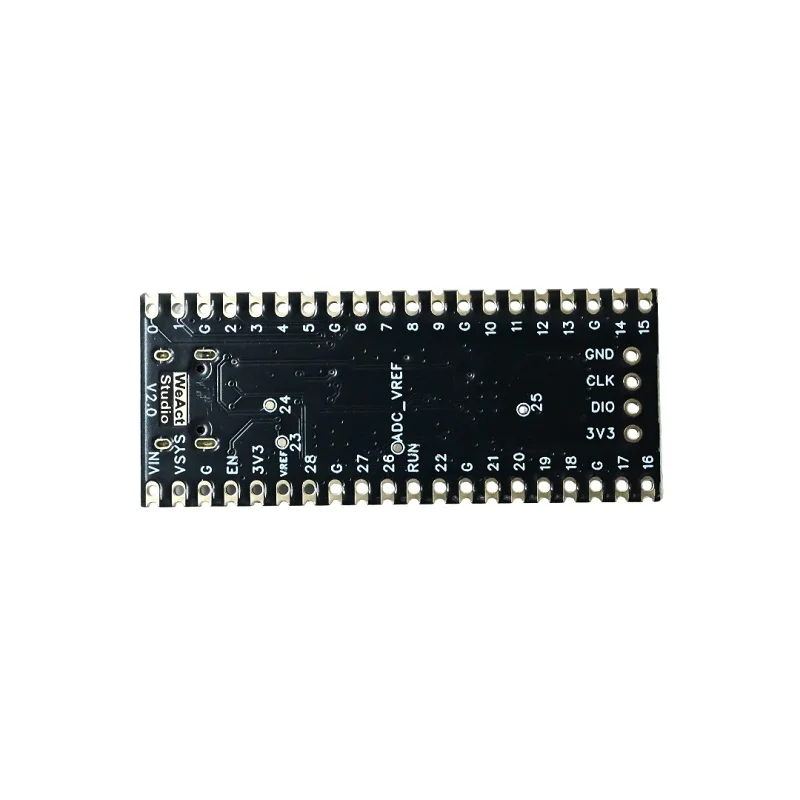
  • Comprehensive I/O includes 26 multi-function GPIOs supporting I2C, SPI, UART, PWM, and ADC interfaces.

Out of stock

Description

The WeAct Studio RP2350A_V20 development board delivers a robust, compact platform for embedded systems development, built around the Raspberry Pi RP2350A microcontroller. This dual-core ARM Cortex-M0+ processor, capable of running at up to 150 MHz, is paired with generous 520KB of SRAM and 4MB of QSPI flash, providing the memory headroom needed for complex applications in robotics, sensor nodes, and custom IoT controllers.

Designed for practical prototyping, the board’s 21mm x 51mm footprint and pre-soldered 2.54mm headers make it instantly breadboard-compatible, eliminating the need for additional adapters. The inclusion of a USB Type-C connector ensures stable power input and streamlined programming via the official Raspberry Pi Pico SDK, supporting development workflows in both C/C++ and MicroPython for rapid iteration and deployment.

Key Features

  • High-performance dual-core ARM Cortex-M0+ microcontroller (Raspberry Pi RP2350A) for efficient multitasking.
  • Substantial 520KB SRAM supports data-intensive applications and complex program states.
  • 4MB QSPI flash memory provides ample non-volatile storage for firmware, filesystems, and application data.
  • Breadboard-optimized design with standard 2.54mm pitch headers for quick circuit integration.
  • Modern USB Type-C interface offers robust power delivery and direct USB 1.1 communication for programming.
  • Comprehensive peripheral set including I2C, SPI, UART, PWM, and 12-bit ADC on 26 configurable GPIO pins.
  • Wide operating temperature range (-20°C to +85°C) ensures reliability in varied environmental conditions.
  • Fully open-source hardware and software, with design files and examples available on GitHub.

Applications

  • Embedded system prototyping and educational electronics for learning ARM Cortex-M architecture.
  • DIY robotics and motor control projects utilizing PWM and GPIO for actuator management.
  • Sensor data acquisition nodes leveraging the ADC and serial interfaces (I2C, SPI, UART).
  • Compact IoT controller for smart home automation, data logging, and peripheral interfacing.
  • Custom USB HID devices or serial communication bridges using the integrated USB 1.1 interface.

Technical Specifications

Microcontroller/SoCRaspberry Pi RP2350A Dual-core ARM Cortex-M0+
CPU Clock FrequencyUp to 150 MHz
SRAM520 KB
Flash Memory4 MB QSPI
Supply Voltage3.3V
Operating Current~100 mA (typical)
InterfacesUSB 1.1 (Type-C), GPIO, I2C, SPI, UART, PWM, ADC
GPIO Pins26 multi-function
USB ConnectorUSB Type-C
Operating Temperature-20°C to +85°C
Dimensions (L x W)51mm x 21mm
WeightApprox. 7g

Frequently Asked Questions

How do I program the WeAct Studio RP2350A_V20 development board?

You can program the board using the official Raspberry Pi Pico SDK. Connect the USB Type-C port to your computer. For C/C++ development, install the SDK and use tools like CMake and GCC. For MicroPython, download the RP2350-specific UF2 file from the Raspberry Pi website, drag it onto the board's mass storage drive that appears after booting in BOOTSEL mode, and then use a serial terminal or IDE like Thonny to write and run Python scripts. The board supports direct USB programming without an external debugger.

What is the power supply requirement for the RP2350A_V20 board?

The board operates at 3.3V and is primarily powered via the USB Type-C port, which provides a regulated 5V input that is stepped down internally. The typical operating current is around 100 mA, but this can increase with peripheral usage. Ensure your USB port or power adapter can supply at least 500 mA for stable operation. While the USB-C is the main power source, you can also supply 3.3V directly to the appropriate GPIO pins if designing a custom carrier board, but careful regulation is required.

Can I use Arduino IDE with this Raspberry Pi RP2350A-based board?

Official Arduino Core support for the Raspberry Pi RP2350/RP2350A microcontroller is not yet widely available as of early 2025. Primary development environments are the Raspberry Pi Pico C/C++ SDK and MicroPython. However, community projects may emerge to add RP2350 support to Arduino. For now, developers should use the recommended Raspberry Pi toolchain or the MicroPython workflow. You can check the Arduino-pico GitHub repository for updates on potential future support for this specific RP2350A variant.

What are the key differences between this board and a Raspberry Pi Pico 2?

The WeAct Studio RP2350A_V20 uses the same RP2350A microcontroller as the Raspberry Pi Pico 2, offering similar dual-core ARM Cortex-M0+ performance, memory (520KB SRAM), and peripheral sets. Key differences include the physical form factor—this board is a compact 21x51mm module with pre-soldered headers—and the inclusion of a USB Type-C connector instead of Micro-USB. It also features 4MB of QSPI flash. Functionally, it is a direct, breadboard-optimized alternative, fully compatible with the same SDK and toolchain as the official Pico 2.

Package Includes

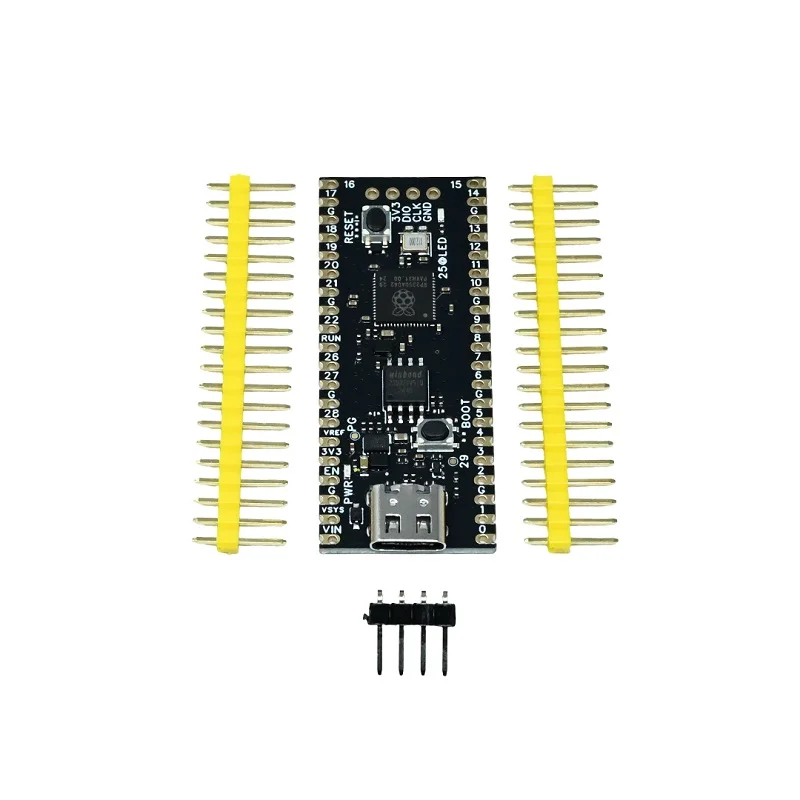
  • 1 x WeAct Studio RP2350A_V20 Development Board
  • 1 x Set of Header Pins
  • 1 x Connector

Additional Information

Weight 0.007 kg
Dimensions 5.1 × 2.1 cm