SKU: IOWC-1055
📋 GST Invoice Available

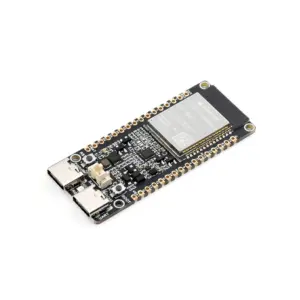
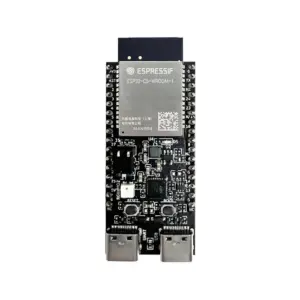
Espressif ESP32-C5-DevKitC-1-N8R4 Wi-Fi 6 & BLE Development Board

₹1,338.00 (Inclusive of all taxes)
Out of Stock

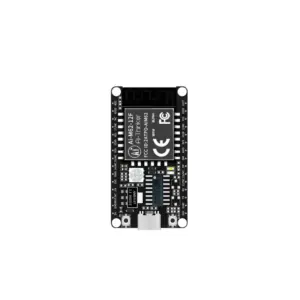
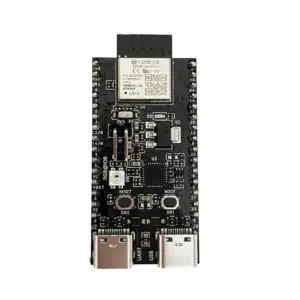
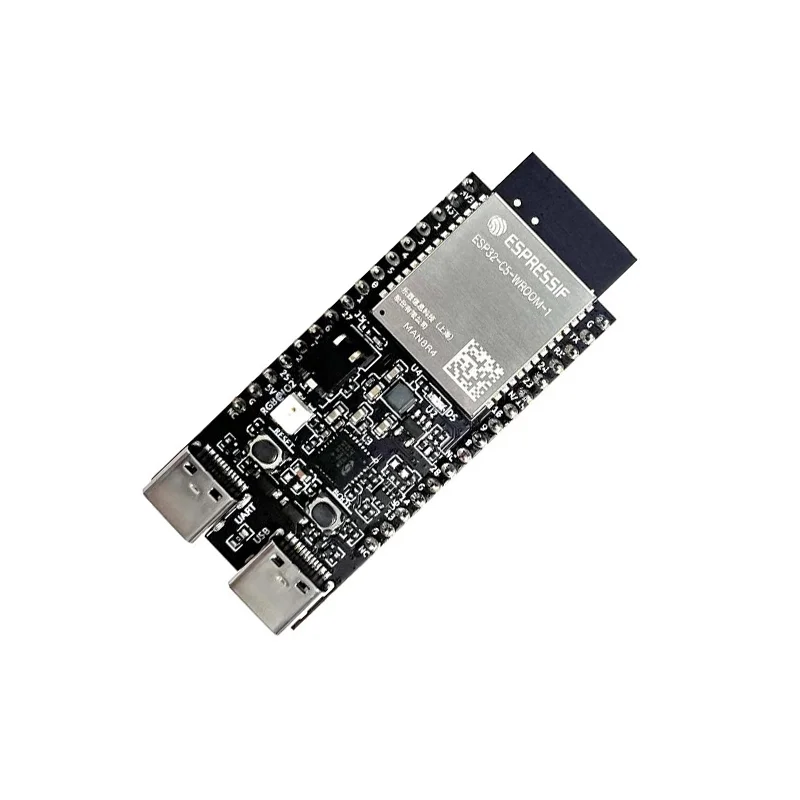
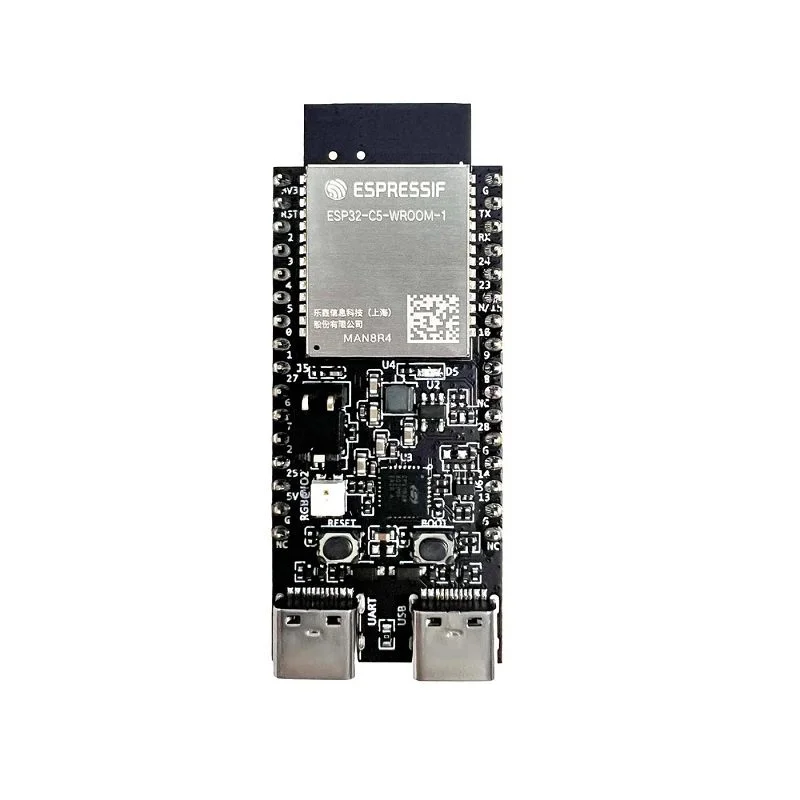
The Espressif ESP32-C5-DevKitC-1-N8R4 is a compact development board featuring the ESP32-C5-WROOM-1 module, offering dual-band Wi-Fi 6, Bluetooth LE, Zigbee, and Thread connectivity for advanced IoT applications. It is powered via USB and is fully programmable with ESP-IDF and Arduino frameworks.

Features

  • Multi-Protocol Wireless: Integrates Wi-Fi 6 (802.11ax), Bluetooth LE, Zigbee, and Thread on a single RISC-V SoC for versatile smart home and industrial IoT connectivity.
  • Enhanced Memory: Equipped with 8 MB of flash and 4 MB of PSRAM to handle complex application logic and data buffering.
  • Developer-Friendly Design: Breadboard-compatible form factor with all GPIOs broken out to standard 0.1″ headers for rapid prototyping.
  • USB-C Power & Programming: Features an onboard USB-to-UART bridge for easy flashing, serial debugging, and power supply.

Out of stock

Description

The ESP32-C5-DevKitC-1-N8R4 development board is built around the ESP32-C5-WROOM-1-N8R4 module, which combines a 32-bit RISC-V processor with a sophisticated multi-protocol radio. This board is engineered for developers creating next-generation IoT devices that require the higher efficiency, increased capacity, and improved range of Wi-Fi 6, alongside low-power mesh networking via Zigbee and Thread.

Its compact, breadboard-friendly layout provides direct access to a comprehensive set of GPIOs, UART, SPI, I2C, and ADC interfaces, facilitating seamless sensor integration and peripheral expansion. The integrated USB interface simplifies the development workflow, offering both power and a direct programming/debugging channel compatible with Espressif’s ESP-IDF, Arduino IDE, and PlatformIO ecosystems.

Key Features

  • Multi-protocol wireless SoC supporting 2.4 GHz Wi-Fi 6 (802.11ax), Bluetooth 5 LE, Zigbee 3.0, and Thread.
  • Powered by a single-core 32-bit RISC-V processor for efficient IoT task handling.
  • Generous 8 MB flash memory and 4 MB PSRAM for application code and data.
  • All available GPIOs routed to dual-row male pin headers for easy connection to breadboards and shields.
  • Onboard USB-to-UART bridge (likely CP2102 or similar) for serial communication and firmware flashing.
  • Flexible power input: 5V via USB Type-C or external 3.3V/5V via pin headers.
  • Compact form factor (approx. 7cm x 3cm) ideal for embedded prototypes and final product integration.
  • Full software support via Espressif's official ESP-IDF SDK, Arduino core, and MicroPython.

Applications

  • High-throughput smart home hubs and gateways coordinating Wi-Fi 6 and Zigbee/Thread mesh devices.
  • Advanced IoT sensor nodes requiring efficient, long-range Wi-Fi 6 connectivity for data upload.
  • Prototyping next-generation industrial IoT (IIoT) equipment with multi-protocol wireless redundancy.
  • Development of Matter-over-Thread compatible smart home appliances and controllers.
  • Edge computing devices leveraging the RISC-V core and ample PSRAM for local data processing.

Technical Specifications

Microcontroller / SoCESP32-C5 (Single-core 32-bit RISC-V)
Wireless ProtocolsWi-Fi 6 (802.11ax), Bluetooth LE 5.x, Zigbee 3.0, Thread
Frequency Range2.4 GHz (Wi-Fi/BLE/Zigbee/Thread)
Flash Memory8 MB
PSRAM4 MB
Supply Voltage5V (USB) or 3.3V/5V (External Pins)
InterfacesGPIO, UART, SPI, I2C, I2S, ADC, PWM
Programming InterfaceUSB Type-C (via USB-to-UART Bridge)
AntennaIntegrated PCB Antenna
Operating TemperatureStandard Commercial Range (Typical -40°C to +85°C)
Dimensions (LxW)Approx. 7 cm x 3 cm

Frequently Asked Questions

How do I program the ESP32-C5-DevKitC-1-N8R4 board?

Install the ESP-IDF framework or the Arduino core for ESP32. Connect the board via the provided USB Type-C cable to your computer. Select the correct COM port in your IDE, choose the 'ESP32-C5 DevKitC' board target, and upload your code. The onboard USB-to-UART bridge handles the flashing process automatically. Ensure you have the latest ESP-IDF or Arduino-esp32 version for full ESP32-C5 support.

What is the power supply requirement for this board?

The board can be powered directly through its USB Type-C port at 5V. For standalone operation, you can also supply 3.3V or 5V to the appropriate VIN or 3V3 pins on the header, respecting the board's voltage regulator input specifications. Typical operating current depends on the wireless mode; enable deep sleep via ESP-IDF APIs for battery-powered applications to minimize consumption.

Can I use Zigbee and Thread simultaneously with Wi-Fi on this board?

The ESP32-C5 radio supports multiple protocols, but they operate on the same 2.4 GHz band and share the RF front-end. You can run a single protocol at a time or switch between them dynamically in your firmware. For concurrent operation, you would need to implement a time-sliced scheduler within the ESP-IDF's radio abstraction layer to manage the shared hardware resource between the different wireless stacks.

Are all GPIO pins accessible and safe to use?

Most GPIOs from the ESP32-C5 module are broken out to the pin headers. However, some pins are used internally for flash, PSRAM, or the USB bridge. Always consult the official ESP32-C5-DevKitC-1 schematic and pinout diagram before wiring. Avoid using pins designated for strapping or debug functions as general I/O to prevent issues during boot or programming.

Package Includes

  • 1 x ESP32-C5-DevKitC-1-N8R4 Development Board

Additional Information

Weight 0.012 kg
Dimensions 7 × 3 × 2 cm