SKU: IOWC-1021
📋 GST Invoice Available

Waveshare ESP32-C6 1.69-Inch LCD Development Board

₹1,759.00 (Inclusive of all taxes)
Out of Stock

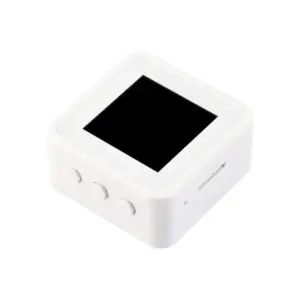
This Waveshare ESP32-C6 development board integrates a 1.69-inch 240×280 IPS LCD with a powerful RISC-V processor, supporting Wi-Fi 6, BLE 5, Zigbee 3.0, and Thread for advanced AIoT and wearable device prototyping.

Features

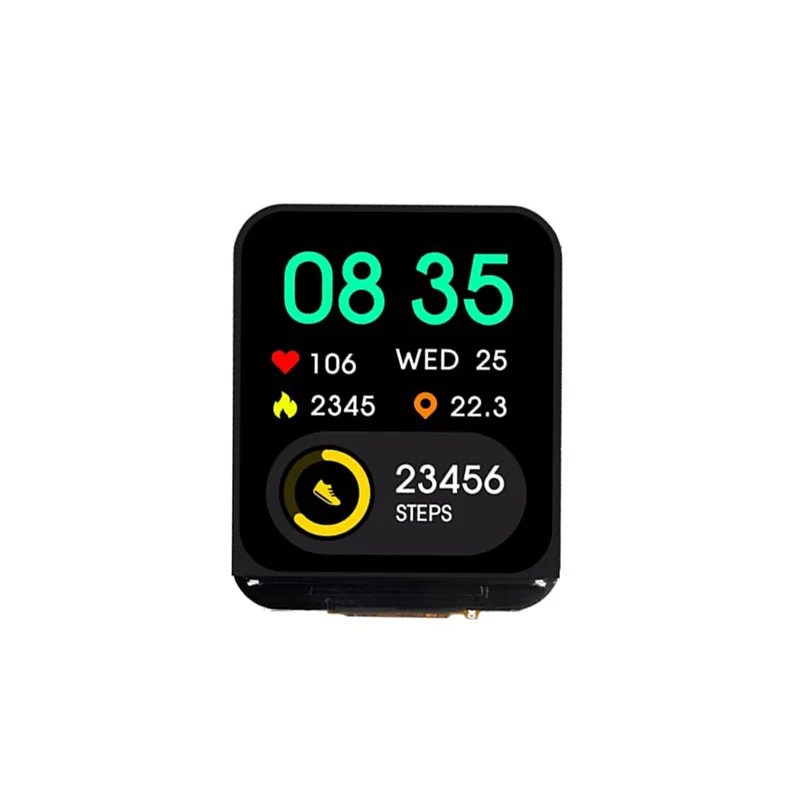
  • High-Res IPS Display: Features a 1.69-inch, 240×280 pixel IPS LCD with 262K colors, driven by an ST7789V2 controller via SPI for crisp visuals and efficient IO usage.
  • Multi-Protocol Wireless: Equipped with ESP32-C6 SoC supporting Wi-Fi 6, Bluetooth 5, Zigbee 3.0, and Thread for versatile, future-proof IoT connectivity.
  • RISC-V Processing Power: Powered by a 160 MHz 32-bit RISC-V dual-core processor with 512KB SRAM and 16MB NOR flash for demanding edge AI applications.
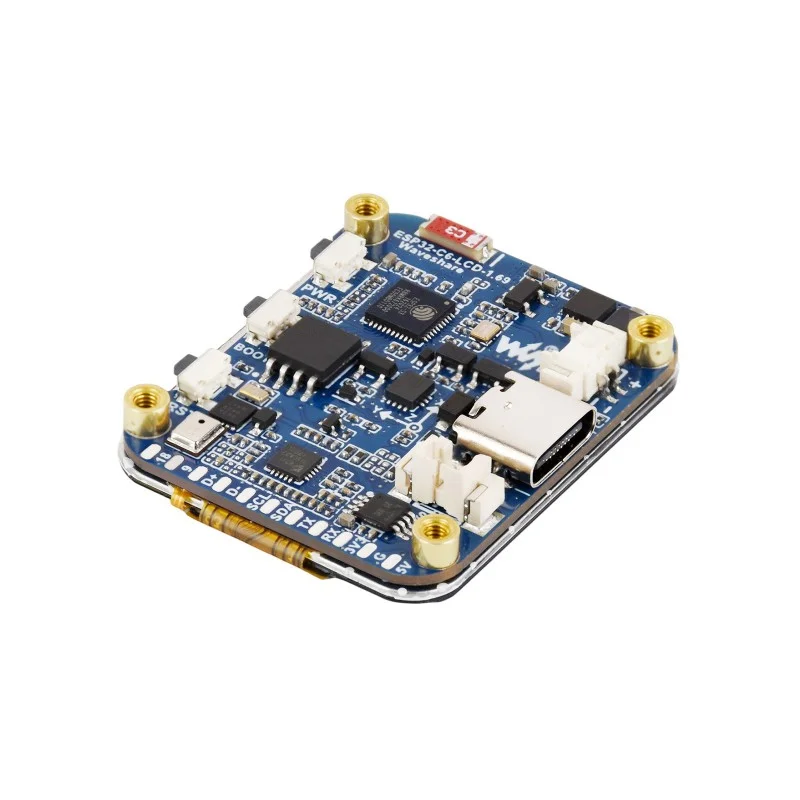
  • Integrated Sensors & Audio: Includes a 6-axis IMU (QMI8658), RTC, audio codec (ES8311), microphone, and speaker amplifier for complete interactive projects.
  • Developer-Friendly Design: Offers USB Type-C for power/programming, Li-ion battery charging support, and is compatible with ESP-IDF, Arduino, and MicroPython frameworks.

Out of stock

Description

The Waveshare ESP32-C6 1.69-Inch LCD Development Board is a feature-rich platform designed for next-generation AIoT and human-machine interface (HMI) applications. Its core is the Espressif ESP32-C6 SoC, which combines a high-performance 160 MHz RISC-V processor with concurrent support for Wi-Fi 6, Bluetooth Low Energy 5, Zigbee 3.0, and Thread protocols, enabling seamless integration into diverse wireless ecosystems.

The board’s compact form factor is dominated by a vibrant 1.69-inch IPS LCD, providing a high-resolution 240×280 pixel canvas for user interfaces and data visualization. Beyond connectivity and display, it incorporates a suite of onboard peripherals including a 6-axis inertial measurement unit (IMU) for motion sensing, a real-time clock (RTC) for timekeeping, and a complete audio subsystem with codec, microphone, and speaker output. This integration simplifies prototyping for smart wearables, portable diagnostic tools, and interactive edge computing nodes.

Key Features

  • Multi-Protocol Wireless Hub: ESP32-C6 SoC provides integrated Wi-Fi 6 (802.11ax), Bluetooth 5, Zigbee 3.0, and Thread radios for flexible network topology design.
  • High-Performance RISC-V Core: Leverage a 160 MHz dual-core RISC-V processor for efficient data processing in power-constrained edge AI applications.
  • Vivid IPS Display Interface: SPI-driven ST7789V2 controller manages the 1.69-inch, 262K-color IPS LCD, optimizing MCU resource usage for graphics.
  • Comprehensive Sensor Suite: Onboard QMI8658 6-axis IMU (accelerometer & gyroscope) and PCF85063 RTC enable motion-aware and time-scheduled operations.
  • Full Audio Pipeline: Integrated ES8311 audio codec with microphone input and speaker amplifier facilitates voice control and audio feedback features.
  • Extended Memory & Storage: Ample 16MB NOR Flash and 512KB SRAM support complex firmware and over-the-air (OTA) update capabilities.
  • Robust Power Management: USB Type-C port provides power, programming, and communication, with built-in Li-ion battery charging circuitry for portable designs.
  • Developer Ecosystem Support: Fully compatible with Espressif's ESP-IDF, Arduino Core, and MicroPython for rapid prototyping and deployment.

Applications

  • Smart Wearables & Health Monitors: Develop fitness trackers, smart watches, or portable medical devices with display, wireless connectivity, and motion sensing.
  • Interactive HMI Panels: Create touchless control interfaces, industrial dashboards, or smart home control units with local display and multi-protocol backhaul.
  • Edge AI Prototyping: Build vision or audio-enabled AIoT nodes for local inference, leveraging the processing power and onboard sensors.
  • Wireless Sensor Network Gateways: Act as a multi-protocol coordinator/bridge between Zigbee/Thread/BLE sensors and Wi-Fi/cloud networks.
  • Portable Diagnostic Tools: Implement field-deployable test equipment with graphical readouts, data logging, and wireless data upload.

Technical Specifications

Microcontroller/SoCEspressif ESP32-C6 (RISC-V dual-core up to 160 MHz)
Wireless ProtocolsWi-Fi 6 (802.11ax), Bluetooth 5, Zigbee 3.0, Thread
Display1.69-inch IPS LCD, 240x280 resolution, 262K colors
Display DriverST7789V2 (SPI interface)
Memory512KB SRAM, 320KB ROM, 16MB NOR Flash
Onboard Sensors6-axis IMU (QMI8658), Real-Time Clock (PCF85063)
AudioCodec (ES8311), Microphone, Speaker Amplifier
Interface/ConnectorUSB Type-C (Power/Programming), SPI for display
Power Supply5V via USB-C, Li-ion battery charging support
Dimensions37.12mm (L) x 30mm (W)
Weight9g

Frequently Asked Questions

What development frameworks are supported for programming this ESP32-C6 board?

The board is fully supported by Espressif's official ESP-IDF (IoT Development Framework), which provides the most comprehensive access to Wi-Fi 6, BLE, Zigbee, and Thread features. It is also compatible with the Arduino Core for ESP32 and MicroPython, offering a simpler entry point for makers and rapid prototyping. You can program it via the onboard USB Type-C port using standard serial flashing tools within these IDEs.

How do I connect and power the board for a portable battery-operated project?

For portable use, connect a single-cell 3.7V Li-ion or Li-polymer battery to the designated battery connector pins (typically labeled BAT+ and BAT-). The board includes integrated battery charging circuitry; when USB Type-C is connected, it will charge the battery. Ensure your firmware utilizes the ESP32-C6's deep sleep modes to minimize current draw and maximize battery life, as the display and wireless radios are the primary power consumers.

Can I use the onboard IMU and audio components simultaneously with the display?

Yes, the ESP32-C6's processing power and peripheral interfaces (I2C for IMU/RTC, I2S for audio codec, SPI for display) allow concurrent operation. In your firmware (ESP-IDF or Arduino), you'll initialize each sensor and peripheral on its respective bus. Be mindful of timing and potential bus contention in high-speed applications. The provided driver examples for the QMI8658 IMU and ES8311 codec will help you read motion data and capture/playback audio while updating the display.

What is the procedure for updating the display graphics or using different graphics libraries?

The display uses the ST7789V2 controller via SPI. You can use the LVGL graphics library, which is highly optimized for embedded systems and has excellent ESP-IDF support, to create complex interfaces. Alternatively, use the TFT_eSPI library in Arduino. First, configure the library with the correct pin definitions for the board. Graphics are updated by writing to the display's frame buffer through SPI commands. The high-speed SPI interface and the ESP32-C6's dedicated SPI peripherals ensure smooth graphics performance.

Package Includes

  • 1 x Waveshare ESP32-C6-LCD-1.69 Development Board
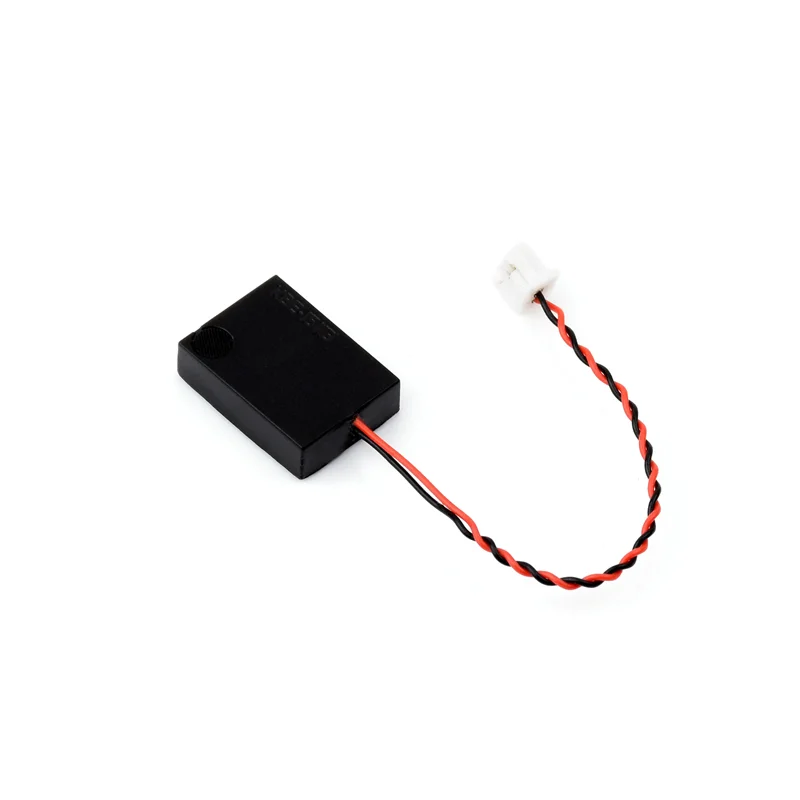
  • 1 x 6Ω 1W Speaker

Additional Information

Weight 0.009 kg
Dimensions 3.712 × 3 cm