SKU: IOWC-0992
📋 GST Invoice Available

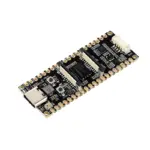
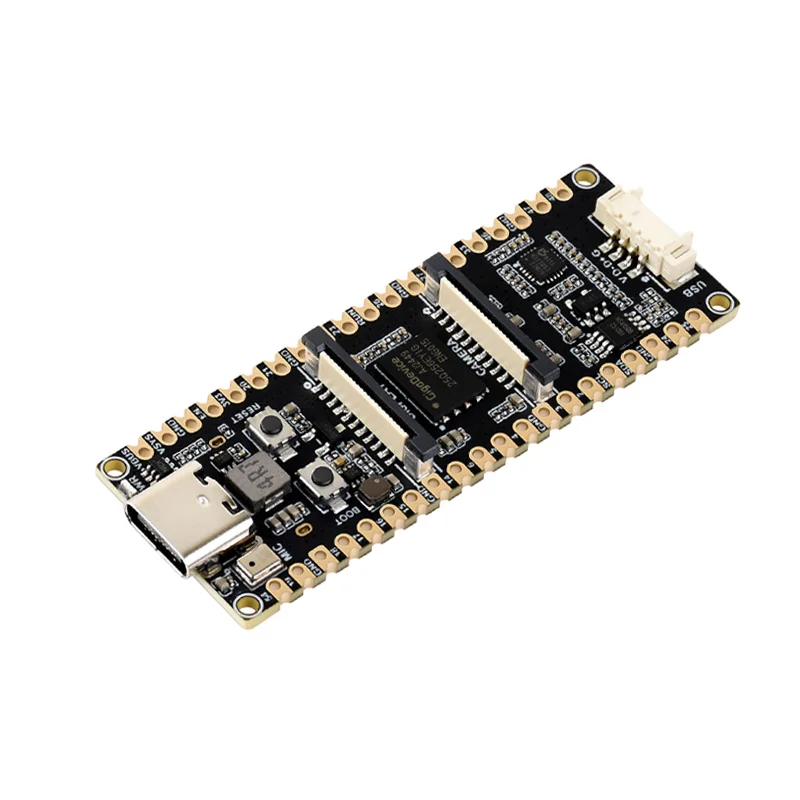
Waveshare ESP32-P4-Pico Development Board w/ Headers

₹1,559.00 (Inclusive of all taxes)
Out of Stock

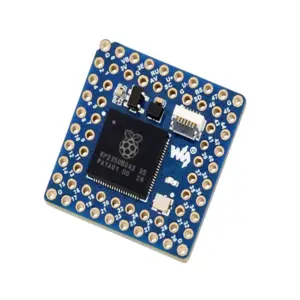
The Waveshare ESP32-P4-Pico is a high-performance RISC-V development board featuring a 400MHz dual-core processor, 32MB PSRAM, and rich multimedia interfaces including MIPI-CSI and MIPI-DSI. It’s designed for secure edge AI, IoT, and HMI applications, with a layout compatible with Raspberry Pi Pico HATs.

Features

  • High-Performance RISC-V Core: Features a 400MHz dual-core ESP32-P4 processor with an additional single-core for efficient multitasking in multimedia and edge AI workloads.
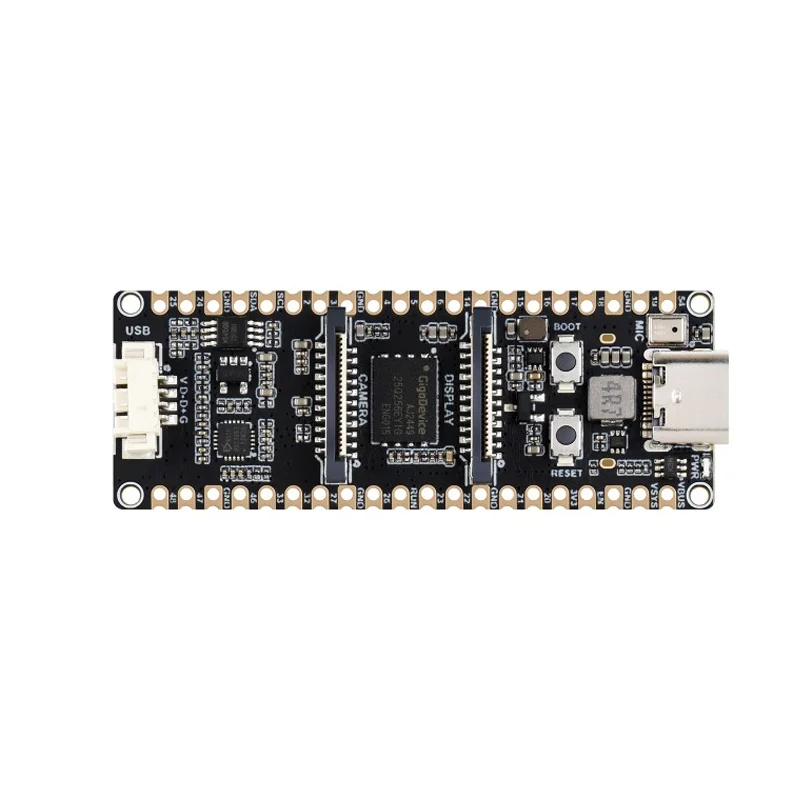
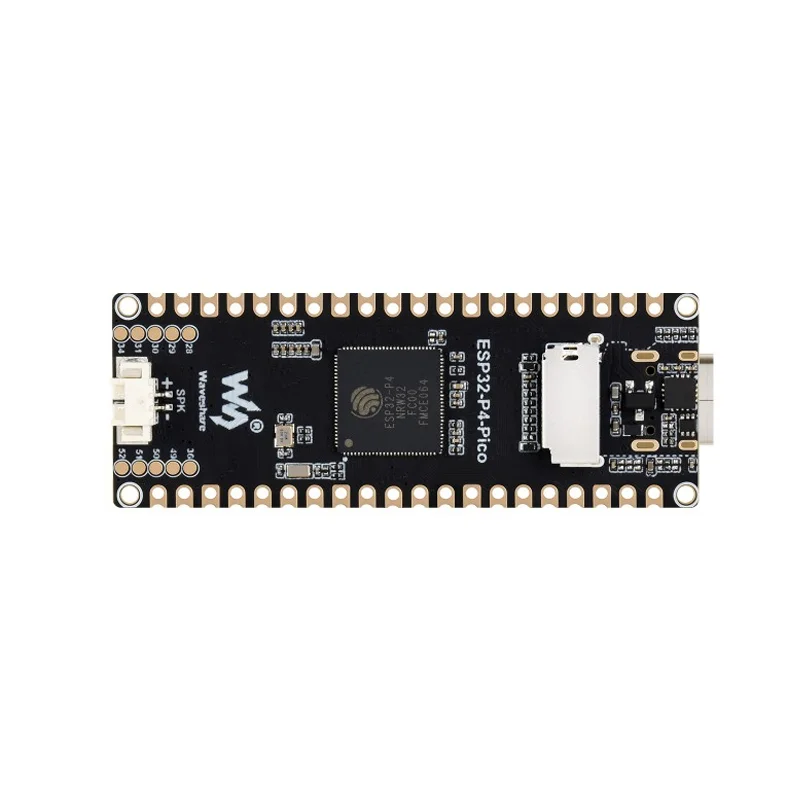
  • Rich Multimedia & Expansion: Integrates MIPI-CSI for camera input, MIPI-DSI for display output, USB 2.0 OTG HS, SDIO 3.0, and a TF card slot for extensive peripheral connectivity.
  • Ample Onboard Memory: Equipped with 32MB of PSRAM and 32MB of NOR Flash, providing substantial memory for complex applications and data buffering.
  • Enhanced Hardware Security: Includes Secure Boot, Flash Encryption, and a Key Management Unit for building secure IoT and industrial embedded systems.
  • Pico HAT Compatibility: GPIO layout is compatible with Raspberry Pi Pico HATs, enabling easy integration with a wide ecosystem of expansion boards and accessories.

Out of stock

Description

The Waveshare ESP32-P4-Pico is engineered as a versatile development platform centered on Espressif’s advanced ESP32-P4 chip. It combines a 400MHz dual-core RISC-V processor with substantial 32MB PSRAM, targeting demanding applications in computer vision, human-machine interfaces (HMI), and secure edge computing. The board’s architecture supports high-speed data interfaces crucial for multimedia, including a dedicated MIPI-CSI port for camera modules and MIPI-DSI for driving displays, alongside USB 2.0 OTG HS for host/peripheral roles.

Power management and system integrity are central to its design, featuring hardware-enforced security mechanisms like Secure Boot and Flash Encryption to protect firmware and data. The inclusion of a TF card slot and SDIO 3.0 interface provides flexible external storage options. Its form factor and pinout are deliberately aligned with the Raspberry Pi Pico standard, allowing developers to leverage existing accessory ecosystems. With pre-soldered headers, it offers a ready-to-use foundation for prototyping IoT devices, interactive kiosks, and AI-driven embedded systems.

Key Features

  • Dual-core RISC-V processor clocked at up to 400 MHz for high-performance computing tasks.
  • Integrated 32MB PSRAM for handling large datasets in AI and multimedia applications.
  • Comprehensive multimedia support with MIPI-CSI (camera) and MIPI-DSI (display) interfaces.
  • Hardware-accelerated H.264 and JPEG codecs for efficient video and image processing.
  • USB 2.0 OTG High-Speed (HS) port for flexible host/device connectivity and data transfer.
  • Onboard SDIO 3.0 controller and TF (microSD) card slot for expanded storage.
  • Hardware security suite featuring Secure Boot, Flash Encryption, and a Key Management Unit.
  • Raspberry Pi Pico HAT compatible GPIO layout for easy hardware expansion.

Applications

  • Edge AI and TinyML vision systems utilizing camera input and onboard processing.
  • Interactive Human-Machine Interface (HMI) panels and smart displays with touch input.
  • Secure IoT gateways and industrial controllers requiring encrypted communication.
  • Multimedia devices and portable instruments with audio/video playback capabilities.
  • Prototyping platform for Raspberry Pi Pico ecosystem projects needing higher performance.

Technical Specifications

Microcontroller/SoCESP32-P4
Processor CoreDual-Core RISC-V + Single-Core RISC-V
Clock FrequencyUp to 400 MHz
On-Chip RAM32MB PSRAM
Flash Memory32MB NOR Flash
Key InterfacesMIPI-CSI, MIPI-DSI, USB 2.0 OTG HS, SDIO 3.0, GPIO, I2C, I2S, UART
Expansion StorageTF Card (microSD) Slot
Audio SupportOnboard microphone connection and speaker header
Security FeaturesSecure Boot, Flash Encryption, Key Management Unit
Dimensions (LxW)60mm x 23mm
Weight9g

Frequently Asked Questions

What development frameworks are supported for programming the ESP32-P4-Pico board?

The board is supported by the official ESP-IDF (Espressif IoT Development Framework), which provides full access to the ESP32-P4's features, including dual-core management and security functions. You can also use Arduino Core for ESP32 via the Arduino IDE or PlatformIO for a more familiar environment, though for advanced features like the MIPI interfaces and hardware security, ESP-IDF is recommended. Setup involves installing the ESP-IDF toolchain and selecting the appropriate board target.

How do I connect a camera and display to the board's MIPI interfaces?

The MIPI-CSI interface accepts compatible camera modules with a FPC connector, such as certain OV series sensors. The MIPI-DSI port can drive compatible display panels. You will need appropriate FPC cables to connect these peripherals. Configuration and initialization are handled through ESP-IDF's dedicated camera and display driver libraries, which provide APIs for capturing image data and rendering graphics. Ensure your peripheral's voltage and signal compatibility matches the board's I/O levels.

What is the power supply requirement for the ESP32-P4-Pico board?

The board is typically powered via the USB Type-C connector, which provides 5V. The on-board voltage regulators step this down to the required core voltages. You can also supply power through the VSYS pin on the GPIO header if designing a custom enclosure. The total current draw depends on active peripherals; with all cores active and interfaces like USB OTG in use, ensure your power source can provide up to 500mA or more for stable operation.

Can I use Raspberry Pi Pico HATs and accessories directly with this board?

Yes, the board's GPIO layout and physical dimensions are designed to be compatible with many Raspberry Pi Pico HATs and expansion boards. This allows you to leverage existing accessories like sensor hats, motor drivers, or displays designed for the Pico ecosystem. However, always verify the pinout mapping, as some advanced ESP32-P4-specific pins (like the MIPI interfaces) are not present on the standard Pico and may have different functions.

How do I enable the hardware security features like Secure Boot and Flash Encryption?

Secure Boot and Flash Encryption are configured during the initial bootloader build and flashing process using ESP-IDF. You must generate a secure boot signing key and an encryption key, then burn them into the ESP32-P4's eFuse memory using `espefuse.py` commands. Once enabled, all subsequent firmware must be signed, and the flash contents are encrypted at rest. Refer to the official Espressif security documentation for detailed, step-by-step instructions, as this process is irreversible.

Package Includes

  • 1 x Waveshare ESP32-P4-Pico Development Board (with pre-soldered headers)

Additional Information

Weight 0.009 kg
Dimensions 6 × 2.3 cm