SKU: IOWC-0983
📋 GST Invoice Available

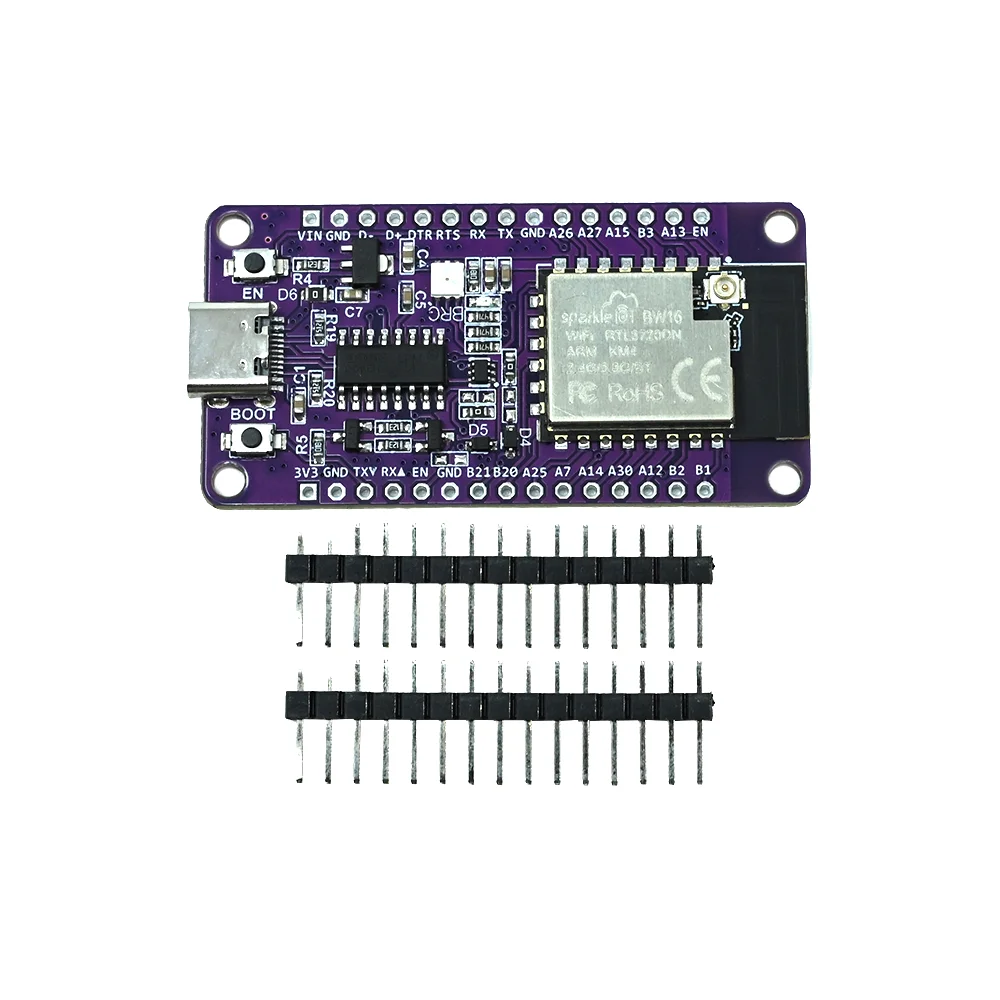
NICEMCU BW16 RTL8720DN WiFi Bluetooth BLE Dev Board w/ IPEX

₹669.00 (Inclusive of all taxes)
Out of Stock

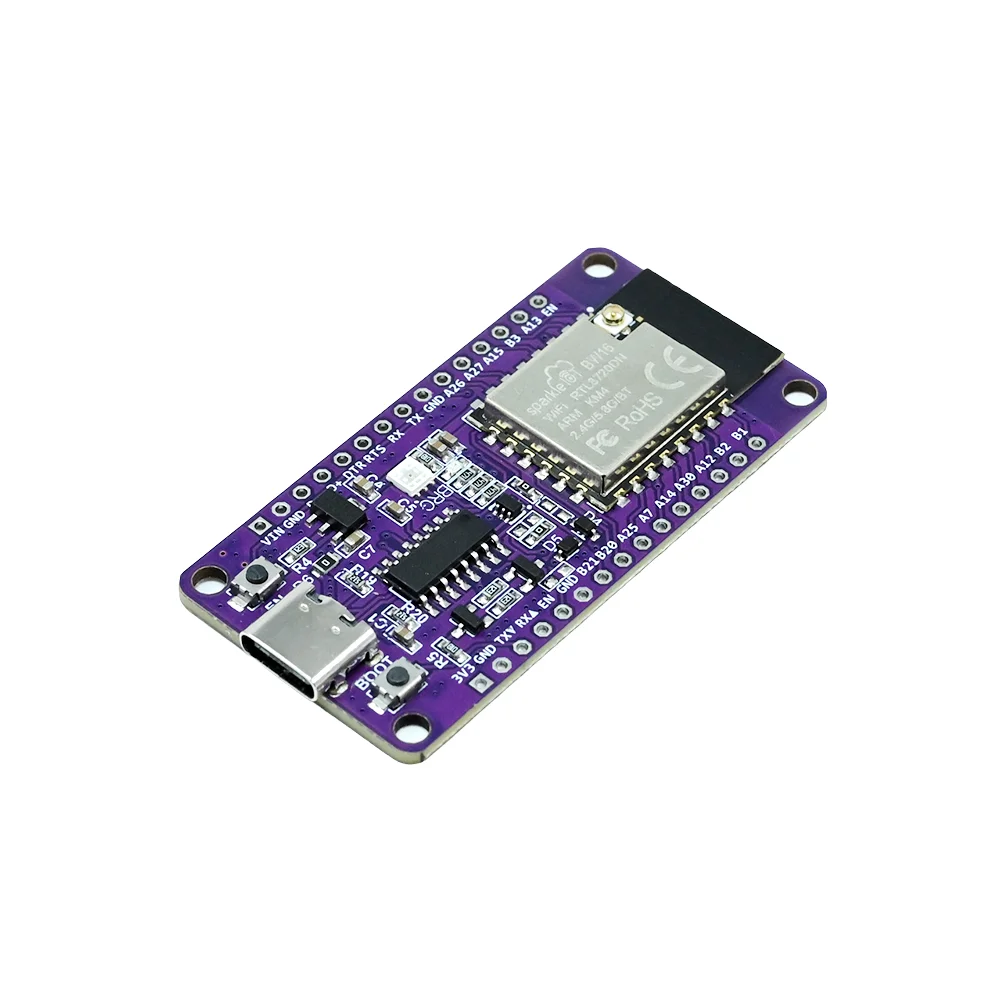
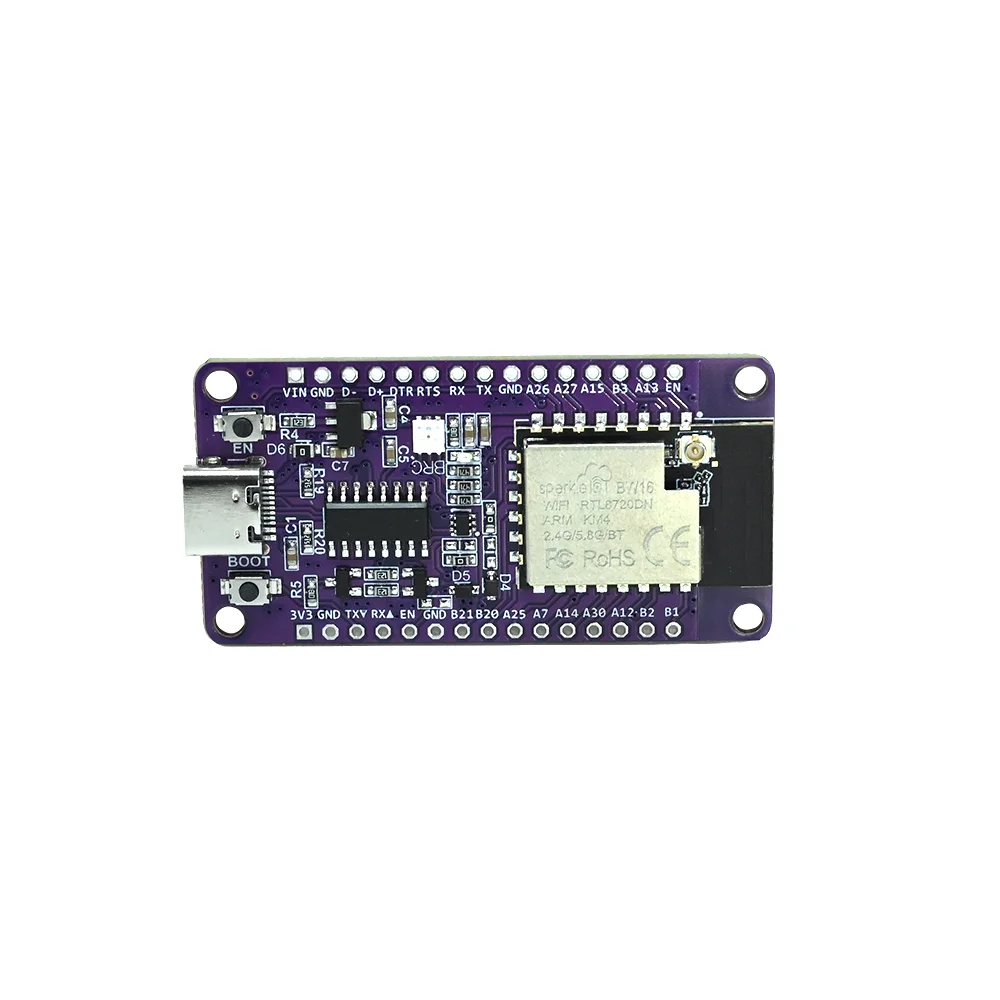
The NICEMCU BW16 is a development board based on the RTL8720DN SoC, integrating dual-band 2.4GHz/5GHz Wi-Fi and Bluetooth 5.0 BLE for IoT prototyping. It features a NodeMCU-compatible DIP-30 pinout, onboard RGB LED, and supports Arduino IDE and other embedded platforms.

Features

  • Dual-band Wi-Fi (2.4GHz/5GHz) and Bluetooth 5.0 BLE for versatile wireless connectivity in IoT applications.
  • Powered by an ARM V8 dual-core MCU (Cortex-M4F + M0) with 4MB flash and 512KB SRAM for robust processing.
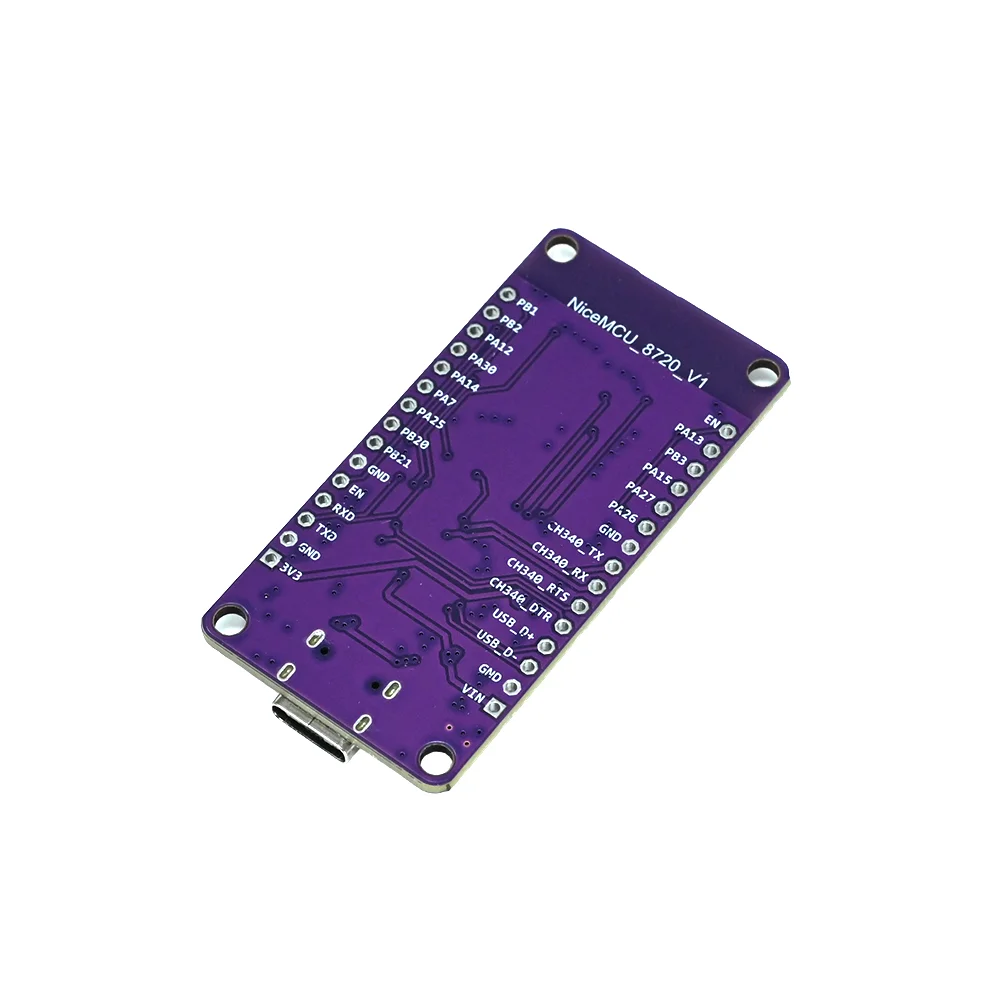
  • Standard NodeMCU DIP-30 pin layout with extensive GPIOs (UART, SPI, I2C, PWM, ADC) for easy prototyping.
  • Onboard RGB LED for visual status indication and development debugging.
  • Dual antenna options: integrated PCB trace and solderless IPEX connector for flexible range optimization.

Out of stock

Description

The NICEMCU BW16 development board centers on the RTL8720DN system-on-chip, a highly integrated wireless solution for dual-band Wi-Fi and Bluetooth Low Energy applications. Its architecture combines a high-performance Cortex-M4F core for application tasks with a Cortex-M0 core for real-time radio management, enabling efficient handling of concurrent wireless protocols. The board operates from a 5V supply and draws over 500mA, suitable for USB-powered development scenarios.

Designed for rapid IoT development, the board features a familiar NodeMCU form factor with a DIP-30 pin header layout, providing direct access to UART, SPI, I2C, PWM, and ADC interfaces. This simplifies integration with sensors, displays, and actuators. The inclusion of both a PCB antenna and an IPEX connector allows developers to choose between a compact built-in solution or an external antenna for extended range, making it suitable for varied deployment environments from smart home devices to industrial telemetry nodes.

Key Features

  • Dual-band Wi-Fi (802.11 a/b/g/n) supporting both 2.4GHz and 5GHz networks for reduced interference and higher throughput.
  • Bluetooth 5.0 BLE with low-power operation for energy-efficient peripheral and beacon applications.
  • ARM V8 dual-core processor (Cortex-M4F + Cortex-M0) balancing application performance and real-time wireless stack processing.
  • Arduino IDE compatibility and support for other popular embedded frameworks accelerates firmware development.
  • Onboard multi-color RGB LED serves as a programmable status indicator for debugging and user feedback.
  • Wide operating temperature range from -40°C to +85°C ensures reliability in harsh environmental conditions.
  • Solderless IPEX antenna connector allows quick attachment of external antennas to boost wireless range.
  • Standard DIP-30 pinout offers easy breadboard integration and access to multiple digital and analog interfaces.

Applications

  • Smart home automation hubs and wireless sensor nodes.
  • IoT prototyping for dual-band Wi-Fi and BLE beacon applications.
  • Educational tools for embedded systems and wireless communication courses.
  • Industrial monitoring devices requiring robust connectivity in wide temperature ranges.
  • Wireless data loggers and telemetry gateways.

Technical Specifications

Microcontroller/SoCRTL8720DN (ARM V8 Dual-Core: Cortex-M4F + Cortex-M0)
Wireless ProtocolsWi-Fi IEEE 802.11 a/b/g/n (2.4GHz/5GHz), Bluetooth 5.0 BLE
Flash Memory4 MB
RAM512 KB SRAM
Supply Voltage5V
Operating Current≥500 mA (typical)
InterfacesUART, GPIO, SPI, I²C, PWM, ADC
Antenna ConnectorPCB Antenna & IPEX Connector
Operating Temperature-40°C to +85°C
Dimensions (LxW)56 mm x 26 mm
Weight11 g

Frequently Asked Questions

How do I program the NICEMCU BW16 board using the Arduino IDE?

First, install the Arduino IDE and add the BW16 board support via the Board Manager using the appropriate third-party package URL. Select 'NICEMCU BW16 (RTL8720DN)' from the boards list. Connect the board via USB, choose the correct COM port, and upload your sketch. The board uses a standard serial connection for programming, and the onboard LED can be controlled via GPIO for testing. Ensure your power supply provides a stable 5V at 500mA.

What is the difference between using the PCB antenna and the IPEX connector?

The integrated PCB trace antenna offers a compact, solder-free solution suitable for short-range indoor applications. The solderless IPEX connector allows you to attach an external antenna (e.g., 2.4GHz/5GHz dipole) for significantly improved range and signal penetration through obstacles. For best performance in final deployments, especially outdoors or in crowded RF environments, an external antenna connected via the IPEX port is recommended. Always match the antenna impedance to 50 ohms.

What are the power requirements and sleep current for battery-operated projects?

The board requires a 5V supply with a minimum current of 500mA during active Wi-Fi/Bluetooth operation. For battery-powered applications, you can leverage the RTL8720DN's low-power sleep modes managed through firmware. Configure deep sleep via Arduino or SDK commands to minimize current draw to microamps, waking periodically for data transmission. Ensure your voltage regulator can provide clean 5V from your battery source, and consider measuring actual sleep current with a multimeter for accurate battery life calculations.

Package Includes

  • 1 x NICEMCU BW16 RTL8720DN WiFi Bluetooth BLE Dev Board
  • 1 x Header Pin Set

Additional Information

Weight 0.011 kg
Dimensions 5.6 × 2.6 cm