SKU: IOWC-0949
📋 GST Invoice Available

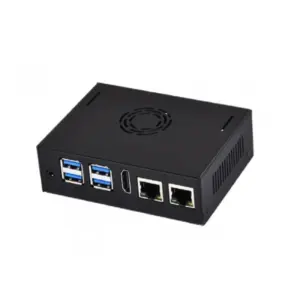
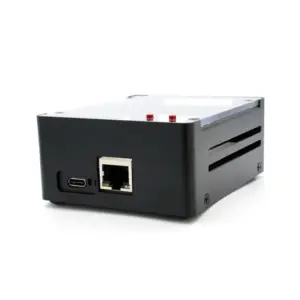
Luckfox Lume Linux Development Board Dual Gigabit Ethernet

₹3,569.00 (Inclusive of all taxes)
Out of Stock

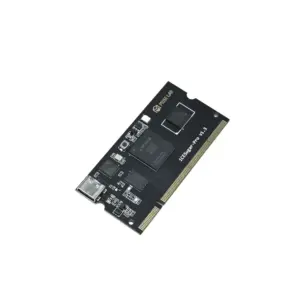
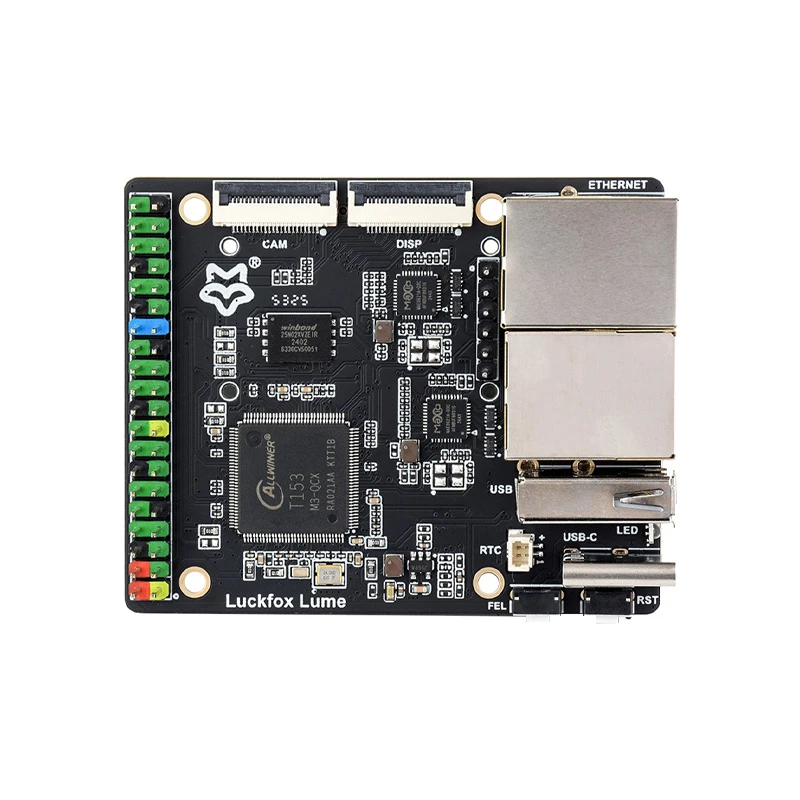
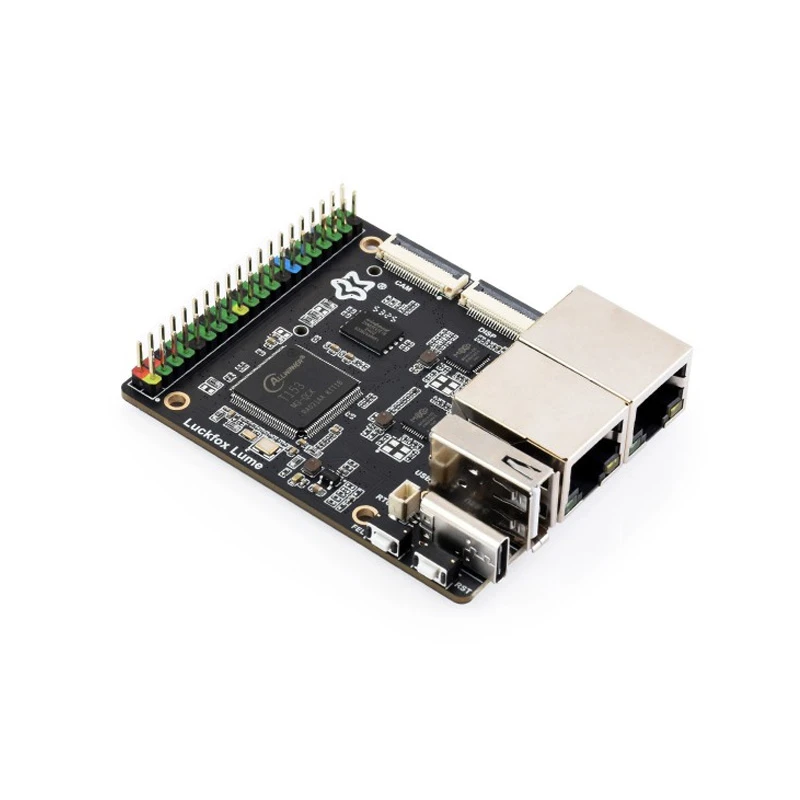
The Luckfox Lume is a compact, industrial-grade Linux development board powered by an Allwinner T153 heterogeneous processor (Quad-core Cortex-A7 + RISC-V E907). Featuring dual Gigabit Ethernet ports, 128MB DDR3 RAM, and 256MB SPI NAND flash, it is engineered for embedded networking, IoT gateways, and edge computing applications.

Features

  • Heterogeneous processing with a Quad-core Arm Cortex-A7 for main tasks and a RISC-V E907 core for real-time operations.
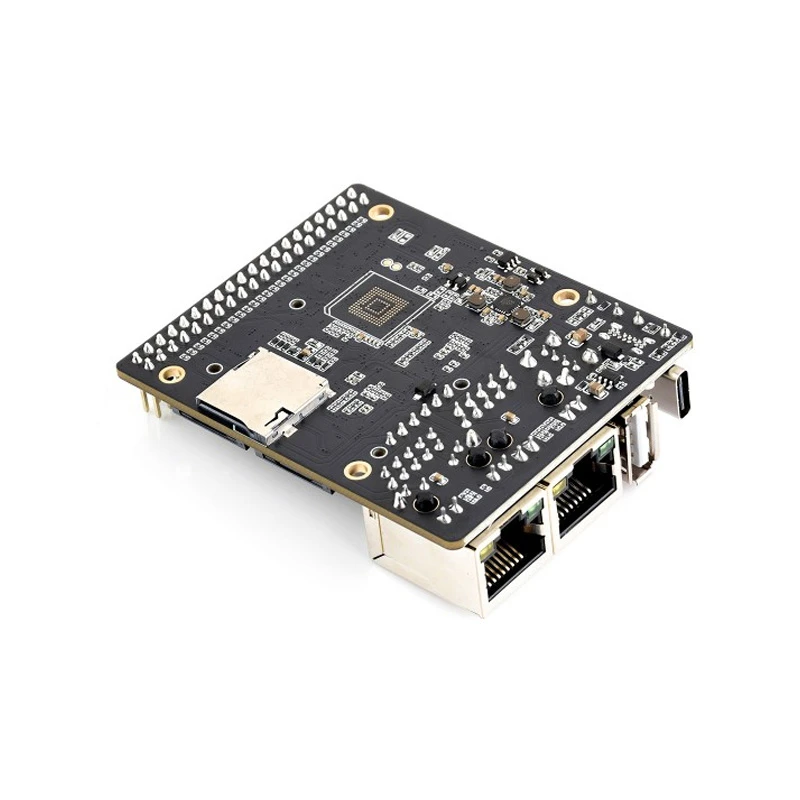
  • Dual 1000Mbps Gigabit Ethernet RJ45 ports for robust networking and gateway functionality.
  • Compact industrial form factor with 128MB DDR3 memory and 256MB SPI NAND flash for stable embedded Linux performance.
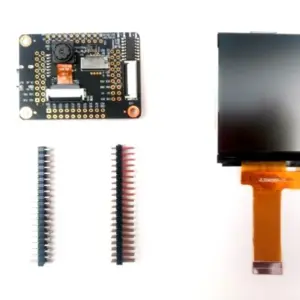
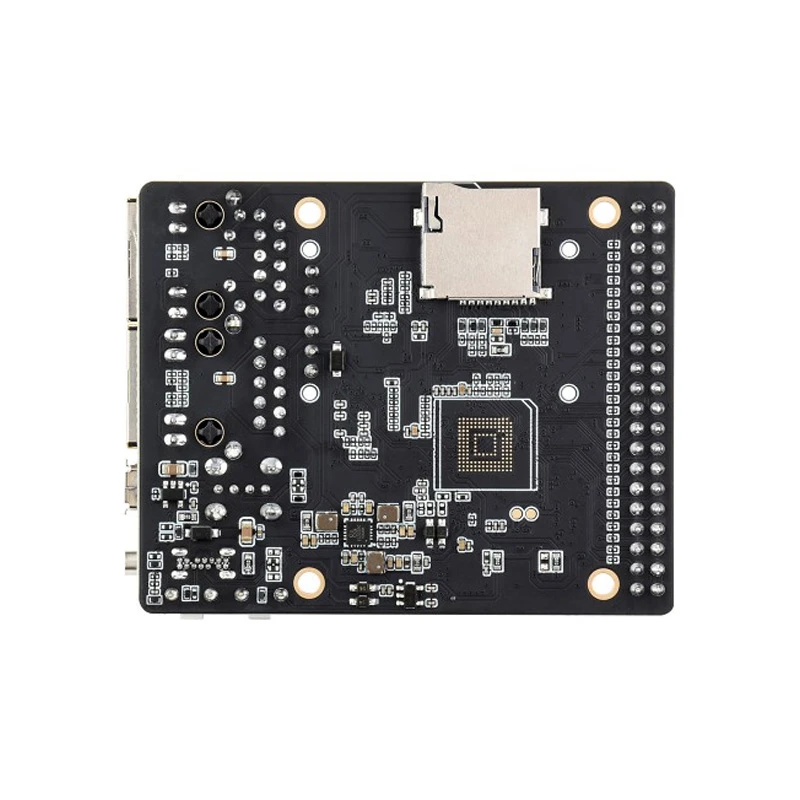
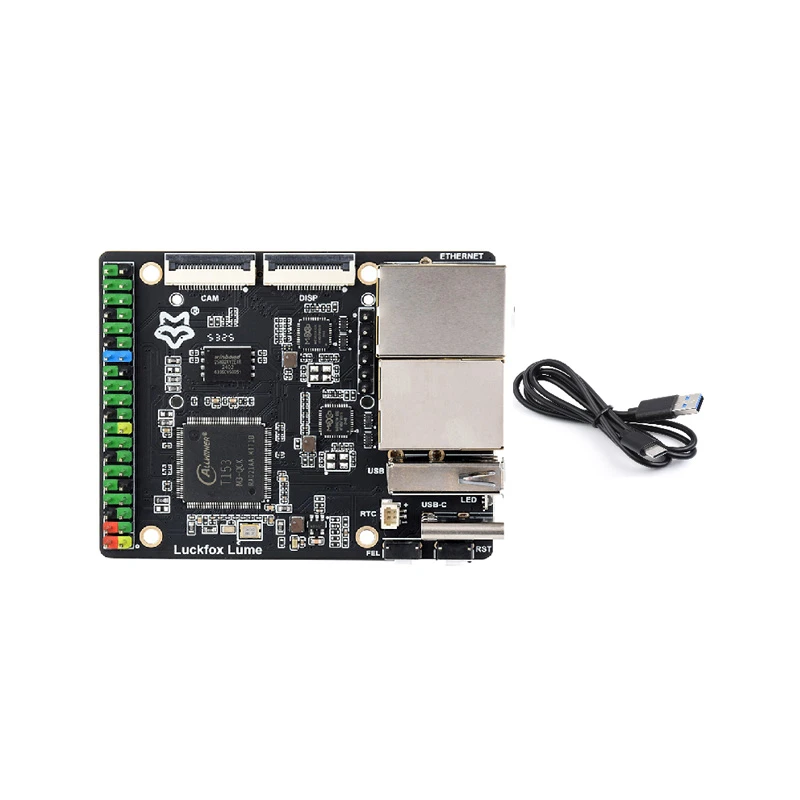
  • Rich I/O including MIPI DSI display and CSI camera interfaces, USB Type-C/A, and a 40-pin GPIO header for expansion.
  • Powered via 5V DC input, making it suitable for industrial automation, edge computing nodes, and embedded control systems.

Out of stock

Description

The Luckfox Lume Development Board is engineered as a high-performance, compact platform for industrial IoT and embedded Linux applications. Its core is the Allwinner T153 multi-core heterogeneous processor, which pairs a quad-core Arm Cortex-A7 cluster for general-purpose computing with a dedicated RISC-V E907 core to handle deterministic, real-time tasks. This architecture is ideal for complex edge computing workloads that require both processing power and low-latency response.

Built for reliability in networking-centric deployments, the board integrates dual independent Gigabit Ethernet controllers, providing high-bandwidth connectivity for router, firewall, or IoT gateway projects. The onboard 128MB DDR3 RAM and 256MB SPI NAND flash offer sufficient resources for running lightweight Linux distributions. Expansion is facilitated through a comprehensive 40-pin GPIO header, MIPI interfaces for displays and cameras, USB ports, and a microSD slot, providing system integrators with extensive flexibility for peripheral integration.

Key Features

  • Multi-core heterogeneous processor (Quad-core Cortex-A7 + RISC-V E907) for efficient task partitioning.
  • Dual independent Gigabit Ethernet ports (10/100/1000Mbps) for high-speed networking and redundancy.
  • Onboard 128MB DDR3 RAM and 256MB SPI NAND Flash for embedded Linux operation.
  • MIPI DSI 4-lane display and MIPI CSI 2-lane camera interfaces for multimedia and vision applications.
  • Versatile connectivity with USB Type-C for power/data, USB Type-A host port, and a 40-pin GPIO expansion header.
  • Onboard microSD (TF) card slot for additional storage or alternative boot options.
  • Compact, industrial-grade PCB design (70x55mm) with 5V DC power input for easy integration.

Applications

  • Industrial IoT Gateways and Network Appliances
  • Edge Computing Nodes for Data Acquisition and Processing
  • Embedded Linux Controllers for Automation and Robotics
  • Network Routers, Firewalls, or VPN Servers
  • Multimedia and Vision-based Embedded Systems

Technical Specifications

Processor / SoCAllwinner T153 (Quad-core Arm Cortex-A7 + Single-core RISC-V E907)
Memory128MB DDR3
Storage256MB SPI NAND Flash
EthernetDual 10/100/1000Mbps RJ45 Ports
Display InterfaceMIPI DSI 4-lane
Camera InterfaceMIPI CSI 2-lane
GPIO / Expansion40-pin Header
USBUSB Type-C (Power/Data), USB Type-A Host
External StorageOnboard TF (microSD) Card Slot
Power Supply5V DC Input
Dimensions70 x 55 x 20 mm
Weight36 g

Frequently Asked Questions

What Linux distributions are compatible with the Luckfox Lume board?

The Luckfox Lume is designed to run lightweight embedded Linux distributions such as Buildroot or Yocto-based systems. Official BSP and kernel sources are typically provided by Luckfox, allowing developers to build a custom root filesystem. It is compatible with Debian-based minimal images optimized for the Allwinner T153 platform. You can flash the system image via the USB Type-C port or boot from the microSD card for development and deployment.

How do I configure the dual Gigabit Ethernet ports for networking?

The dual Ethernet ports are managed as independent network interfaces (e.g., eth0, eth1) by the Linux kernel. You can configure them using standard Linux networking tools like iproute2 or netplan. Typical setups include bridging the ports for a switch-like gateway, using one for WAN and one for LAN, or setting up firewall rules with iptables. The board's BSP includes the necessary drivers for the Gigabit PHY chips, ensuring full 10/100/1000Mbps operation out of the box.

Can I connect a display and camera simultaneously to the MIPI interfaces?

Yes, the board provides separate MIPI DSI (4-lane) and MIPI CSI (2-lane) interfaces, allowing concurrent connection of a display and a camera module. The Allwinner T153 SoC includes dedicated video pipelines to handle both inputs. You will need to enable and configure the respective kernel drivers (sunxi-drm for DSI, V4L2 for CSI) in your Linux build. This makes the Lume suitable for embedded HMI projects or vision-based edge AI applications requiring a local interface.

What is the purpose of the RISC-V E907 core on the Allwinner T153?

The integrated RISC-V E907 core serves as a real-time co-processor within the heterogeneous Allwinner T153 SoC. It is designed to handle time-critical, deterministic tasks independently from the main Cortex-A7 cores running Linux. This allows developers to offload real-time control functions—such as sensor polling, PWM generation, or low-latency communication—to the RISC-V core, ensuring responsive performance without being affected by Linux scheduling latency or system load.

Package Includes

  • 1 x Luckfox Lume Linux Development Board
  • 1 x USB Type-A to Type-C Cable (92cm)

Additional Information

Weight 0.036 kg
Dimensions 5.5 × 7 × 2 cm