SKU: IOWC-0057
📋 GST Invoice Available

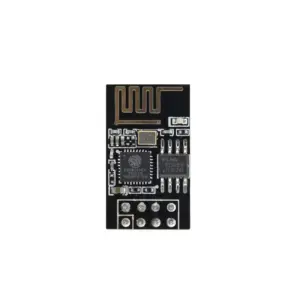
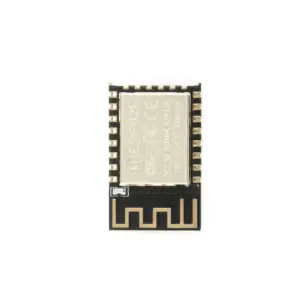
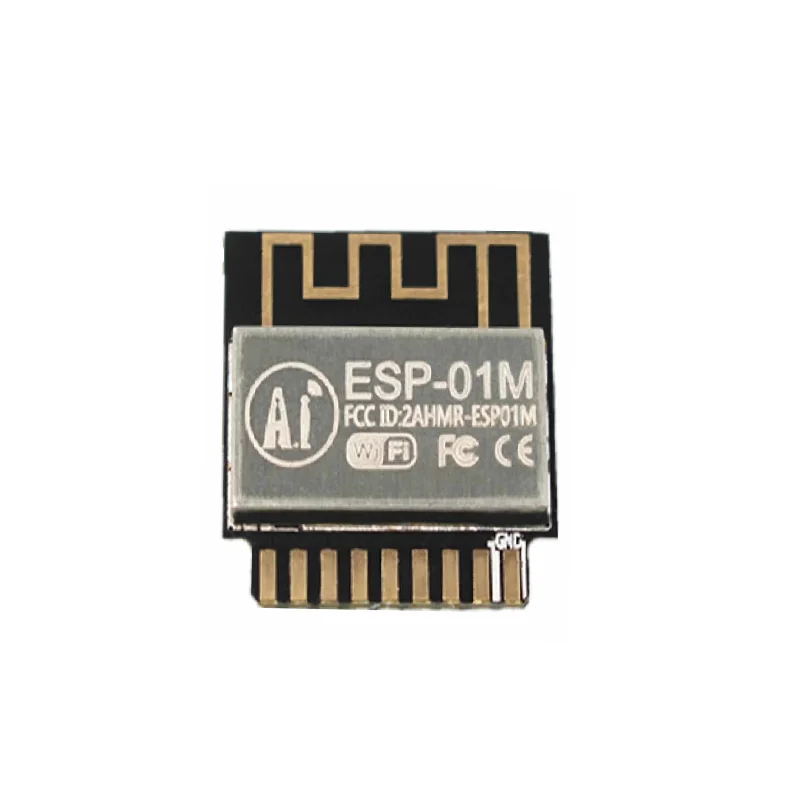
AI-Thinker ESP-01M WiFi Module

₹209.00 (Inclusive of all taxes)
Out of Stock

The AI-Thinker ESP-01M is a compact ESP8266-based Wi-Fi SoC module designed for embedded IoT networking. It operates on 3.3V logic and supports STA/AP/STA+AP modes, making it ideal for adding Wi-Fi connectivity to automation projects via AT commands or custom firmware.

Features

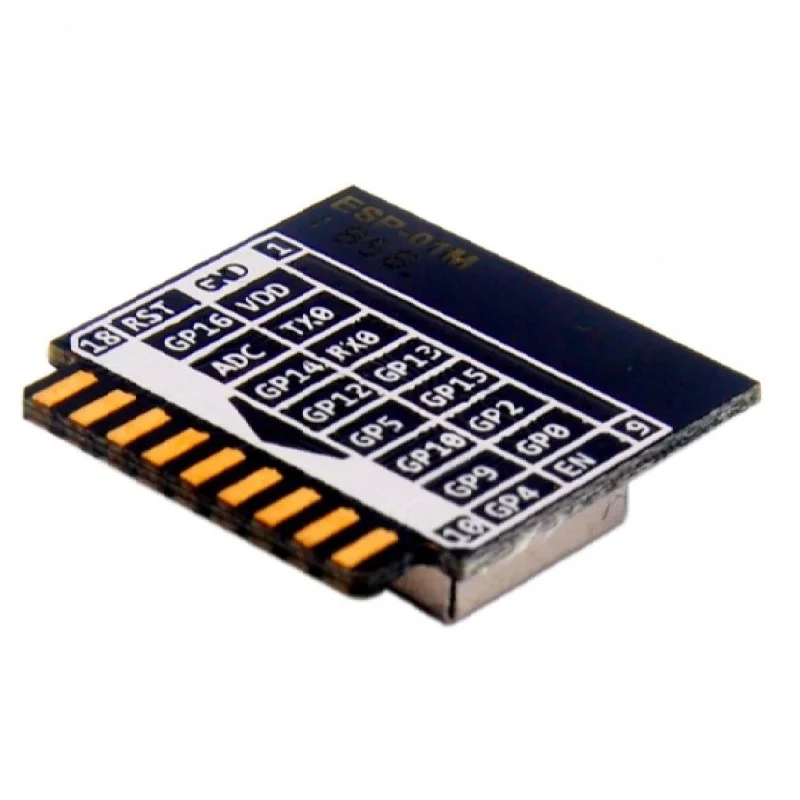
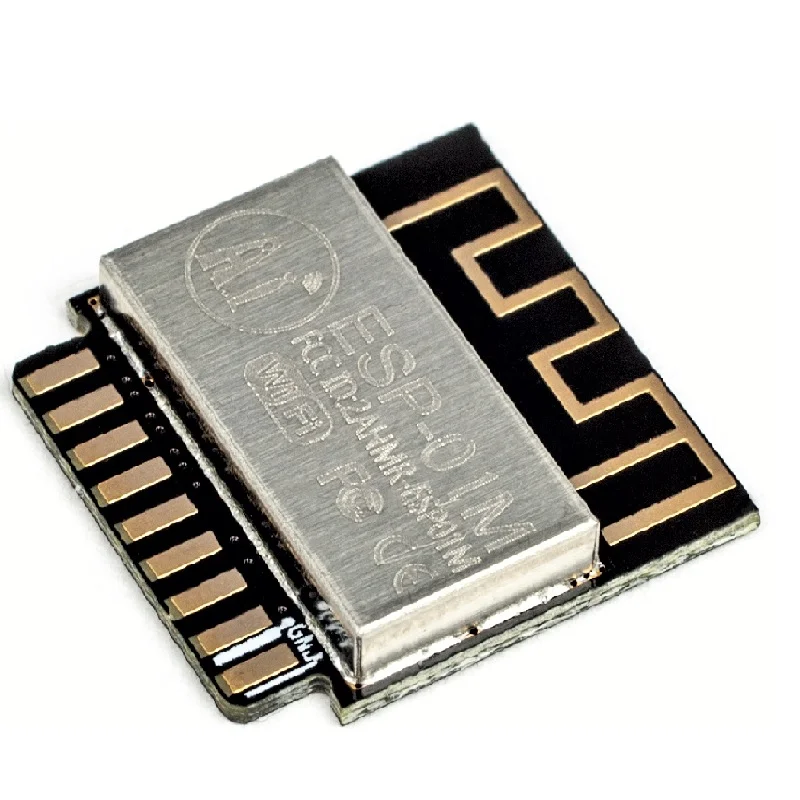
  • Compact ESP8266 Wi-Fi SoC module in an 18x18mm DIP-18 package for easy integration into existing PCB designs.
  • Supports 802.11b/g/n protocols with integrated PA/LNA for robust RF performance up to +16dBm transmit power.
  • Features a 32-bit Tensilica L106 processor running up to 160MHz with built-in 1MB SPI flash for application code.
  • Provides multiple GPIO, UART, PWM, and a 10-bit ADC interface for sensor connectivity and peripheral control.
  • Includes embedded LwIP TCP/IP stack and supports Smart Config for easy network provisioning from mobile apps.

Out of stock

Description

The AI-Thinker ESP-01M is a highly integrated Wi-Fi module built around the ESP8266 chipset, delivering full TCP/IP protocol stack and microcontroller capabilities in a minimal footprint. Its DIP plug-in package design allows for straightforward soldering or socket mounting, facilitating rapid prototyping and volume production for cost-sensitive IoT applications.

Engineered for low-power operation, the module supports deep sleep modes with standby consumption as low as 1.0mW, extending battery life in remote sensors and wearable devices. The integrated power amplifier (PA) and low-noise amplifier (LNA) enhance wireless link reliability, supporting stable connections in home automation, industrial wireless control, and smart signage systems.

Key Features

  • Ultra-compact form factor (18x18x2.8mm) with a DIP-18 pinout for simplified PCB integration and mass production.
  • Full-featured ESP8266 SoC with integrated Wi-Fi MAC/BB/RF/PA/LNA, eliminating the need for external RF components.
  • Supports multiple operating modes including Station, Access Point, and simultaneous STA+AP for flexible network topologies.
  • Embedded LwIP protocol stack and support for universal AT commands enable rapid development without deep TCP/IP knowledge.
  • Features serial local upgrade and remote firmware update (OTA) capabilities for field maintenance and feature deployment.
  • Robust security with WEP, WPA-PSK, and WPA2-PSK encryption to secure IoT data transmissions.
  • Wide operating temperature range from -20°C to 85°C ensures reliability in challenging environmental conditions.

Applications

  • Home and building automation for smart switches, lighting control, and environmental monitoring.
  • Industrial wireless control and telemetry systems for remote sensor data acquisition.
  • Wearable electronics and IoT devices requiring compact, low-power Wi-Fi connectivity.
  • Wireless positioning beacons and asset tracking tags within indoor networks.
  • Baby monitors, smart appliances, and consumer electronics needing network integration.

Technical Specifications

Microcontroller/SoCESP8266 (Tensilica L106 32-bit)
Wireless Protocols802.11b/g/n Wi-Fi
Frequency Range2.412 - 2.484 GHz
RF Transmit Power802.11b: 16±2 dBm @11Mbps; 802.11g: 14±2 dBm @54Mbps; 802.11n: 13±2 dBm @HT20, MCS7
Supply Voltage3.0V - 3.6V DC
Operating CurrentData not provided; includes low-power sleep modes
InterfacesUART, GPIO, PWM, ADC (10-bit)
Antenna ConnectorIntegrated PCB Antenna
Operating Temperature-20°C to +85°C
Dimensions18mm x 18mm x 2.8mm

Frequently Asked Questions

What is the default UART baud rate for the ESP-01M module, and how do I change it?

The default UART baud rate is 115200 bps. You can change it using AT commands like AT+UART_DEF. Send 'AT+UART_DEF=9600,8,1,0,0' to set it to 9600 bps with 8 data bits, 1 stop bit, and no parity. Ensure your serial terminal or microcontroller is configured to match the new baud rate after sending the command for successful communication.

How do I flash custom firmware onto the ESP-01M using the Arduino IDE?

To flash custom firmware, connect the module's GPIO0 pin to GND to enter bootloader mode, then power cycle it. In Arduino IDE, select 'Generic ESP8266 Module' as the board. Use a USB-to-serial adapter (3.3V logic) connected to the module's UART_TXD and UART_RXD pins. Select the correct COM port and upload your sketch. Remember to remove the GPIO0-GND connection after flashing to run the new firmware.

What power supply requirements does the ESP-01M have for stable operation?

The ESP-01M requires a stable 3.3V DC power supply within the range of 3.0V to 3.6V, connected to the VCC and GND pins. During RF transmission peaks, the module can draw significant current, so ensure your power source or regulator can deliver at least 300-400mA. Decoupling capacitors (e.g., 10uF and 0.1uF) placed close to the VCC pin are recommended to mitigate voltage drops and ensure stable Wi-Fi performance.

Package Includes

  • 1 x AI-Thinker ESP-01M WiFi Module

Additional Information

Weight 0.003 kg
Dimensions 1.8 × 1.8 × 0.28 cm