SKU: IOWC-0031
📋 GST Invoice Available

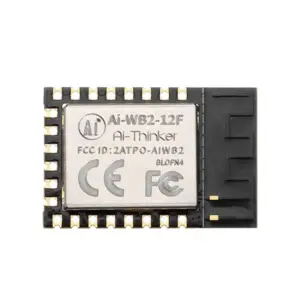
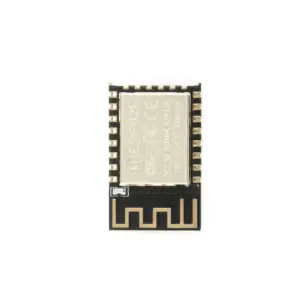
AI-Thinker Ai-WB2-13 Wi-Fi & BLE 5.0 Module w/ BL602 SoC

₹122.00 (Inclusive of all taxes)
Out of Stock

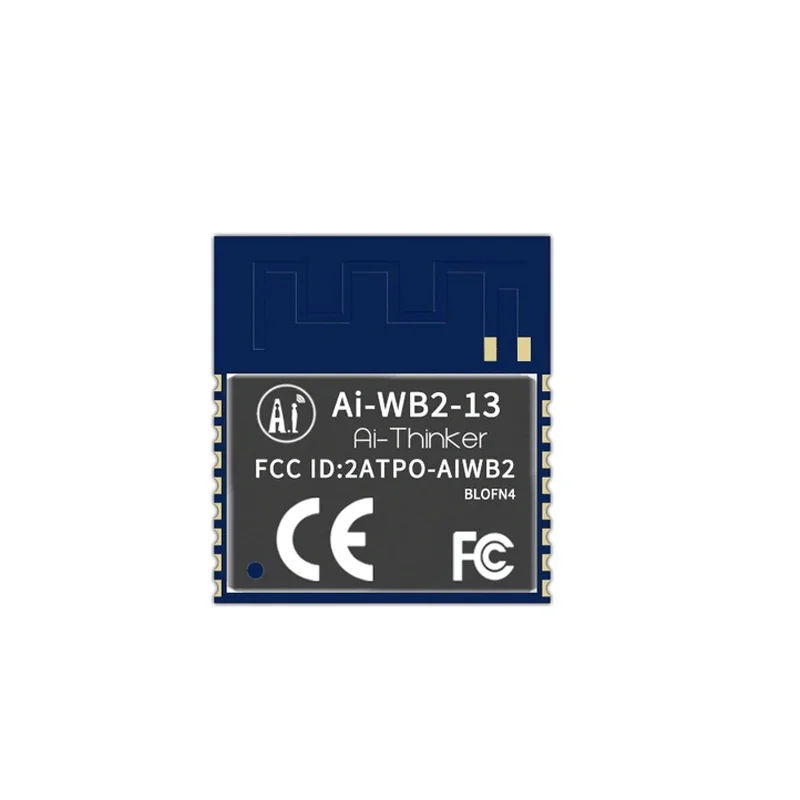
The AI-Thinker Ai-WB2-13 is a compact SMD module featuring the BL602 chip, supporting 2.4GHz Wi-Fi 802.11b/g/n and Bluetooth Low Energy 5.0. It offers extensive peripheral interfaces and low-power modes, ideal for embedded IoT development with Arduino IDE and ESP-IDF.

Features

  • Dual-Mode Wireless: Integrates 2.4GHz Wi-Fi (802.11b/g/n, up to 72.2 Mbps) and Bluetooth Low Energy 5.0 with Mesh support for versatile IoT connectivity.
  • BL602 RISC-V Core: Powered by a 32-bit RISC CPU with 276KB RAM and 4MB flash, enabling robust application processing and secure firmware execution.
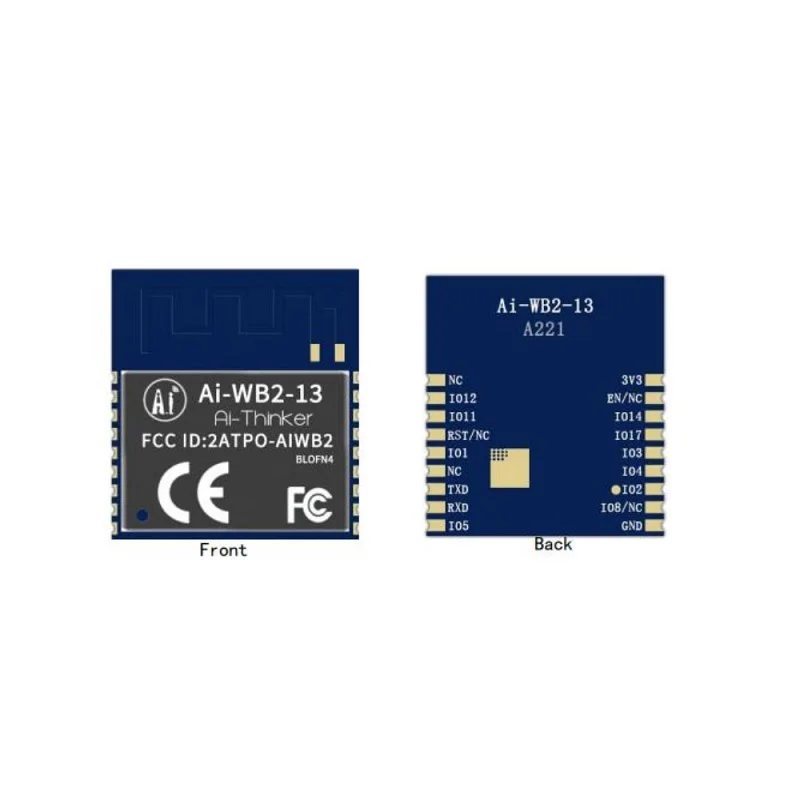
  • Rich Peripheral Set: Provides 11 GPIOs alongside interfaces including UART, SPI, I2C, ADC, DAC, PWM, and IR remote for sensor and actuator integration.
  • Advanced Power Management: Features multiple sleep modes with a deep sleep current as low as 12μA, extending battery life in remote deployments.
  • Integrated Security: Includes hardware AES-256 encryption, SHA, TRNG, and secure boot with ECC-256 signature for robust data protection.

Out of stock

Description

The Ai-WB2-13 module from AI-Thinker is a highly integrated wireless communication solution centered on the BL602 system-on-chip. This SoC combines a 32-bit RISC-V processor, Wi-Fi MAC/BB/RF front-end, and Bluetooth LE 5.0 radio into a single compact package. The on-board PCB antenna simplifies design-in, while the extensive GPIO and peripheral suite (including SPI, I2C, UART, ADC, and PWM) allows direct interfacing with sensors, displays, and control systems.

Engineered for low-power IoT applications, the module supports several sleep modes, achieving a deep sleep current of just 12μA to maximize operational lifespan on battery power. Its integrated hardware security accelerators ensure secure communication and device authentication. The module is supported by a universal AT command set for rapid prototyping and a full SDK for custom firmware development in Windows or Linux environments, making it suitable for smart home devices, wearable electronics, and industrial telemetry nodes.

Key Features

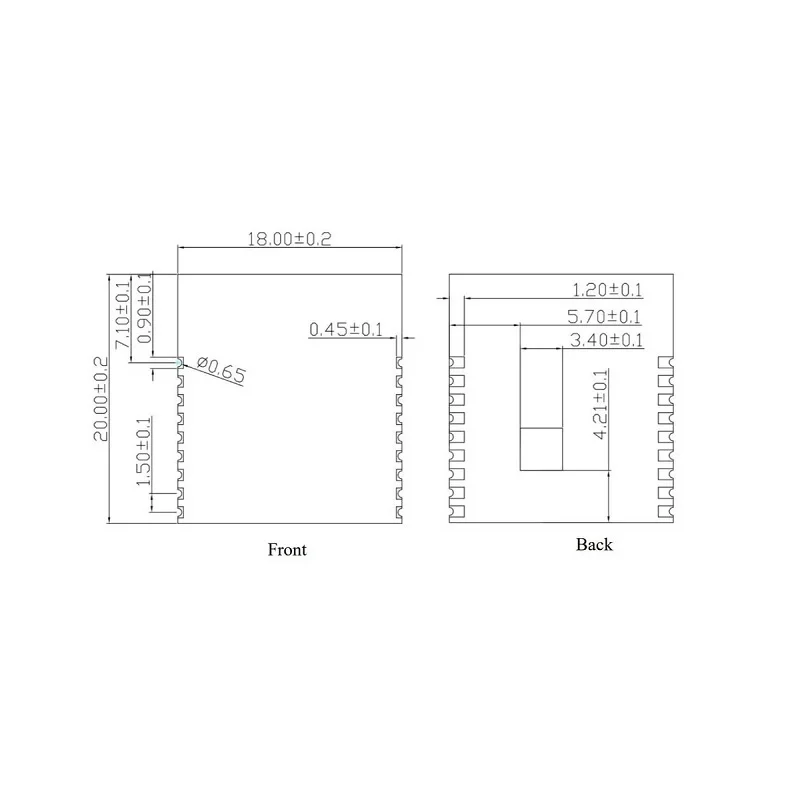
  • Compact SMD-18 Footprint: Measures only 20.0 x 18.0 x 3.1mm with an integrated PCB antenna for space-constrained designs.
  • Comprehensive Wireless Security: Supports WPS, WEP, WPA, WPA2 Personal/Enterprise, and WPA3 for secure network authentication.
  • Hardware Crypto Acceleration: Features dedicated engines for AES-128/192/256, SHA-1/224/256, True Random Number Generation (TRNG), and Public Key Accelerator (PKA).
  • Flexible Development Paths: Can be used with pre-programmed AT commands for quick integration or fully customized via the BL602 SDK with C/C++ toolchains.
  • Robust Thermal Design: Operates reliably across an industrial temperature range of -40°C to 85°C.
  • On-the-Fly Decryption: Supports OTFAD (On The Fly AES Decryption) for secure execution of encrypted firmware from external QSPI/SPI flash.

Applications

  • Smart Home Automation: Used in Wi-Fi smart plugs, lighting controls, and environment sensors connected to platforms like Home Assistant or Tuya.
  • Wearable & Portable Electronics: Enables data logging and wireless sync for health monitors, fitness trackers, and personal IoT gadgets.
  • Industrial IoT (IIoT) Telemetry: Connects sensor nodes for temperature, humidity, or vibration monitoring to cloud dashboards via Wi-Fi or BLE gateways.
  • Consumer Electronics: Integrates into toys, remote controls, and audio accessories requiring low-power, dual-mode wireless connectivity.

Technical Specifications

Microcontroller/SoCBL602 (32-bit RISC-V CPU, 276KB RAM)
Wireless ProtocolsWi-Fi 802.11b/g/n, Bluetooth Low Energy 5.0, Bluetooth Mesh
Frequency Range2400 – 2483.5 MHz
RF Transmit PowerIntegrated PA/LNA (Typical for 802.11n)
Supply Voltage2.7V – 3.6V DC
Operating Current≥500mA (peak during RF transmission)
Deep Sleep Current12μA (typical)
InterfacesUART, SPI, I2C, GPIO (11), ADC, DAC, PWM, IR Remote, PIR, SDIO
Antenna ConnectorIntegrated PCB Antenna
Flash Memory4 MB (on-module)
Operating Temperature-40°C to +85°C
Dimensions20.0 x 18.0 x 3.1 mm

Frequently Asked Questions

What development environments are supported for programming the Ai-WB2-13 module?

The module is supported by the official BL602 SDK, which provides toolchains for Windows and Linux. You can develop in C/C++ using command-line tools or IDEs like VSCode. For quick start, use the universal AT command firmware via a UART connection at 115200 baud to configure Wi-Fi and BLE settings without custom coding.

How do I connect and power the Ai-WB2-13 module for initial testing?

Provide a stable 3.3V DC supply to the VCC and GND pins, ensuring your power source can deliver bursts up to 500mA. Connect a USB-to-UART adapter's TX/RX lines to the module's UART0_RX and UART0_TX pins. Use a serial terminal at 115200 baud to send AT commands like "AT+WJAP" to join a Wi-Fi network. An external 3.3V regulator is recommended for stable operation.

What is the procedure for updating or flashing new firmware onto the Ai-WB2-13?

Firmware flashing requires entering the bootloader mode by holding the GPIO8 pin low during power-up. Use the `bflb_mcu_tool` from the Bouffalo Lab SDK to connect via UART and upload your compiled .bin file. Ensure you have the correct partition table and bootloader. The process erases the existing firmware, so backup any configurations first.

Can I use an external antenna with the Ai-WB2-13 module instead of the PCB antenna?

The standard Ai-WB2-13 variant uses a fixed PCB antenna. For an external antenna, you would need a module variant with an IPEX connector or must carefully solder a coaxial cable to the RF pad, which requires impedance matching (50Ω) and RF layout expertise to avoid signal degradation. For most applications, the integrated antenna provides adequate range.

What are the key power consumption figures for designing a battery-powered node?

In active Wi-Fi transmission, current can peak above 200mA. During connected idle with Wi-Fi in sleep, expect currents around 10-20mA. The module achieves its lowest consumption in deep sleep mode, drawing approximately 12μA, which allows for years of operation on a coin cell when waking periodically. Use the provided PWM or GPIO to control peripheral power for further savings.

Package Includes

  • 1 x AI-Thinker Ai-WB2-13 Module

Additional Information

Weight 0.015 kg
Dimensions 5 × 5 × 2 cm