SKU: IOWC-1155
📋 GST Invoice Available

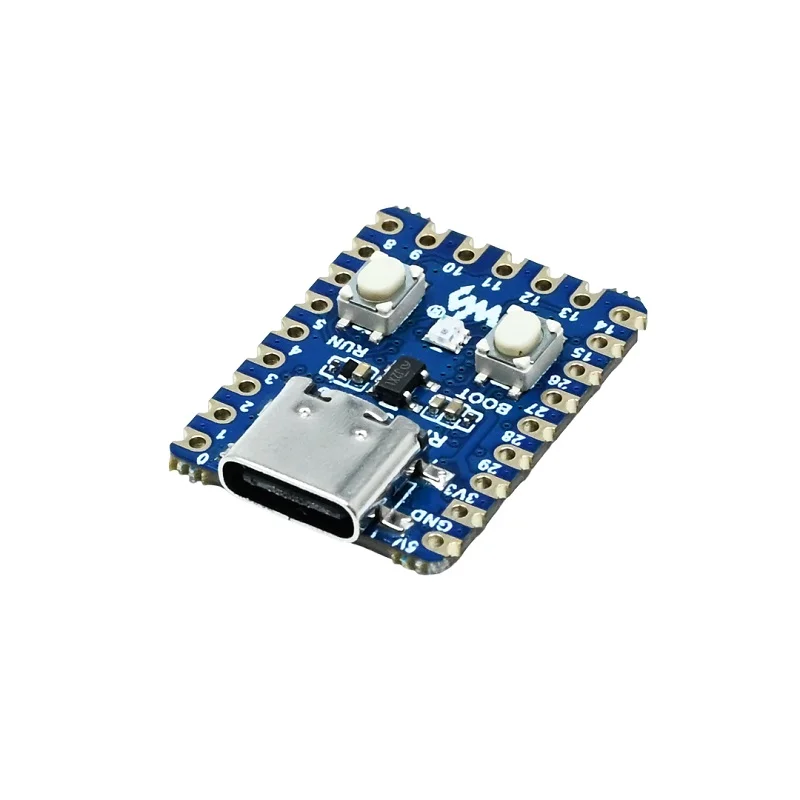
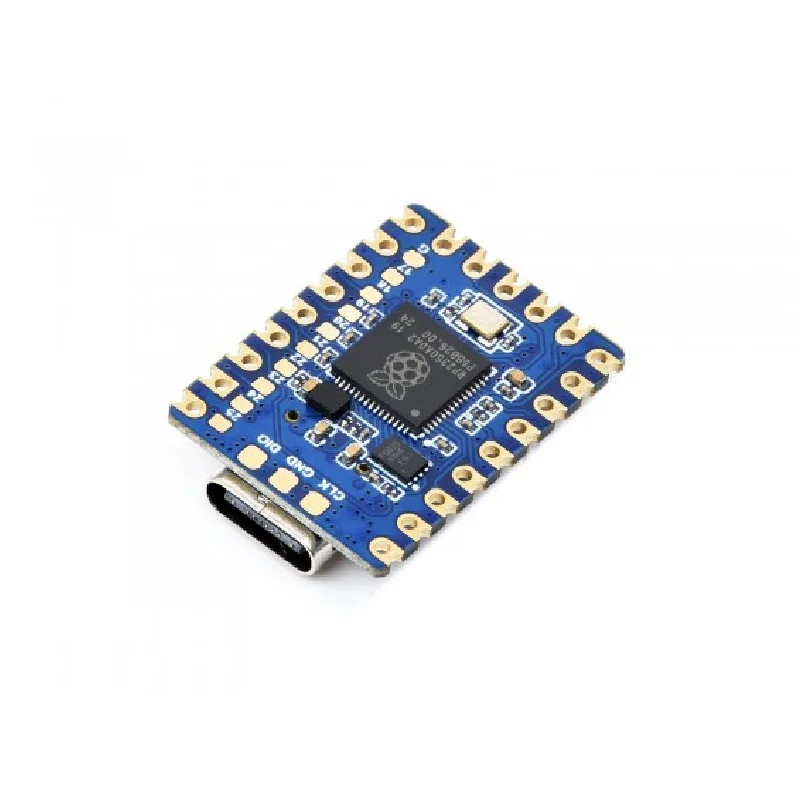
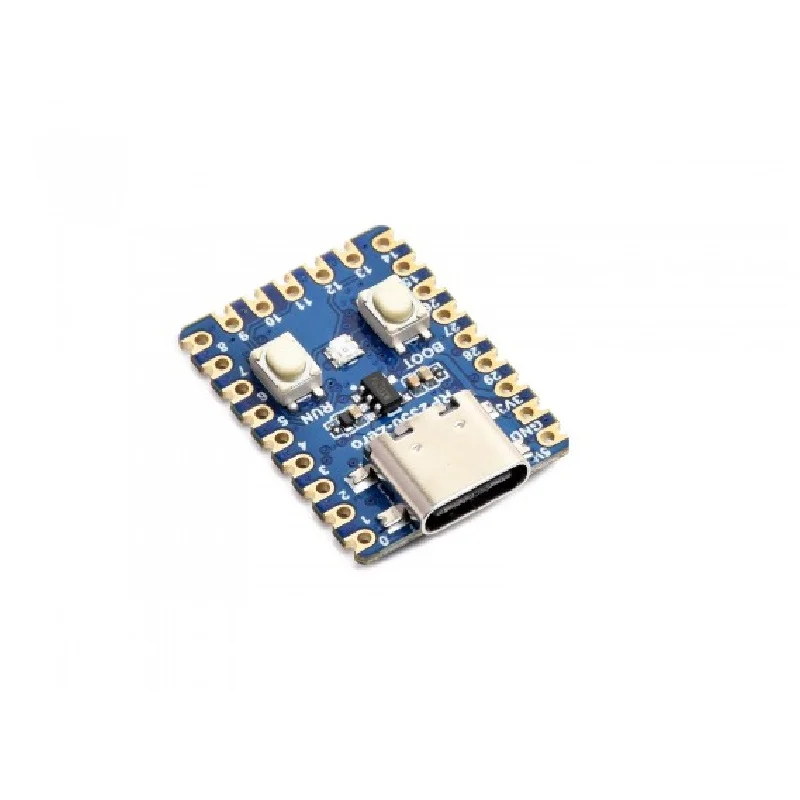
Waveshare RP2350-Zero Mini Development Board

₹599.00 (Inclusive of all taxes)
Out of Stock

The Waveshare RP2350-Zero is a compact development board based on the Raspberry Pi RP2350 dual-core microcontroller, featuring Arm Cortex-M33 and RISC-V cores running up to 150 MHz. It offers 520KB SRAM, 4MB flash, USB 1.1 Type-C connectivity, and extensive GPIO for embedded IoT prototyping.

Features

  • Dual-core RP2350 SoC with Arm Cortex-M33 and RISC-V Hazard3 processors for flexible, high-performance computing.
  • Up to 150 MHz clock speed with 520KB SRAM and 4MB on-board flash for complex firmware and data logging.
  • USB 1.1 Type-C connector supports both device and host modes for easy programming and peripheral connection.
  • 29 multi-function GPIO pins (20 via edge connector) provide SPI, I2C, UART, ADC, and PWM interfaces.
  • Low-power sleep and dormant modes enable energy-efficient operation for battery-powered IoT sensor nodes.

Out of stock

Description

The Waveshare RP2350-Zero Mini Development Board brings the Raspberry Pi RP2350 microcontroller to a compact, breadboard-friendly form factor. This board leverages a unique dual-architecture design, pairing an Arm Cortex-M33 core with a RISC-V Hazard3 core, both capable of running at up to 150 MHz. This allows developers to partition tasks between cores for efficient real-time control and custom peripheral handling via programmable I/O (PIO) state machines.

Equipped with 520KB of SRAM and 4MB of QSPI flash, the board provides ample memory for application code, file systems, and data buffers. The integrated USB 1.1 controller with a Type-C port simplifies firmware updates via drag-and-drop mass storage mode and can act as a USB host for connecting additional devices. Its 29 GPIO pins, accessible through an edge connector and solder pads, offer extensive interfacing capabilities for sensors, displays, and communication modules.

Key Features

  • Dual-core, dual-architecture RP2350 microcontroller (Arm Cortex-M33 + RISC-V) for high-performance embedded tasks.
  • Programmable I/O (PIO) state machines enable custom peripheral interfaces without CPU overhead.
  • USB 1.1 Type-C port supports device (programming) and host (peripheral) modes.
  • On-board temperature sensor for environmental monitoring applications.
  • Low-power sleep and dormant modes optimize energy consumption for portable projects.
  • Drag-and-drop firmware programming via mass storage class eliminates the need for external programmers.
  • Compact form factor with 20-pin edge connector and additional solder pads for GPIO expansion.
  • 4MB QSPI flash provides substantial storage for application code, file systems, and Over-the-Air (OTA) updates.

Applications

  • Embedded IoT prototyping and sensor data acquisition systems.
  • Custom USB peripheral development and HID device creation.
  • Real-time control systems leveraging dual-core processing and PIO state machines.
  • Low-power battery-operated sensor nodes for environmental monitoring.
  • Educational platform for learning Arm and RISC-V microcontroller architectures.

Technical Specifications

Microcontroller / SoCRaspberry Pi RP2350 (Dual-core: Arm Cortex-M33 + RISC-V Hazard3)
Clock FrequencyUp to 150 MHz
Memory520 KB SRAM, 4 MB QSPI Flash
ConnectivityUSB 1.1 (Device/Host), Type-C Connector
GPIO & Interfaces29 Multi-function Pins (SPI, I2C, UART, ADC, PWM)
Power ModesSleep, Dormant
ProgrammingDrag-and-drop via Mass Storage (USB)
Special FeaturesProgrammable I/O (PIO) State Machines, On-board Temperature Sensor
Dimensions (Shipping)7 cm x 5 cm x 2 cm
Weight (Shipping)0.015 kg

Frequently Asked Questions

How do I program the Waveshare RP2350-Zero board?

The board supports drag-and-drop programming via its USB Type-C port. Connect it to your computer, and it will appear as a mass storage device. Simply copy your compiled UF2 firmware file to the board's drive, and it will automatically reset and run the new code. No external programmer or debugger is required for basic firmware updates, streamlining the development workflow.

What are the Programmable I/O (PIO) state machines used for?

The RP2350's PIO state machines are dedicated hardware processors that can independently handle precise timing and bit-banging for custom communication protocols. They allow you to implement interfaces like DPI video, SDIO, or custom serial protocols without burdening the main CPU cores, enabling real-time performance and freeing up processing resources for your application logic.

Can this board be powered and communicate solely via the USB-C port?

Yes, the USB Type-C port provides both 5V power and data communication. It supports USB 1.1 for programming and can be configured as a host to connect other USB peripherals. For standalone projects, you can also supply power directly to the 3.3V and GND pins via the GPIO header, but the USB port is the simplest method for development and debugging.

What development environments or SDKs are compatible with the RP2350-Zero?

You can develop for the RP2350 using the official Raspberry Pi Pico C/C++ SDK or the Arduino core for RP2040/RP2350. The board is also supported by MicroPython and CircuitPython. Set up your toolchain, clone the SDK, and target the RP2350 platform. The board's UF2 bootloader ensures compatibility with these standard Raspberry Pi microcontroller development workflows.

Package Includes

  • 1 x Waveshare RP2350-Zero Mini Development Board

Additional Information

Weight 0.015 kg
Dimensions 5 × 7 × 2 cm